
The Bonneville Salt Flats are where brave souls from around the world come to test themselves, and their equipment, in one of the most demanding racing environments on the planet. The combination of high altitude, scorching temperatures, unpredictable winds, and an irregular, constantly changing surface makes attempting to tame Bonneville a challenge that produces both heroes and zeros.
Andy Green is a hero. The retired British RAF fighter pilot is recognized as The Fastest Man in the World. This title was earned back in 1997, when Green was hired by fellow Brit, Richard Noble, to pilot the jet-powered ThrustSSC. Ultimately, Green hustled the enormous vehicle to a record speed of 763.04 mph (1,228 km/h) on the Black Rock Desert (Nevada), setting a land speed record that still stands today. What’s even more impressive is that he also broke the sound barrier during his record-setting run.
In 2006, Green would travel to Utah with JCB, the British tractor manufacturer, in an effort to establish a new record for diesel-powered vehicles. Dieselmax, the company’s four-wheel-drive streamliner race car, was fitted with a pair of 74-hp diesel tractor engines that had been massaged using turbochargers and intercoolers to produce 750-hp each. Green would deliver JCB a world record speed of 350.092 mph that has only recently been challenged.
Twenty Years Later, Back on the Salt
Twenty years on, JCB has become a world leader in the use of hydrogen technology and was looking for a way to promote the capabilities of their equipment on a world stage. Recognizing how effective the Dieselmax program was for marketing and growing brand recognition, the company decided that a return to Bonneville might be the perfect solution to showcase their clean technology.
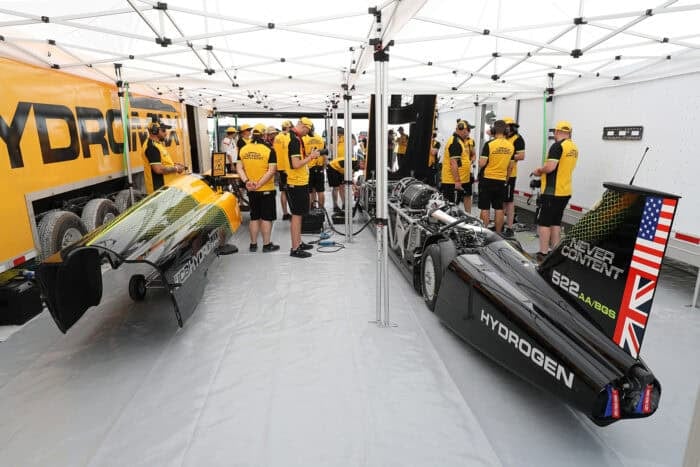
A phone call was made and Andy Green decided to come out of retirement to help JCB with their effort as based on his previous experience with the company he knew what they were capable of designing and that they ran a top-tier operation that focuses on safety as well as performance. The salt flats beckoned, and the new car, Hydromax, was designed and built with the assistance of ProDrive and Ricardo in about 10 months, before undergoing preliminary tests a few weeks before being shipped to the United States and prepared to run at Bonneville.
“This record has given all of us huge confidence in the car, the team, and the quality of the engineering. With our first record in the bag, we’re now turning up the power on the engines, aiming to go even faster next week.”
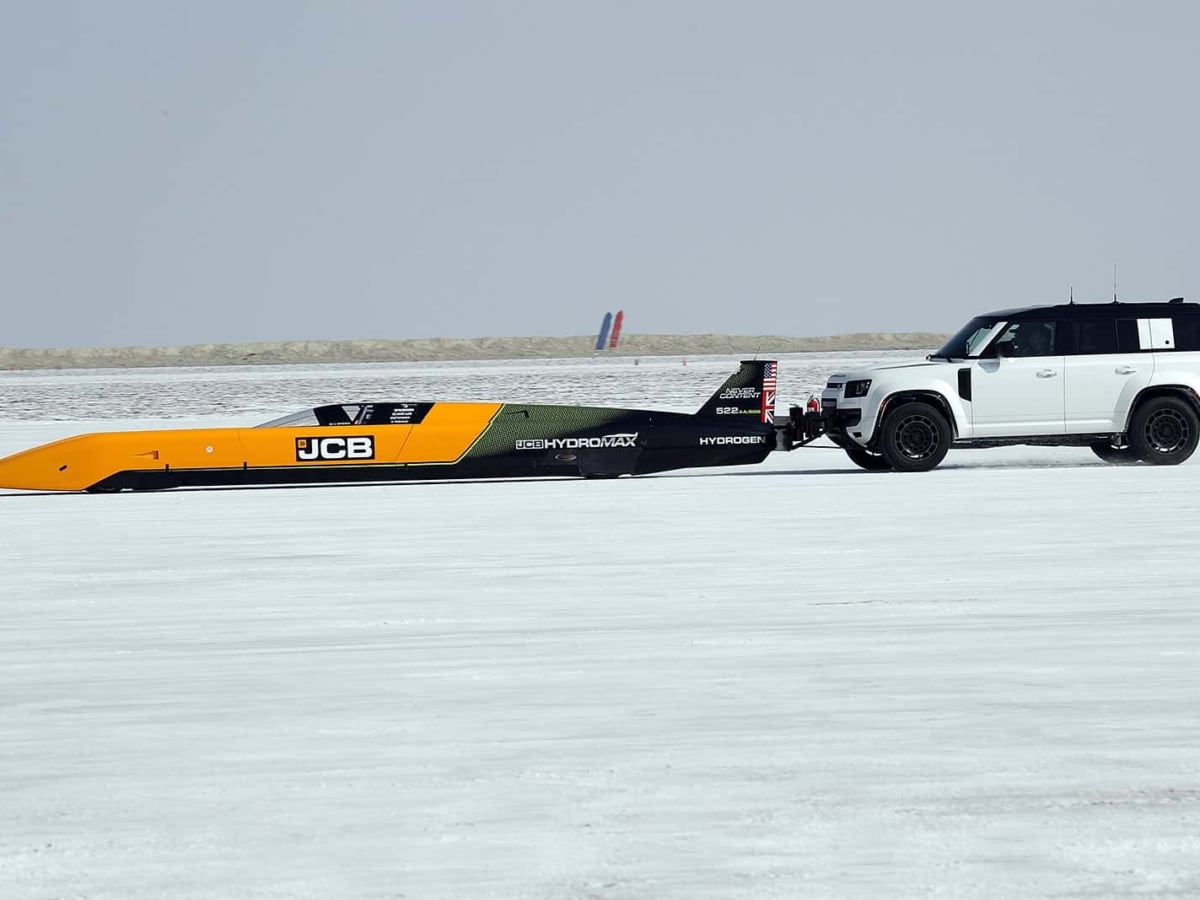
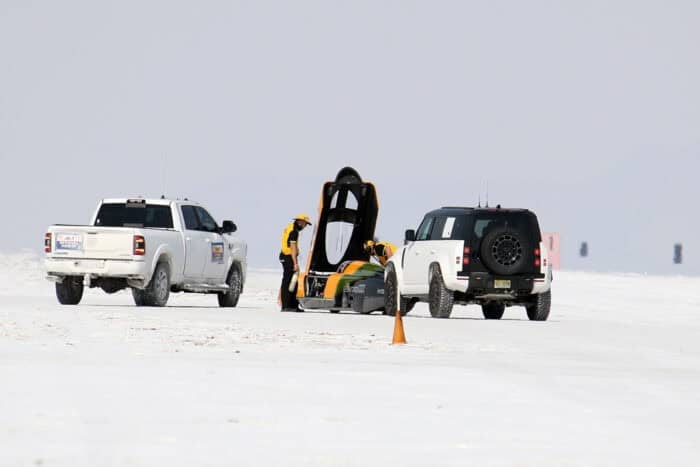
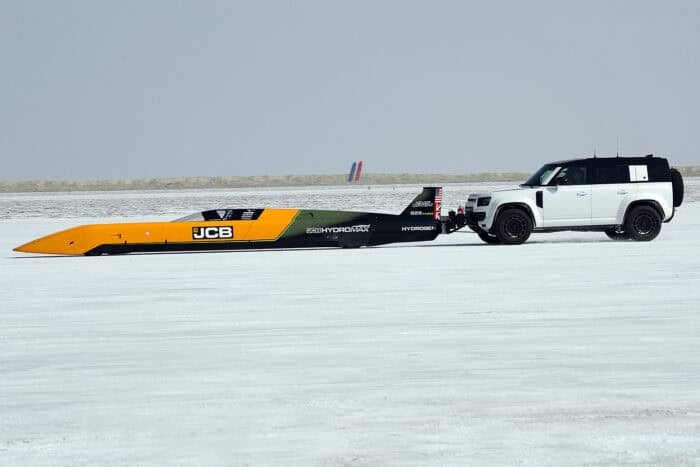
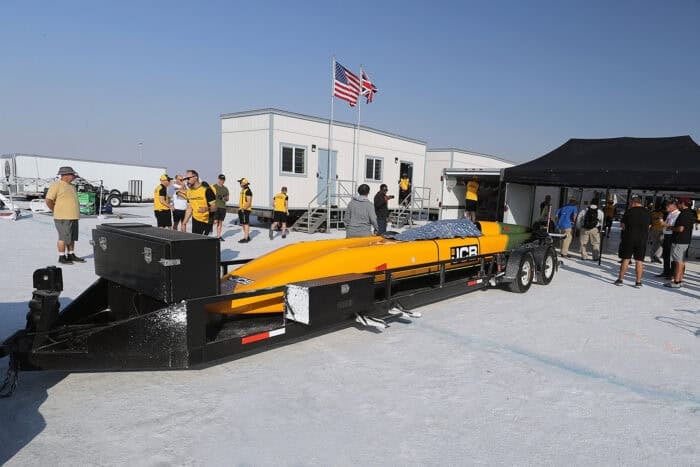
Driving into the pit area at Speed Week it was obvious that the JCB team was prepared to do the work and perform. An enormous compound took centre stage and included a large, temporary command centre for meetings, meals, and media operations. Situated immediately across the salt access road was the garage area where the crew and engineers could prepare the Hydromax before and after each run. A fleet of Land Rover Discovery SUVs was always nearby to shuttle team personnel around the paddock, with one dedicated to serve as the push-vehicle to help Hydromax leave the starting line.
JCB branding was in abundance, as were examples of the tractors, forklifts and other equipment the company produces to allow dealers and visitors to get a close-up look at the products that pay the bills.
The goal for Speed Week was for the JCB Hydromax to beat the world land speed record set by its predecessor, the JCB Dieselmax 20 years earlier. That goal required Green to pilot the Hydromax to a speed of at least 351 mph. The following week, JCB would remain in Bonneville to push Hydromax even further, this time with officials from the Fédération Internationale de l’Automobile (FIA), the governing body of motorsport, on hand to verify and certify the results as an official world record.
From Tractor Engines to 1,600 Horsepower
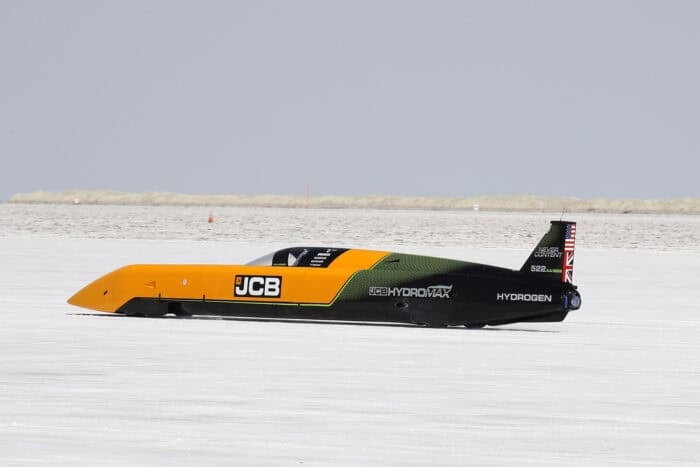
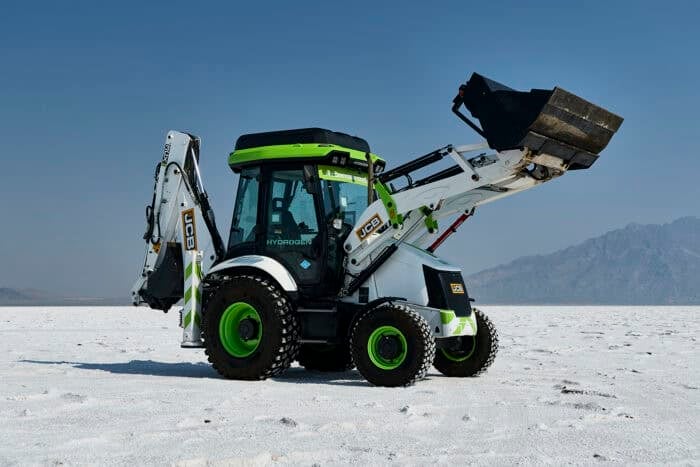
Much like Dieselmax, Hydromax is a streamliner race car powered by two production-based 74-hp tractor engines that now combine for a total of 1,600 hp, but instead of diesel, they operate on Hydrogen. These engines are similar to the hydrogen-powered units fitted to the JCB backhoes, but the race engines have been tuned for racing on the salt flats.
New construction methods and materials mean that Hydromax is lighter, faster, and stronger than Dieselmax. The new car also benefits from 20 years of technological advances, including improved data systems, advanced computers, better tires, and a better understanding of aerodynamics.
Green stated that Bonneville is a great place to test technologies. “You take a four-cylinder, 74-hp, Hydrogen-powered engine in the back of a digger (tractor) and adapt it to perform at extreme limits to demonstrate its durability and potential output.”
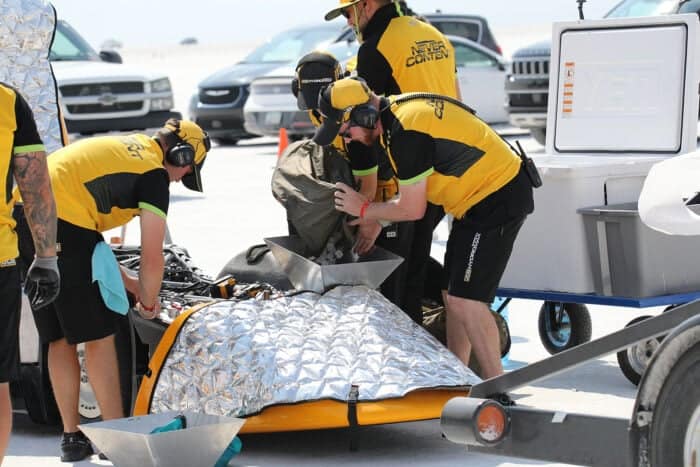
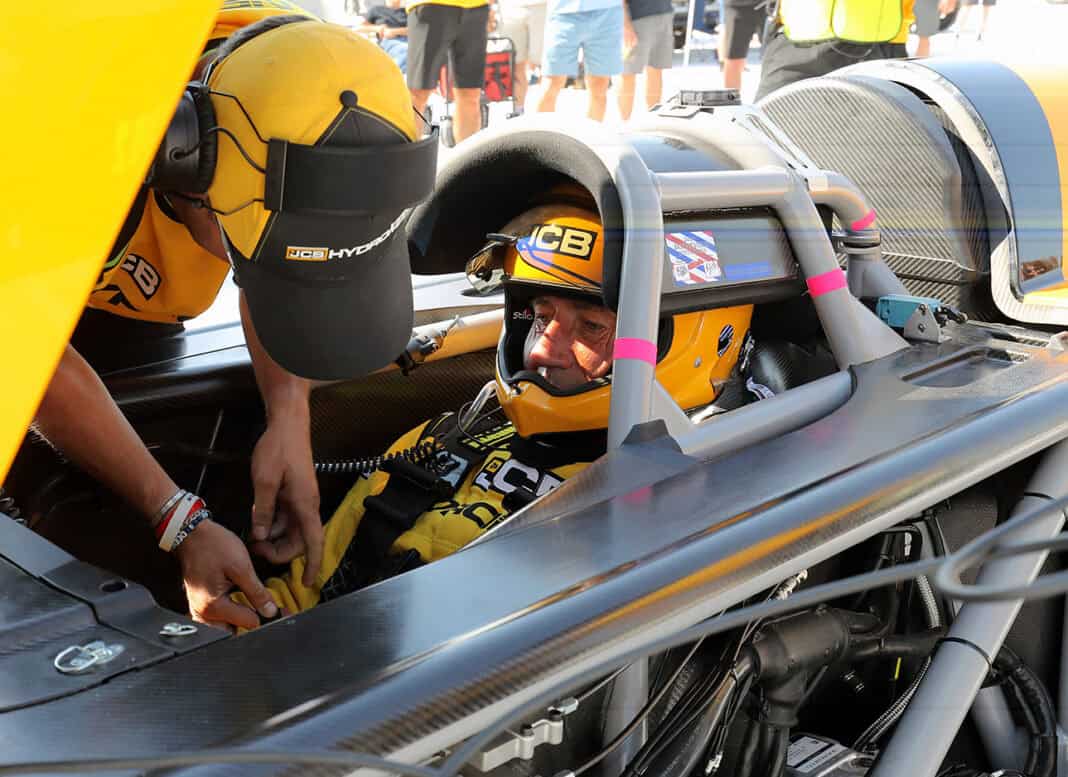
These engines weigh about 1,000 pounds and are designed to be strong and heavy because they form part of the backhoe’s chassis. JCB’s engineering team added turbochargers and intercoolers, increased the fuel-rail pressure, and this bumped their output up to an impressive 800 hp each. Green sits between two of these units strapped into a safety cell in a stretched chassis that is wrapped in wind-cheating bodywork to form a race car to showcase how strong, adaptable, and high-quality these engines are.
The Push Beyond 400 MPH
The JCB team spent the first few days of Speed Week performing test runs and getting the car sorted before attempting the record on Tuesday. The team broke the SCTA record for the category by almost 20 mph with a speed of 367.141 mph, but all record attempts require a second back-up run from which the average of the two times will establish the record.
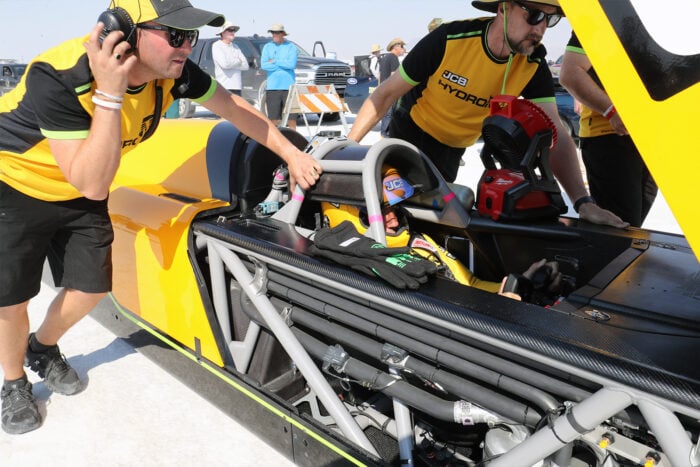
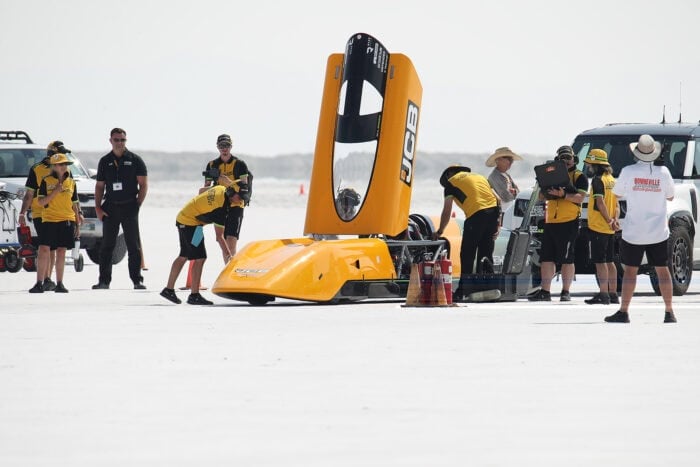
On Wednesday, the second run of the day was to be the record run, but something shut off just after the push vehicle separated from Hydromax, and Green had to take a side access road to clear the track and coast to a stop. After a brief check-over, the team was allowed to re-stage and make another attempt. Just before the track was scheduled to close for the day, Green and his 32-foot-long steed completed their run with a maximum speed of 369.554 mph, giving the team a claim to a new record for Blown Gas Streamliners of 368.347 mph.
“It has been an absolute joy to be back on the salt, racing at Speed Week, alongside some incredible teams. The Bonneville Salt Flats are home to the World Land Speed Record, where racers push the boundaries of physics and innovation. This record has given all of us huge confidence in the car, the team, and the quality of the engineering. With our first record in the bag, we’re now turning up the power on the engines, aiming to go even faster next week,” says Andy Green.
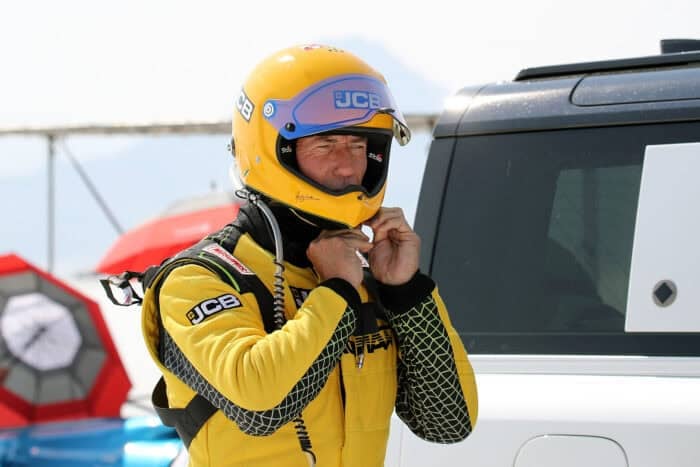

About that. On August 11, 2026, Andy Green and the JCB Hydromax completed the two runs the FIA required to set a new world land speed record for a hydrogen-powered vehicle at 406.320 mph (653.90 km/h). The first run clocked 400.623 mph, and the second reached 412.135 mph.
By setting a new land speed record, companies like JCB are able to test new engineering concepts and ideas, market their products, and help demonstrate how involvement in motorsports can improve their product. The JCB Hydromax also represents a new breed of high-performance racing that is much more environmentally friendly, as running on hydrogen power releases zero carbon emissions, and that makes us all winners.