
When the White House announced its intent to make kei cars legal for road use in America, the internet went into shock. It was an unexpected announcement that whipped certain corners of the car community into a frenzy, but now that the dust has settled, the reality of feasibility is sinking in. While the market for new kei cars in North America is probably slim, kei trucks are an entirely different proposition. Forget big in Japan, these little trucks could be big in America because they wouldn’t be competing with regular cars.
Tiny Cars and Trucks From Japan Make Their Move
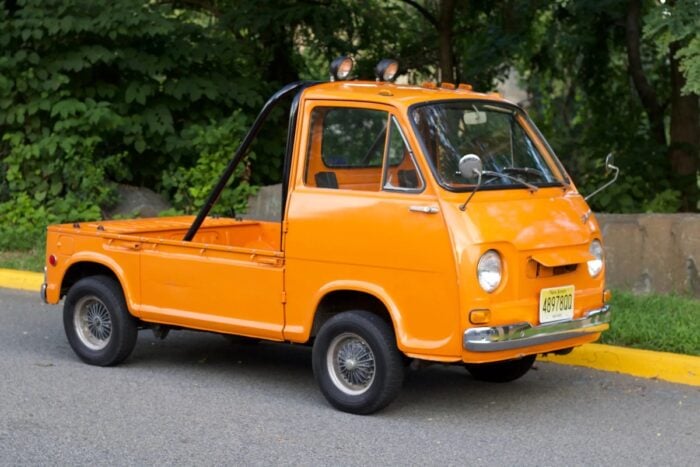
First, what is a kei car? Well, back in 1949, Japan realized it needed to do something to jumpstart domestic auto manufacturing. The concept of incredibly small, inexpensive people’s cars was thoroughly sweeping the globe, and the concept of something a little more sophisticated than a motorcycle was a great way to get the country on four wheels rather than two. Thus, the kei-jidosha or light vehicle was born.
Think truly diminutive dimensions to fit down narrow streets and park in small spaces, a tiny engine that’s easy on fuel, and attractive tax breaks to incentivize ownership. While the regulations have been revised several times over the years, the upper limits of the format currently stand at 3.4 metres long, 1.48 metres wide, two metres tall, and with a 0.66-litre engine cranking out a maximum of 63 horsepower.
“What’s more, side-by-sides aren’t road-legal in most jurisdictions, whereas a fully homologated kei truck could be.”
It stands to reason that passenger cars meeting this description probably won’t have huge appeal on a massive continent used to relatively cheap gasoline and wide freeways. After all, you probably wouldn’t want to come face-to-face with an F-450 driving something smaller than an average postwar bungalow guest bedroom. However, the kei segment is so much more than squircle-shaped CVT-equipped city boxes. It also includes trucks that do real work and could decimate the utility side-by-side market in North America.
American Kei Trucks (Like the Daihatsu Hijet) Could Put UTVs to Shame
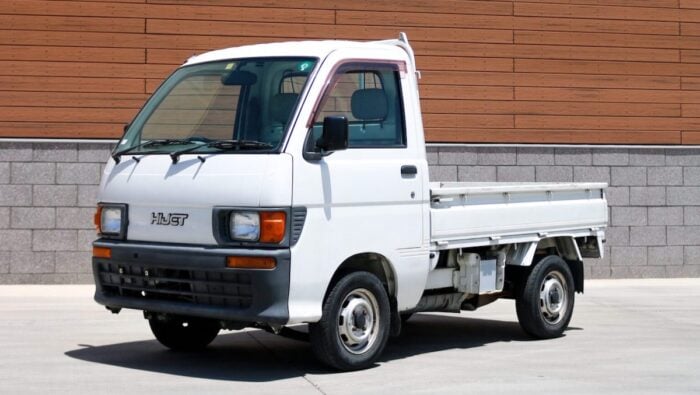
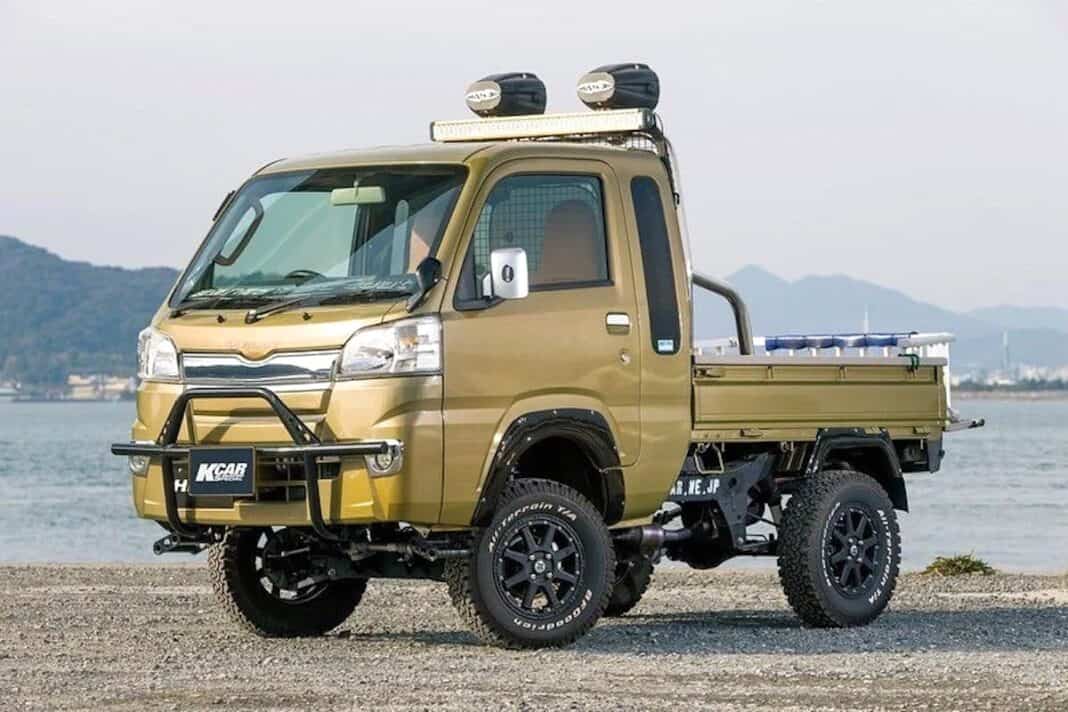
Think “Honey, I shrunk the cabover,” tiny trucks with simple flatbeds, available with all sorts of real truck stuff. Four-wheel-drive, locking differentials, even dump beds, all for a low price. For example, the Daihatsu Hijet starts at 1,028,500 yen, or roughly $6,569 American or $9,014 Canadian at current exchange rates. Even with the 25 percent Chicken Tax applied, that’s still a proper trucklet for less than the price of a utility side-by-side.
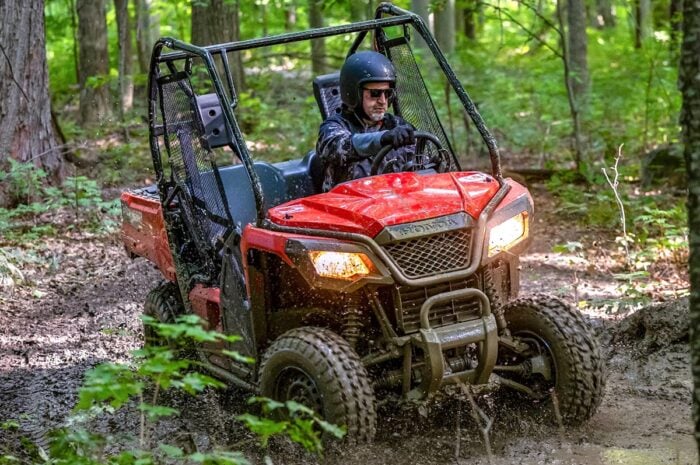
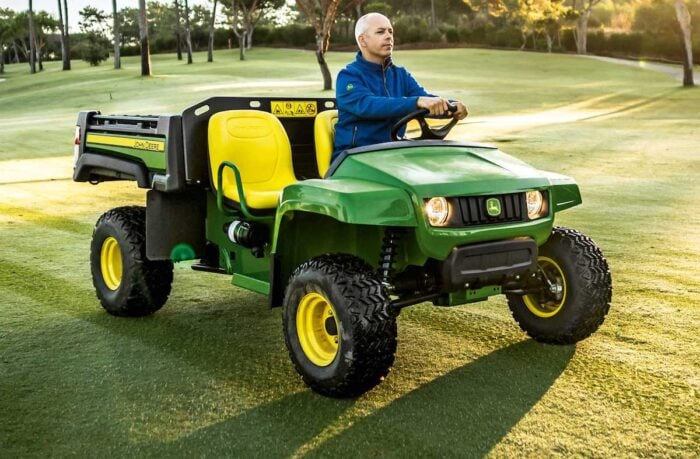
While a payload capacity of 771 pounds doesn’t sound hugely impressive by truck standards, it vastly exceeds what a Honda Pioneer 520 or a John Deere TX 4×2 can haul by triple-digit poundage, and lands just 229 pounds short of a $15,999 John Deere HPX615E’s payload capacity. Impressive stuff when you consider that a Hijet is fully enclosed, whereas the HPX615E has no windshield, no roof, and definitely isn’t highway-capable. What’s more, side-by-sides aren’t road-legal in most jurisdictions, whereas a fully homologated kei truck could be.
Takeaway
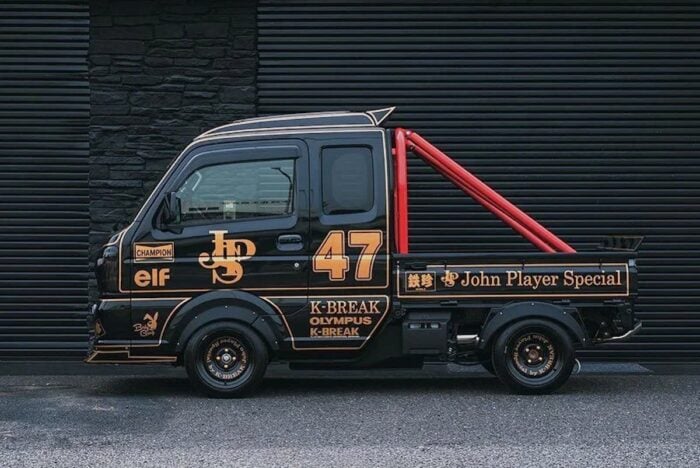
While kei cars would likely be a novelty in North America, kei trucks could be genuinely useful for farmers, couriers, campuses, landscapers, park rangers, people with rural properties—in short, anyone who needs a small, utilitarian vehicle to do actual work. On paper, it’s a better solution for most applications than a utility side-by-side, and building a better mousetrap is often a recipe for success.
Will brand new kei trucks actually make it onto North American roads? We’ll have to see. Between dealer lobbyist groups that have it out for these tiny machines and the barrier of tariffs, it’s anyone’s guess. Still, isn’t it worth having an ounce of hope?