
Let’s be honest, many vehicles today have become showcases for features no one asked for. Screens grow wider, menus get deeper, cabins smell fruitier, and ambient light modes feel less luxurious and more ’90s rave. Overall, convenience tech increasingly feels like it exists simply because it can. At times, it’s hard to tell whether these additions genuinely improve the ownership experience or merely justify a price tag that keeps creeping upward.
Lincoln’s new Rejuvenate feature initially feels like it belongs in that category. A “spa on wheels” sounds indulgent, maybe even unnecessary, until you consider how people actually use their cars today. Waiting for kids to finish practice. Arriving early to an appointment and staying in the vehicle instead of sitting in a sterile waiting room. Taking a moment alone before heading back into a busy day. Decompressing after a proper road rage incident. In those quiet, in-between moments, the idea of a vehicle that actively helps you slow down, disconnect, and reset begins to make a surprising amount of sense.
Related – The New Black Label Navigator Is a Lesson in Selling Luxury
Rejuvenate in Practice
The idea didn’t begin with technology or trend forecasting. Rather, it came from observing how Lincoln customers were already using their vehicles. We sat down with Lincoln Experience Engineer Justine Nestorowich to learn more. She tells us more than 90 percent of customers described their vehicle as a place to be alone, a private space that increasingly serves as a buffer between home, work, and the rest of the world.
“Since COVID, well-being has been much more in the forefront,” Nestorowich explains. “And with our Lincoln customers, we realized that the vehicle is a space where well-being can be fully integrated into everyday life.”
That shift was amplified by how long people now spend in their cars, often without even leaving the driveway. Waiting for family members, arriving early to appointments, or simply choosing to stay in the vehicle rather than step into another crowded or impersonal space. For Lincoln, those moments represented an opportunity. Not to add another feature, but to intentionally design for stillness, grounding, and disconnection.

Testing the Experience, Not the Idea
To validate that idea, the engineers went beyond customer surveys and partnered with Purdue University to study the physiological effects of the experience. Participants were first placed under stress, then guided through a Rejuvenate session. The results were measurable.
“We saw a clear physiological response,” says Nestorowich. “Heart rates dropped significantly after going through Rejuvenate.” For Lincoln, that confirmation helped separate Rejuvenate from surface-level wellness features, reinforcing that the experience wasn’t just calming by design, but calming by effect.
Sit Back, Chill Out
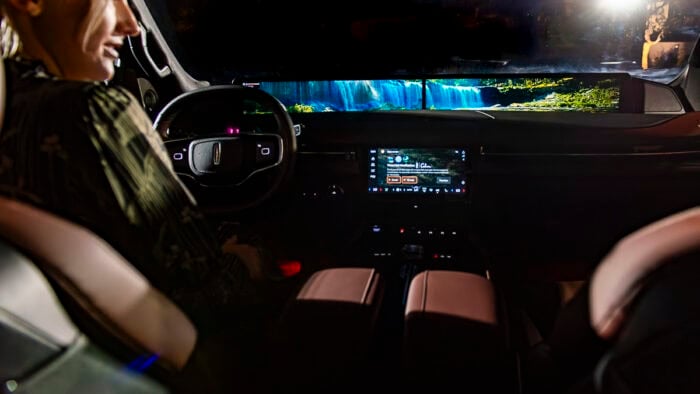
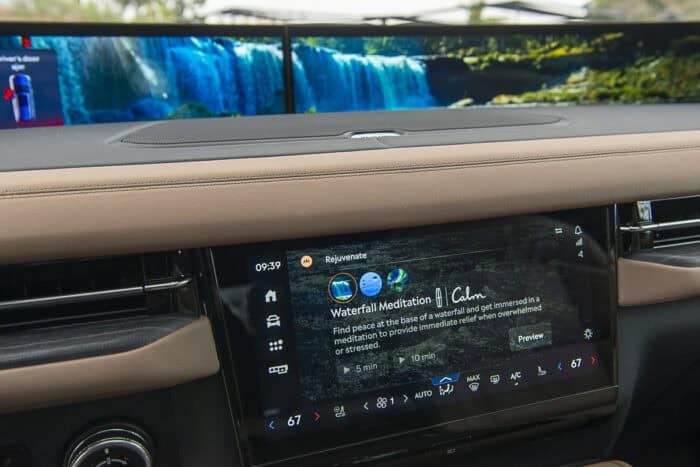
Lincoln Rejuvenate is designed for the moments when the vehicle isn’t moving at all. Activated while parked, the experience unfolds as a short, guided sequence rather than a feature set to adjust. The driver’s seat slides rearward, reclines, warms slightly, and begins a gentle massage. The steering wheel moves up and away, opening the cabin physically as ambient lighting, sound, scent, and expansive visuals take over the displays. The result feels less like activating a function and more like stepping into a brief, intentional pause.
In that context, Rejuvenate isn’t about luxury for luxury’s sake. It’s about recognizing that modern vehicles have become emotional spaces as much as physical ones.
What separates Rejuvenate from typical comfort tech is its restraint. There’s nothing to fine-tune or customize mid-experience, no menus to scroll through once it begins. Sessions run for five or ten minutes, then end on their own. Lincoln describes the vehicle as a “third space” — a sanctuary between home and work — and Rejuvenate leans fully into that idea, encouraging occupants to disengage rather than interact. It’s meant for the in-between moments: waiting for kids, arriving early to an appointment, or simply staying in the car a little longer before heading back into the day.
Four Themes with Calm App Integration
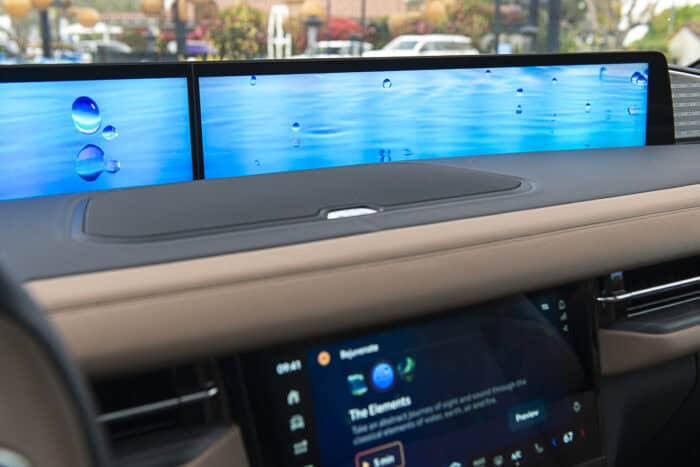
Waterfall Meditation (with Calm) – cascading water visuals and guided meditation
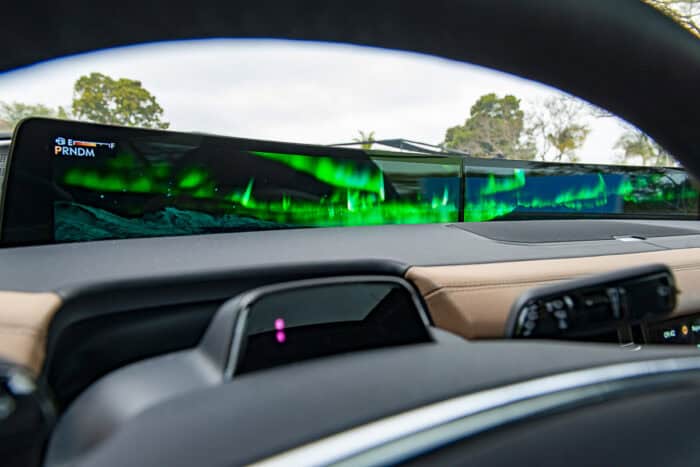
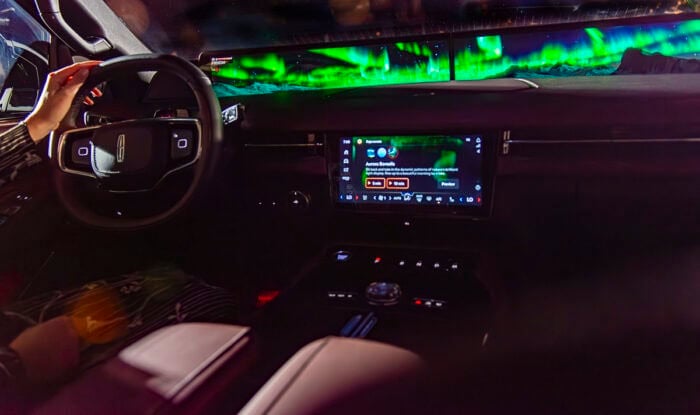
Aurora Borealis – inspired by northern lights and shifting skies
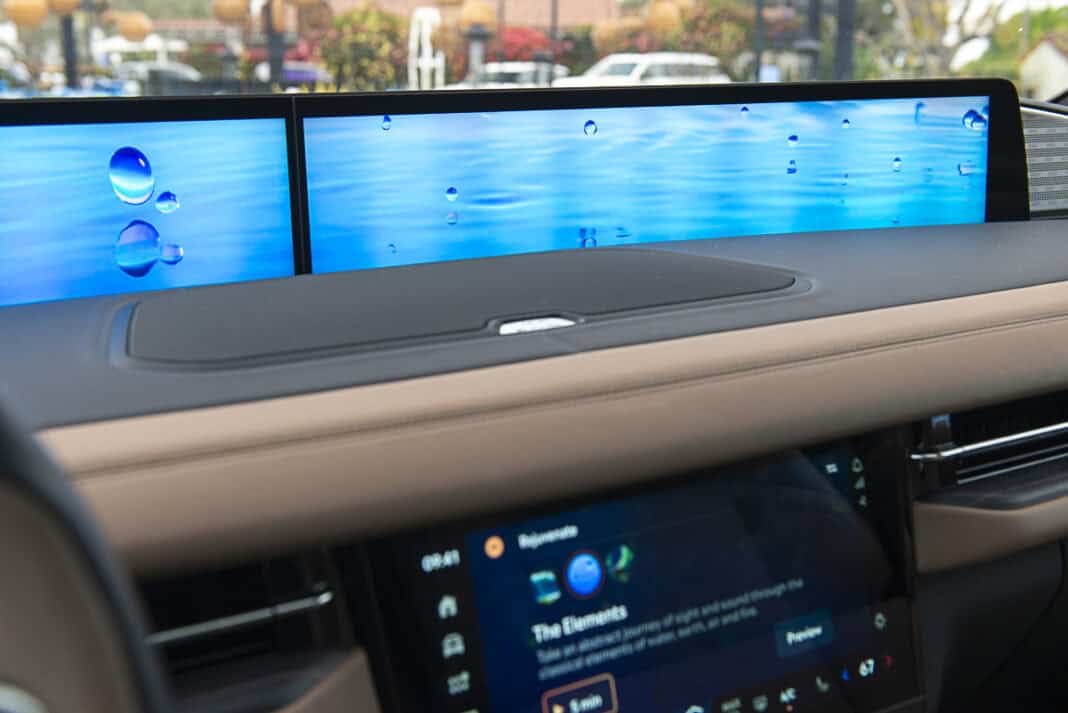
Elements – abstract journey through water, earth, air, and fire
Forest Meditation (with Calm) – immersive forest environment with body-scan meditation narrated by Calm’s Tamara Levitt (new theme introduced later in October)
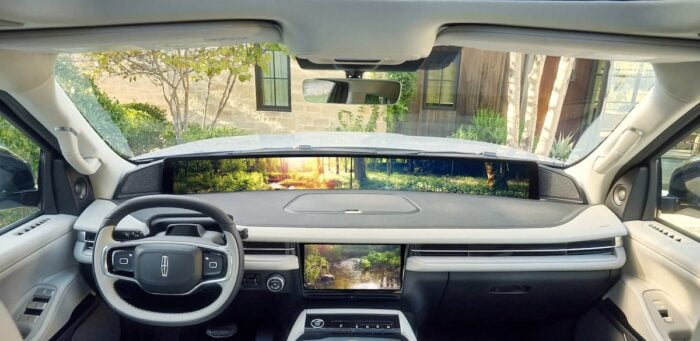
The experience itself is guided through a series of nature-inspired themes, each designed to evoke calm differently. Visuals, audio, scent, and seat movement are all synchronized, creating a multi-sensory environment rooted in grounding rather than stimulation. It’s all less hokey than you’d expect, serving its purpose and doing it well.
Recent additions like Forest Meditation (developed in collaboration with Calm and delivered via over-the-air update) expand the system’s scope, reinforcing that Rejuvenate isn’t static. It’s a feature designed to evolve over time, quietly adapting to how owners actually use their vehicles rather than demanding attention from them.
Takeaway
During the presentation for the next-gen 2026 Navigator first drive earlier this year, where I first experienced Rejuvenate, I listened as Justine walked through the feature. Here we go, I thought. Another glossy addition inside a premium family hauler. Another thing Navigator owners will likely never use. Maybe that was just the jet-lagged, cynical media guy in me talking.
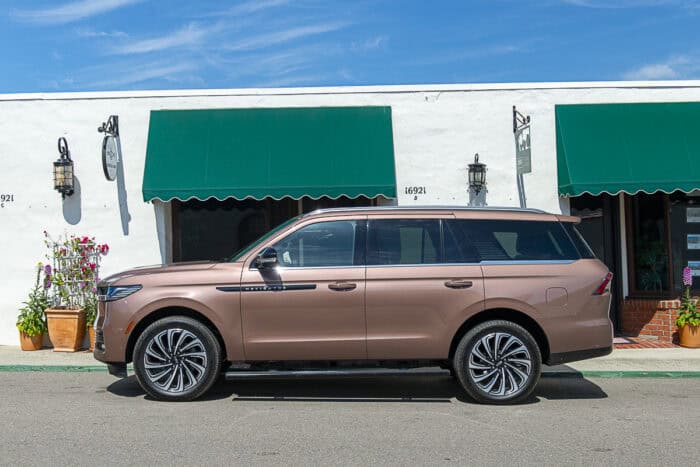
But the moment she shifted the conversation to those quiet stretches spent waiting in the car — killing time between appointments, sitting through a practice pickup, or choosing the cabin over a crowded waiting room with open coughing and snotty-nose kids — it all clicked. As a parent myself, it made even more sense.
In that context, Rejuvenate isn’t about luxury for luxury’s sake. It’s about recognizing that modern vehicles have become emotional spaces as much as physical ones. And in a world where most in-car technology demands attention, there’s something genuinely refreshing about a feature that asks for nothing at all. Except a few minutes to slow down.