
Full-size pickups are not only the best-selling vehicles for Detroit’s Big Three automakers but also contribute significantly to their respective companies’ bottom lines, helping to bankroll the large investments in electric vehicle (EV) products and technologies we’ve seen over the past five years.
An EV version of the biggest-selling, most profitable model was high on the list for US OEMs planning to roll out electric powertrains across the vehicle lineup. Hence, Ford went early with the F-150 Lightning, and GM followed quickly with the Silverado and Sierra EVs, while Ram thought about it, did a bunch of development, then decided against it, for now.
Related – First Drive: 2024 Chevy Silverado EV RST Review
The EV Revolution Will be Delayed
The recent cancellations of the Ford F-150 Lightning and all-electric Ram 1500 are a sign of the times. As we near the end of 2025, it’s clear that in the US and Canada at least, the report of the combustion engine’s death was an exaggeration, as Mark Twain might have put it. At the very least, the EV revolution has not gained the same momentum that many prophesied just a few years ago, and now faces political headwinds, too.
Indications are that GM may have delivered around 200,000 EVs in 2025, but pickups are not leading the charge. Through September of last year, Chevrolet sold 9,379 Silverado EVs in the US, and GMC sold another 6,147 Sierra EVs. GM therefore sells more than 40 gas and diesel Silverados and Sierras for every electric truck that leaves the lot. Tesla sold more of the quirky Cybertruck than GM did of the two EV half-tons combined. That Chevrolet sold more than 50,000 new Equinox EVs in the same period shows where EV volume currently lies.
On the Road in the Silverado EV Trail Boss
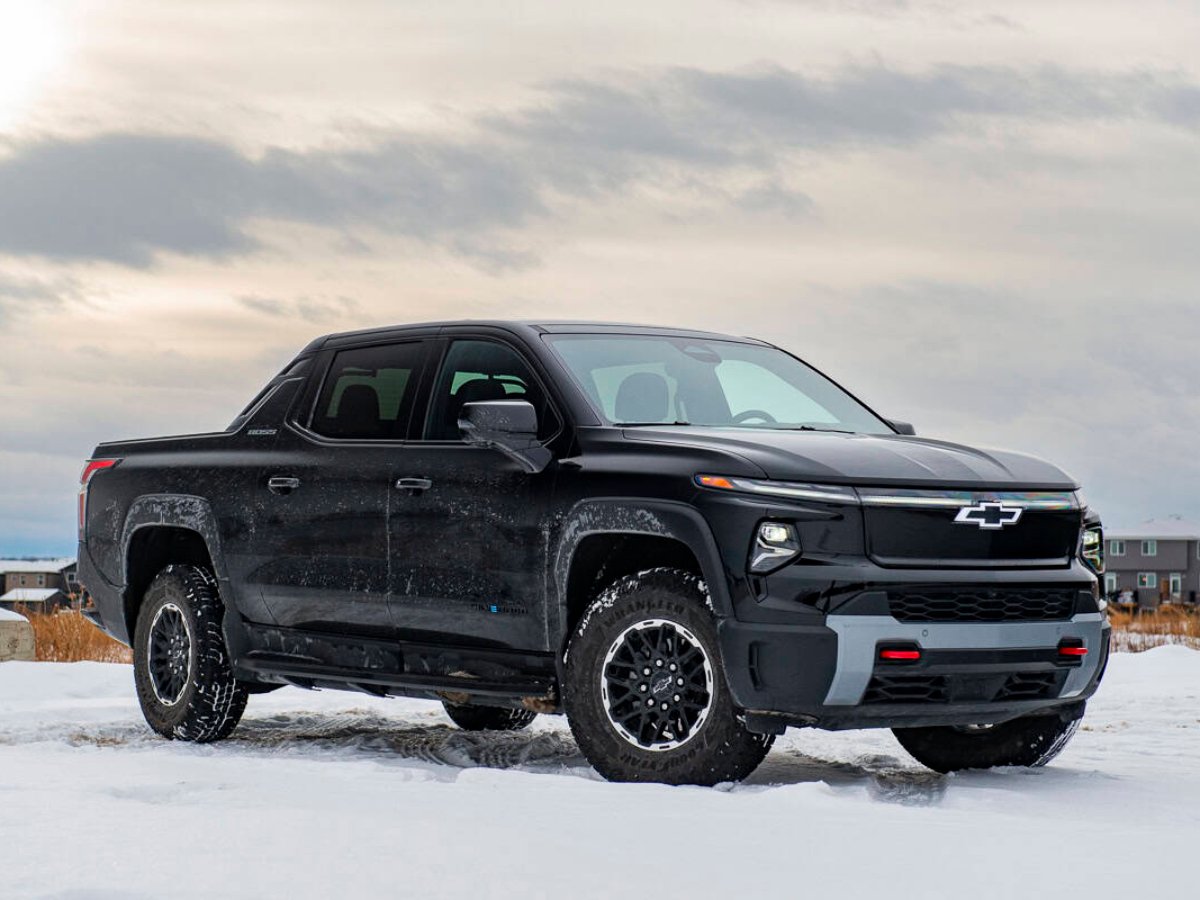
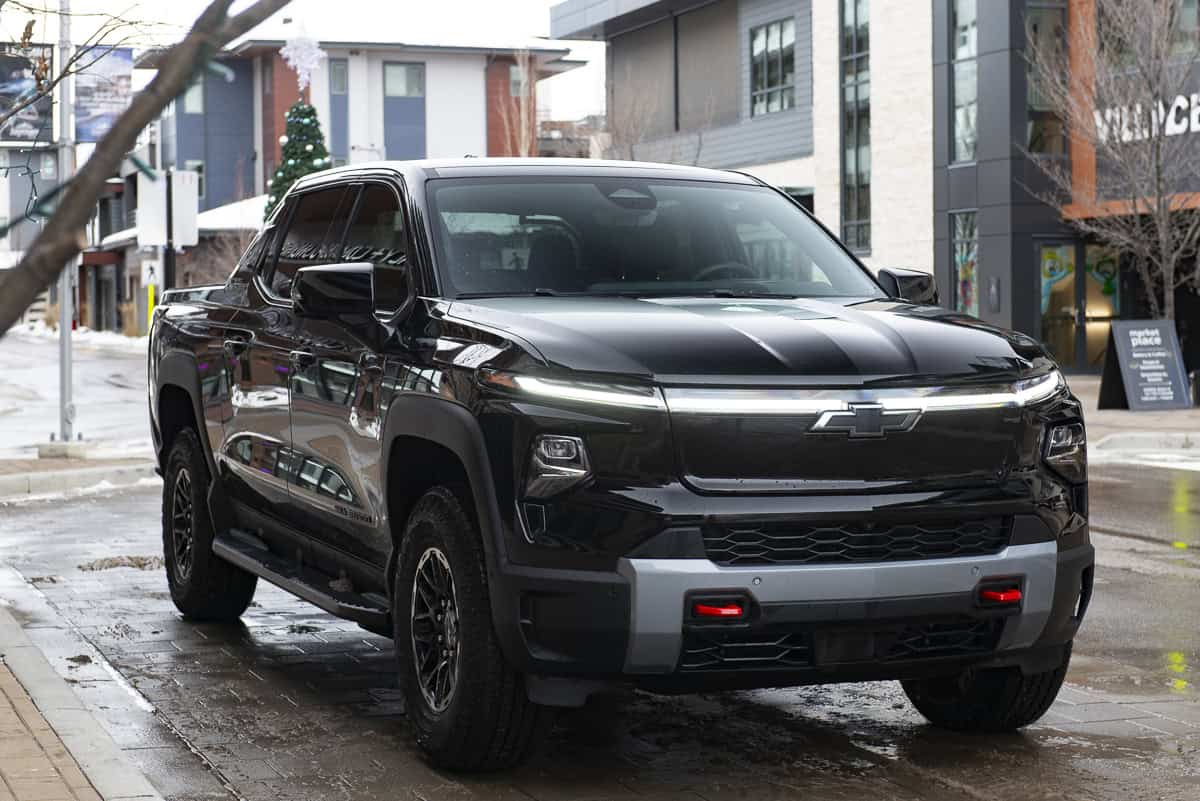
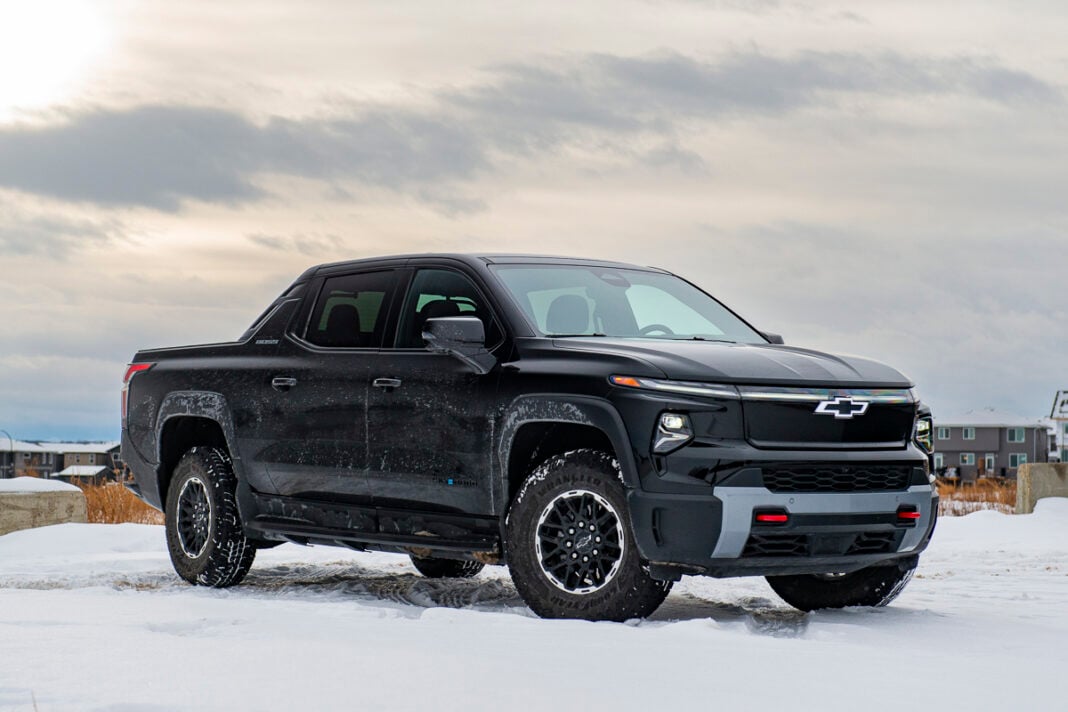
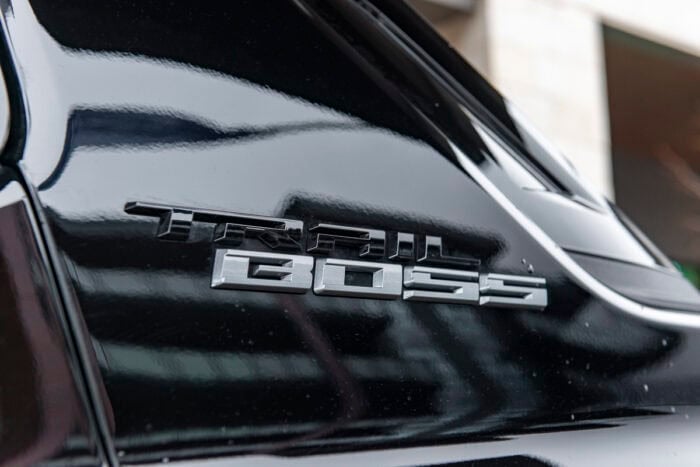
Leaving aside for now the crucial question of who will buy the Silverado EV, let’s talk about what it’s like to live with. We spent a week in a Trail Boss Max Range, a trim that’s new to the lineup in 2026, and retails for US$88,695 / C$106,999. With up to 478 miles (769km) of range on a full charge, it has about 62 miles / 100km more than the Extended Range version and some 186 miles / 300km more than the Standard Range Work Truck.
If you can’t plug in overnight on a Level 2 home charger, pick your public charger carefully. Huge batteries take lots of time to fill.
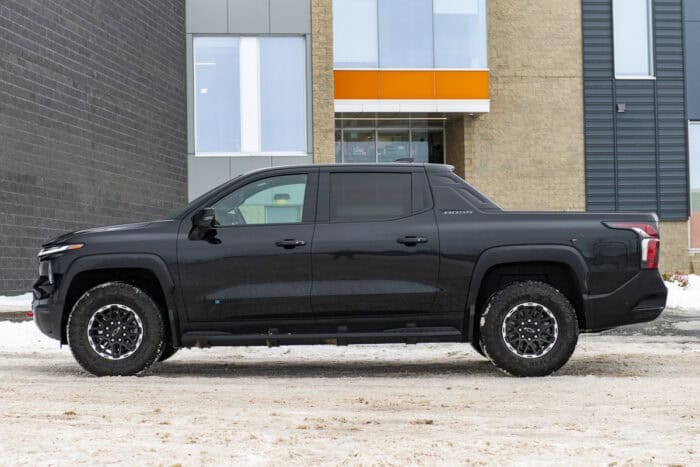
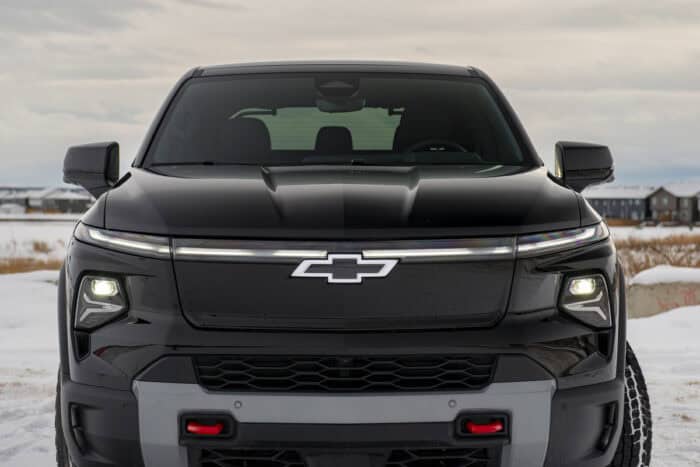
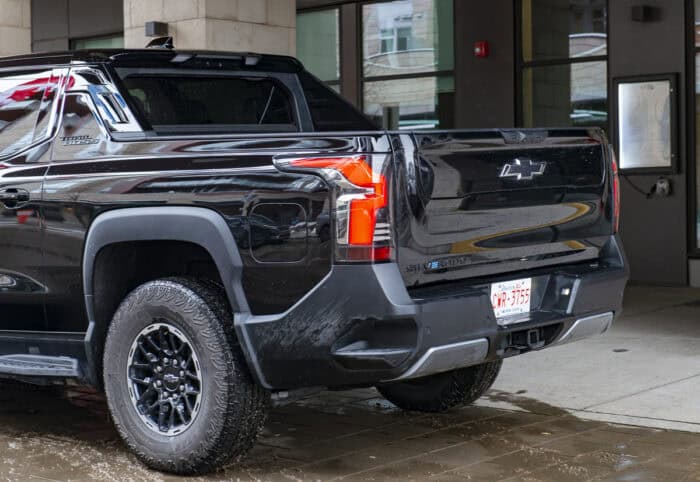
Imagine a futuristic Silverado: that’s pretty much how the Silverado EV looks. It seems ridiculous to call an 8,900-lb (4,037kg) truck ‘sleek’, but it is, in its way, assisted by the Avalanche-style flying buttresses. There’s practicality, too, in the form of the Multi-Flex Midgate – which extends the bed through into the cabin for longer loads – as well as multiple sockets in the bed to keep your power tools or tailgate-party-TV running. There’s also a 120V socket in the frunk, which is not big enough to hold a family’s weekly grocery shop, unfortunately.
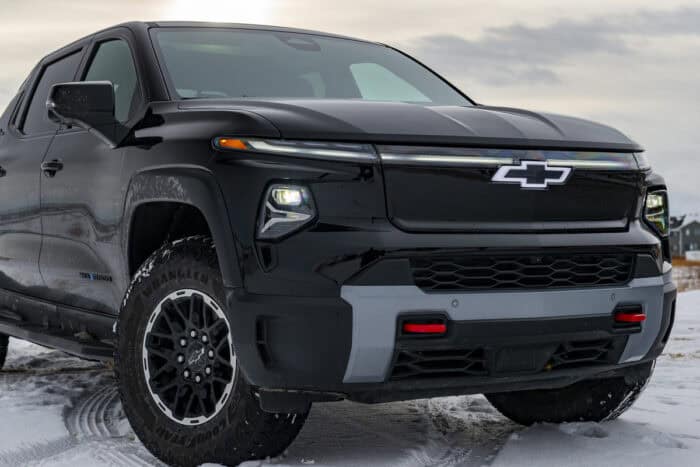
Despite its bulk, the truck has great maneuverability around town, or in and out of tight parking spots, thanks to the four-wheel steering system. Mostly the rear wheels turn in the opposite direction to the fronts, but like the Hummer EV, it’ll also perform a crowd-pleasing ‘crab walk’ if you fire up the Sidewinder mode through the main screen.
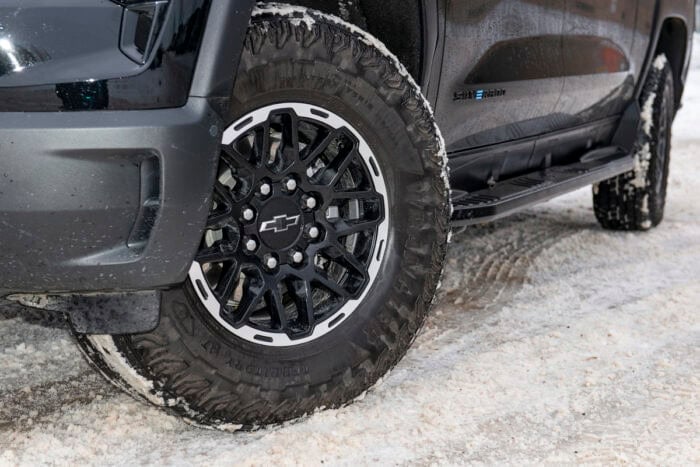
Also unique to the Trail Boss trim are a two-inch-taller ride height and knobbly sidewalled Goodyear A/Ts. You’d think that this combination ought to translate to poor wind and road noise, but the truck was surprisingly quiet on a highway run from Calgary to Banff. A closer look at the tires reveals a tread pattern that’s more range-extending all-season than off-road terrain-conquerer.
Range efficiency still favours smaller EVs
The truck’s impressive range does not make it more efficient than a smaller, lighter vehicle – it just has an enormous, 205-kWh pack. If saving the planet is your goal, there are better ways to do it: compared with the theoretically possible 3.75km/kWh, we averaged 3.1km/kWh, but an AWD Blazer EV, for example, will go about 50% further on the same amount of energy.
When it came time to top up, an Electrify Canada station delivered 76 kWh (336km/209 miles of range) in 39 minutes via the CCS connector, taking the truck from 46% to 76% full. From that charger on that day, the average 127 kW charge rate was considerably below GM’s stated maximum of 350 kW, so we added only around 52 miles every 10 minutes instead of the 100 miles quoted in the Silverado EV’s advertising. If you can’t plug in overnight on a Level 2 home charger, pick your public charger carefully. Huge batteries take lots of time to fill.
Silverado EV Cabin: Space-Age Frustration
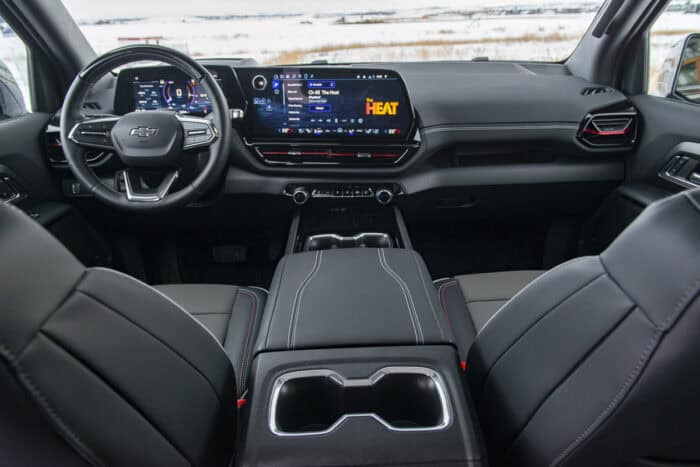
For anyone familiar with all but the very latest Silverados, the EV’s state-of-the-art cockpit might come as something of a shock. There’s a wide, wraparound screen to handle infotainment and vehicle settings, with a convenient, configurable mini-screen in front of the driver for the main instruments. The absence of a start button takes some getting used to.
Google apps (with voice recognition) are featured but there’s no Android Auto or Apple CarPlay because Chevy wants to integrate EV-specific functions like charge planning into the vehicle’s own apps. If, like me, you prefer to mirror your smartphone in the dash display, that’s disappointing.
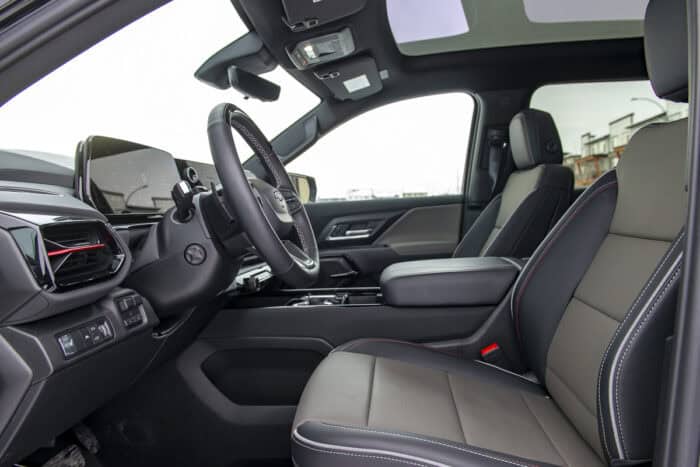
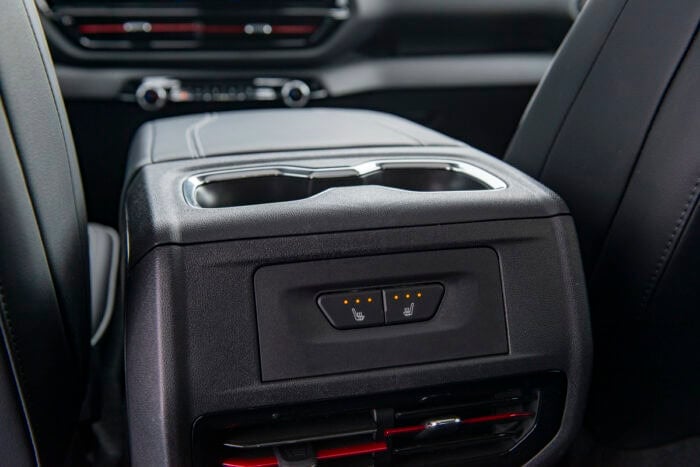
There is not as much front-passenger room as you might expect from an EV, but rear-seat occupants have an extra inch of legroom over a regular Silverado Crew Cab. A pity, then, that the rear seats felt a bit thin and a bit cheap for such an expensive vehicle. They flip up to enable the Multi-Flex Midgate, but the resulting floor space is not as useful as it might be, as it’s not flat and (in this case) houses the subwoofer. Overall, we felt the trim quality was decent rather than luxurious.
Takeaway: Will Chevy Truck Loyalists Buy the Silverado EV?
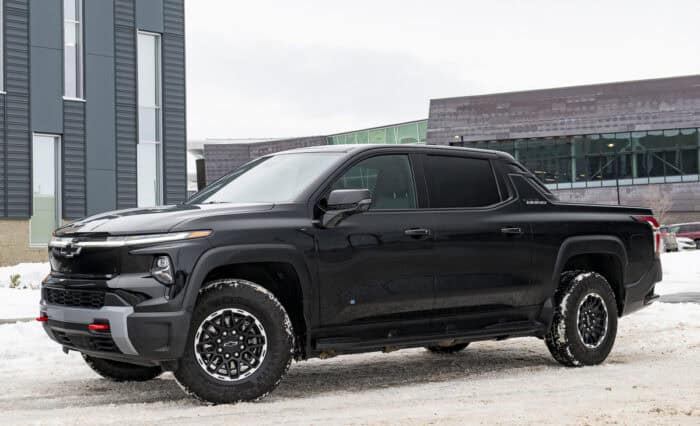
We enjoyed our time with the Silverado EV. It’s a likeable truck with some clever touches (Multi-Flex Midgate, four-wheel steer), but also some notable shortcomings (limited covered gear storage, no smartphone mirroring).
The awkward question of who-will-buy remains, though, and the abolition of the US$7,500 federal tax credit and iZEV incentives in Canada, won’t help. But for private buyers whose trips typically stay within a few hundred miles (that’s most of us), or municipalities and small businesses running truck fleets in urban areas (there are plenty), the Silverado EV’s quiet running, ability to deliver power to a job- or campsite, and zero local emissions, must be attractive to many more people than have bought one to date.
GM Canada says that more than 60 per cent of its EV buyers are new to Chevrolet, GMC, or Cadillac. Future success must surely lie not in conquests, but in convincing existing brand loyalists to make the switch.
2026 Chevrolet Silverado EV Trail Boss Photo Gallery