
When is a new tire not a new tire? When it’s the Michelin X-Ice Snow+. At least, that’s what you might think when glancing at this latest studless winter tire, which will be available to customers in plenty of time for the 2026-27 winter season. Demand for full winter tires remains high, according to Michelin, despite rapid growth in the all-weather market, especially in the US.
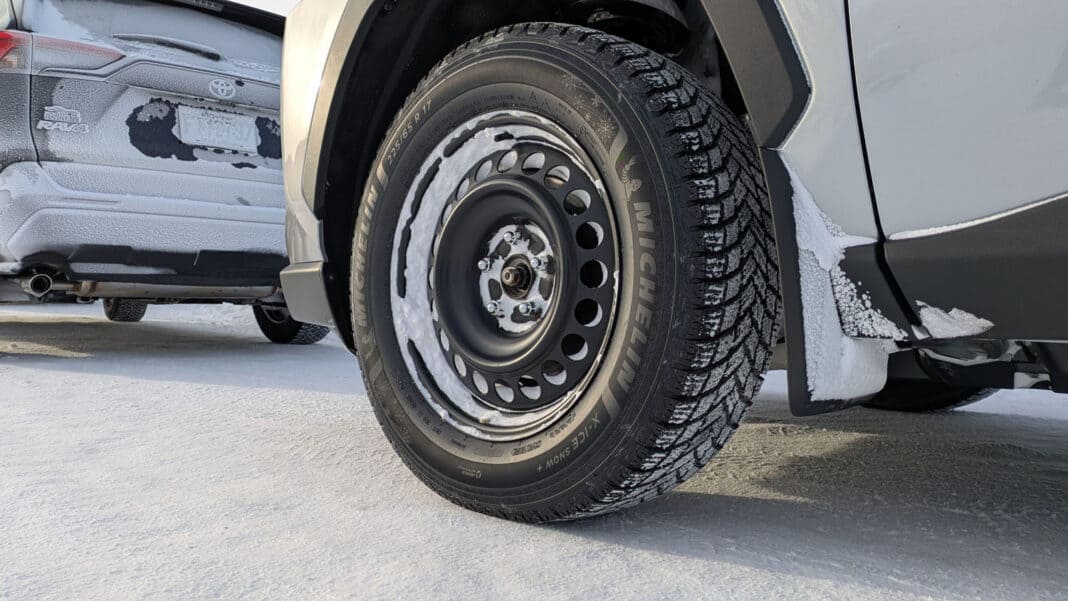
On the surface, the Michelin X-Ice Snow+ (we’ll call it the ‘Plus’ for simplicity) is near-identical to its popular predecessor, the no-plus Michelin X-Ice Snow, which the manufacturer says gets an average 4.7 customer satisfaction score in the biggest winter-tire markets (it’s also ‘Recommended’ by Consumer Reports). But beneath the carryover tread pattern lies an all-new rubber compound that pushes the tire’s performance even higher than before.
Quick Specs:
- Available Sizes: 14″–22″ wheel diameters (cars, CUVs, SUVs)
- Load Ratings: Passenger (P-metric) and SUV/CUV fitments
- Treadwear Warranty: Up to 60,000 km (40,000 miles) limited warranty (varies by size/application)
- Approx. Price: $110–$275 USD / $140–$350+ CAD per tire (size dependent)
- Certification: 3PMSF severe snow rated (studless winter tire)
Michelin’s VP of marketing for North America, Omer Waysman, told us that, with the performance level of even the cheapest tires rising, “We need to show the way, raise the bar, in all [areas of] tire performance, no matter the conditions.”
We were invited to test the new winter tire at the launch event in February 2026, held on the Mécaglisse tracks in Laurentians, Quebec. Here’s what we discovered.
Design and Features: Michelin X-Ice Snow+
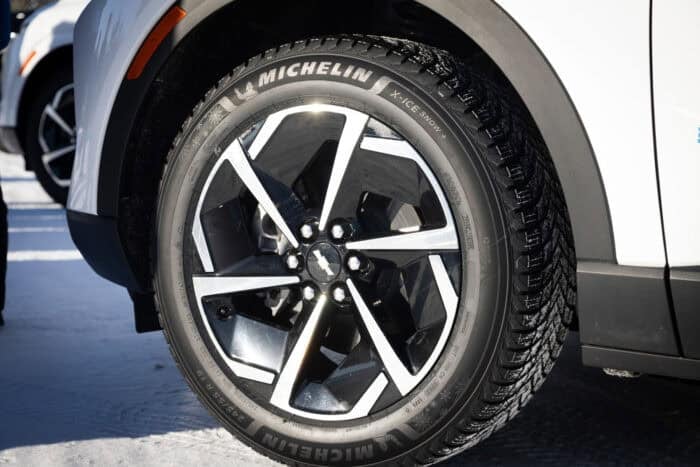
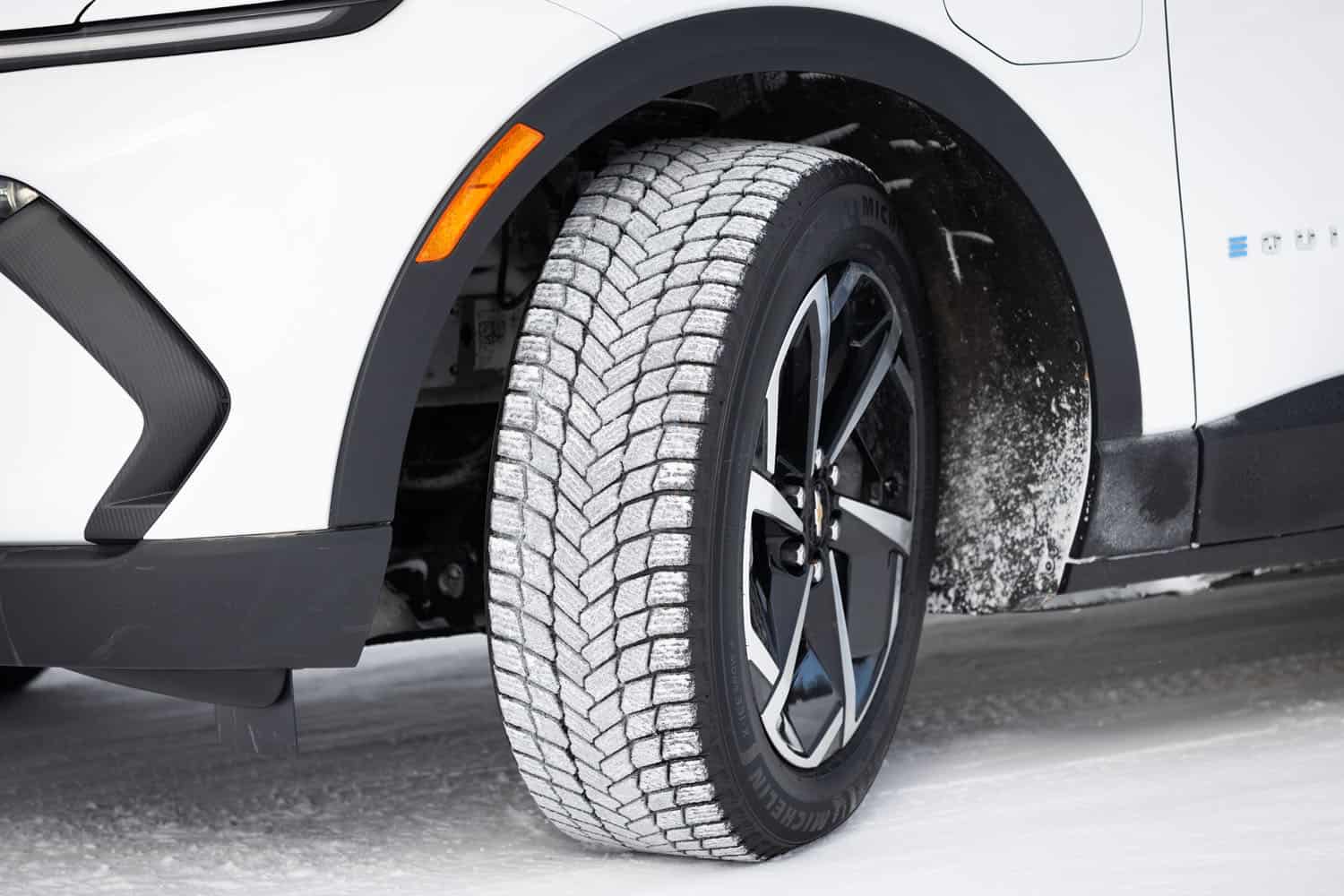
Michelin_8O7A0882: X-Ice Snow+ on an Equinox EV. Michelin was happy enough with the new tire’s quietness not to add sound-deadening foam to the inside
Michelin is notoriously tight-lipped when it comes to the technical details of its tires. All it will say about the X-Ice Snow+ is that, compared with its predecessor, it has a new elastomer (that’s the rubber at the heart of the tread compound), a new type of oil, and a tweaked silica filler. It calls the new formulation Flex-Ice 3.0.
The X-Ice Snow+ will be sold around the world, including in North America. It starts shipping to dealers from May 2026 and will be available in 80 of the most popular sizes during the first phase of its launch, representing 72% of market volume.
All tires generate grip mechanically (through the tread pattern design) and chemically (from what’s inside). How the tire flexes and how it responds to temperature changes are two factors determined by its ingredients, and affect chemical grip. In the case of the Plus, it’s the increased chemical grip that delivers the performance improvements over the outgoing model, notably 14% more grip when braking on a wet surface, 7% more on dry pavement and 4% more on ice, according to Michelin-commissioned tests carried out by independent German test house, TÜV SÜD.
Impressively, the new compound does not appear to trade grip for mileage or rolling resistance. Michelin already offers a 60,000km/40,000-mile warranty on the outgoing X-Ice Snow and says that number will increase, but it hadn’t released the figure at the time of writing. It says the tread wear is now 26% longer lasting than the closest competitor in this area of performance, the Continental VikingContact 8. It commissioned external wear testing on a public road near Narbonne, France, to verify the claim.
Further independent testing established the X-Ice Snow+ as having less rolling resistance – which leads to greater fuel efficiency or, for an EV, extended electric range – than three leading competitors: the VikingContact 8, Bridgestone Blizzak DM-V2, and the Nokian Hakkapeliitta R5 SUV. Again, the Conti ran the Michelin closest, being only around 7% less efficient.
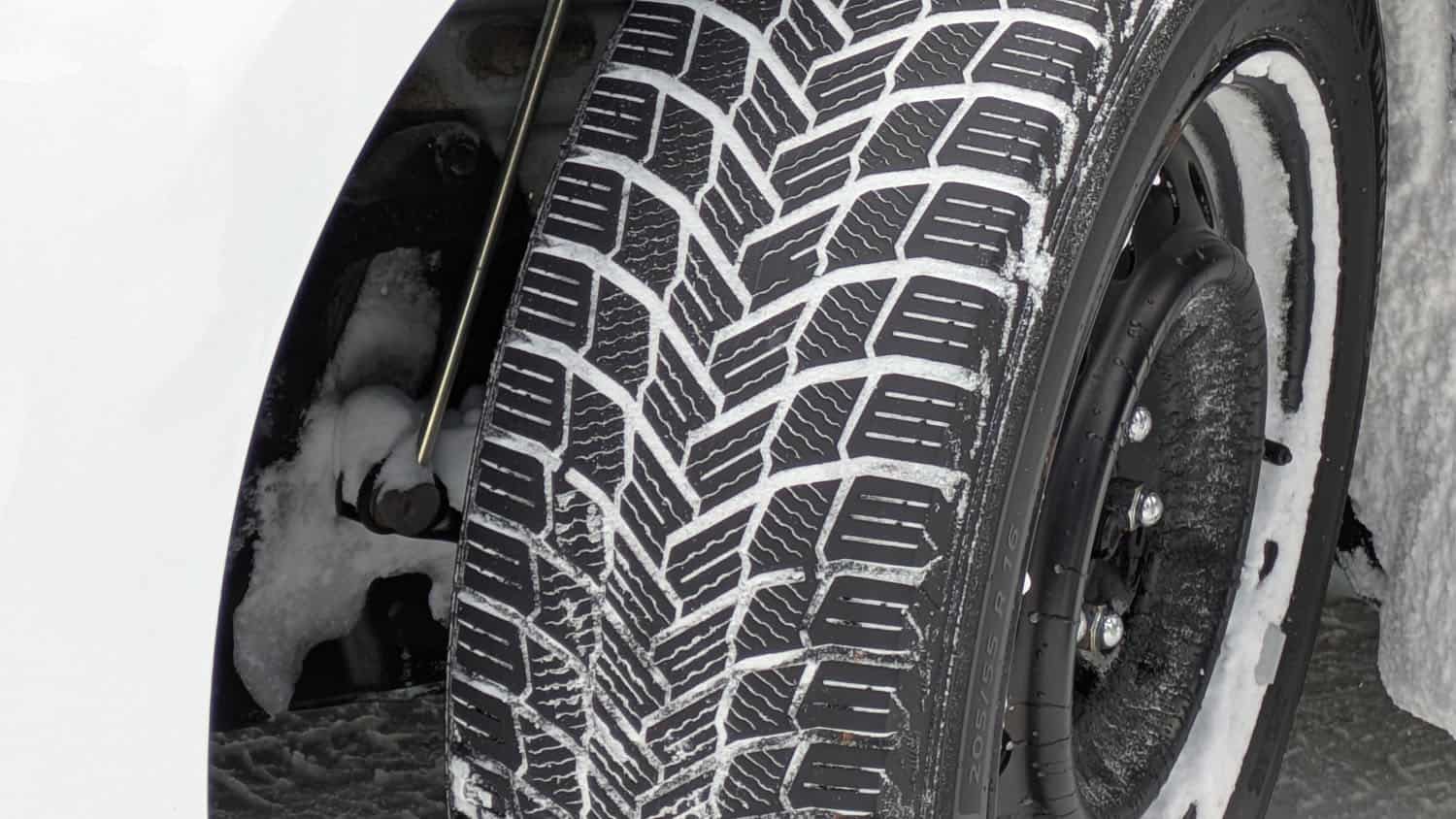
While the tire’s chemical grip has changed significantly, the carryover tread design means its mechanical grip has not. Michelin’s product category manager for the winter segment in North America, David Griese, told us that, despite exploring alternatives, Michelin decided not to mess with a winning formula, as the current pattern performs well and is a favourite with a dealers and customers.
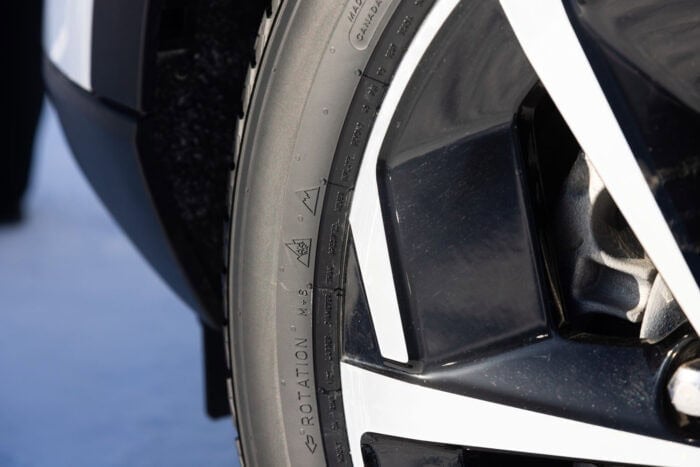
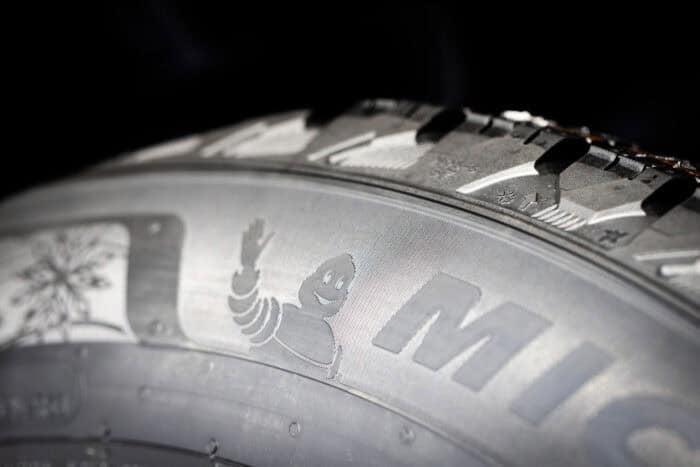
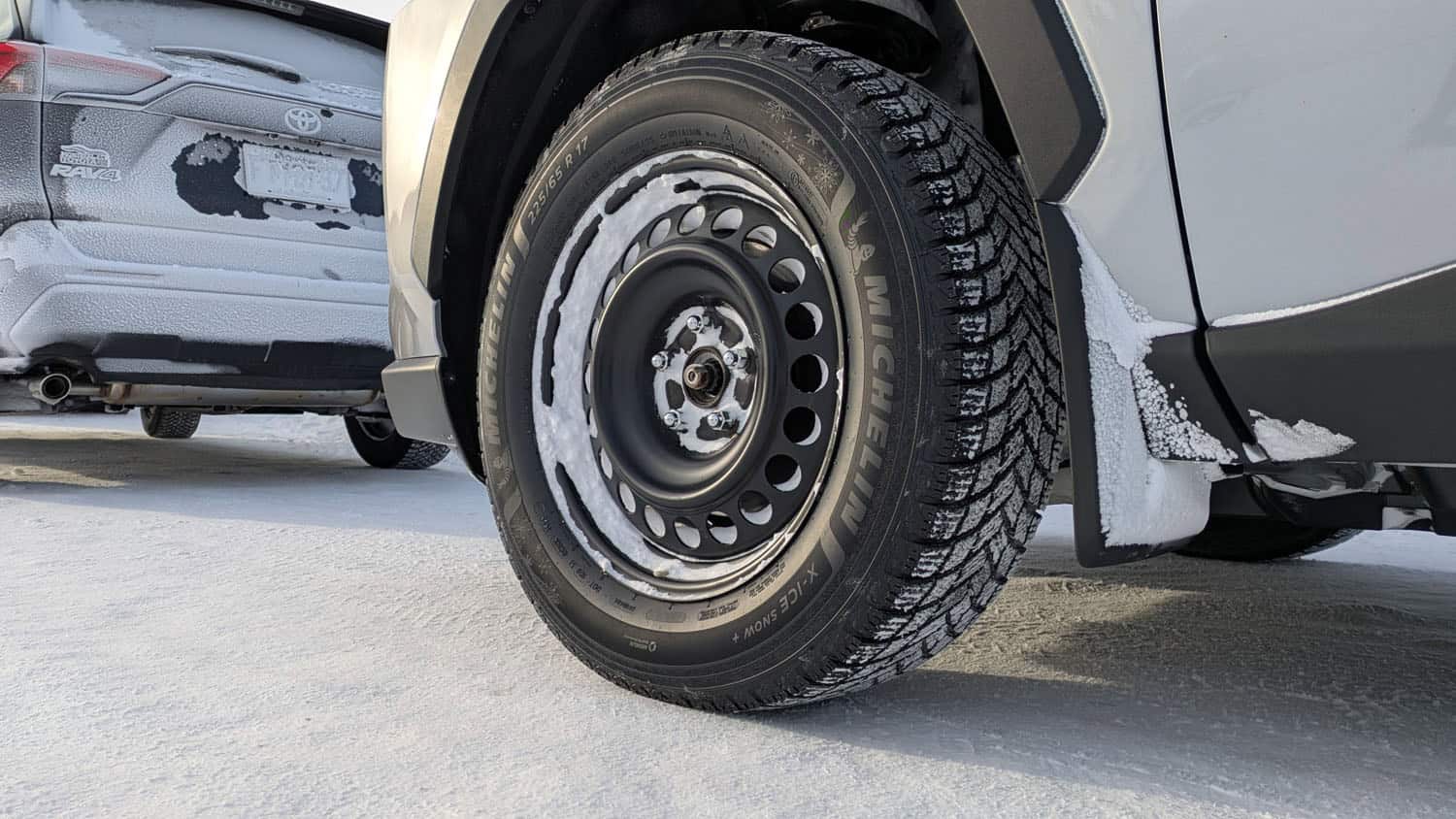
The sidewall design has been revised, however, with a nifty new snowflake pattern and – more importantly – two performance markers. These are the familiar 3-Peak Mountain Snowflake (3PMSF) designation – which even many all-weather tires are able to attain – and the newer Ice Grip Symbol (IGS), a tougher ice-braking test to an ISO standard.
Interestingly, Michelin has shied away from putting an ‘EV’ label on the sidewall, even though the upgraded tire is suitable for EVs, with the vast majority of sizes bearing the ‘XL’ load rating in addition to the aforementioned treadwear and rolling-resistance performance. Says Griese, “We feel like we have a tire that would suit an EV consumer very well, but is also something that an ICE driver would be looking for. It’s simpler to have one tire that suits both, without adding the complexity of different EV marks or a dedicated line. There is also no international standard for an EV-ready tire, which is one reason we’ve chosen not to put it on the sidewall.”
Testing the Michelin X-Ice Snow+
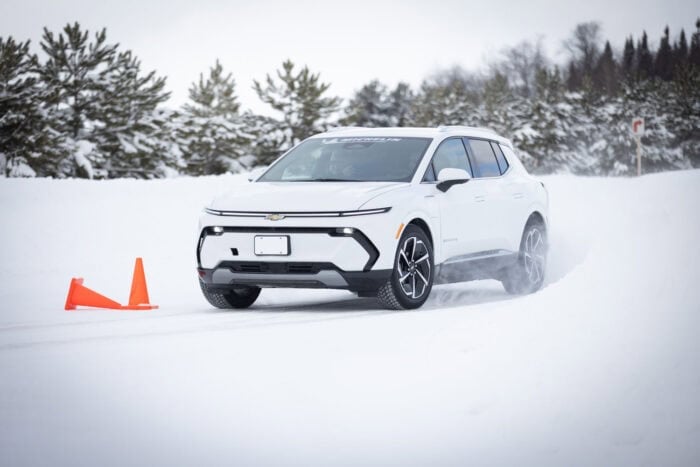
So, how does this all impact on the Plus’s performance on snow and ice? At the launch event, during which the ambient temperature was around -15°C (5°F), Michelin laid on a variety of tests against competitor tires so that we could see for ourselves how the newcomer stacks up against some of its biggest rivals.
We should say that all of the driving impressions that follow are subjective and the tests were not instrumented. Nevertheless, they give some idea of the Plus’s performance relative to rivals, in different situations.
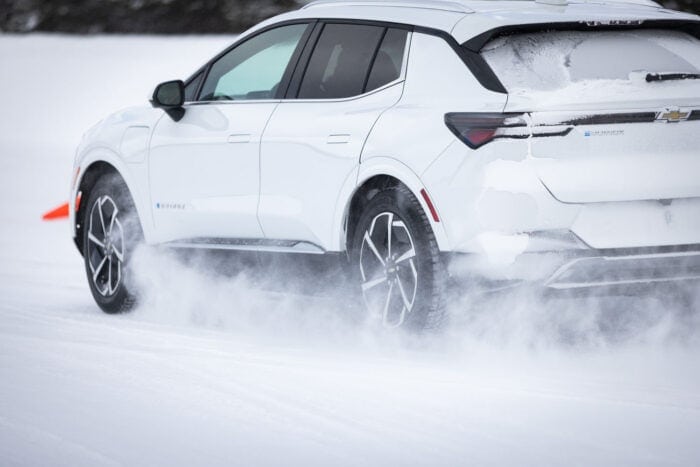
First was a handling course on a slightly icy, packed-snow track in Chevrolet Equinox EVs shod with the Continental VikingContact 8, Nokian Hakkapeliitta R5 SUV and the new Michelin. We found there was clearly less lateral (cornering) grip from the Conti, especially as the loads rose with higher speeds, but that the performance of the Nokian and the Michelin was very similar in this test.
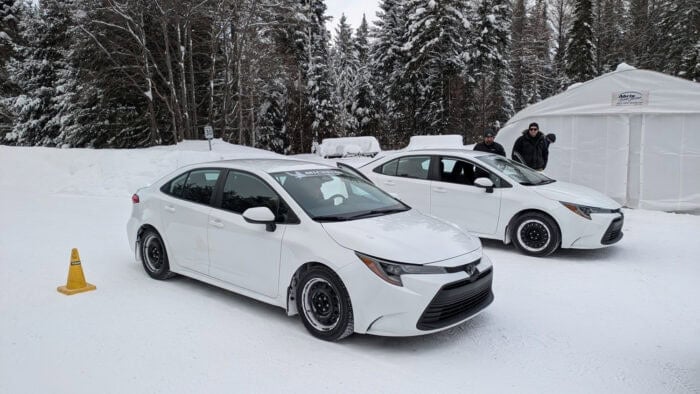
Next, we climbed aboard two FWD Toyota Corolla sedans to drive a winding road in deep snow (about 10-15cm/4-6in). One car had the Michelins, the other Bridgestone Blizzak WS90s; all had been buffed down from the as-new tread depth (about 10.5/32in in the case of the Plus) to 4/32in, which is above the legal limit in North America, but about the point you should consider replacing the tires.
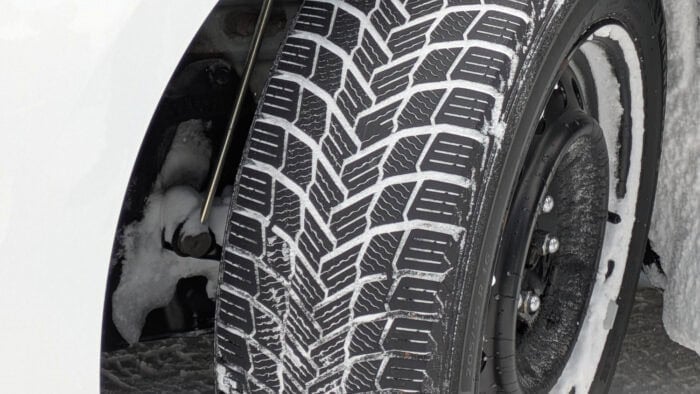
The sipes in the tread of the Michelin extend right to the base of the tread blocks, whereas on the Bridgestone, they stop short, and were barely visible on our test tires. As such, it was easier for the Corolla to maintain progress and change direction with the X-Ice Snow+. It was likewise much easier to make a hill start with the Plus, when exiting the course.
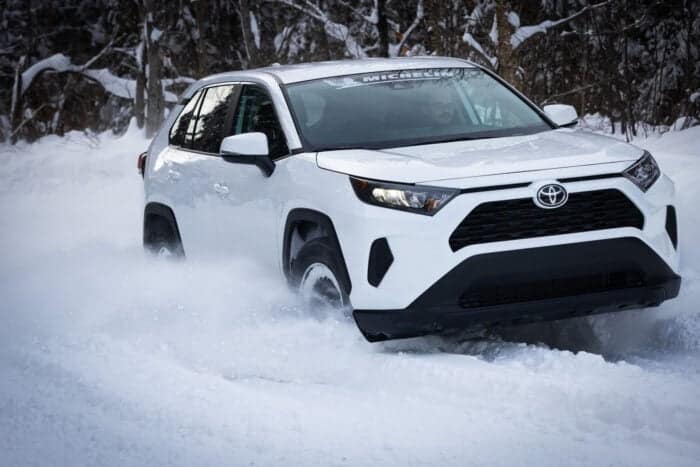
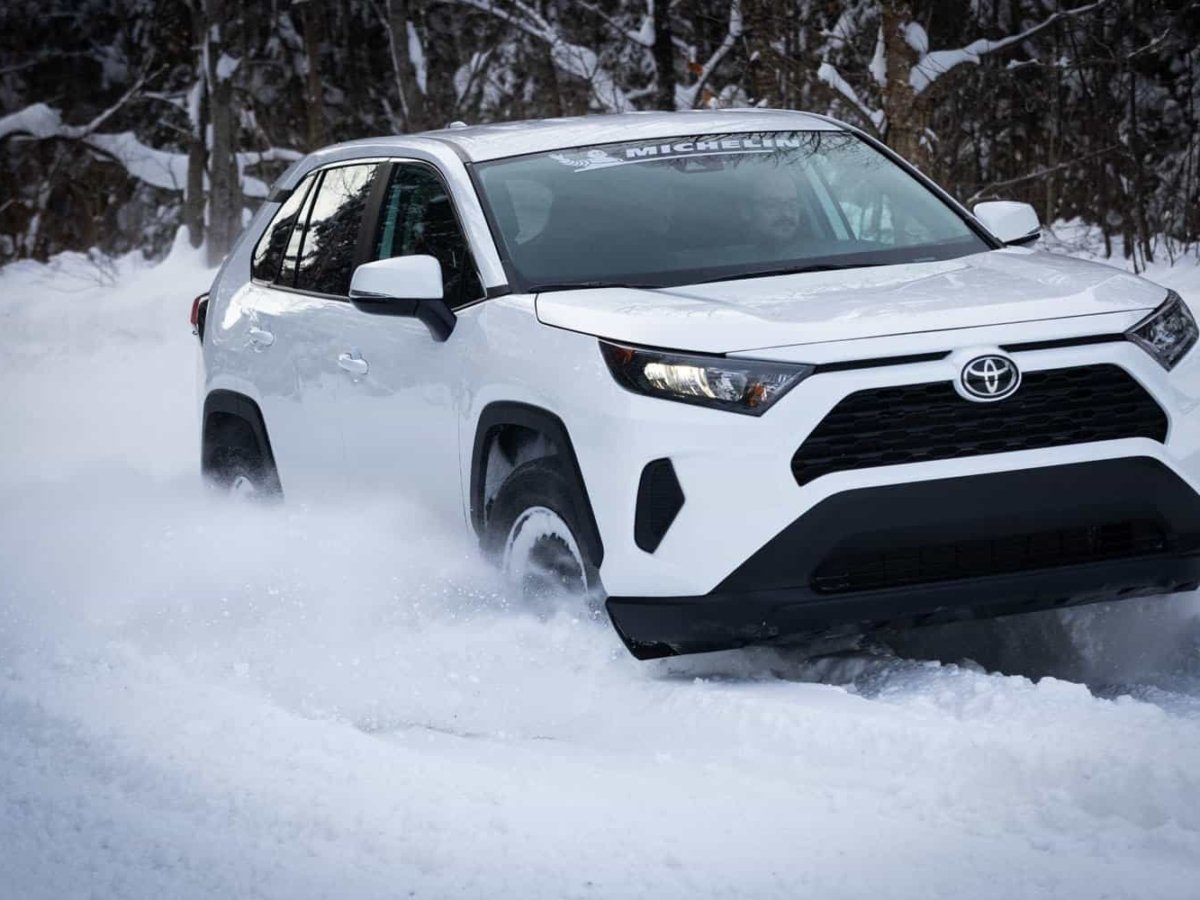
Finally, we drove in deep snow on a winding road, in Toyota RAV4s fitted with as-new Michelins and VikingContact 8s. We found no obvious difference between the two tires in this scenario.
Sizing and Availability
The X-Ice Snow+ will be sold around the world, including in North America. It starts shipping to dealers from May 2026 and will be available in 80 of the most popular sizes during the first phase of its launch, representing 72% of market volume. A further 65 sizes will follow in May 2027. Chances are, there will be a Plus to fit your vehicle.
Notable among this multitude of sizes are fitments in the increasingly popular 18in-plus market, with Michelin now catering for rims up to 23in. Performance vehicles will also be better served by the improved X-Ice Snow+. Where the predecessor tire’s speed ratings by size are about a 60/40 split between T and the higher-speed H rating, the new line is almost all H-rated. The only size with a T will be the 195/65 R15.
Takeaway






The outgoing Michelin X-Ice Snow was already an excellent winter tire and the improved X-Ice Snow+ improves it. In our testing, and in Michelin-commissioned independent testing, it also performed well against some of its major rivals.
But the tire market does not stand still and Michelin is not the only tire maker upping its game. In the very same week that we tested the X-Ice Snow+, Bridgestone presented the tire that will replace the long-running Blizzak WS90 and DM-V2 models – the Blizzak IcePeak. So while the latest Michelin has demonstrated a handy performance advantage over these two older rivals during our tests at Mécaglisse and in independent testing, it’s a certainty that the brand-new IcePeak’s performance will be much closer to that of the updated X-Ice Snow+.
It’s also true to say that none of the rival tires we tested during this event are ‘bad’ winter tires. Products from premium tire makers like Bridgestone, Continental and Nokian are almost always solid bets (for the record, the author owns four sets of tires that are used in summer and winter across two vehicles – from Bridgestone, Conti, Michelin and Nexen). But that’s not to belittle Michelin’s achievement with the X-Ice Snow+, which has all the ingredients to maintain its predecessor’s position as a consumer favourite.