
Pros:
- Class-leading cargo space and practicality
- Strong value with lots of tech and features
- Available AWD with confident all-weather capability
Cons:
- Base 2.0L engine lacks power
- Dual-clutch can feel rough in traffic
- Not the most engaging drive in the segment
Austin, TX – Here we are again with yet another crossover vehicle. Consumers keep asking for them, and carmakers are delivering.
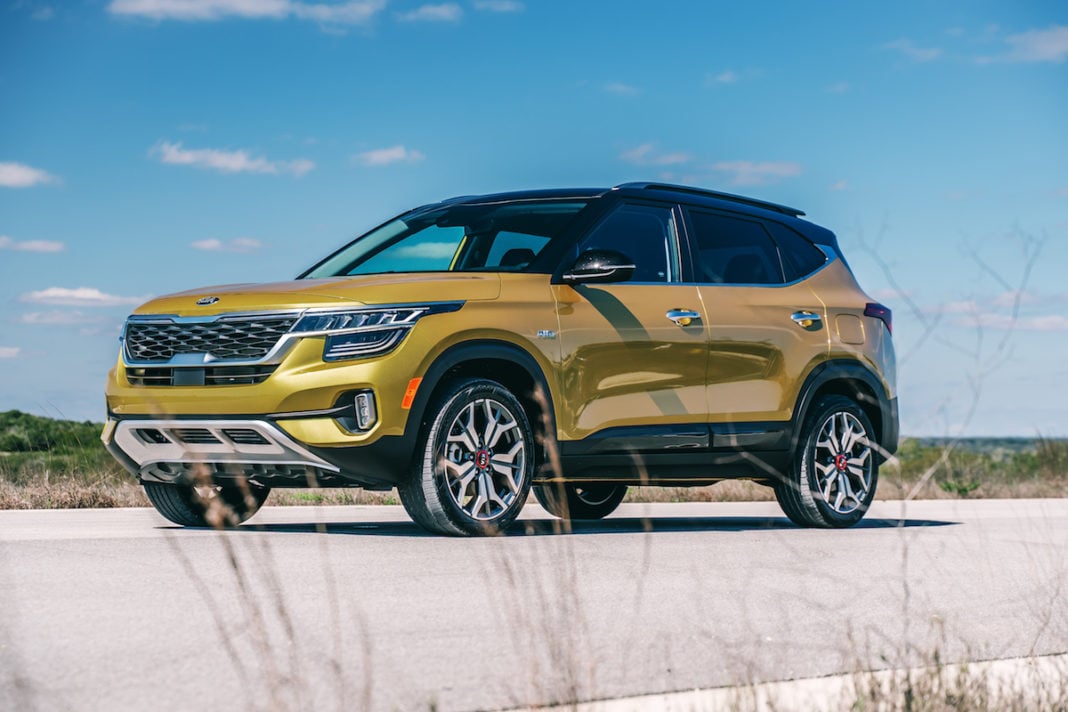
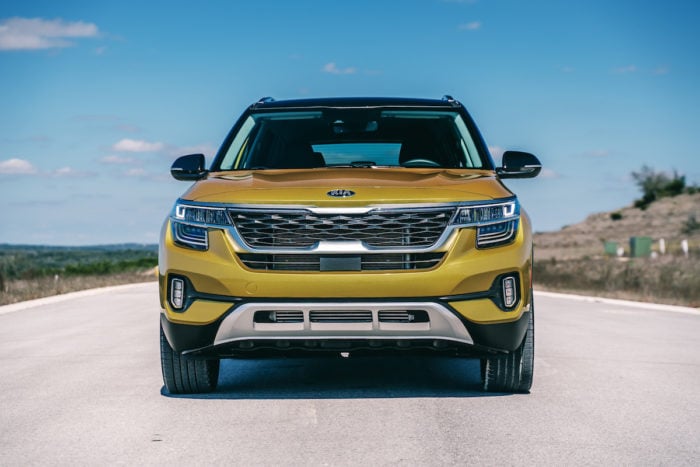
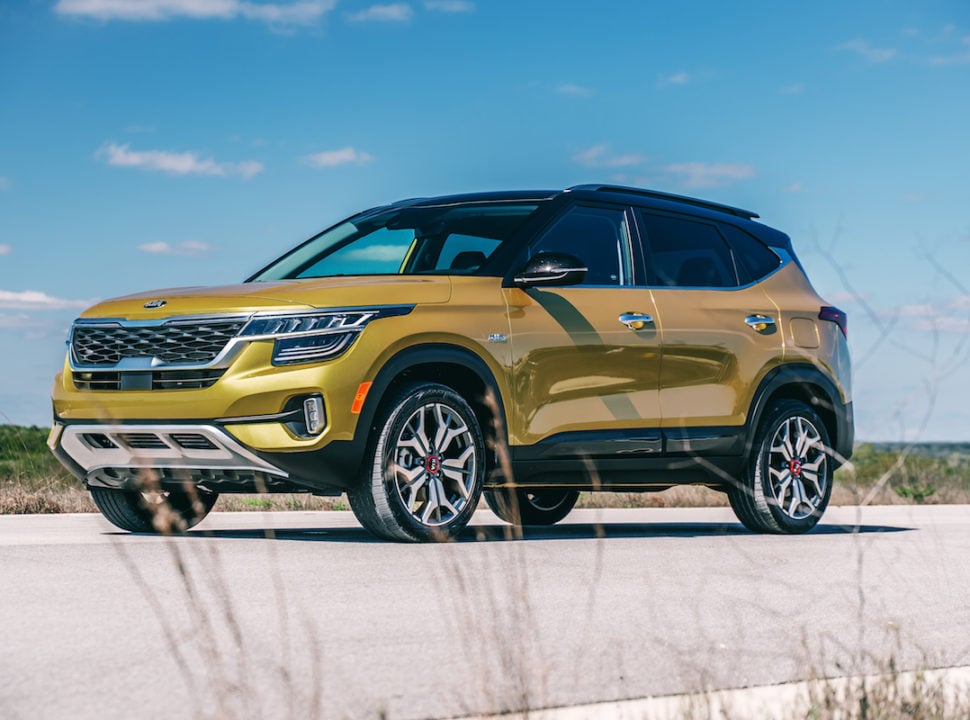
Kia currently offers five of these things, ranging from the cute and boxy Soul to the large and ostentatious Telluride. But that doesn’t seem to be enough, as Kia introduces the Seltos, a new subcompact offering put here to take on an ever-evolving crowd. It squeezes its way between a Niro and Sportage within the brand’s lineup, ready to battle the Mazda CX-30, Nissan Rogue Sport / Qashqai, Honda HR-V, Ford EcoSport, Jeep Renegade, Mitsubishi RVR, the upcoming Chevrolet Trailblazer, and its own corporate cousin, the Hyundai Kona.
We got up close with the new Seltos at its global debut in LA. Now, we headed down to Austin, Texas, to take it for a spin during its official North American debut.
Related – Kia SUV Models Up Close: Smallest to Biggest
What Is the 2021 Kia Seltos? Size, Positioning & Competitors
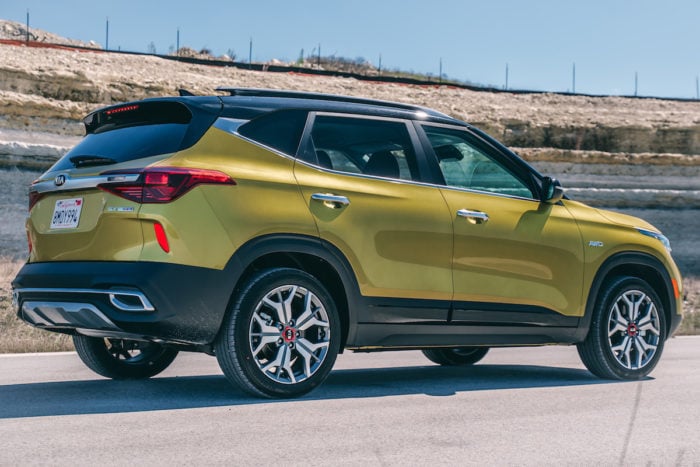
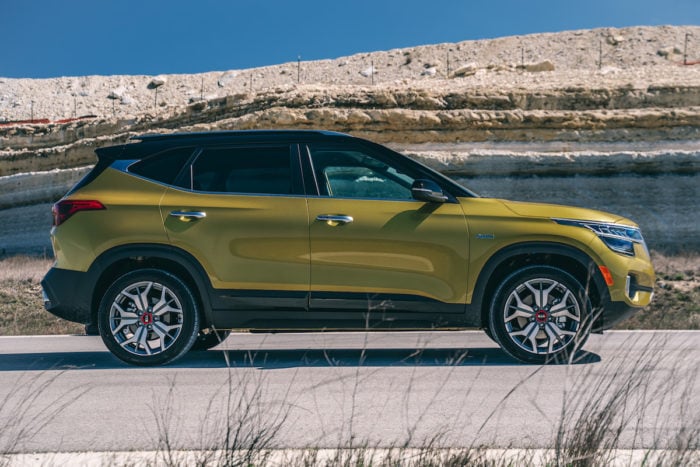
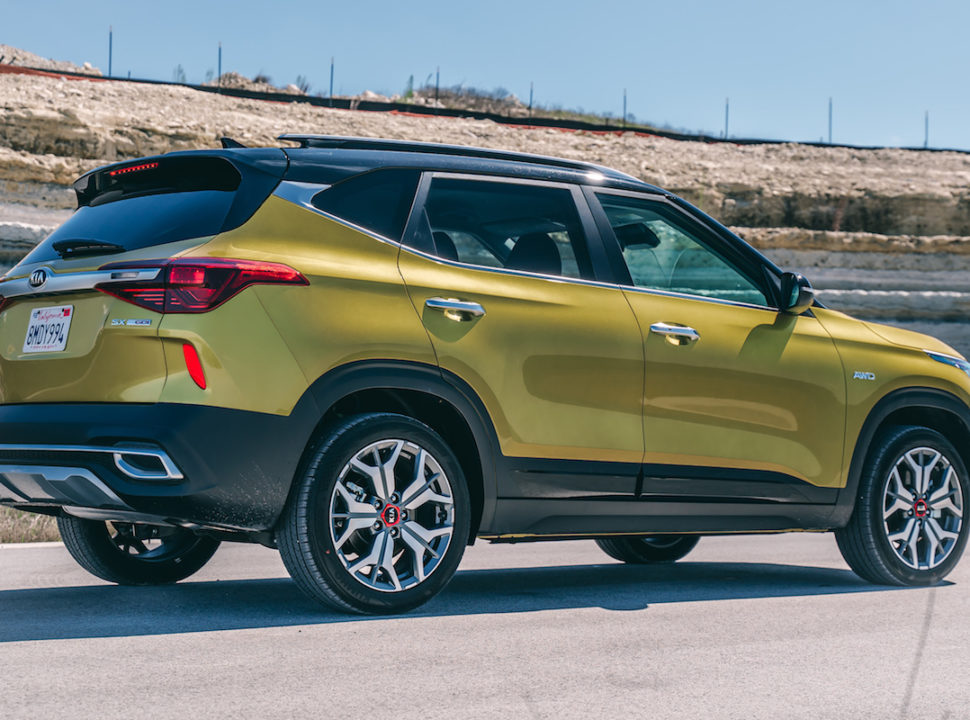
You may think the Seltos is essentially a rebadged Hyundai on which the Korean giant slapped a different grille and logo. But you’d be wrong. While yes, it rides on the same architecture as a Kona, its wheelbase was considerably stretched and widened to provide substantially more passenger and cargo space. Its roof is also taller and more angular, allowing for better ingress and egress for tall passengers.
Key Competitors: How the Seltos Fits the Segment
| Model | Segment Position |
|---|---|
| Mazda CX-30 | Premium-leaning subcompact |
| Honda HR-V | Practical subcompact |
| Nissan Qashqai (Rogue Sport) | Balanced compact |
| Subaru Crosstrek | Rugged subcompact |
| Hyundai Kona | Smaller sibling |
| Ford EcoSport | Entry-level crossover |
| Jeep Renegade | Off-road subcompact |
Interior, Space & Features
Cargo Space & Practicality
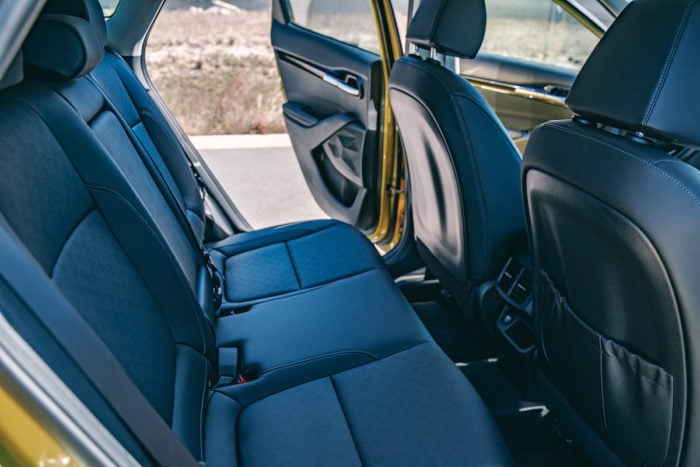
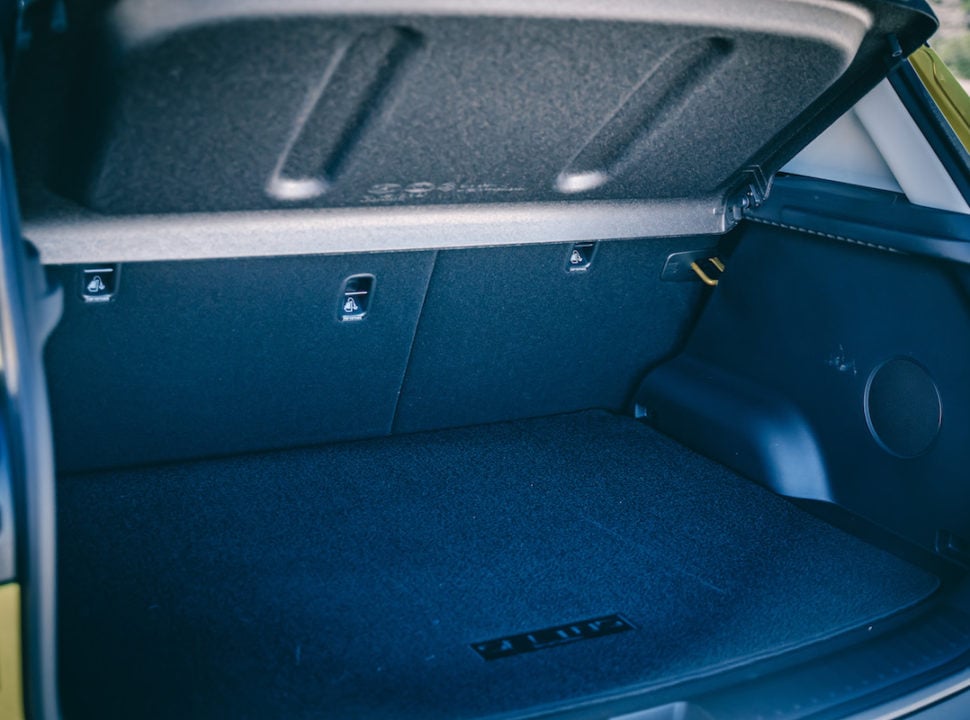
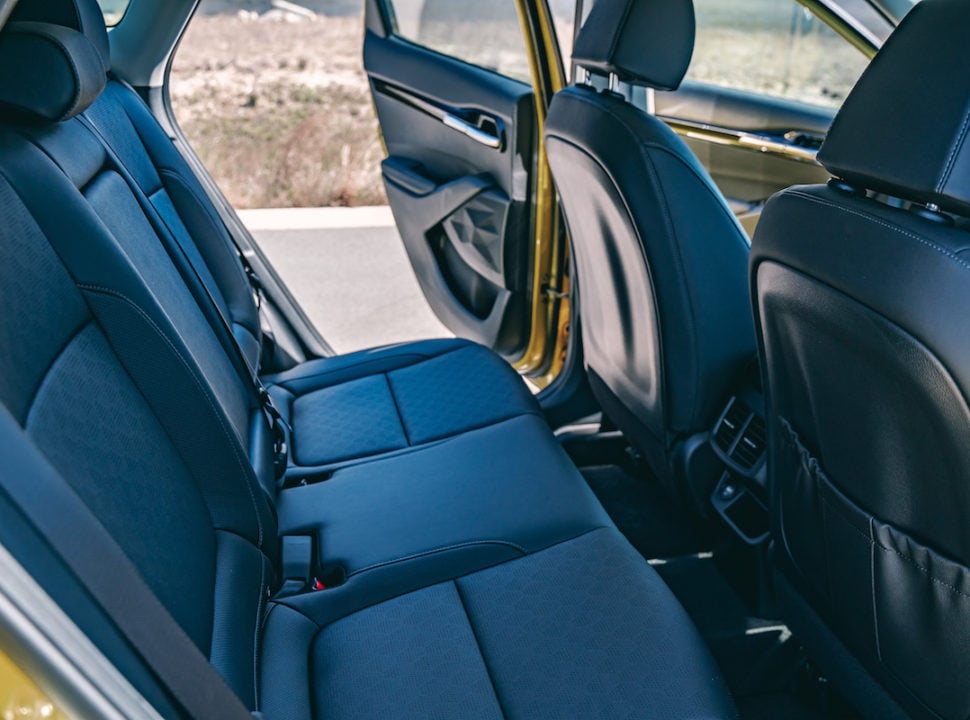
Such dimension-bloating allows the Seltos to present itself as a beefier vehicle overall, offering the highest cargo space in the segment, with a trunk that’ll swallow 752 liters of your gear. Push that rear seat down to the floor, however, and Kia’s Greek-named crossover beats the class leader, the Nissan Qashqai (1,730 liters), with its 1,778 liters of total cargo space.
Cargo Capacity (Segment Comparison):
- Kia Seltos: 752 L (seats up) / 1,778 L (seats folded)
- Nissan Qashqai: 648 L / 1,730 L
- Mazda CX-30: 572 L / ~1,280 L
- Hyundai Kona: 544 L / ~1,296 L
Technology & Features
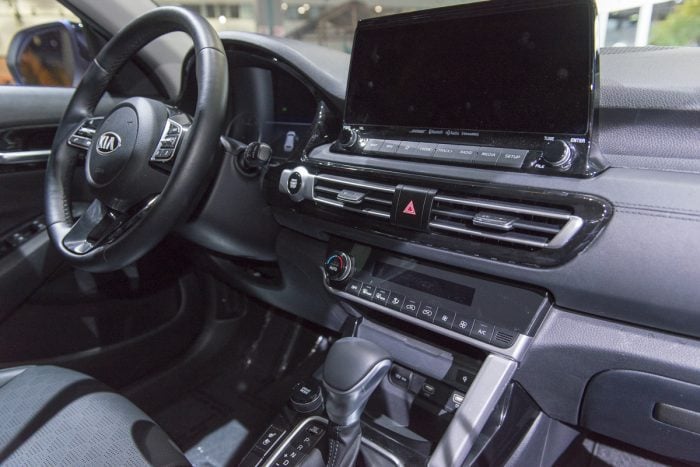
And the toys this Kia has! While small and relatively affordable, consumers can choose from a full plethora of neat tech and creature comforts, such as leather heated seats, dual phone connectivity, “locking” differentials, and ambient relaxing noises channeled through the car’s optional Bose audio system.
We’re not sure about that last one, but Kia is at least trying something new that should please the vehicle’s target demographics.
Related – The Kia Seltos Has a Smarter Cabin Than You’d Expect
Engine Options, Specs & AWD System
2.0L Engine: Efficient but Unexciting
Two engines power it, and both can be had with all-wheel drive. Entry-level cars are propelled by a naturally aspirated 2.0-liter four-cylinder good for 146 horsepower and 132 lb-ft of torque; an engine that’s essentially taken directly out of the Kia Forte. It can only be mated to a continuously variable automatic gearbox Kia calls iVT, whether you opt for front or all-wheel drive.
SX Turbo: More Power, More Character
Then there’s the top-shelf Seltos SX Turbo which spices things up by way of a turbocharged 1.6-liter four, pumping out a claimed 175 horsepower and 195 lb-ft of torque and coupled to a seven-speed dual-clutch automatic gearbox. The turbo engine only comes with all-wheel-drive.
Ride, Handling & Steering Feel

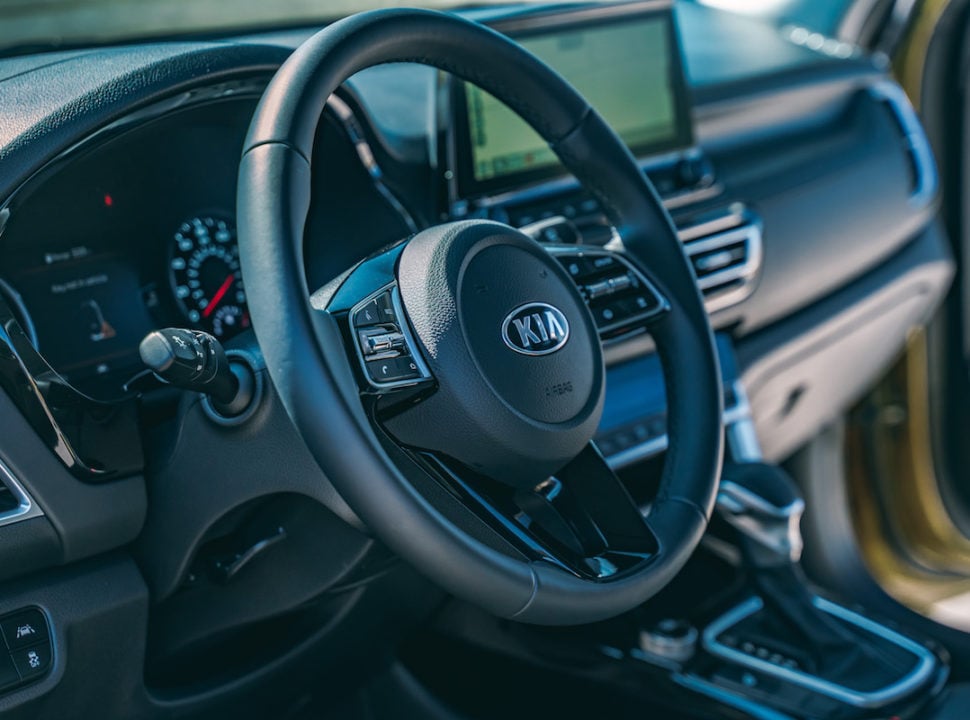
It doesn’t take long after driving the 2021 Kia Seltos to realize how well Kia understands what consumers want. Its standout features are impeccable build quality and a comfortable cabin, which make you wonder why competing brands haven’t managed to do something this good.
While far from a sports car, the Seltos’ driving experience has a dynamic charm to it that entices you to drive it like a hooligan. Handling is playful, the steering has an enjoyable level of resistance, and the suspension sits on the fence between too stiff and too wobbly. It feels, dare we say it, European.
Manual vs Automatic Feel (CVT & DCT)
The base 2.0-liter engine isn’t an exciting unit, but it gets the job done in a frugal and efficient manner. Same for the CVT gearbox, which simply works. Push the Seltos hard when exiting a corner, and this little bugger sticks to the pavement, instantly up the revs, and lets you thrash it without punishing you for doing so. We congratulate Kia for adding drivability to a vehicle that was never intended to offer it.
But the icing on the cake really is the turbocharged engine. While we wish it were available in lower trim levels, it’s a feisty little piece of engineering that, despite a fair bit of turbo lag, punches well above its weight once it starts boiling. The dual-clutch gearbox delivers near-Volkswagen DSG levels of precision, but we did find it rough around the edges in stop-and-go traffic, especially when the vehicle is set to Sport mode.
Is the 2021 Kia Seltos Reliable? What to Know
For today’s buyer, the 2021 Kia Seltos has proven to be a generally solid and dependable choice in the subcompact SUV segment. It benefits from Kia’s strong reputation for value and long-term ownership confidence, backed by one of the industry’s best warranties. Most owners report few major issues, and the Seltos’ straightforward design and proven components help keep running costs predictable over time.
That said, it’s not without a few considerations. The base 2.0L engine and CVT are reliable but uninspiring, while the 1.6L turbo with the dual-clutch transmission delivers better performance but can feel less smooth in stop-and-go driving. Overall, though, for buyers prioritizing practicality, all-weather capability, and feature content, the Seltos remains a smart and low-risk choice on the used market.
Takeaway







Pros
- Class-leading cargo space and practicality
- Strong value with lots of tech and features
- Available AWD with confident all-weather capability
Cons
- Base 2.0L engine lacks power
- Dual-clutch can feel rough in traffic
- Not the most engaging drive in the segment
As we kept flogging this little Kia through the vast and sunny Texan countryside, we couldn’t help but admire the brand’s near-fanatical attention to its value proposition. While material quality is like its rivals, their overall presentation is clearly more creative, with clever use of unique surfaces and color-contrasting designs that fool the eye into believing Seltos is worth much more.
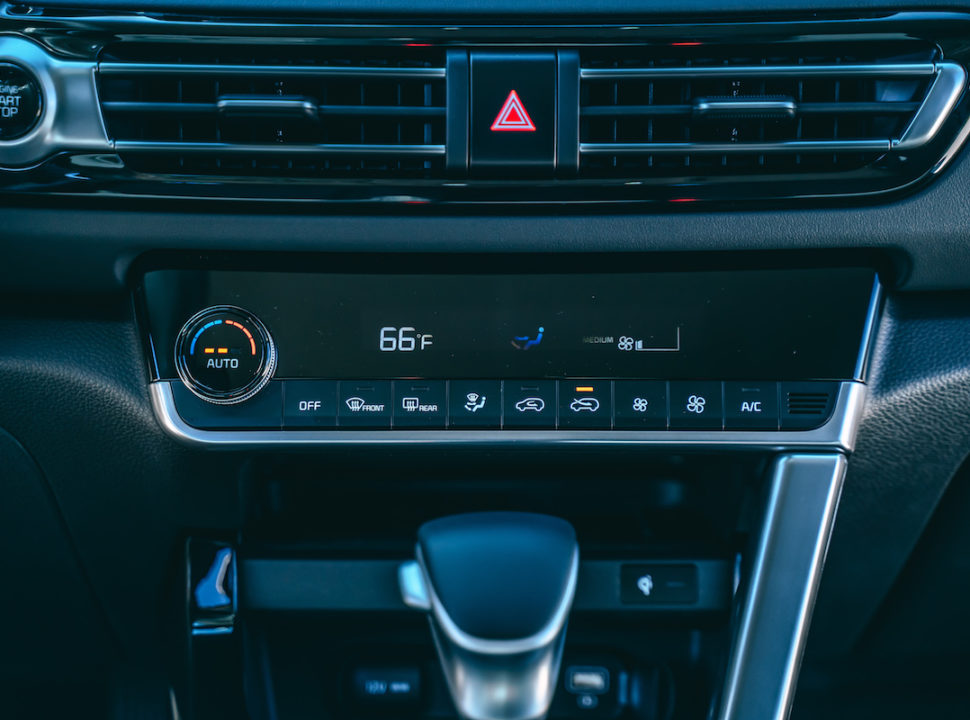
Finally, we continue to adore Kia’s straightforward and downright brilliant infotainment interface which can be operated through its touch-operated interface or redundant physical controls. The 3D navigation system also proved useful as we tried to make our way out of a congested downtown Austin.

Any flaws? It’s been a long time since we drove a car in which we needed to dig for some issues. We could say the 2.0-liter engine is noisy when pushed, that the dual-clutch gearbox could be smoother and we wish the turbo engine was available for less money. Heck, we could even complain that it’s not offered with a manual transmission. But these are all minor details the targeted consumer will probably never notice.
All in all, the 2021 Kia Seltos is yet another value-packed Korean homerun that’ll hit the industry hard as it makes its way to North American showrooms this Spring.
Shopping for a new crossover? Check out our 2020 Best Small SUV & Crossover Guide here.