
The internet has already made up its mind about the new BMW M5. It’s heavy. It’s hybrid. It’s quieter than it should be. And depending on who you ask, that’s either progress or sacrilege. But spending real time with the seventh-generation M5 tells a more nuanced story. One BMW likely anticipated when it decided to push its most famous super sedan into unfamiliar territory. Because let’s be clear: BMW was never going to let the M5 go soft.
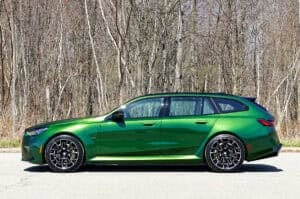
Related – 2025 BMW M5 Touring Review: Space for Kids, Speed for Dad
A Hybrid M5, But Not a Compromised One
- Engine: 4.4-Liter Twin-Turbo V-8 With Electric Motor
- Horsepower: 717 hp
- Torque:738 lb-ft
- Transmission: 8-Speed Automatic
Yes, the 2025 M5 full-size sedan gains weight. Yes, it plugs in. But it also keeps a twin-turbo V8, adds instant electric torque, and delivers more than 700 horsepower, making it the most powerful M5 ever built. Numbers aside, what matters more is how all of this comes together behind the wheel, and whether the soul of the M5 survives the transition. After driving it both on track near BMW’s Spartanburg facility and on public roads, the answer is more straightforward than the headlines suggest.
Learning to Appreciate Silence in an M Car
The M5 now offers up to 25 miles of all-electric range, enough to glide silently through a neighborhood or knock out a short commute without waking the V8. It’s odd, really, not hearing the 8-cylinder grumble. But it’s also oddly satisfying. The car doesn’t feel neutered; it feels restrained, waiting. And when the V8 wakes up, there’s no mistaking what kind of machine this still is.
The 2025 BMW M5 isn’t the purist’s dream, but it was never meant to be.
The electric motor sharpens everything up, filling gaps with immediate torque and quick transitions that feel purposeful rather than gimmicky. It’s a car that can creep through traffic like a luxury sedan, then snap into something far more aggressive with a few deliberate inputs.
Big, Wide, and Surprisingly Agile
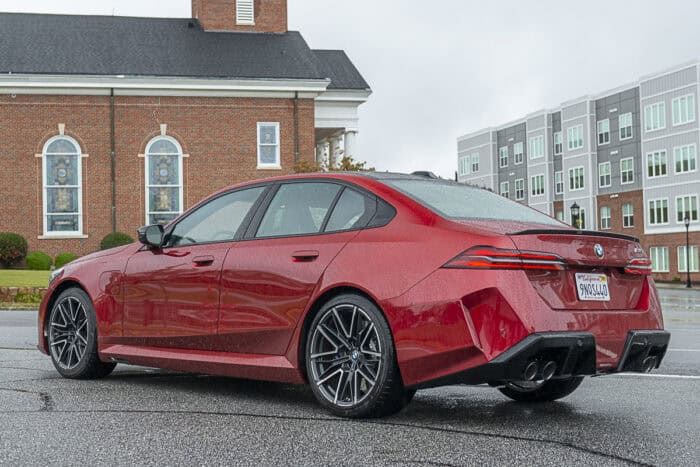
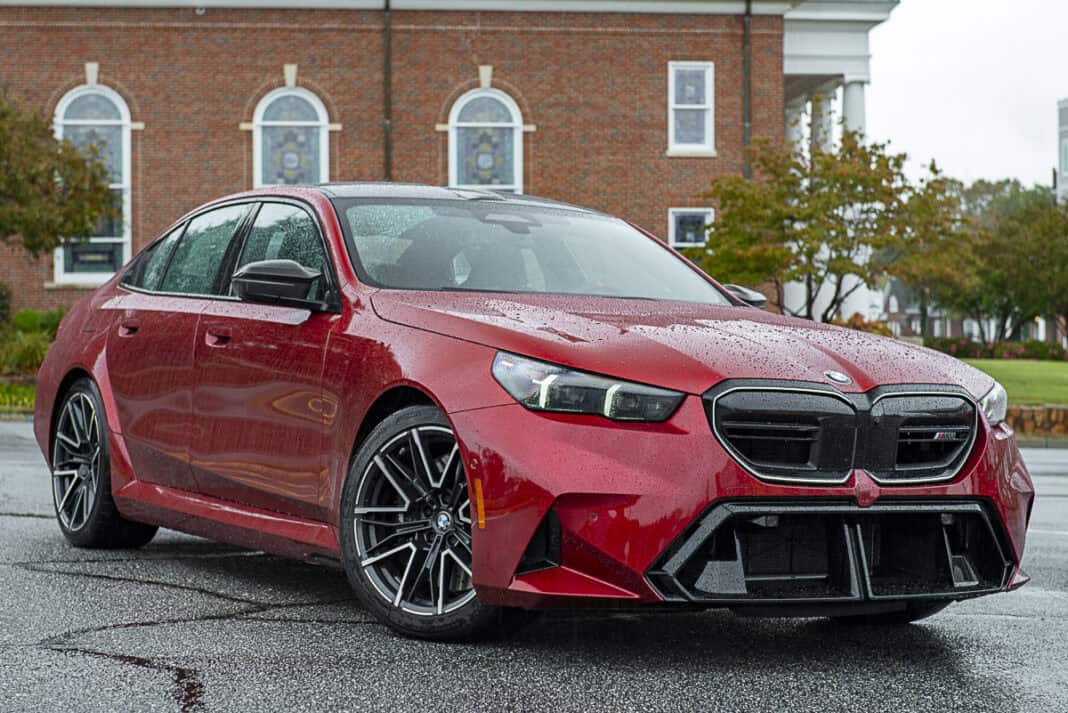
Visually, BMW definitely hasn’t gone subtle. Compared to the outgoing F90, the new M5 stands wider, lower, and more sculpted, with pronounced arches and sharper surfaces. It’s muscular to the point of excess, and whether you love or hate the look will come down to taste. Personally, the design feels like BMW leaning into the M5’s role as a statement car, not just a fast one. It doesn’t try to hide its size or intent.
Despite tipping the scales north of 5,300 pounds, the M5 feels far more agile than it has any right to. Rear-wheel steering plays a major role here, tightening the car at low speeds and stabilizing it at higher ones. You don’t feel the system working, but you feel the results, especially when threading through corners or making quick lane changes.
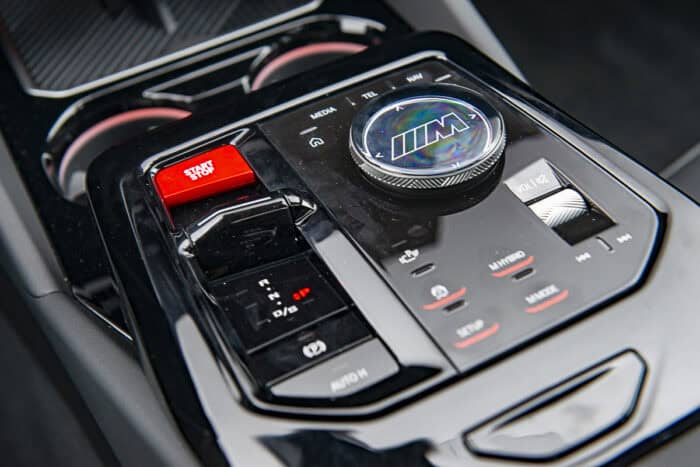
BMW’s latest M xDrive system continues that theme. The car gives you options: full AWD for maximum grip, or a rear-drive mode for those who want a more traditional M experience. What stands out is how intuitive it all feels.
A Cabin That Still Feels Like a Cockpit
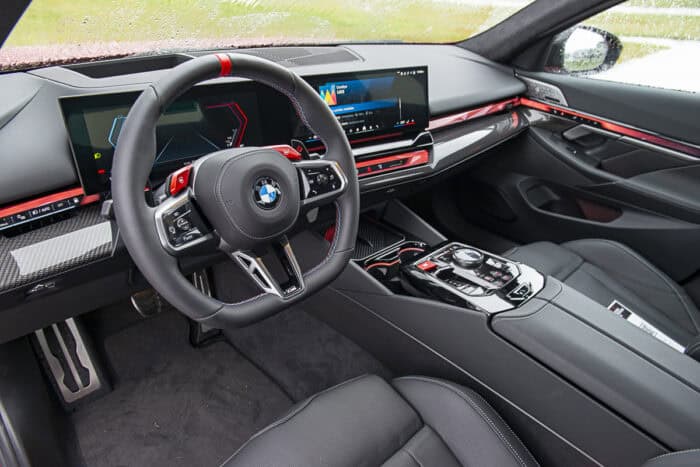
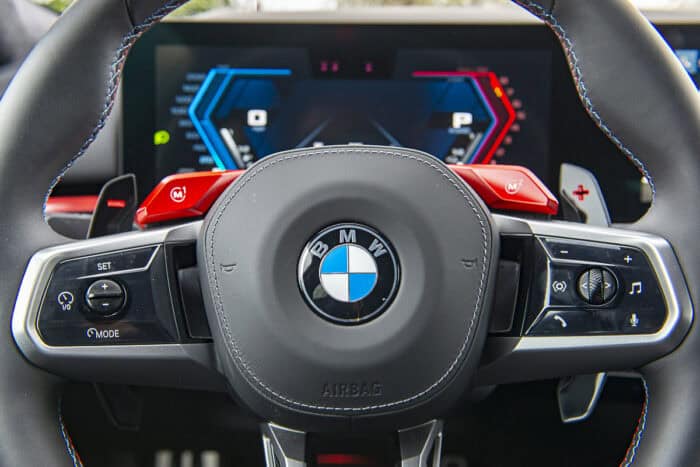
Inside, the cabin continues to balance between modernization and restraint. The curved display dominates the dashboard, pairing a digital gauge cluster with a large central touchscreen running BMW’s latest interface. It’s clean, crisp, and undeniably tech-forward, yet the essentials remain. Physical M buttons are still there (nice). The seating position is spot on. This is still a cockpit designed for driving, not just scrolling.
With electrification comes complexity, and BMW doesn’t shy away from it. Hybrid-specific drive modes allow you to dictate how the electric motor and V8 interact, whether you want to conserve battery, blend power sources, or rely solely on electric drive. It sounds complicated (and it can be), but the beauty is that you don’t have to engage with every layer. The M5 works just as well when you leave it to manage itself.
Takeaway: An M5 Built for What Comes Next
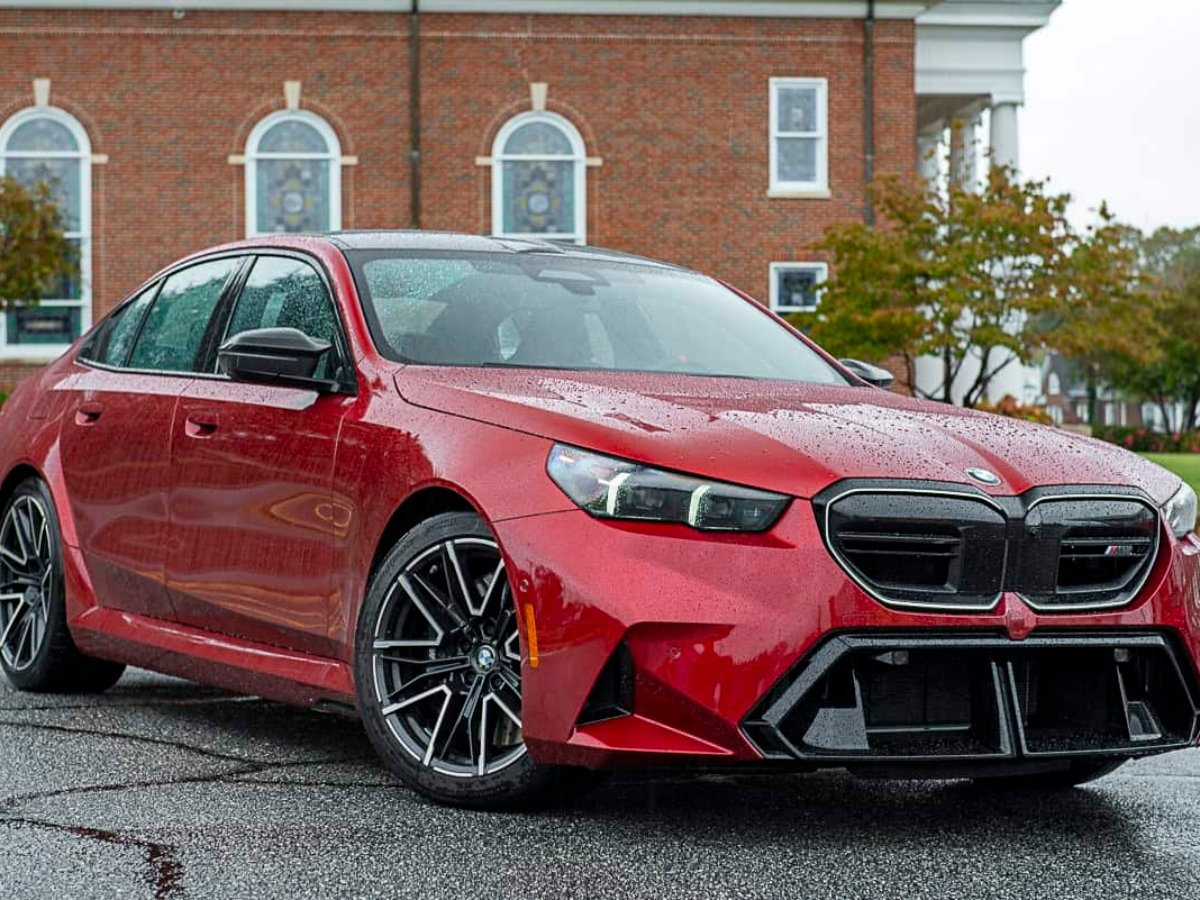

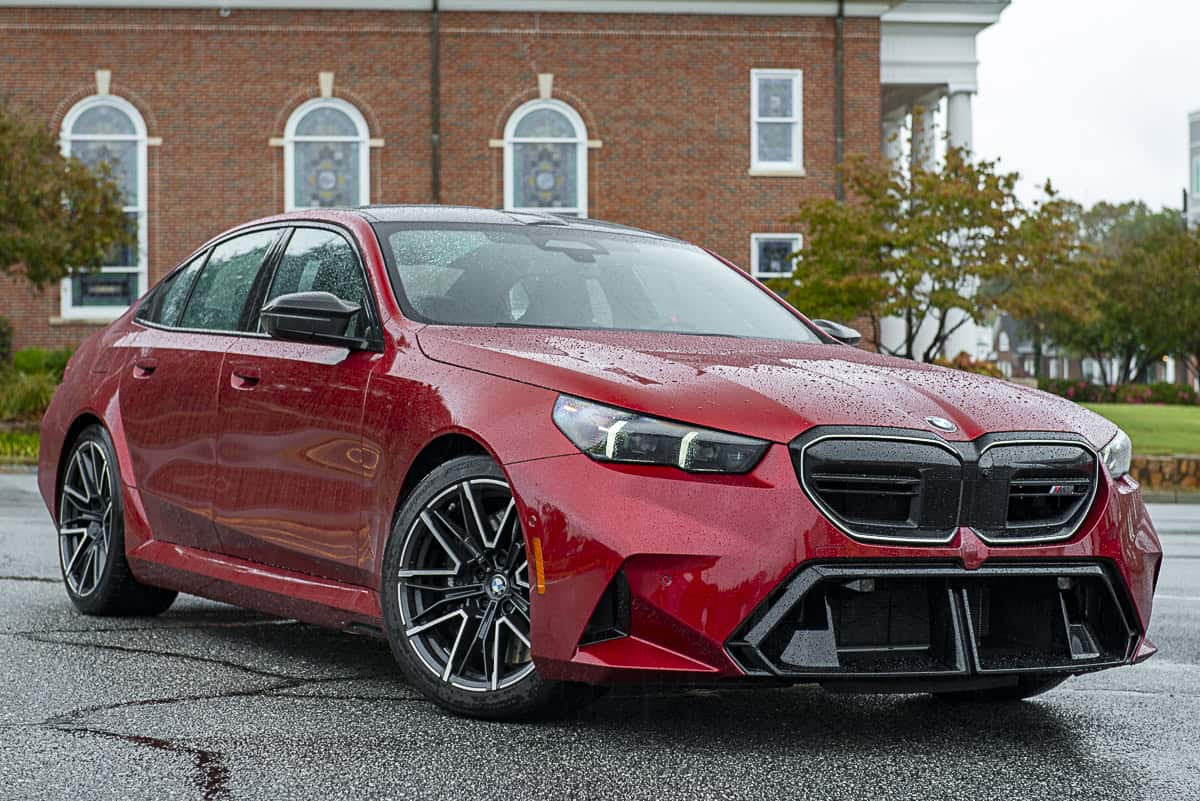


The 2025 BMW M5 isn’t the purist’s dream, but it was never meant to be. It’s a bridge car between eras, expectations, and regulations built to ensure the M5 remains relevant without losing what made it special in the first place. It may be heavier and quieter than before, but when it matters, it still feels unmistakably like an M car. And in today’s automotive landscape, that might be BMW’s biggest win yet.