
Jump to Section:
- Longer Distance, Faster Charging
- Designed and Manufactured for Efficiency
- Software is a Big Player — Maybe the Biggest
- Google Gemini Grabs Shotgun
- Safety Engineered as a System
- An EV Built to Stand Out
- 2027 Volvo EX60 Photos and Specs
The way Volvo tells it, unveiling its new EX60 electric mid-size SUV isn’t merely the electric heir apparent to the XC60, it represents a structural turning point in how it engineers, manufactures, and evolves vehicles going forward.
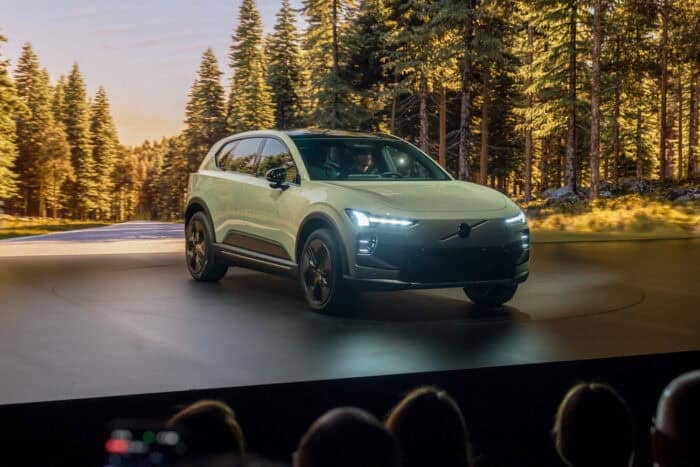
Inside and out, the Swedish brand aims to approach some form of flexibility and modularity in new ways. Its new SPA3 architecture serves as its most advanced technology base to date, built to support continuous hardware and software development throughout a vehicle’s lifecycle. Thus, the EX60 is designed to move past prior platforms that locked in major components at launch, instead putting the vehicle on an evolutionary path that will see it gain new performance and functional features for years after it rolls off the assembly line.
That also goes for what happens in the cabin, courtesy of a tighter relationship with Google that will see its latest AI, Gemini, become the focal point of an infotainment surge. Two trims, plus a Cross Country revival variant, will be coming to the U.S. and Canada starting in spring 2026.
Longer Distance, Faster Charging
Volvo is offering the EX60 with two variants aimed at covering a wide range of use cases. The P10 AWD version delivers an estimated range of up to 514 km (320 miles) with 503 hp, while the P12 AWD variant extends that to 640 km (400 miles), the longest of any electric Volvo so far, along with 670 hp. In the U.S., a third option will be the rear-drive P6 capable of 310 miles range, though that number drops if you go with the 21- or 22-inch wheels over the standard 20-inchers. All three variants are good for Volvo’s 10-year battery warranty.
While the P6 uses a single motor with 369 hp, the other two configurations use dual-motor setups that distribute torque between the front and rear axles on demand for effective traction in varying conditions. Instant electric torque ensures strong, predictable acceleration, while the P12’s extended range positions it as Volvo’s most capable long-distance electric vehicle to date.
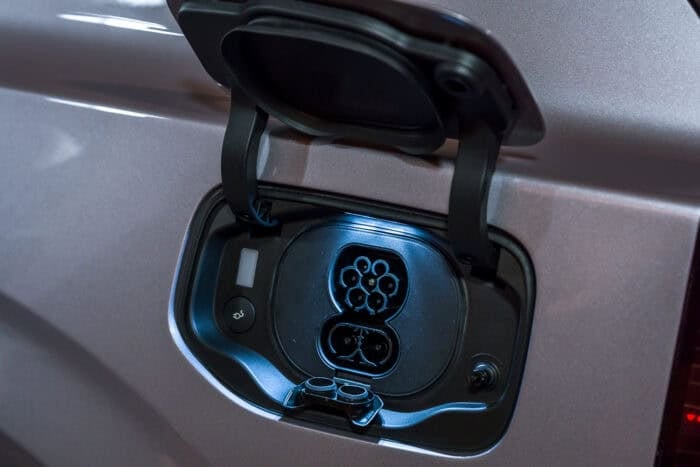
The EX60 will also be the first Volvo to feature a native North American Charging Standard (NACS) port, opening things up to 25,000 Tesla Superchargers across the continent without the need for an adapter.
Charging from 10 to 80% takes about 18 minutes for the P10 AWD variant and 19 minutes for the P12, figures that place the EX60 firmly among the fastest-charging vehicles in its segment. Volvo says it didn’t achieve these gains through battery size alone, but through improvements in thermal management, propulsion efficiency, and system integration made possible by SPA3.
The catch is that the faster charging figures are based on a 400kW charger, which is hard to find these days.
Designed and Manufactured for Efficiency
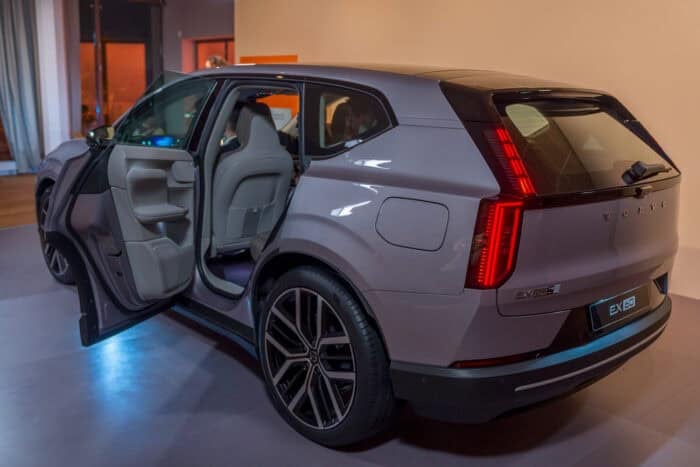
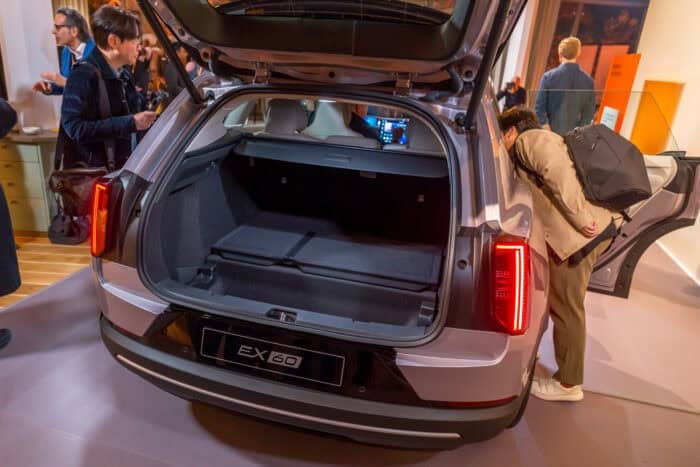
While newly-engineered, the EX60 is also partially based on Volvo’s XC60 — still the company’s best-selling vehicle. So good, in fact, it has no plans to retire it despite unveiling the EX60. That means similar proportions, versatility, and usability, only with more refined aerodynamics in the form of shorter overhangs, a gently sloping roofline, and tapered body sides. This careful shaping, including in the rear, leads to a 0.26 drag coefficient without sacrificing luggage capacity and rear-seat legroom.
Megacasting, cell-to-body, and the cost of progress
Volvo cites the EX60’s design and build as its performative advantage, particularly in how it’s the brand’s first production vehicle to combine megacasting with cell-to-body battery technology. Megacasting replaces hundreds of individual aluminum components with large, single-piece recycled aluminum castings, which Volvo says leads to less material usage, shorter manufacturing time, and lighter weight without compromising structural rigidity. Cell-to-body integration eliminates traditional battery modules and embeds battery cells directly into the vehicle structure instead. Doing this should result in a 20% improvement in energy density and faster charging, while also helping lower carbon footprint.
Not only that, but Volvo also claims these technologies contribute to 31% better charging performance and 37% lower carbon footprint, putting it in line with the EX30, even though the latter is smaller and more compact.
What’s not clear is how molding what was previously 100+ pieces into one casting might affect repairing damage from a collision. If it was easier to replace one or two pieces in the past, it’s hard to know because it will also depend on damage severity and location. Volvo reps say the larger pieces are more rigid and resistant.
Cross Country, reinterpreted
The EX60 lineup is also reviving the Cross Country variant as an ode to Volvo’s take on adventure-focused vehicles. It’s not quite an off-road beast; more like a rugged ride that will take you off the beaten track on unpaved roads but not into the woods or rocky conditions.
The EX60 Cross Country also stands out by sitting 20mm higher than the standard EX60 for more ground clearance, and is equipped with an adaptive air suspension system to push it up another 20mm when needed. At higher speeds, it automatically lowers to reduce drag.
Apart from an exclusive Frost Green paint job, the Cross Country has wider tracks, pronounced wheel-arch cladding, black upper door moldings, and stainless-steel skid plates to set it apart from the other EX60s. One of the design details includes an embossed Cross Country lettering at the back between the back door and trunk.
The interior across the EX60 lineup sticks with Volvo’s minimalistic design, as well as the Scandinavian-inspired set of earthy and natural materials that come in different variations. The new battery layout helps flatten the floor for more legroom and cargo space in the back. It feels like a departure from the EX90, where the third row in the back makes for tighter confines because of the elevated gap caused by the rear motor and ventilation shaft. Without a third row, that’s a non-issue here, but the long wheelbase is the biggest reason why.
Software is a Big Player — Maybe the Biggest
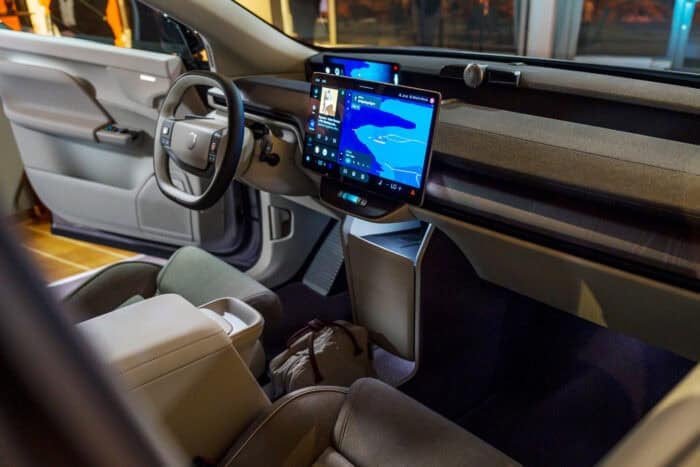
Although the EX60 is deeply software-defined, its digital systems are closely tied to core automotive functions rather than existing as standalone infotainment layers. The vehicle is built around HuginCore, Volvo’s centralized hardware and software system, which integrates in-house development with technologies from Google, NVIDIA, and Qualcomm.
In another first for Volvo, it’s making Apple Music available as a native app in the infotainment system with Dolby Atmos support, Android users can access it the same way.
At the heart of the system is Nvidia Drive AGX Orin, providing the processing power required for advanced safety systems, driver assistance, and future functionality. A Qualcomm Snapdragon 8255 CPU is built to support faster and more responsive user interactions, especially when it comes to using Gemini, Google’s AI that’s embedded in the infotainment system.
The software brains behind all this is SPA3. Volvo’s all-new architecture is partly a future-proofing exercise to roll out the red carpet for new firmware or software updates in the coming years. That means the EX60 will get updates for an undetermined period of time long after 2026. Without getting too technical, HuginCore makes this possible for the simple fact it’s a single software stack that treats Volvo’s EVs like a singular system, so that Snapdragon CPU updates and upgrades roll out to all compatible vehicles at the same time, rather than staggering them out.
Google Gemini Grabs Shotgun
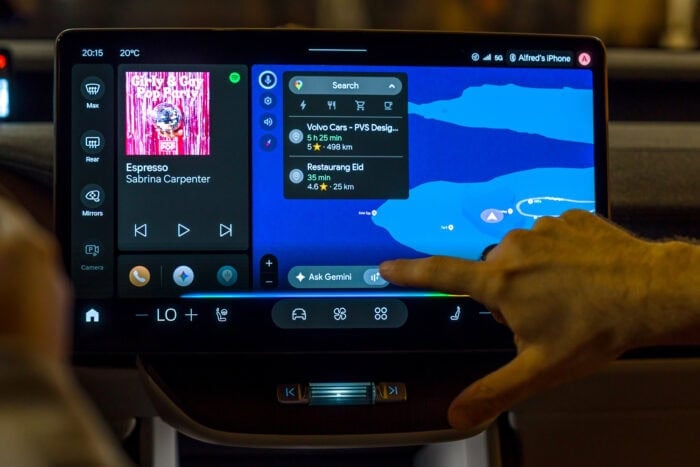
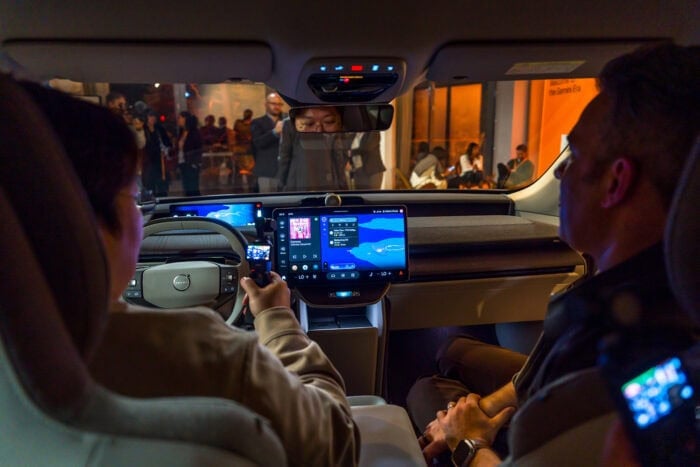
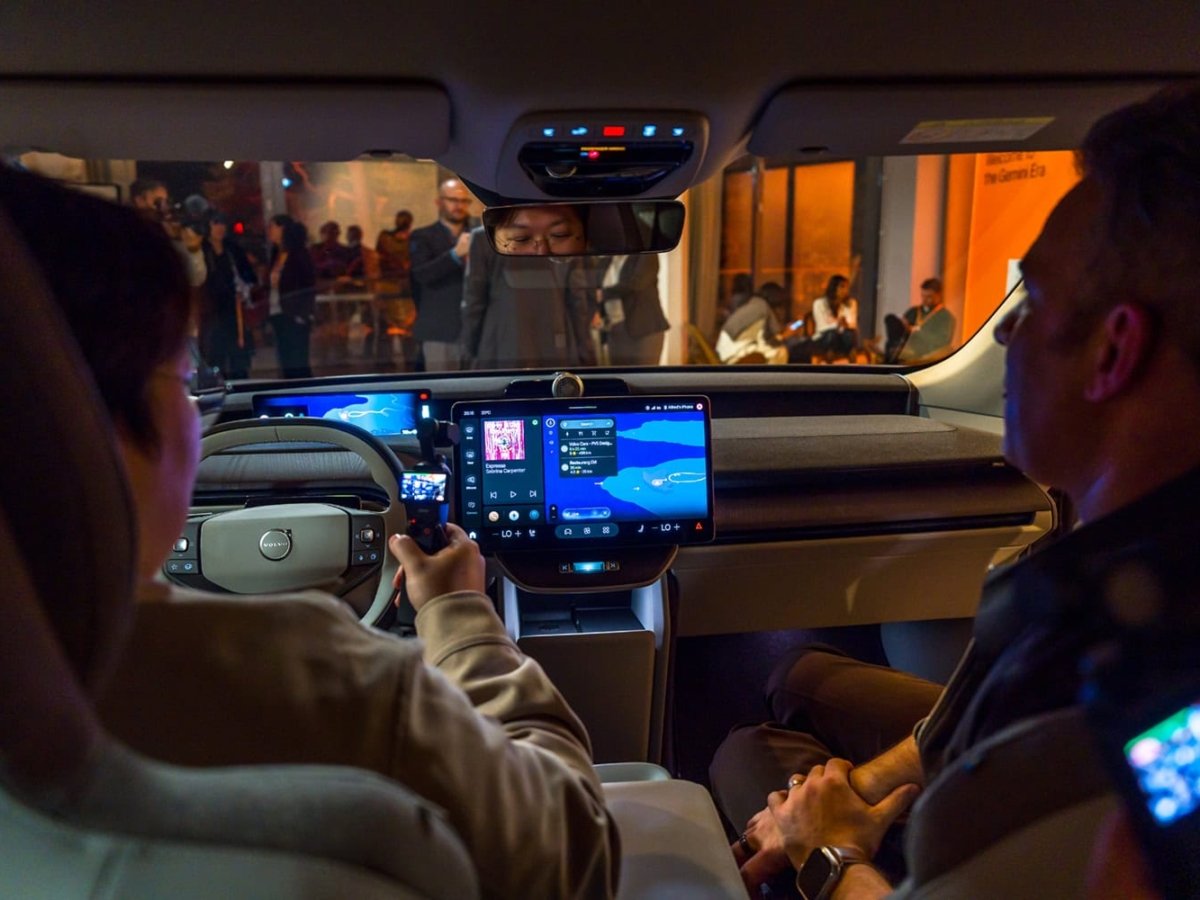
For drivers, much of it will flow and appear through the massive 15-inch main screen, also significant because it’s an OLED panel. Volvo claims it’s got glare-resistant coating but I’ve seen enough OLED screens in my time to be skeptical. What’s equally interesting is that the company chose to go with a landscape orientation — a first for a Volvo EV — and features a slight outward curve with the expressed intent to improve visibility and accessibility for both driver and front passenger.
Then there’s the 11.4-inch digital cluster, or what Volvo calls the “front forward display”, standing out in stark contrast from the EX90’s small cluster and the EX30’s complete lack of one. Volvo previously leaned hard on heads-up displays (HUD) as an alternative, but seems to have had a change of heart, at least for the EX60.
Built-in, not bolted on
Google Gemini will come built-in, completely replacing Google Assistant. Volvo is so tight with Google at the moment that the collaboration will yield returns for existing EV owners as well. Though timing is unknown, Volvo will release an over-the-air update to streamline its infotainment system and user interface in about 2.5 million existing Volvo vehicles with built-in Google infotainment systems, going back to the 2021 model year. That update will come separate from the Gemini update because the latter will roll out from Google servers, not Volvo’s. The other key point is that Gemini may not do as much in older vehicles running on aging hardware in the dash, thereby limiting its ability to do the same things it will do in the EX60.
Anders Bell, Volvo’s Chief Engineering and Technology Officer, says the EX60 is the catalyst in tandem with learning a few lessons from earlier models. Hardware differences across these vehicles mean performance and feature depth will vary, but the EX60’s Nvidia Drive AGX Orin and Snapdragon 8255 processors are designed to support more advanced AI use cases over time.
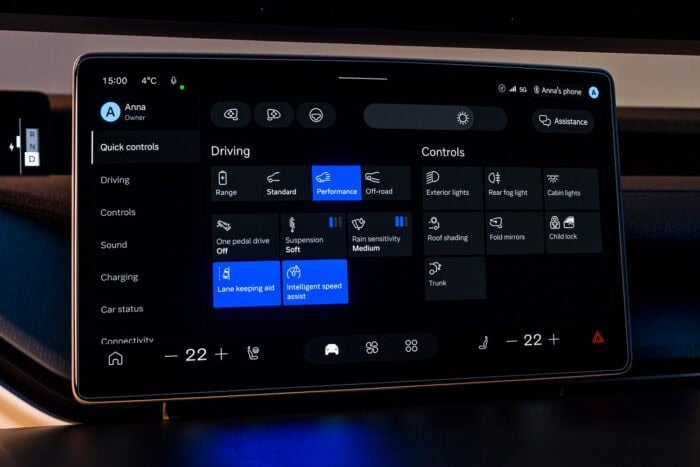
The plan is to enable Gemini to work with vehicle functions, including managing navigation, messaging, control in-car climate, check diagnostics, and offer voice-enabled access to the user manual. As good as all that sounds, Google reps couldn’t really demonstrate them at the launch because many of these advanced features are “still under development” and aren’t likely to all be available when the EX60 launches. That also means Gemini will still need access to the cloud at all times, though both Volvo and Google are working on making part of it work without an internet connection.
Even though the main focus is on the built-in Google system, you can use CarPlay or Android Auto in the EX60, like always. The one advantage the Google system has is the ability to stream apps like YouTube and Tubi on the main screen when parked.
The highest EX60 trim comes with a Bowers & Wilkins sound system with 28 speakers integrated throughout the cabin, including the headrests. Mid-level trims use a Bose setup. Only the Bowers & Wilkins system supports Dolby Atmos and spatial audio. In another first for Volvo, it’s making Apple Music available as a native app in the infotainment system with Dolby Atmos support, Android users can access it the same way.
Safety Engineered as a System
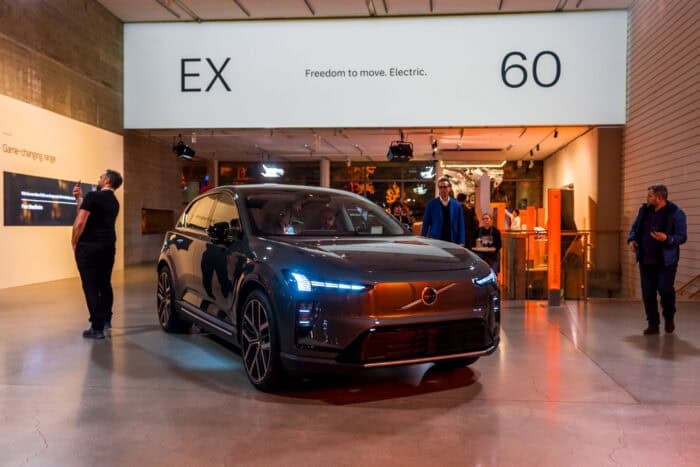
Safety remains a defining pillar of the EX60, extending from its physical structure to its sensing and software capabilities. The vehicle’s body structure incorporates high-strength materials designed to manage crash forces effectively, while a comprehensive sensor suite continuously monitors both the environment outside the car and the driver inside.
This data feeds into advanced safety software that allows the vehicle to assess risk in real time and respond accordingly. Rather than relying on isolated systems, the EX60 treats safety as an integrated, adaptive system that evolves alongside the rest of the vehicle.
An EV Built to Stand Out
At $77,500 CAD (roughly $55,000 USD) to start, the EX60 enters the mid-size electric SUV segment with a high level of standard content, though Core, Plus, and Ultra trims will lead to differences between them.
Volvo will also experiment with ownership in Sweden by piloting CARE, a 36-month leasing model that bundles auto insurance, home charging and electricity into a single monthly payment. For now, it’s just in Sweden for an undisclosed length of time until it “rolls out to many other markets”. Both Canada and the U.S. are among those the company has in mind, though no one is saying when that might happen.
The P10 AWD will be available for pre-order now with production beginning in spring 2026 and deliveries expected in the summer and fall. The P12 AWD will follow at a later undetermined time. The EX60 Cross Country will come out in Europe first before it stands to make its North American debut in mid-2027.
This equipment level underscores Volvo’s strategy of delivering completeness rather than upsell-driven complexity, aligning with the EX60’s broader goal of reducing friction in everyday ownership.
2027 Volvo EX60 Photos and Specs


| Metric | P6 (RWD) | P10 AWD | P12 AWD |
|---|---|---|---|
| Drivetrain | Rear-wheel drive | Dual-motor AWD | Dual-motor AWD |
| Power | 369 hp | 503 hp | 670 hp |
| Estimated Range* | up to 620 km (385 mi) | up to 514 km (320 mi) | up to 640 km (400 mi) |
| DC Fast Charging (10–80%) | ~19 min | ~18 min | ~19 min |
| DC Peak Rate | up to 400 kW | up to 400 kW | up to 400 kW |
| Positioning | Long-range efficiency | Performance balance | Maximum range & power |