
This guide is continuously updated for relevance, accuracy, and the latest model information.
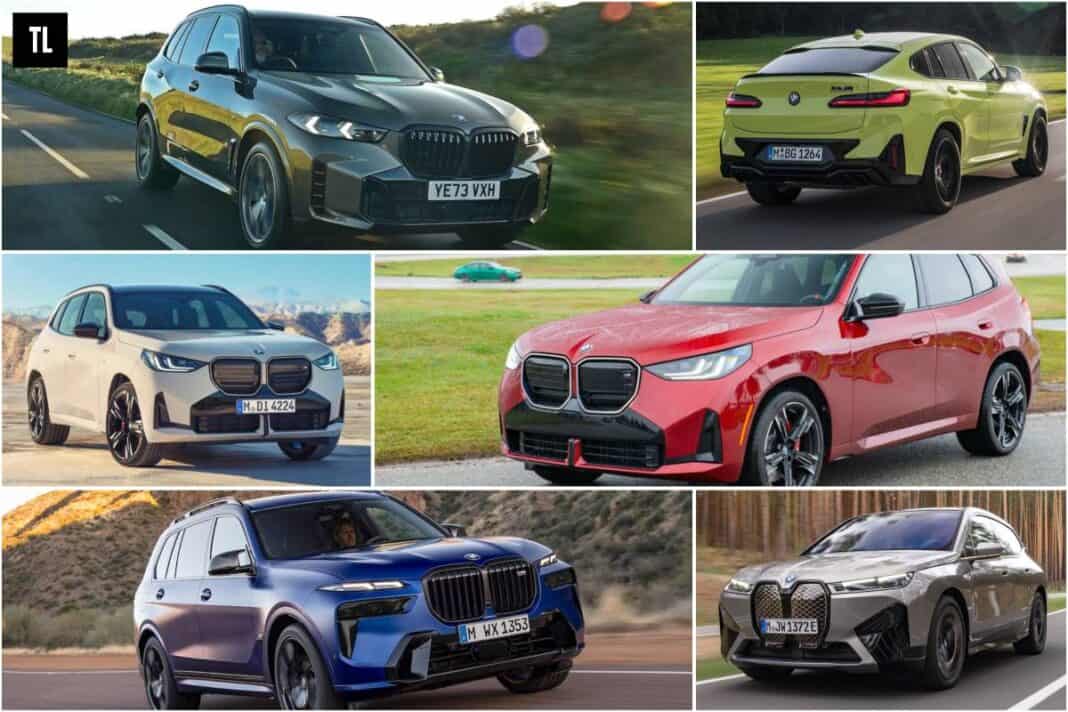
BMW’s SUV lineup has grown into one of the most diverse in the premium market, stretching from compact, tech-forward runabouts to full-size luxury cruisers and high-performance M machines. This guide breaks down the current lineup: what’s new, what each model does best, and how they stack up heading into 2025 and beyond:
- BMW X1 (Subcompact SUV)
- BMW X2 (Compact SUV)
- BMW X3 (Compact SUV) and X3 M50 (M Performance)
- BMW X4 (Compact SUV) & X4 M / M40i
- BMW X5 (Mid-Size SUV) & X5 M Competition
- BMW X6 (Mid-Size SUV) & X6 M Competition
- BMW X7 (Full-Size SUV) & Alpina XB7
- BMW iX (Mid-Size BEV SUV)
- BMW XM (Full-Size PHEV SUV)
BMW X1 (Subcompact SUV)
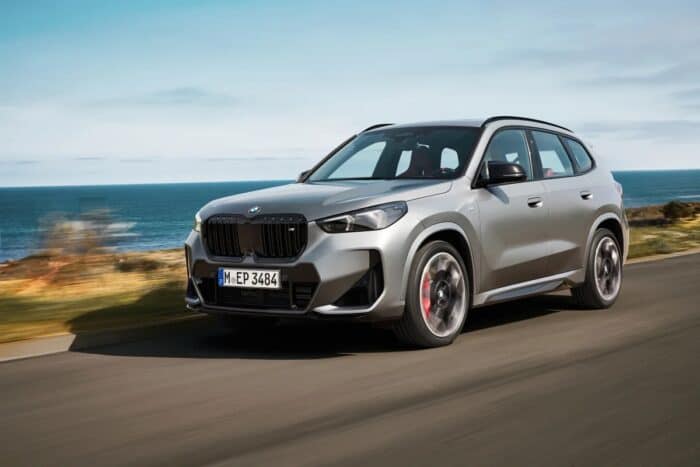
Key features:
Newest-generation interior with BMW’s curved display
Standard AWD and efficient 2.0-litre turbo engine
Surprisingly spacious cabin for a subcompact SUV
The X1 is BMW’s entry point into the SUV world, but it doesn’t feel “base model” anymore. The current generation is larger and boxier than before, with a more upright stance that makes it look like a mini X5 instead of a tall hatchback. Inside, you get the same curved display and minimalist dash design seen in pricier BMWs, plus usable rear space and a decent cargo area for small-family duty. Under the hood, North America gets a 2.0-litre turbo four with around 240 hp and standard all-wheel drive, paired to a dual-clutch automatic.
Performance is more about confident everyday pace than hot-hatch antics, though the chassis is still one of the more engaging in the segment. Think of it as a premium alternative to a Mazda CX-5 or VW Tiguan for buyers who want BMW badge appeal and tech without jumping straight into an X3.
Related – 2013 BMW X1 xDrive35i Review: The Underrated CUV Rocket
BMW X2 (Compact SUV)
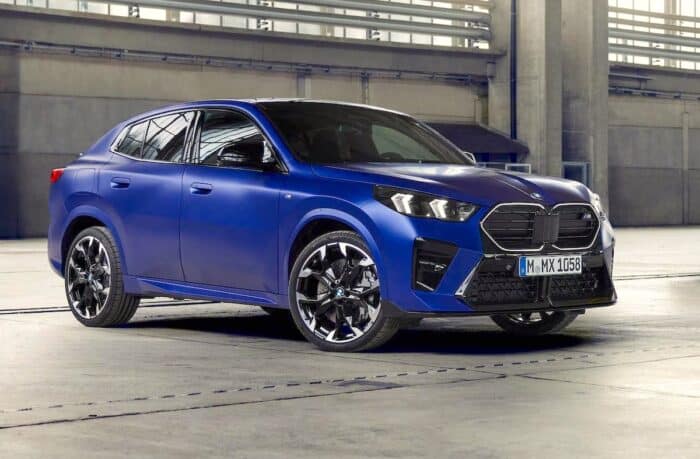
Key features:
Coupe-inspired design with a longer, sleeker body
Sportier tuning than the X1, especially in M35i trims
High-tech cabin with minimalist controls and curved display
The latest X2 leans hard into the “sporty coupe-SUV” brief. Redesigned for 2024, it’s much longer and lower than the old model, with a sleeker roofline, bold grille treatment, and chunky rear haunches that make it look more like a shrunken X4 than a dressed-up hatch.
Cabin tech mirrors the X1: big curved screen, clean centre console, and enough rear room for adults on short trips. But cargo space takes a slight hit thanks to that roofline. In North America, the xDrive28i uses a 241-hp 2.0-litre turbo four, while the M35i cranks output into the low-300s and tightens up the suspension. Ride quality skews firmer than the X1, and road noise is more noticeable, but that’s the trade if you want the more expressive, style-first BMW small SUV.
BMW X3 (Compact SUV)
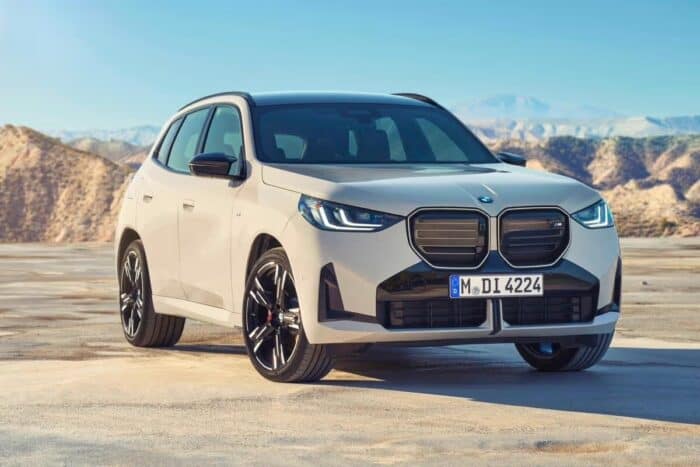
Key features:
Balanced ride and handling; still the segment’s “driver’s choice”
Spacious, practical cargo area with family-friendly room
New mild-hybrid engines for better efficiency and response
The X3 is BMW’s bread-and-butter SUV, and the latest generation leans into a chunkier, more “monolithic” look with slimmer lights and a cleaner side profile. Inside, it adopts BMW’s latest curved display and more driver-assist tech, while still offering one of the more practical cabins in the class – plenty of rear legroom and a square, low-floor cargo area.
The core X3 30 xDrive uses a 255-hp 2.0-litre turbo four with 48-volt mild-hybrid assist and standard AWD; it’s quick enough, refined, and impressively efficient for a luxury SUV. Step up to the X3 M50 and you get a 3.0-litre turbo six with roughly 390 hp, adaptive suspension and bigger brakes – basically BMW’s sweet spot between everyday family hauler and proper performance SUV. Rivals like the Mercedes-Benz GLC and Audi Q5 match the X3 on comfort and polish, but few feel as eager to be hustled down a back road.
Related – Throwback: 2013 BMW X3 Compact SUV
X3 M50 (M Performance): The “M-Lite” Hot One
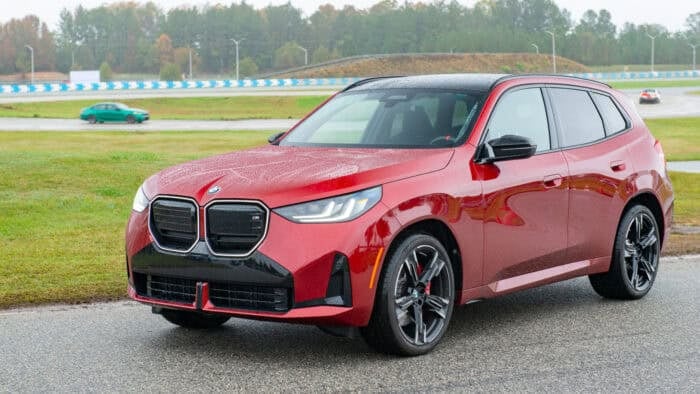
BMW doesn’t badge a full-fat X3 M on this generation. Instead, you get the X3 M50, an M Performance model that’s probably enough for 95% of people. It pairs a turbocharged inline-six with a mild-hybrid system for about 393 hp and 428 lb-ft, funneled through an eight-speed auto and rear-biased xDrive. In the real world, it’s properly quick, with sports-sedan acceleration and the kind of mid-range shove that makes highway passing effortless. Adaptive dampers and stickier tires sharpen things up without turning the ride into a chore, making this the enthusiast’s pick of the X3 range.
BMW X4 (Compact SUV)
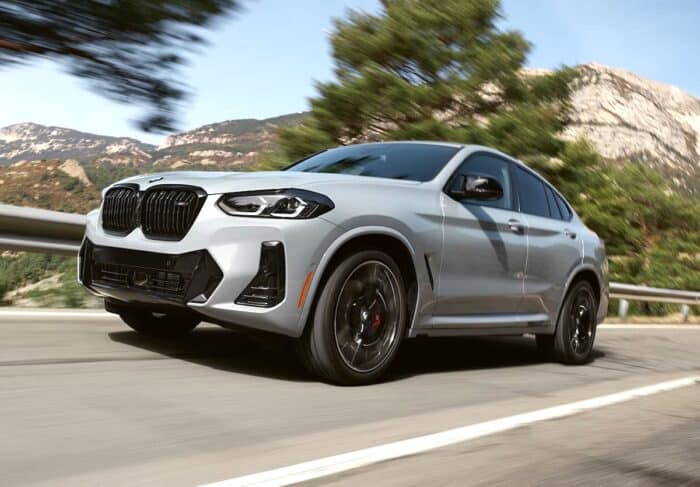
Key features:
Coupe-SUV styling
Same powertrains and tech as X3 but sportier feel
More exclusive appeal, with trade-offs in headroom and cargo height
The X4 is essentially the X3 in a sharper suit: same platform, engines and tech, wrapped in a lower, coupe-like roofline and a more dramatic rear end. That shape gives it a bit more presence than the X3, especially in M Sport trim, and it’s the one people notice in a parking lot. Inside, the layout and tech are familiar BMW fare, with the usual mix of high-quality materials and configurable screens.
There are trade-offs: rear headroom and load-bay height both suffer compared with the X3, and visibility out the back is tighter. Powertrain choices mirror its sibling – turbo four for the xDrive30i and a strong turbo six in the M40i – and the drive is broadly similar, with a slightly firmer feel out of the box. It’s a good time to remember that BMW has already confirmed the X4 will bow out after this generation, so this coupe-SUV is living on borrowed time.
X4 M / M40i: Style With Serious Pace
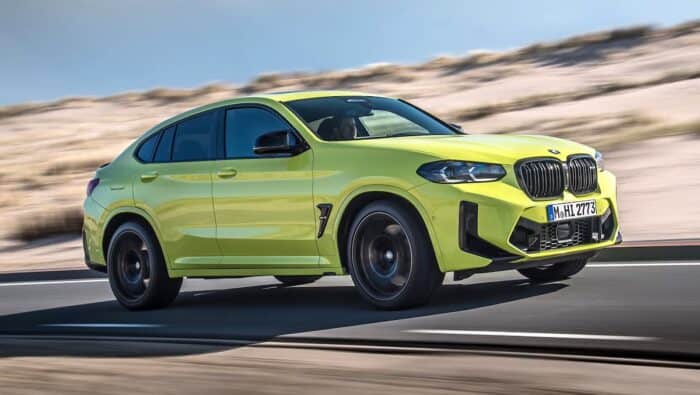
For buyers who want the look and the shove, the X4 M40i (and, in some markets, the full X4 M) crank things up considerably. The M40i’s turbo 3.0-litre six makes around 380 hp and delivers a properly muscular soundtrack with launch-control levels of off-the-line punch. Stiffer suspension, variable steering and uprated brakes make it feel much more tied-down than the regular X4, though ride comfort over broken pavement takes a hit. The full X4 M goes further again with track-ready hardware, but even the M40i is more performance than most coupe-SUV shoppers will ever really need.
BMW X5 (Mid-Size SUV)
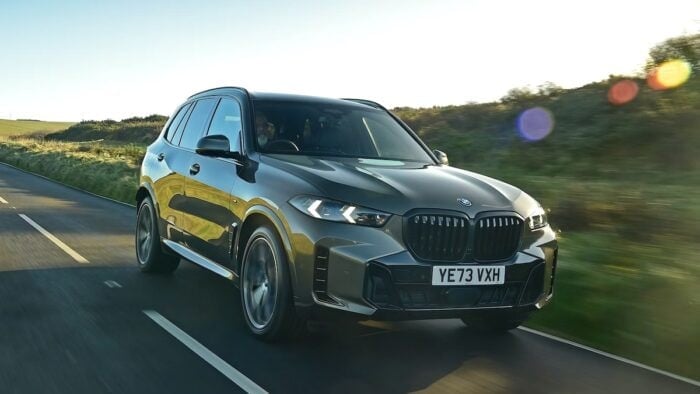
Key features:
Broad powertrain range: six-cyl, V8, and plug-in hybrid
Upgraded cabin with BMW’s curved display and richer materials
One of the most well-rounded luxury SUVs available
The X5 is the SUV that essentially invented this corner of the market for BMW, and the latest facelift keeps it near the front of the pack. The styling refresh brought slimmer headlights, a cleaner grille and more aggressive bumpers, while the cabin moved to BMW’s curved display with a 14.9-inch touchscreen and upgraded driver-assist systems.
Drivetrains are where the X5 really spreads out. The xDrive40i uses a 375-hp turbo inline-six with mild-hybrid assist, offering a near-perfect mix of power and refinement. Above that, the M60i swaps in a twin-turbo V8 for effortless towing and autobahn speeds, while the plug-in hybrid xDrive50e pairs a six-cylinder with a battery pack for over 480 hp and usable electric-only range. If you want one SUV that can haul a family, tow a boat and still feel like a BMW on a back road, this is it.
Related – 2017 BMW X5 xDrive40e iPerformance Review
X5 M Competition
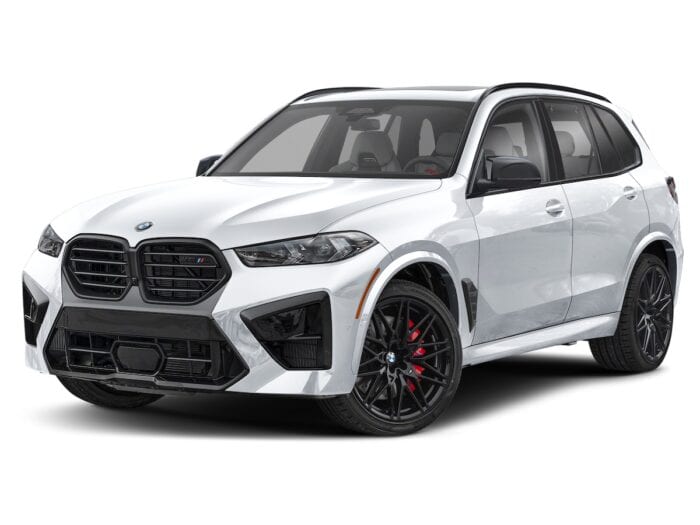
The X5 M Competition takes the sensible X5 recipe and turns every knob to 11. Its 4.4-litre twin-turbo V8 works with a small electric motor to deliver around 617 hp and 553 lb-ft, sent to all four wheels through an eight-speed auto. Acceleration is super-car-rude; the trade-offs are predictable: firm ride, heavy curb weight and fuel economy that lives in the teens. Reviews praise the grip and balance but note that it’s more “brutal missile” than all-rounder. Brilliant if you absolutely must have the craziest family hauler on the street.
Related – 2020 BMW X5 M First Drive Review: Pure, Unadulterated V8 Fun
BMW X6 (Mid-Size SUV)
Key features:
Coupe-SUV version of the X5 with a more aggressive stance
Same high-end tech and drivetrain choices
Sportier ride tuning but less rear-seat and cargo space
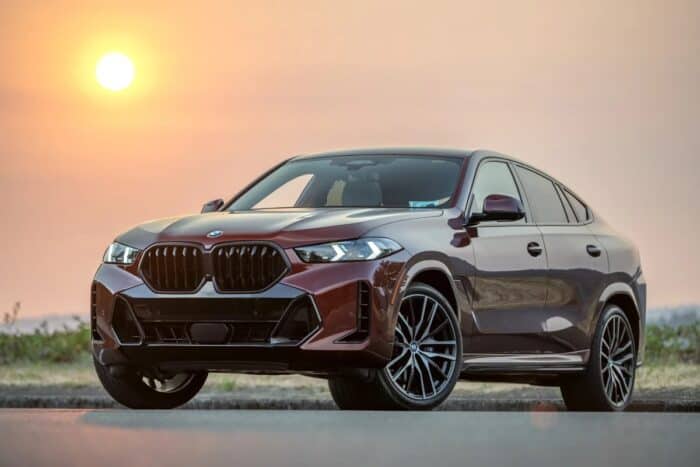
If the X5 is the rational choice, the X6 is the same idea with more attitude. The current model leans into the coupe-SUV look with a sweeping roofline and a wide, planted stance, especially in M Sport or M60i trim. Inside, it shares most of its hardware with the X5 – curved displays, light-bar dashboard trim, and plenty of luxury options – but the rear seats and cargo area are a bit tighter thanks to that sloping tailgate.
The xDrive40i again runs a 375-hp turbo six with mild-hybrid assist, while the M60i adds a twin-turbo V8 and more aggressive chassis tuning. Both are AWD-only and skew sportier in feel than their X5 equivalents. Ride comfort is still decent on sensible wheels, but if you value rear-seat space, the X5 remains the better family call.
X6 M Competition
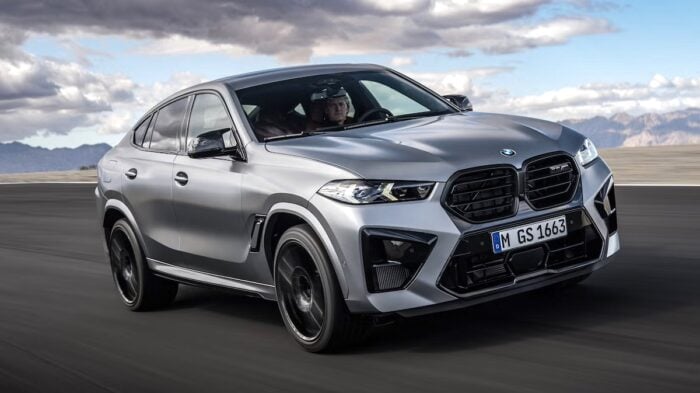
The X6 M Competition is one of BMW’s wildest SUVs. It uses the same 617-hp twin-turbo V8 and eight-speed auto as the X5 M, plus adaptive M suspension, active anti-roll bars and massive brakes. 0–100 km/h happens in under four seconds – absurd for something this tall and heavy. On a twisty road it feels shockingly capable, but reviewers agree it’s also pretty unforgiving: firm, noisy and always up for a scrap. It’s the one to pick if you want maximum drama from your BMW SUV and don’t mind sacrificing refinement.
BMW X7 (Full-Size SUV)
Key features:
True three-row luxury with adult-friendly third row
Mild-hybrid six- and eight-cylinder engines
High-end comfort features and available hands-free highway assist
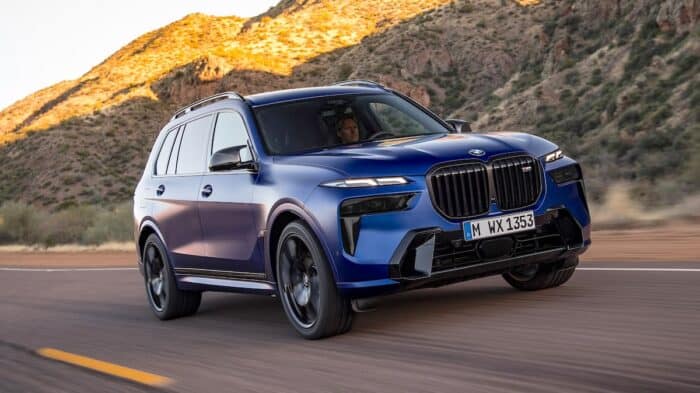
The X7 is BMW’s full-size, three-row flagship – essentially a 7 Series on stilts. The most recent update brought the now-familiar split headlights, illuminated grille and curved interior display, plus more driver-assist features including hands-free highway driving on certain roads. Inside, it’s all about space and comfort: adult-friendly third row, huge glass area, and an options list that runs from crystal-style interior controls to theatre-grade audio.
The xDrive40i uses a 375-hp turbo inline-six, while the M60i gets a 4.4-litre twin-turbo V8 with mild-hybrid assist for serious towing and effortless highway pace. At the top sits the Alpina XB7, which turns that V8 up to roughly 630 hp and adds bespoke chassis tuning and trim – think S-Class-rival luxury with sports-car pace.
Alpina XB7
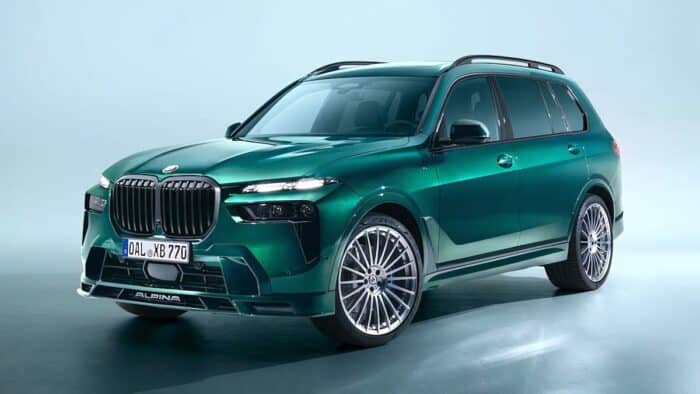
The Alpina XB7 is technically not an “M,” but it fills the same halo role with a very different vibe. Alpina reworks the X7’s V8 to around 630 hp, adds its own adaptive suspension calibration, and dresses the cabin in unique trim, stitching and wheels. Where the X5 M and X6 M feel edgy and aggressive, the XB7 majors on effortless speed – huge torque, a supple ride and long-legged composure on the highway. It’s the one for buyers who want maximum performance and exclusivity without sacrificing the X7’s core brief as a luxurious, genuinely comfortable seven-seater.
Related – 2023 BMW X7 Gains a Sportier Face, More Power & Updated Cabin
BMW iX (Mid-Size BEV SUV)
Key features:
Purpose-built electric platform, not a converted gas model
Dual-motor AWD with long-range battery options
Futuristic, lounge-like cabin with recycled materials
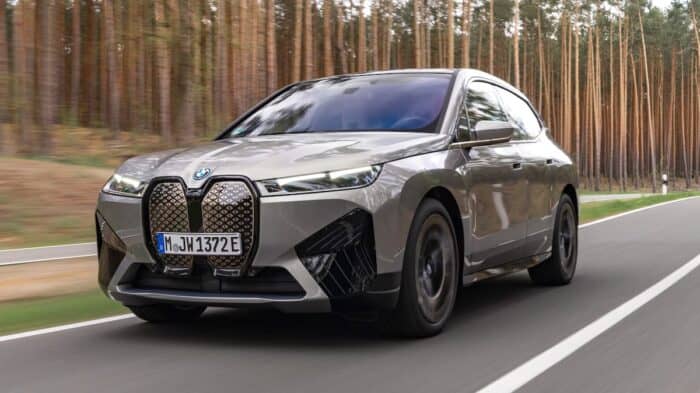
The iX is BMW’s dedicated electric SUV – not just an electrified X5. Built on an EV-first architecture, it has a long wheelbase, short overhangs and minimalist bodywork that looks more sci-fi than the brand’s combustion models. Inside, it’s very lounge-like: thin seats, flat floor, hexagonal steering wheel and a huge curved display, with lots of recycled and eco-focused materials.
In North America, the xDrive50 model uses dual motors for around 500 hp and over 300 miles (≈480 km) of range in ideal conditions; the M60 pushes power toward 600 hp and sharpens the chassis without turning it into an uncomfortable rocket. Charging speeds are competitive, and air suspension plus active sound design help it feel futuristic but still very BMW to drive. If you want a large luxury EV but the iX isn’t your style, alternatives include the Mercedes EQE SUV, Audi Q8 e-tron and Tesla Model X.
BMW XM (Full-Size PHEV SUV)
Key features:
Plug-in hybrid V8 with up to 738 hp (XM Label)
EV-only driving range for short commutes
High-performance chassis with luxury-first tuning
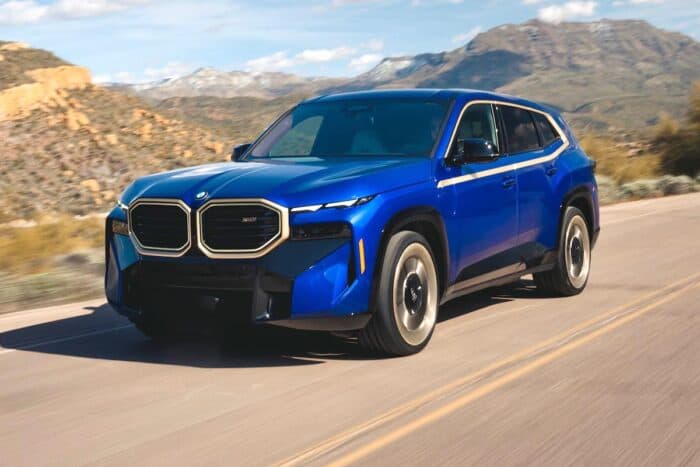
Finally, the XM: BMW M’s first standalone product since the original M1, and one of the wildest plug-in hybrid SUVs on sale. Under the sharp, polarizing bodywork lives a twin-turbo 4.4-litre V8 paired with an electric motor and battery pack. In standard form, you get about 644 hp; the XM Label cranks that to roughly 738 hp, enough to land near the very top of the performance-hybrid SUV pile.
Despite the numbers, the XM is set up more as a rapid, luxurious GT than a track toy. There’s genuine EV-only range for short commutes, and the cabin is packed with high-end materials and tech. On the flip side, it’s heavy, expensive, and deliberately in-your-face, so it won’t be for everyone – especially with BMW already plotting a more off-road-focused halo SUV to eventually take its place.