
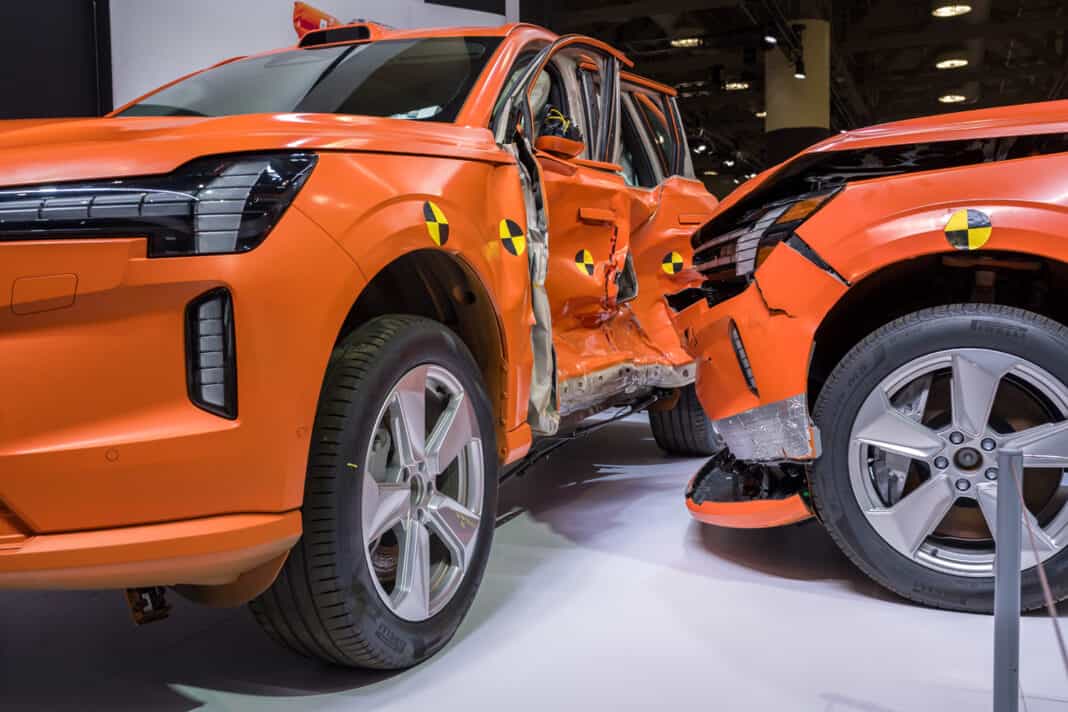
Volvo first introduced the three-point seat belt in 1959, and looking at it today, it’s a wonder it took decades for the auto industry to figure that out. Credited with saving countless lives in the 50+ years since, it’s one of the few vehicle fundamentals that hasn’t changed much.
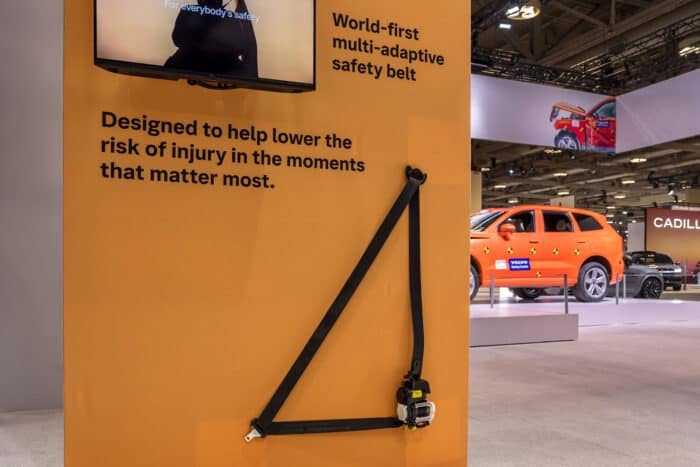
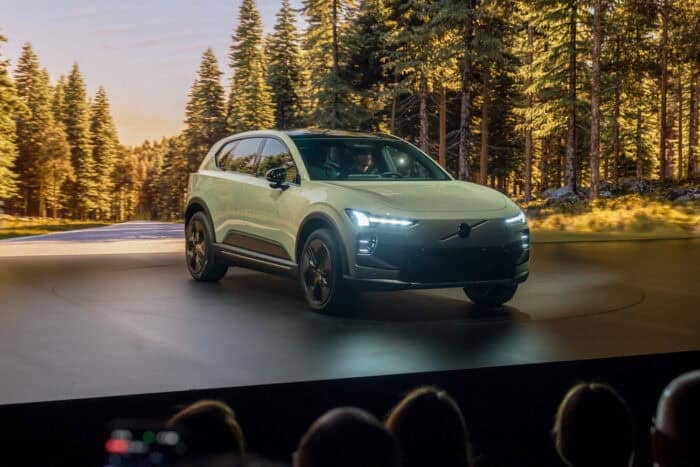
Now that Volvo’s new multi-adaptive safety belt is set to arrive in the 2026 EX60, the automaker wants to mark the biggest shift of that technology since engineer Nils Bohlin invented the three-point belt.
The Problem with One-Size-Fits-All
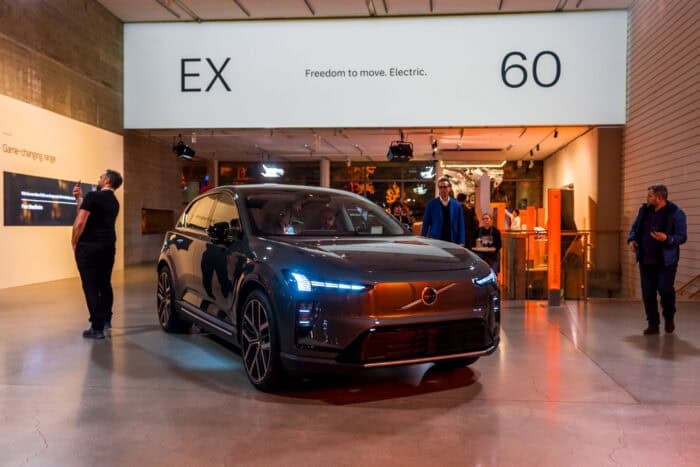
The three-point belt arguably worked for so long because it’s so universal. Its single mechanism works for virtually everyone. Volvo’s argument is that universality doesn’t always match the nuances of every collision. Multiple variables come into play when gauging the efficacy of seat belts, be it the direction or speed of the crash, or the size of the occupants inside. The company’s safety personnel figure since most seat belts function in the same way, there’s no way they can both account for these variables and provide equal protection in all scenarios.
“We reach for zero injuries. Do we get there? Maybe never. But we will never stop trying.”
The new multi-adaptive safety belt is different in that it uses real-time data from the vehicle’s sensors to adapt to traffic variations. Data coming in from interior and exterior sensors customize protection, adapting the setting based on the situation and the individual’s profile. That means making adjustments based a person’s height, weight, body shape and seating position.
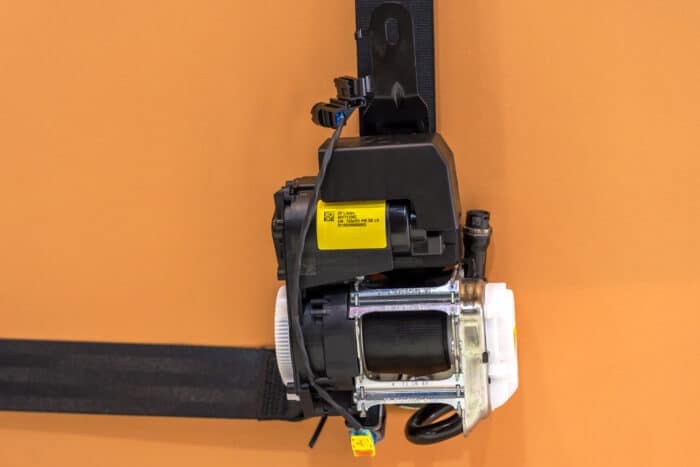
Standard seat belt systems use three load-limiting profiles to control force during accidents. Volvo’s adaptive system expands this to 11 profiles, widening custom protection based on various accident scenarios and passenger types. In practical terms, that means a larger occupant in a serious crash gets a higher belt load setting to help reduce the risk of head injury. Conversely, someone smaller in a milder crash gets a lower belt load setting to reduce the risk of rib fractures.
Related – 2025 Volvo EX30 First Drive Review
Decades of Data, Now Put to Work

Volvo’s penchant and focus on safety goes back decades but it’s also been actively tracking collisions with its vehicles throughout.
“We’ve had an in-depth investigation team since the 1970s,” says Åsa Haglund, Global Vice President, Volvo Cars Safety Centre in an interview. “We have this unique data set of 50,000 accidents involving more than 80,000 people, where we’ve studied what happened, why it happened, and how were people injured. So, we know a lot about how people are injured in the real world.”
Volvo’s multi-adaptive safety belt was named one of Time magazine’s Best Inventions of 2025, giving the impression and recognition of a very consequential technological advancement beyond just the automotive space.
That empirical knowledge forms the foundation of the multi-adaptive belt’s design. The difference now is that Volvo’s physical safety engineering that designs around the understanding of what happens in the real world now extends into sensor-driven systems. That doesn’t necessarily mean there’s artificial intelligence making its own determination, just that the belt can act on what the sensors are capturing.

The system processes accident data in milliseconds, simultaneously analyzing collision direction, impact speed and passenger posture. External sensors provide information about approaching collisions while interior sensors monitor passenger positioning and characteristics, thereby cross-referencing to make the immediate adjustment for maximum protection.
As Haglund puts it, “We reach for zero injuries. Do we get there? Maybe never. But we will never stop trying.”
Related – First Drive: 2025 Volvo EX90 Tackles the Roads with Quiet Confidence
A System That Learns Over Time
Haglund notes that the technology is designed to get better over time. Volvo can send over-the-air firmware updates to improve what the safety belt can do based on all the real-world driving data the company collects. In other words, each belt in the EX60 isn’t a “dumb” mechanical part, it’s a dynamic component with a performance runway.
Over-the-air updates also tie in to crash data from the EX60 fleet, once it is on the road, as a source of insight. The more insights Volvo gathers, the more the car can improve its understanding of the occupants, new scenarios and response strategies. That does sound like EX60 drivers and passengers are akin to beta testers but the idea is grounded on making the next generation of protection smarter.
“We suddenly have electric power in cars that we didn’t have in that way before,” says Haglund. “But that level of compute power and sensors with that performance level can now be packaged and put onto a car, opening up a whole new era of safety.”
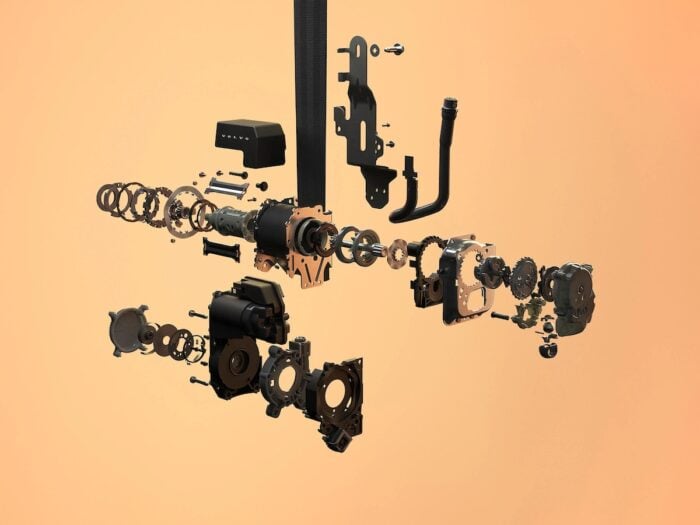
To do this, Volvo engineers had to integrate the multi-adaptive safety belt into the existing safety suite in order to work alongside the airbag system, occupant detection program, and other driver assistance features. The goal is a system that requires no learning curve from the driver.
“You shouldn’t have to learn it. If you do, then we didn’t do our job,” she says. “It should be systems that you know you can trust, that give you the support you need to react in the ways that is the best way to react. That’s our target.”
The multi-adaptive belt is supposed to feel like any other seat belt, so you don’t do anything differently as a driver or passenger. Buckle up as always. All the underlying intelligence runs in the background, calibrating in milliseconds to the specific person in the seat and the specific situation unfolding around them.
Recognition and the Road Ahead
Volvo’s multi-adaptive safety belt was named one of Time magazine’s Best Inventions of 2025, giving the impression and recognition of a very consequential technological advancement beyond just the automotive space. One wonders if we might eventually see something similar on planes, trains, and other forms of transportation
Nils Bohlin offered the three-point belt for free to the entire industry because Volvo believed the technology was too important to keep to itself. Whether the multi-adaptive system eventually follows a similar path remains to be seen. For now, it arrives in the EX60 as a statement — that after 67 years, Volvo still isn’t finished reinventing the safety belt.