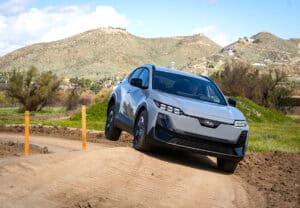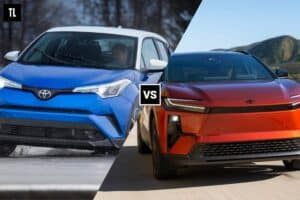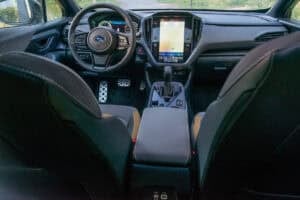

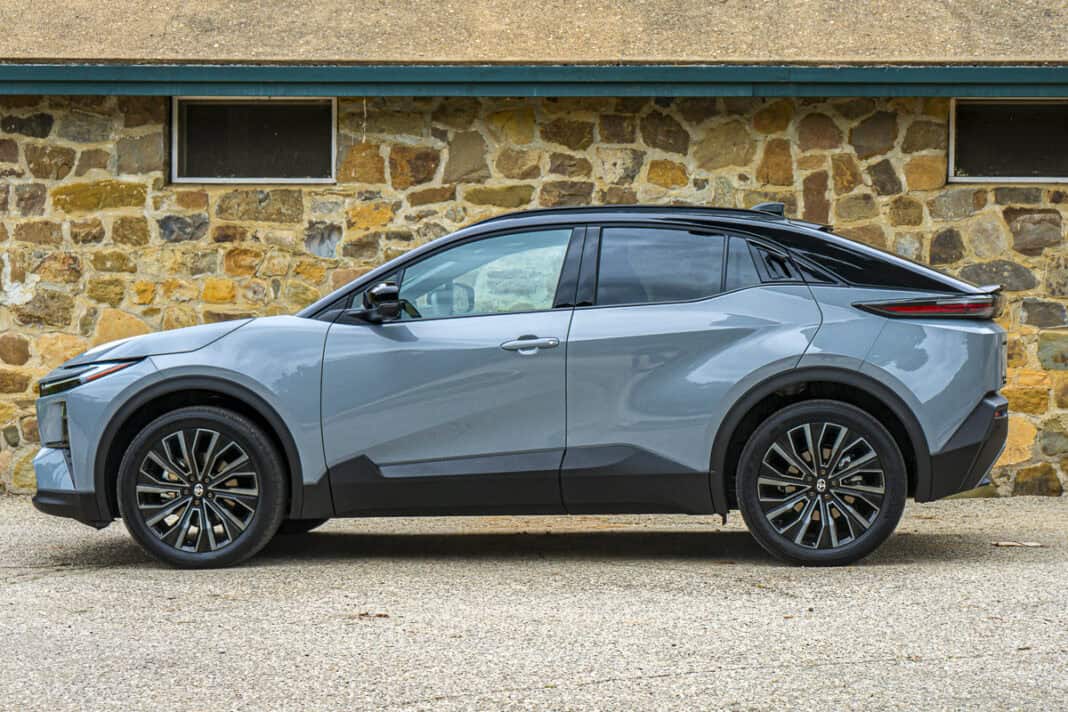
Here’s a quick primer: Toyota’s newest EV, the C-HR, is a squat-bodied small car that’s smack between the size of the Corolla Cross and the Subaru Crosstrek. But on paper, anyway, it’s definitely more like a WRX or Toyota’s $41,115 GR Corolla. The latter, gas-powered AWD sports car produces 300 horsepower at 6,500 RPM, and 295 lb ft of torque at 3,250 RPM. Car & Driver says their tests show that’s good enough to hit 60 MPH in 4.9 seconds.
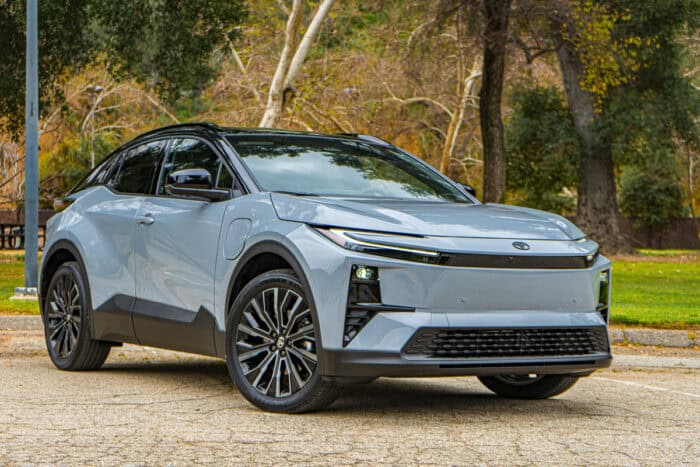
Now, however, for $37,000, you can have the C-HR. It’s also got AWD, and according to Toyota, it’s capable of getting to 60 MPH in…4.9 seconds. But carmakers are always conservative when they issue 0-60 numbers, because they want consumers to feel like heroes when they can replicate such chases. So my guess is the CH-R is even faster than that, plus its 323 lb ft of torque isn’t only a higher digit—it’ll hit from 0 RPM, as will all of the car’s dual-motor 338 horsepower.
To be clear, we’re in new territory here. There have certainly been faster EVs to this point. But compact ones with short wheelbases are too rare. The new Chevy Bolt will be that, but quick? Lithe? I’m not betting on that. So the C-HR (and its forthcoming twin, the Subaru Uncharted) suggest an EV moment where affordable, quick, and sporty electric cars are at long last arriving.
Related – 2018 Toyota C-HR Review
Not Perfect
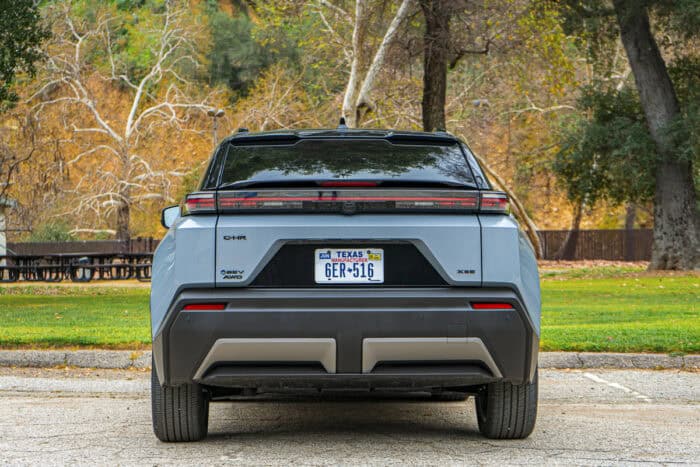
- Power Output: 338 hp (combined system)
- Torque: 323 lb-ft (combined)
- Drivetrain: Dual-motor All-Wheel Drive (AWD)
- 0–60 mph: 4.9 seconds (manufacturer-est.)
- Battery: 74.7 kWh lithium-ion
- DC Fast Charging: 10–80% in ~30 minutes
- Max DC Charging Rate: 150 kW
- Onboard AC Charger: 11 kW
To be clear, there are a few realities to making EVs affordable that Toyota (and all BEV makers) have to face. Toyota says that under ideal conditions you could see recharging from 10-80 percent on a fast charger in about 30 minutes. However, the 11kW onboard charger will limit the speed of Level 2 home charging, with Toyota suggesting a total home charging time of 7.5 hours. That’s slower than you’ll see with some cars with higher capacity onboard chargers—though in my experience testing almost all EVs save massive pickups, plugging in in the evening and charging overnight on our Level 2 charger always means you’ve got a “full tank” the next morning.
“What’s next? Don’t be shocked to see Toyota drop a GR version of this car with blistered fenders and a lowering kit, aiming the C-HR directly at competition like Hyundai’s Ioniq N cars.”
Where slower onboard chargers can be a headache is if the only public juice around is Level 2, and your goal is to add some range while you’re at the grocery/big box store doing chores or figure you’ll top up at the L2 charger at the rec center while your groms are at soccer practice.
Nope, slower L2 charging is hardly a dealbreaker, just a factor to be aware of.
Decent Cargo, Cramped Second Row
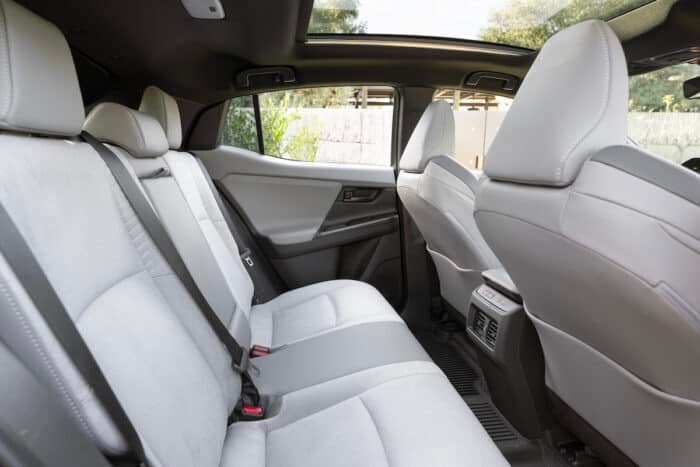
Speaking of toting around children and daily duties like fetching groceries, the CH-R’s 25.3 cubic feet of cargo volume behind the rear seats slays the 17.3 cubes in the hatch of the GR Corolla, and is also just slightly more than you’ll see in the hatch of the Corolla Cross, too. Also, the C-HR’s maximum 59.5 cubes is far superior to the 46.9 cubic feet in the Corolla Cross, and is nearly equal to the 63.9 cubic feet in the Subaru Crosstrek.
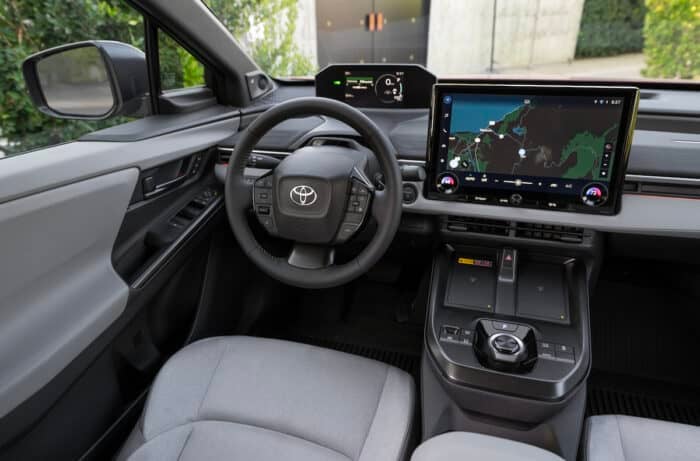
Both the Corolla Cross and the C-HR have about 32 inches of rear seat legroom, however, which is definitely kids-only territory (compared to 36.5 inches in the back of the Crosstrek). A more likely cross-shop might be the Tesla Model 3, and it has 34.5 inches of rear seat legroom.
However, that car has a trunk, not a hatch, which makes it way less useful for toting cargo.
Can’t Match Tesla Range, But Other Features Shine Brighter
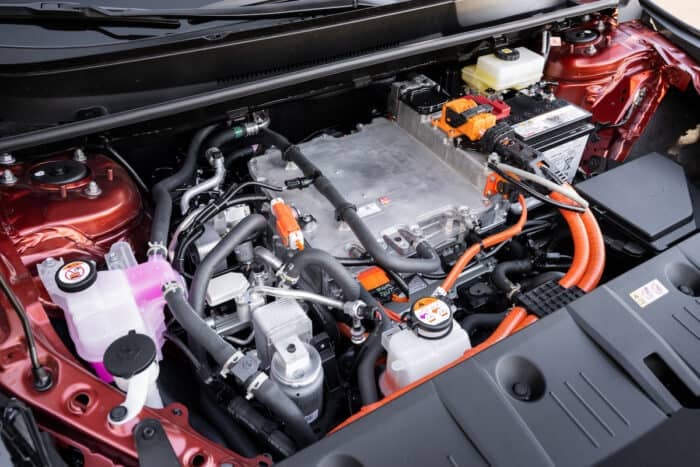
It’s no accident Toyota chose a starting price of $37,000. That’s about a grand cheaper than (current) Model 3 pricing. A base Model 3 with AWD, however, has up to 346 miles of range, whereas the maximum range on any grade of C-HR is 287 miles.
That said, there are several standard features with the C-HR that Tesla doesn’t offer. That starts with more comfortable seats (Tesla’s can feel pretty hard and unsupportive), wireless charging for two phones, wireless pairing with Apple CarPlay and Android Auto, advanced cruise control with lane-keeping assistance, and heated front seats and steering wheel. Also, Toyota doesn’t lump all controls into a central tablet display the way Tesla does, which means, yes, there are dedicated inputs for climate functions, audio volume, etc.
The XSE grade, for $39,000, adds rear heated seats, a panoramic glass roof, driver’s seat memory and 20-inch wheels. But you may not want those hoops, because they drop range down to 273 miles, and don’t forget that larger wheels mean you’ll be spending more for larger tires when the time comes to swap worn rubber.
The Cheaper Option(s)
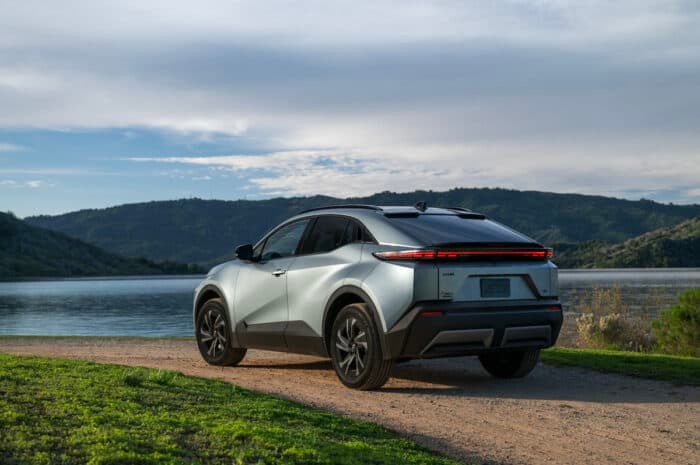
You can slightly undercut the price of the C-HR by going with the front-wheel-drive base Subaru Uncharted instead. That car starts at $34,995, and, possibly, because it’s not AWD, it may have a range topping 300 miles, though the official EPA range isn’t out yet. Still, with only 221 horsepower and the same, 74.7 kWh battery as the Toyotas (all of these are co-assembled in Japan), the FWD version of this platform seems very likely to eke out more distance per charge. By the way, even in front-wheel-drive guise, Subaru ensures a generous, 8.2 inches of ground clearance, so this will still be a capable car for heading up the average dirt access road to a hiking trailhead.
And, if range matters more than muscle, and you want to save a few bones, the base Subaru Uncharted is clearly the better value play.
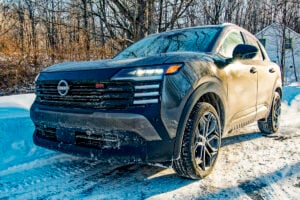
But you can go yet cheaper with the $29,990 Nissan Leaf (303 miles of range), or the forthcoming next-generation Chevy Bolt, which will retail for $28,995. The Bolt’s 262 miles of range, however, might give buyers pause.
Takeaway: The C-HR’s Edge
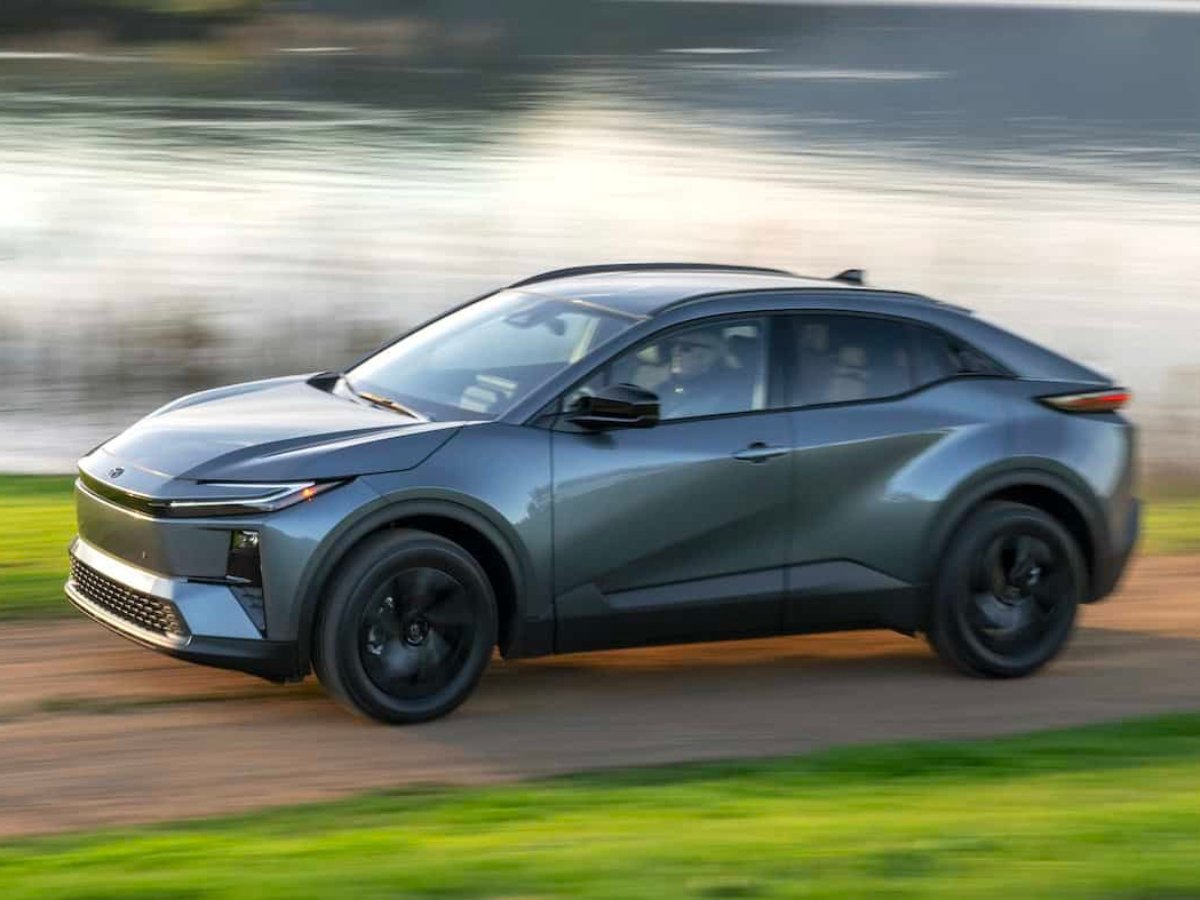


Turning back to the Toyota as the baseline, the carmaker has promised taut handling and a sporty ride, and given that it’s a full foot shorter than the Corolla Cross, that’s not hard to believe. And don’t forget the weight’s in the floor, so it’s going to corner well.
Sure, because of those batteries, you’re looking at a vehicle that’s a good thousand pounds heavier than the equivalent-scale Subaru Crosstrek, but I’m betting the added power and torque, and its short wheelbase, should make the C-HR a pretty fun, stealth sporty car. Plus, unlike Toyota’s GR Corolla, which is a blast—but also, pretty boisterous—the C-HR’s operation will be totally silent.
Sporty, powerful, useful, plus AWD, and all for shy of $40,000 is pretty unheard of these days no matter the fuel source. So the C-HR should sell well.
What’s next? Don’t be shocked to see Toyota drop a GR version of this car with blistered fenders and a lowering kit, aiming the C-HR directly at competition like Hyundai’s Ioniq N cars. Toyota is all about TRD and GR versions of as many of their cars as possible, so that direction seems 100 percent obvious for their EVs, too.
2026 Toyota C-HR Specs
| Specification | 2026 Toyota C-HR (SE AWD) |
|---|---|
| Power Output | 338 hp (combined system) |
| Torque | 323 lb-ft (combined) |
| Drivetrain | Dual-motor All-Wheel Drive |
| 0–60 mph | 4.9 seconds (est.) |
| Battery | 74.7 kWh lithium-ion |
| EPA Range | 287 miles (SE) |
| EPA Range (XSE) | 273 miles |
| DC Fast Charging | 10–80% in ~30 minutes |
| Max DC Charging Rate | 150 kW |
| Onboard AC Charger | 11 kW |
| Cargo Space | 25.3 cu ft (59.5 max) |
| Starting Price | $37,000 |