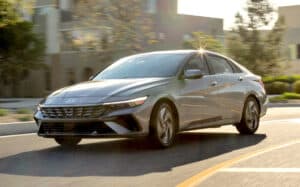

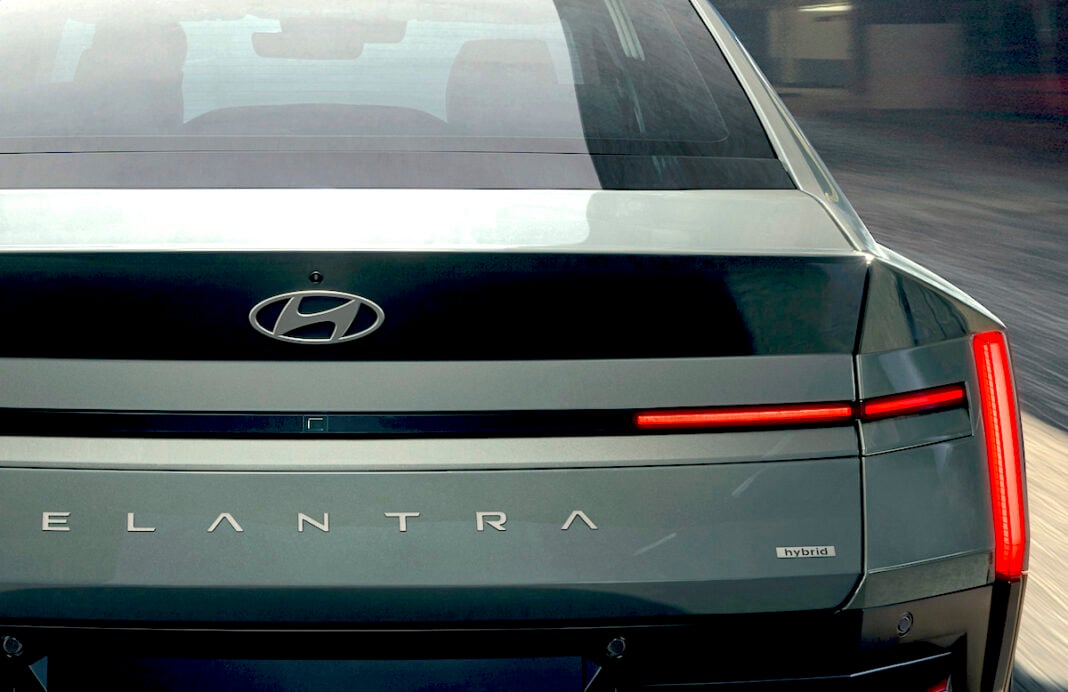
Hyundai may have just given buyers a pretty good reason to skip the regular Elantra. The completely redesigned compact sedan debuted at the 2026 Los Angeles Auto Show, bringing sharper styling, a larger cabin, and considerably more technology. But look beyond the new sheet metal, and there’s an interesting question: why choose the gasoline model when the hybrid appears to offer so much more? There’s a catch, of course. The standard Elantra carries a 2027 model-year designation, while the new hybrid is a 2028. Hyundai hasn’t announced exact U.S. arrival dates or pricing for either, but the differences are already worth examining.
The Elantra Hybrid Has More Going for It
The regular 2027 Elantra sticks with a 2.0-litre four-cylinder producing 147 horsepower, paired with Hyundai’s Intelligent Variable Transmission (IVT). That output should sound familiar. The 2024 Elantra refresh brought revised styling, more technology, and interior upgrades, but carried over the existing engine lineup. Three model years later, the regular car still makes the same 147 horsepower. Hyundai has made some refinements, including changes to thermal management and reduced transmission friction, while targeting up to 35 mpg combined.
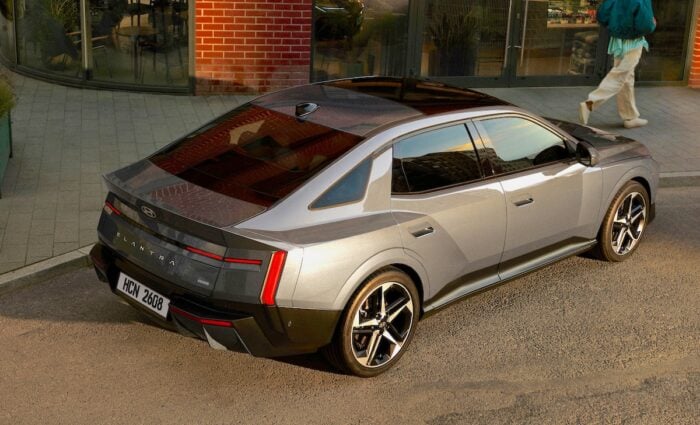
The 2028 Elantra Hybrid tells a different story. Its 1.6-litre gasoline-electric powertrain now produces 155 combined horsepower, up from 139 in the outgoing model, while targeting up to 53 mpg combined. That’s a considerable efficiency advantage over the standard car, though the current 2026 Elantra Hybrid Blue is already EPA-rated at 54 mpg. And horsepower and fuel economy aren’t the only differences.
The hybrid also gets a six-speed dual-clutch transmission instead of the gasoline model’s IVT, along with a multi-link independent rear suspension in place of the standard car’s torsion-beam setup. Neither guarantees a better driving experience, but they’re meaningful mechanical differences in a segment where keeping costs down usually takes priority.
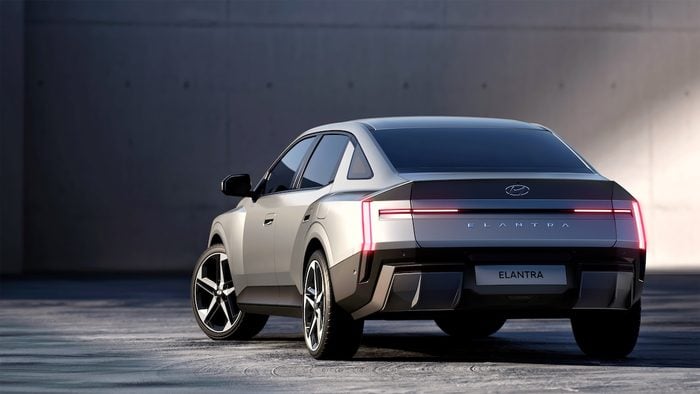
There’s also adjustable regenerative braking and a new Stay Mode, which can operate the climate control and other electrical features for up to 30 minutes while parked, using the hybrid battery.
2027 Elantra vs. 2028 Elantra Hybrid
| Spec | Gasoline | Hybrid |
|---|---|---|
| Model year | 2027 | 2028 |
| Engine | 2.0L four-cylinder | 1.6L hybrid |
| Horsepower | 147 hp | 155 hp |
| Transmission | IVT | 6-speed DCT |
| Combined fuel economy | Up to 35 mpg | Up to 53 mpg |
| Rear suspension | Torsion beam | Multi-link independent |
Fuel economy figures are preliminary Hyundai targets, not final EPA ratings.
So Why Buy the Regular 2027 Elantra?
Price, most likely. And possibly timing. Hyundai hasn’t released U.S. or Canadian pricing, so we don’t know how much more the hybrid will cost. If the difference is substantial, the regular Elantra could still make plenty of sense, particularly for buyers who drive fewer miles and simply want an affordable, well-equipped sedan.
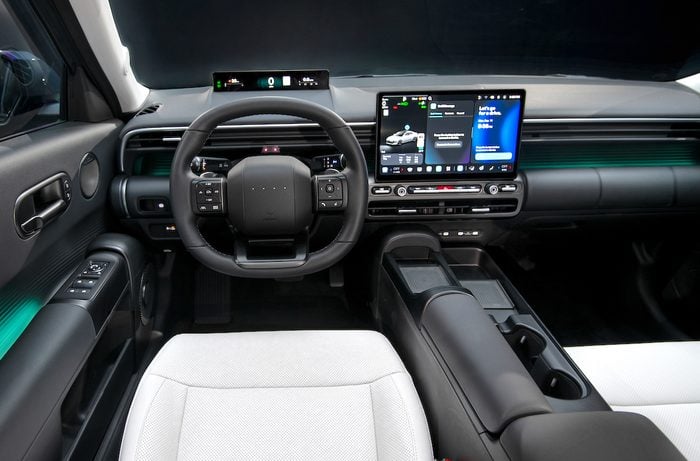
It’s not exactly lacking, either. Both versions benefit from the redesign’s longer wheelbase, 39.1 inches of rear legroom, and a standard 12.9-inch infotainment display. The new Elantra is 3.4 inches longer than before, bringing it closer to mid-size sedan territory without abandoning its compact-car positioning.
For buyers who don’t care about electrification, the gasoline version should remain a perfectly reasonable choice. And until both cars are available to drive, there’s no reason to declare the hybrid the better vehicle outright. But on paper, Hyundai has made the decision unusually interesting. The hybrid offers more power, substantially better fuel economy, and a more sophisticated rear suspension. That’s quite a bit to give up simply to avoid a battery and electric motor.
The regular 2027 Elantra doesn’t look like a bad car. Far from it. But unless Hyundai creates a meaningful price gap between the two, waiting for the 2028 hybrid could be the smarter move.