
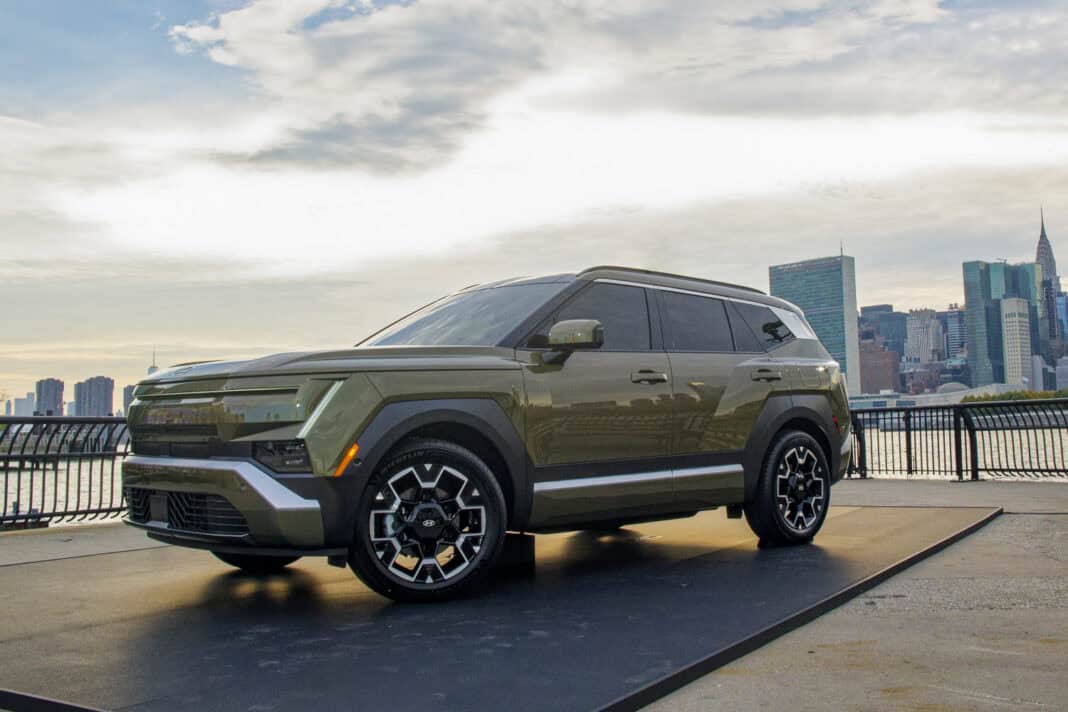
Hyundai’s new Tucson is aimed directly at the Toyota RAV4. This isn’t really news, because the RAV4 is perennially the first- or second-highest volume seller in North America. By default, that means any five-seat-crossover brand is directly competing against it. But the tech in the Tucson, and especially how Hyundai’s deploying it, highlight a bull’s-eye target on the Toyota, and here are multiple ways that’s clear, both from what I saw from the Tucson’s debut in Queens, New York, and via information they shared about the 2027 Tucson at the reveal. (FYI, we didn’t get to drive the crossover yet. So some of my suppositions still have to be backed by more than data.)
The Tucson Hybrid Gets a Much-Needed Efficiency Boost
First, Hyundai made clear that their hottest-selling Tucson has been their extant hybrid, garnering 31 percent of sales. And those numbers are from 2025, before the war with Iran caused gas prices to balloon by 40% and counting. Never mind the Trump White House detonating EPA fuel economy standards; buyers aren’t dumb and will continue to chase fuel efficiency.
Given that, Hyundai’s challenge has been Toyota’s combined 43 MPG (from the FWD Toyota RAV4 hybrid), which has outstripped the combined 38 MPG from the outgoing Tucson FWD Hybrid.
“Hyundai’s outgoing Tucson was already strongly competitive with the Toyota, both on price as well as spec. But the design wasn’t there yet.”
The new target, per Hyundai’s announcement today, is a combined 42 MPG for the FWD, and 40 combined MPG with AWD. That latter figure will still trail the Toyota RAV4 AWD figure of combined 42 MPG, but getting into the 40-mile frame will help Hyundai for sure.
Clever tech is part of how Hyundai will achieve its goals. For instance, they’ll shave energy use with a metal-and-ceramic-embedded heated glass windshield that can de-ice itself in winter (so you’re not blasting inefficient heated air). And that same glass has a reflective coating that cuts solar gain by 60 percent, reducing cabin heat by 2 degrees Celsius, to further reduce A/C use.
Related – 2022 Hyundai Tucson Hybrid Review
Hyundai’s added a clever feature called Stay Mode to the hybrid Tucson. This lets you run the A/C or heat off the battery while the vehicle is stationary, so you’re not burning gas.
Think of how many times you’ve walked by a car where someone has left the engine running trying to keep a tyke or pet cool (or warm) during a dash into the grocery. We all know idling delivers wretched fuel economy. And it’s hardly great for vehicle longevity. Hyundai’s Stay Mode smartly lets you only draw from the Tucson Hybrid’s 1.49 kWh battery.
A Bigger Tucson Creates More Space Than the RAV4
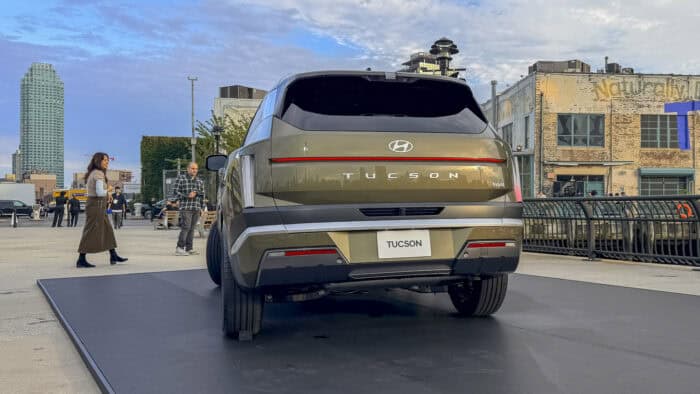
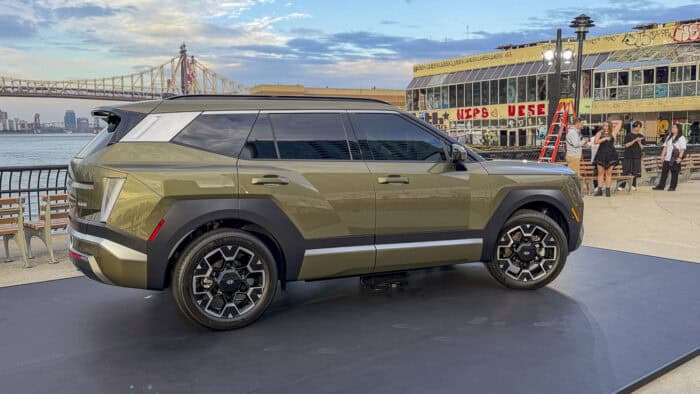
Meanwhile, the Tucson’s grown larger and more elegant. It’s drawing its looks from the big-brother Palisade. It’s 2.36 inches longer, 1.5 inches wider, and the wheelbase grew by an additional inch. Interestingly, it now rides about an inch lower, with the notable exception of the XRT Pro (more on that, below). That’s almost surely to gain a fuel economy edge. With a bigger interior, rear-seat legroom now bumps by a half inch, to nearly 42 inches, which smokes the 38 inches in the second row of the RAV4. And the already winning 38.7 cubic-feet of cargo capacity (vs. 37.8 for the RAV4) jumps to 41.7 cubic feet. We don’t know the folded-seat maximum cargo capacity, but the outgoing Tucson was already top of the class with 80 cubic feet, besting the RAV4 by a full 10 cubes.
Related – 10 Interior Changes You’ll Notice in the 2026 Toyota RAV4
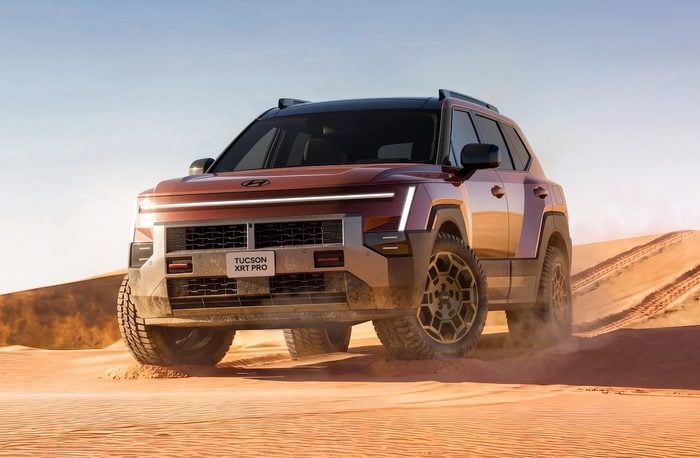
XRT Pro Brings a More Serious Off-Road Push
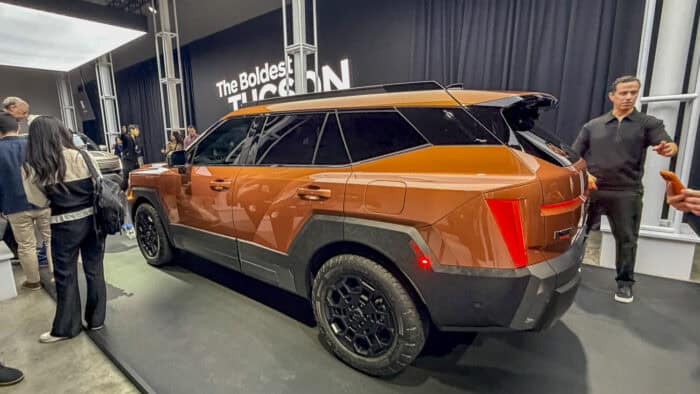
The Tucson will also gain an XRT Pro grade. That rides about an inch higher, with 8.3 inches of ground clearance and Hyundai gives it a butch look, plus all-terrain tires. Hyundai officials touted but haven’t enumerated functional undercarriage protection, so just how rugged the XRT Pro really is is a watch-this-space question.
We auto scribes also haven’t received exact approach and departure figures. For the record, 8.3 inches of ground clearance doesn’t quite match the 8.5 inches of Toyota’s RAV4 Woodland. I should note, too, that the MSRP of any of these grades wasn’t announced. That RAV4 Woodland sells for a bit more than $41,000, and I’ll bet four knobby tires Hyundai significantly undercuts that sticker with the XRT Pro. On the tech side, Hyundai’s added what they call a new E-Traction system for hybrid versions of the Tucson. This sounds like they’re using stability control to add power to the inner tires during cornering, effectively tightening the steering angle and reducing understeer.
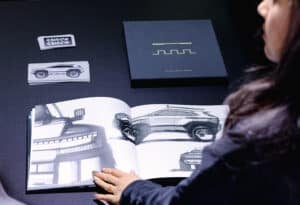
Related – Designing the Crater Concept: A Look Inside Hyundai’s Rugged Vision
One feature I’m very intrigued about is called Smart Terrain Assist (STA). You’d expect something like this to come from Land Rover, not Hyundai, but regardless STA derives data from the terrain via the car’s cameras and current tire slip, while visually highlighting a safe path forward. Think of this like Google Lens or AI analyzing the space around you and describing it for you; that’s very helpful in foreign surroundings, or if you have a disability. Here Hyundai’s taking that kind of capability and creating a game plan for off-roading.
A second feature works sort of like hill-descent control, but not just on hills. Target Speed Control manages the throttle and brakes, mapped according to the terrain, so the driver only has to steer through the chunder. Like a few peers (yes, Land Rover), Hyundai’s also added a virtual camera view that lets you see “through” the hood and underneath the Tucson.
A further feature called Memory Reversing Assist (MRA) uses a looped recording of the terrain you’ve just driven over so, if you get stuck and need to back up, the system can help you reverse more safely, using that recording to map a safe path of retreat.
Pleos Connect Rethinks the Tucson’s Interior Tech
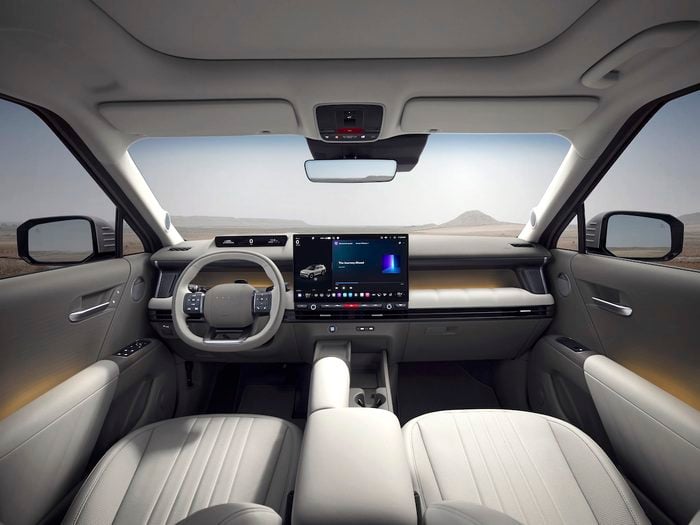
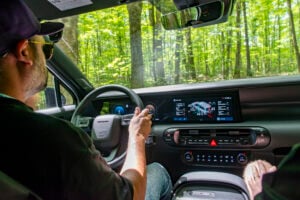
Hyundai’s also hyping Pleos Connect, a new infotainment system that looks like the next stage a lot of automakers are adopting, brewing together AI (their assistant is called Gleo), phone projection and onboard apps.
At least visually this looks promising, because Hyundai’s preserving large panels onscreen, one native, for car functions, another flexible (such as mapping), and a third flexible pane as well, for whatever app you’re currently using from your phone. Then a sub-menu of apps and constantly used items such as climate features rims the bottom of the screen, so they’re at the ready. You still get hard buttons for climate temp, audio mode, tuning and volume, too.
We’ve seen so many attempts at getting this right, but Pleos may present a decent solution. Again, watch this space for when TractionLife finally gets behind the wheel.
Takeaway
And speaking of that, the new Tucson looks like a clear shot at the RAV4. Hyundai’s outgoing Tucson was already strongly competitive with the Toyota, both on price as well as spec. But the design wasn’t there yet. Now it is, both inside and out. If it drives as good as it looks, Toyota will need to up their game. And Honda, with their pricier CR-V, will be under even more pressure, too.