

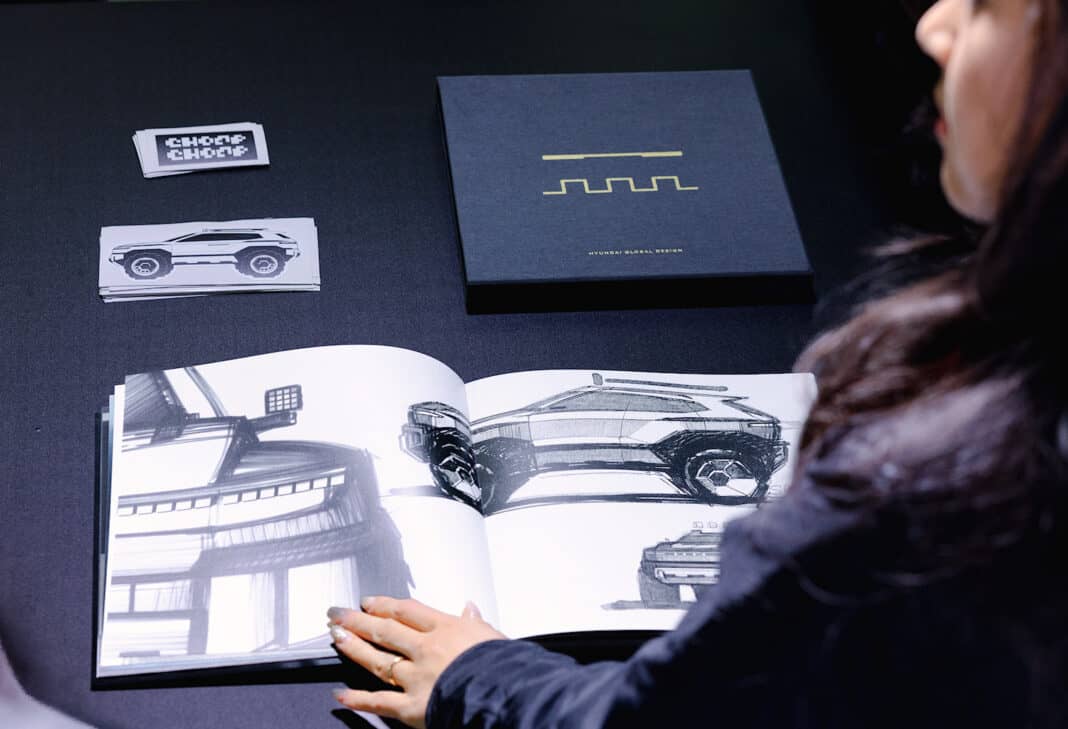
Hyundai’s Crater Concept looks like something that would fit in either a Batman or dystopian sci-fi movie. First impressions can speak loudly, and this vehicle certainly makes one.
The Crater is arguably a more extreme expression of Hyundai’s growing XRT adventure sub-brand when comparing it to the Ioniq 5 XRT, Santa Cruz XRT, and Palisade XRT Pro. The team behind it has produced something tough, not refined, peeling away into an adventure-first attitude through sharper angles and exposed hardware. It just looks thick and ready for anything. Hyundai has since pushed those rugged ambitions even further with the body-on-frame Boulder Concept unveiled at the 2026 New York International Auto Show in April.
So, why build it? What does it possibly portend for an OEM not known for this sort of thing?
Related – First Drive: 2024 Hyundai Santa Fe XRT Review
Adventure as a Starting Principle
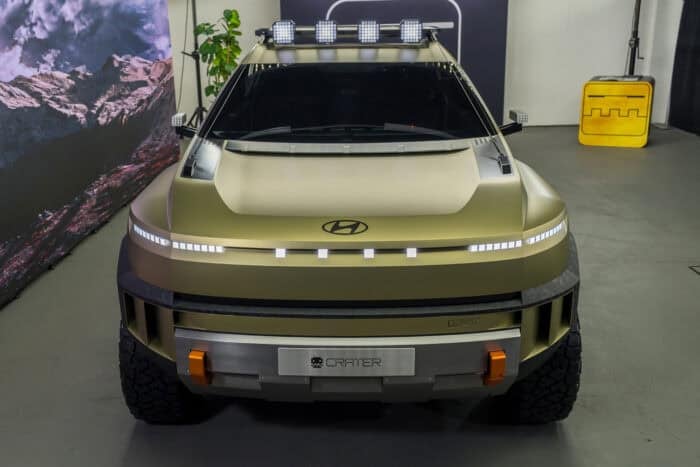
Hyundai’s design team says Crater started with “adventure” as the core principle behind it.
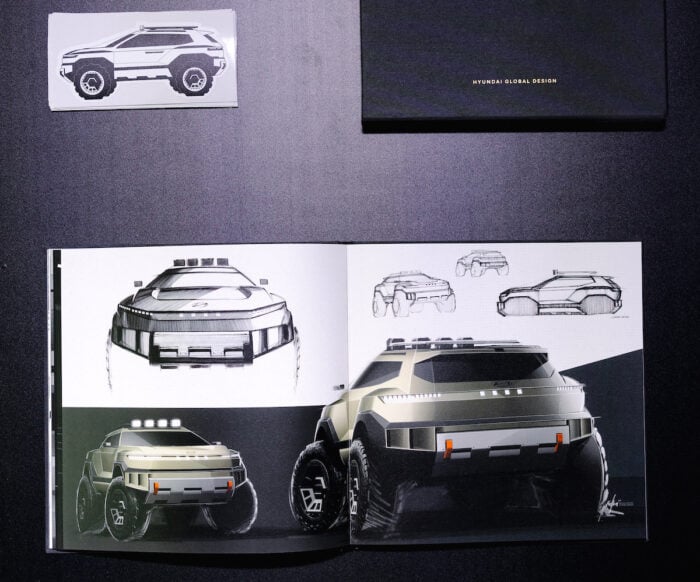
“We wanted a compact vehicle that truly feels like it can go anywhere,” says May Rihn, Exterior Designer, Hyundai Design North America, in an interview. “From the very first sketch, we designed Crater to handle any terrain, any condition and any season. Everything you see on the exterior comes from that mindset,”

It’s hard to argue the design philosophy isn’t obvious. A bold silhouette that looks like it means business and wants to roll over any terrain ahead of it. If this were a Level 5 autonomous vehicle, it’s hard to know where it might draw the line. It’s technically a compact SUV yet straddles the line between trail rig and urban crossover.
“With the guidance of Hyundai’s ‘Art of Steel’ philosophy, we explored how far we can push,” says Rihn.
Rihn and her team developed the Crater Concept at Hyundai’s America Technical Center in Irvine, California. She notes that the rugged outdoor culture of the American West helped define the vehicle’s identity, though one could also argue the Ford Bronco’s resurrection played a role in that, too. Not to mention Jeep Wrangler sales have increased in the last two years as well, helping push stronger demand for compact off-roaders. While still a concept, the Crater feels like Hyundai’s answer to that.
The ‘Art of Steel’ Inside And Out
The Crater challenges Hyundai’s existing design language because nothing else from the company looks like it. Is it an evolution or an intentional disruption? Or a bit of both?
“With the guidance of Hyundai’s ‘Art of Steel’ philosophy, we explored how far we can push,” says Rihn. “The evolution of design innovation is pressured and shaped to its limits for the end goal of something remarkable in Crater Concept.”
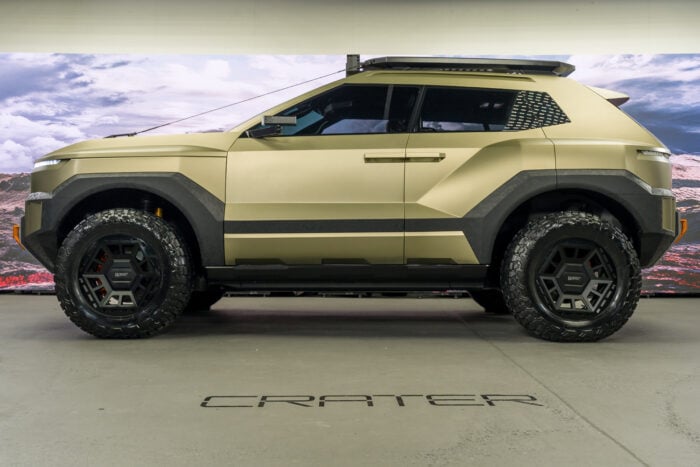
That might explain why Hyundai is presenting the Crater as a glimpse into the upper limit of its rugged-vehicle ambitions. Take the XRT idea and push it in a direction no one really saw coming. Less about slick aesthetics, its exterior is angular, robotic and clearly industrial, given the oversized fenders shaped like armored shoulder plates. The matte green-and-gold paint job gives it the air of a rugged ride in any situation, conjuring in me the feeling that ragtag rebels could roll into battle in a vehicle like this.
Related – Family-Friendly SUVs That Can Tackle Any Terrain
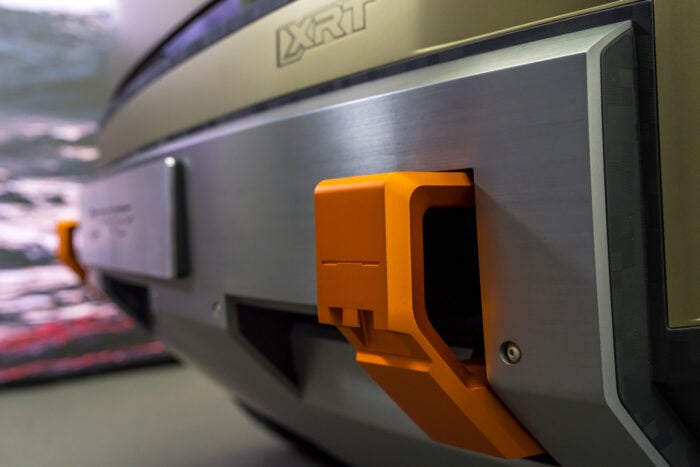
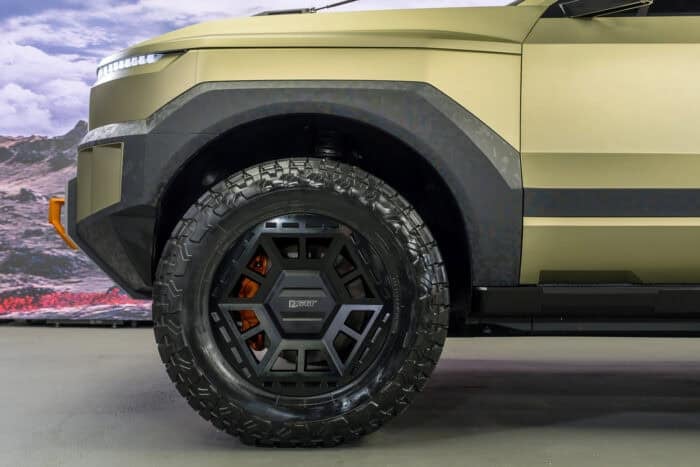
The 18-inch rims and 33-inch off-road tires make that at least somewhat plausible. Traction and ground clearance matter, of course, but certain elements, like the hexagonal rim design and Morse code references for the letter H via pixel clusters on both fascias, appear to be carryovers from the latest Nexo. Rihn’s team even utilized the Concept’s built-in recovery hooks by making them bottle openers as well. The side mirrors are basically removable cameras with built-in flashlights. Take one out and you can mount an action camera instead.
The team even christened a mascot, Crater Man, to act as a veritable “Where’s Waldo” all over the vehicle. Easter eggs abound as to its place in the Concept’s design. “Crater Man represents the Crater spirit: confident, daring and just meant to make people smile,” she says.
Built for Anyone Who Dares to Go Further
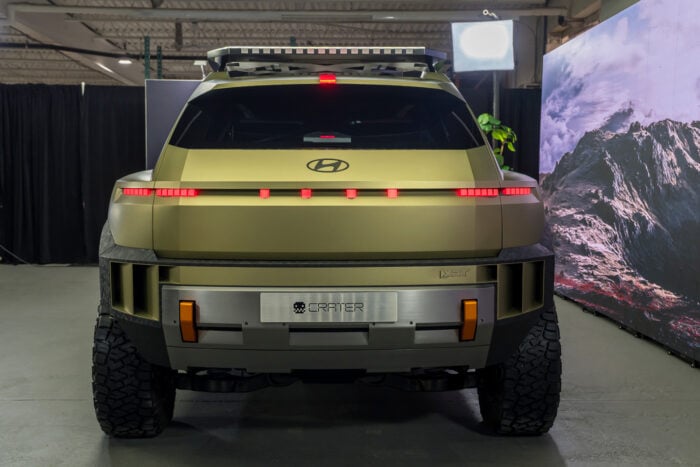
Who are those smiling people supposed to be? Rihn and team: “Anyone who dares to explore beyond the pavement.”
A tactile, gear-type off-road controller sits under the driver’s hand for rough trail use, accompanied by front and rear locking differentials, traction and braking management systems, and a terrain mode selector with presets for Snow, Sand and Mud. Additional tools include downhill brake control, trailer brake control, a compass and an altimeter. If Hyundai were to equip a production model Crater with all those tools, that would put it more in line with established off-roaders rather than soft crossovers.
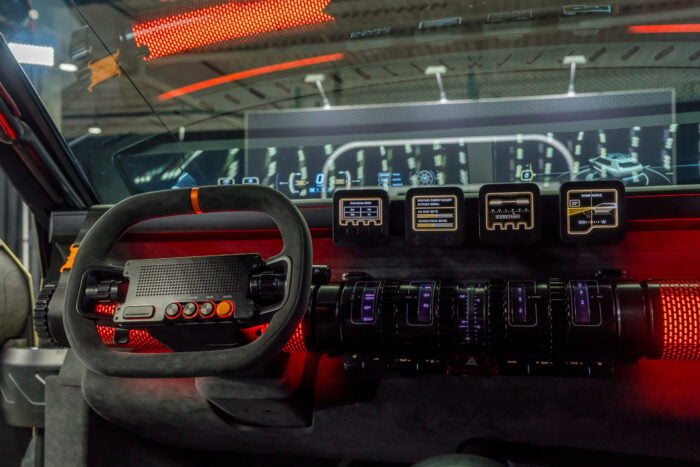
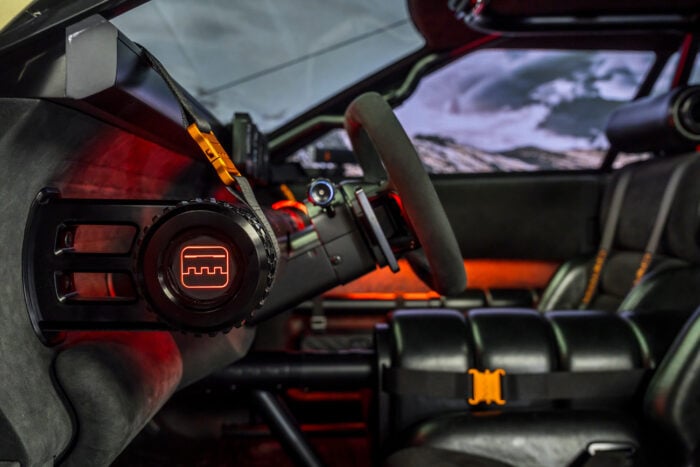
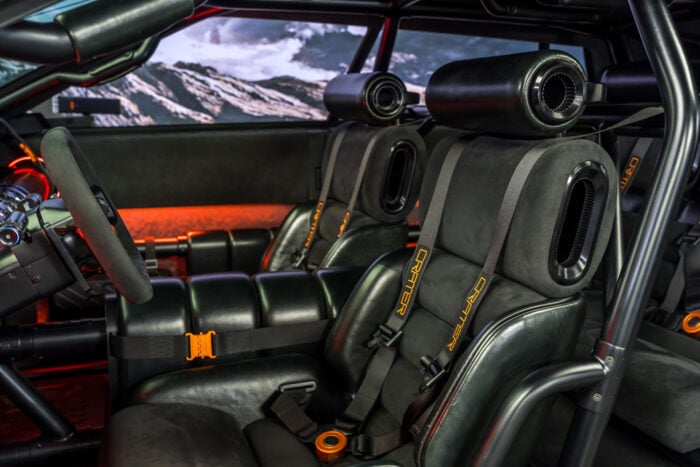
The interior is chalk full of similar sentiments. The dashboard features a high, cylindrical crash pad running the width of the cabin — like a structural beam wrapped in upholstery and mesh, with an orange glow leaking through the perforations to create an ambience that gave me some Blade Runner 2049 vibes.
The centre console continues the mechanical theme with round, drum-style controls that you twist or push, each paired with its own small indicator light — tactile in a way most current touch-heavy interiors are not. An integrated roll cage, exposed grab handles, and wraparound supportive seating add to the rugged personality.
There’s no traditional fixed infotainment screen because the implication is that it’s a “Bring Your Own Device” (BYOD) setup. Four removable small screens adorn the dash but they don’t do much when the ultimate prospect is to integrate phones and tablets. The driver side has a full-width heads-up display (HUD) that projects key information directly onto the windshield up ahead.
The Crater Within Hyundai’s Broader XRT Vision
The design team, for its part, is coy about what comes next. “You’ll have to wait to find out,” says Rihn. “This is just the beginning. We challenge ourselves to go beyond our customers’ expectations — this is what drives us every day. Listening to customer feedback, to then satisfy their preferences and desires, is truly top priority for us at Hyundai. We aim to make a lasting impact in their memories and create emotional connections as they venture beyond the familiar path. That’s our ‘Spirit of The Journey.’”
For its part, Hyundai’s leadership suggests the Crater is more than a flash in the pan. Randy Parker, President and CEO of Hyundai Motor North America, has gone on record in saying the company wants to gather feedback from retail partners and U.S. car buyers on the Crater. What’s clear enough is the Concept shows Hyundai likes the idea of a rugged SUV built for more than just a niche customer.
We just don’t know whether we’ll ever see it in a showroom or if it’s just another continuous step to shape future XRT models. What is clear is the Crater clarifies Hyundai has off-road ambitions in ways it never did before.