
Toyota is one of just a few automakers globally to be well positioned for the future. Sure, their 2025 profits dropped by 25 percent last year (thanks, tariffs), but that’s peanuts compared to how their rivals fared. You might point to BYD as a better model for the future than Toyota, and the jury there is a solid maybe. Yes, what BYD has achieved in very short order is nothing short of astonishing.
But Toyota is a truly global carmaker with decades of incremental growth and quality praised worldwide; BYD in its infancy could be a total gamechanger, but it takes billions of driven miles to prove that out. Pointing back to Toyota, they’re also not saddled with the poor decision-making that has hampered the Detroit Three time and again, most lately around moving faster than consumers on EVs.
Instead, Toyota, the hybridization juggernaut worldwide, has argued for over a decade that hybridization, where you make every car emit less carbon, but do it fleet-wide, made more sense than selling a few small-volume EVs at too-high prices (cough, Ford Lightning). Like weatherizing your attic before adding a mini-split heating system, you have to sweat the small investments first, that argument goes.
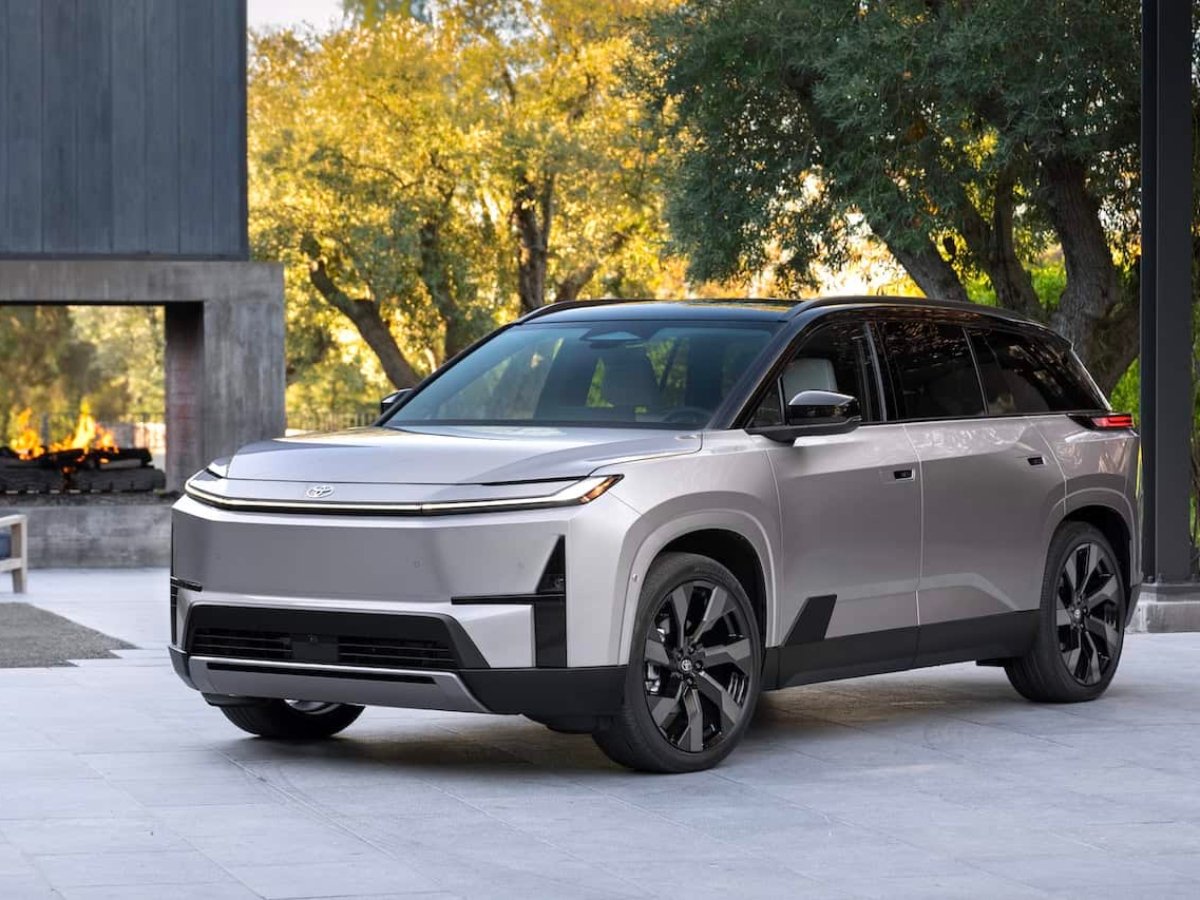
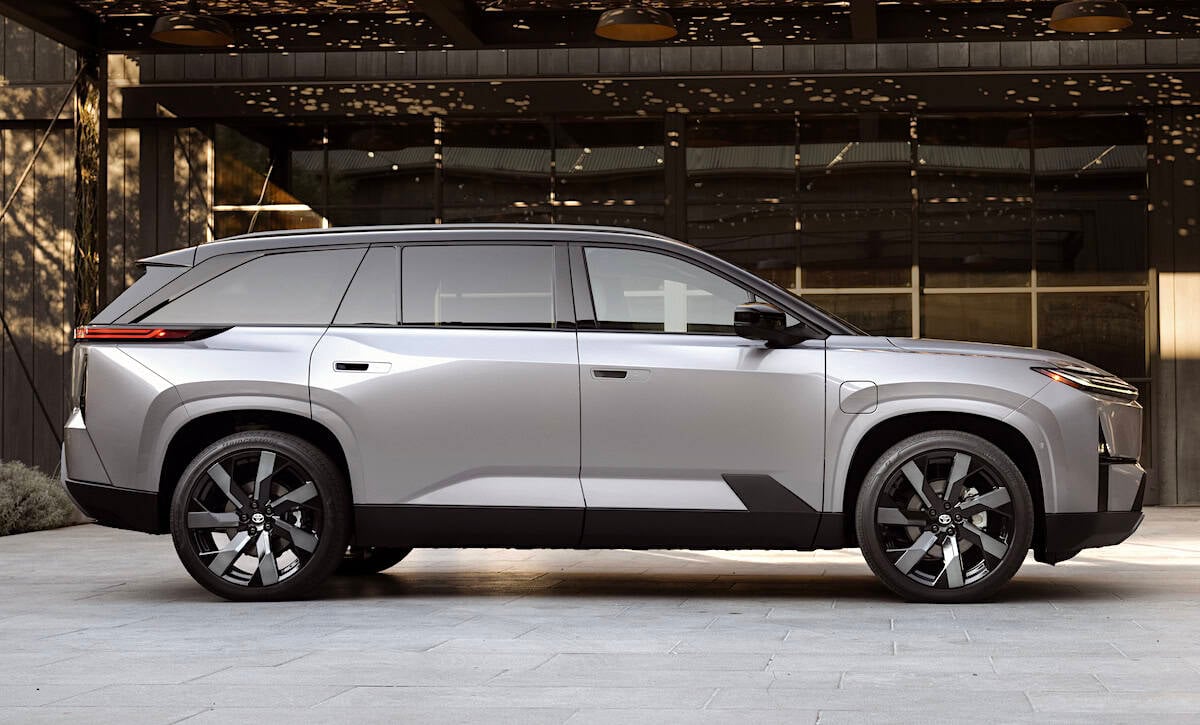
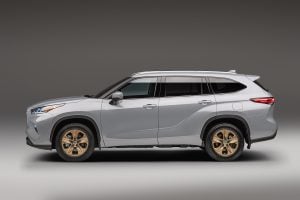
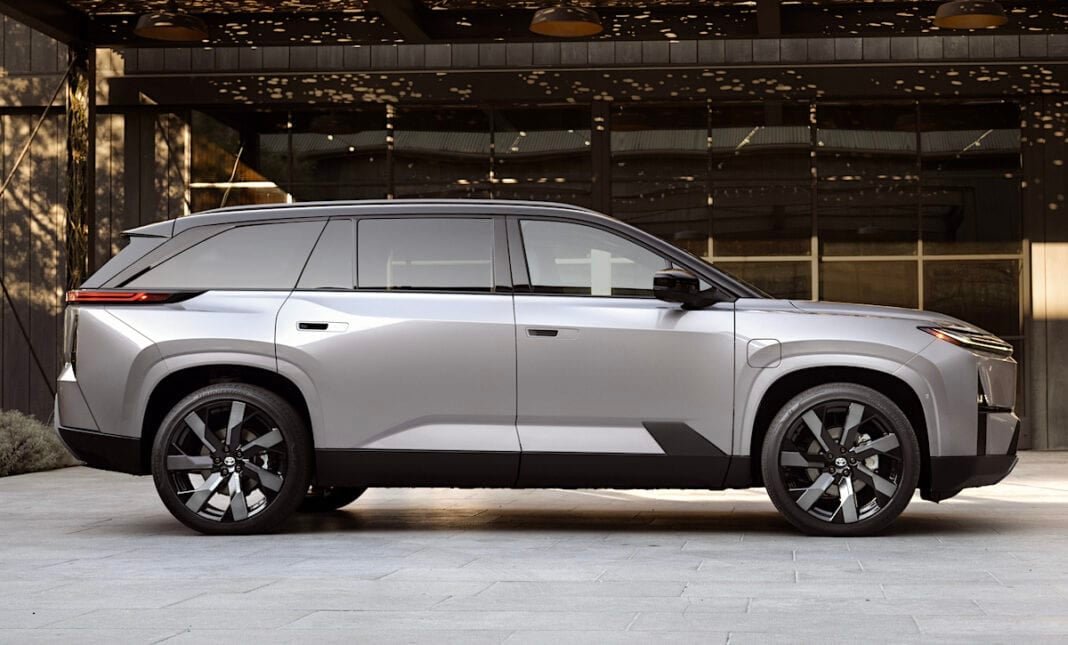
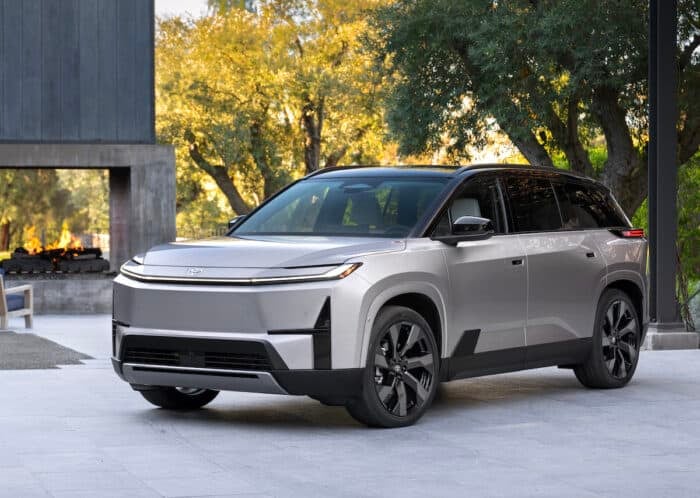
But now it’s 2026, and Toyota’s debuting three EVs, too, to add to its portfolio. These include the rebooted C-HR, a small, Corolla-sized crossover; the bZ Woodland, a twin to Subaru’s Trailseeker and that duo are basically for the Outback crowd; and now the Highlander three-row SUV, which becomes the carmaker’s only large family EV.
The obvious question is what’s changed, if anything, around Toyota electrification, and whether the Japanese giant can avoid the mistakes of its peers.
Related – Toyota’s Small SUV Lineup: Up Close with Each Model
Why the Highlander EV?
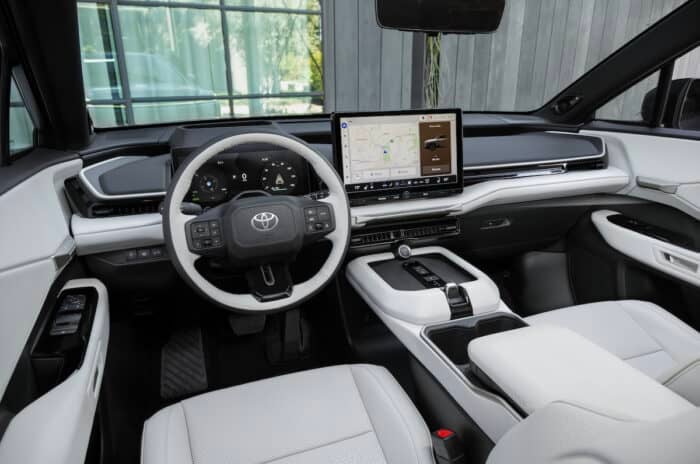
First, this Highlander EV is domestically made, at Toyota’s Kentucky plant, and can slot directly into that assembly line, which already produces high-volume vehicles like the RAV4 and the Camry. It sits on a modified version of the extant TNGA-K platform, which means that the new Highlander is (weirdly), more reflective of the era most legacy carmakers are going to, where their EVs can be made alongside existing gas and hybrid cars, rather than at a dedicated facility. Cost-wise, this is the only way to make the math work.
Here, Toyota is making an EV, in America, with their own know-how. It won’t be flashy, but it will be genuinely Toyota, and that might be all that matters.
Further, the Highlander EV will source batteries domestically, too. That’s critical. It should allow Toyota to sell the vehicle with less tariff overhang. The bZ Woodland and C-HR will sell at about $37,000, $45,000, and doubtless they could sell for less if they didn’t carry a tariff overhang for being built in Japan. We won’t have a price for the Highlander EV until later this year when it goes on sale, but my bet is it’s not a stiff penalty vs. the Grand Highlander.
A Bigger Highlander
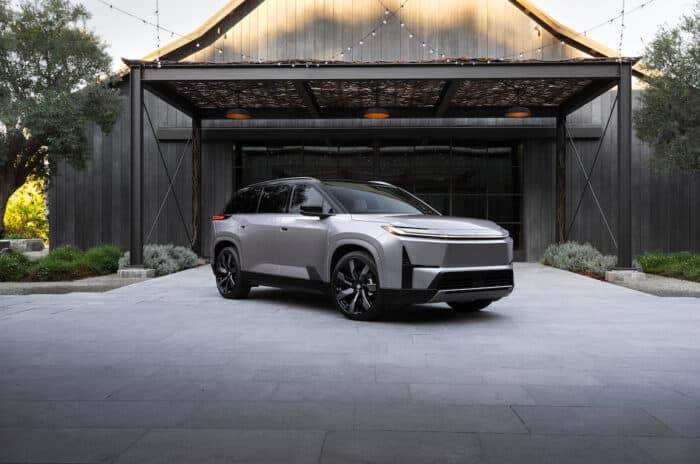
The biggest change from the gas Highlander is that the Highlander EV’s wheelbase was stretched by eight inches, and it’s four inches longer than the outgoing model. Now the Highlander EV is just a few inches shorter than the existing Grand Highlander—and offers a massive 45 cubic feet of storage behind the second row.
While I don’t have overall interior numbers to know this yet, it’s very possible that the new Highlander EV may have nearly as much interior volume as the bigger brother gas model, because they’re now so close to par on size. Depending on pricing, Toyota may benefit from heavy cross-shopping between EV and Grand Highlander buyers.
Power-Packed
Among the nitty-gritty details of the bZ Woodland that’s going on sale in March, is that it’s going to be very fast, thanks to nearly 400 ft lb of torque and 375 horsepower. Figure on 0-60 times under five seconds, no sweat.
Don’t expect the Highlander to be as fast, but I wouldn’t be even slightly shocked if it’s the fastest-ever Highlander, especially the two-motor AWD edition, which produces 338 horsepower and 323 ft lb of torque. Sure, this EV will be heavier than the outgoing gas car, but all of its torque will be available instantaneously. Nobody buys a Highlander for its muscle, true. But the outgoing model was always a little snoozy to get up and go. That won’t be an issue with the EV—save, perhaps, for one version, I mention below.
What Buyers Actually Want
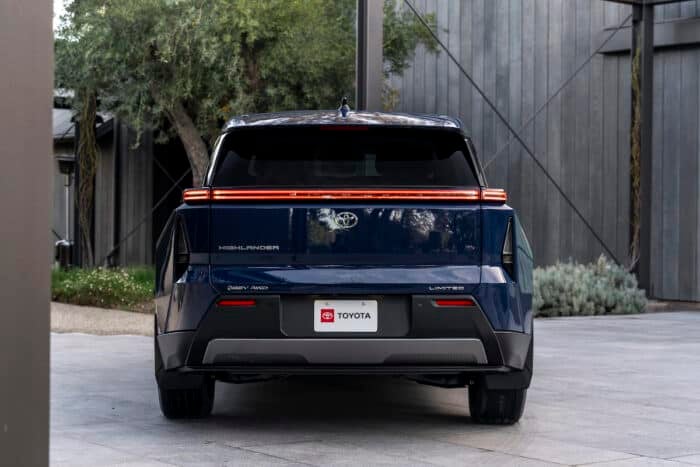
It’s always interesting to see what carmakers actually think buyers want. Often, in the EV realm, they’ll sell a longer-range two-wheel-drive EV, but that’s not very powerful.
But here Toyota’s betting Highlander customers want the option of AWD across the board, so even in the base, XLE grade with the smaller 77 kWh battery, you can have front- or AWD (287 miles of range for FWD; 270 for AWD).
Spend more (again, it’s not clear how much), and step up to the 95.8 kWh battery for 320 miles of range. But even if you get the smaller battery AWD Highlander, you still get the potent 338 horsepower and 323 ft lb of torque. Only the FWD, 77 kWh combo yields a relatively meek 221 hp and 198 ft lb of torque.
Or, put another way, Toyota is betting most buyers want more power and AWD, and is wisely offering a somewhat shorter-range version of the AWD Highlander EV that’s still going to feel very quick, and will likely be more agile than the Grand Highlander, thanks to a very low cg with all those batteries in the floor.
Maybe This Is The Stealth Three-Row EV That “Hits?”
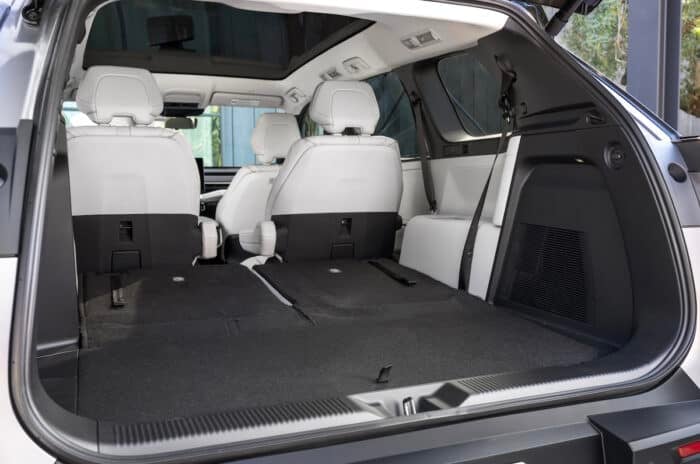
Even before the carnage wrought by revoking the EV tax credit in the U.S. (Carney is restoring Canada’s), three-row EVs weren’t selling great. See VW’s ID. Buzz as the candy-colored exhibit A, but the far better-executed Hyundai Ioniq 9 and Kia EV9 have hardly been lighting the sales world ablaze.
Partly, this is just down to the very high cost wall of three-row SUVs, period, where $60,000 isn’t, somehow, expensive. Now carmakers are expecting customers to (likely) make their first EV a family car, and also adjust to EV ownership at a big sticker price. That’s been a tough proposition.
But, since the Highlander EV and Grand Highlander will now sit very close on scale, and even possibly, price, Toyota might have a winning formula. FYI, you can add in an edge to the EV with V2L battery for stuff like powering appliances for camping trips, tailgating, charging devices and power tools.
Still, Toyota’s real ace, and why their incremental approach can work where it’s tougher for other brands, is that they’re Toyota. As we saw with brisk sales of the Honda Prologue, which was just a rebodied version of the Chevy Blazer EV, buyers may think brand first. They trusted Honda to “make” an EV, even though they didn’t.
Here, Toyota is making an EV, in America, with their own know-how. It won’t be flashy, but it will be genuinely Toyota, and that might be all that matters.