

This guide is updated, last posted on July 2022; now updated and republished.
The Toyota Highlander doesn’t always get credit for its capability (especially since the larger, more capable Grand Highlander arrived). Still, this mid-size SUV has quietly delivered a solid 5,000-pound towing capacity in its gas models for years, matching many rugged rivals without trying to be one. Even hybrid versions, capped at 3,500 pounds, handle small boats, utility trailers, and weekend gear with ease.
This quick guide breaks down towing capacity for every model year, explains gas vs. hybrid capability, and shows exactly what the Highlander can tow, whether you’re looking at the newest turbo models or an older V6.
Related – Palisade Vs. Highlander: Toyota’s Hybrid Edge Seals the Deal
Latest Toyota Highlander Towing Capacity
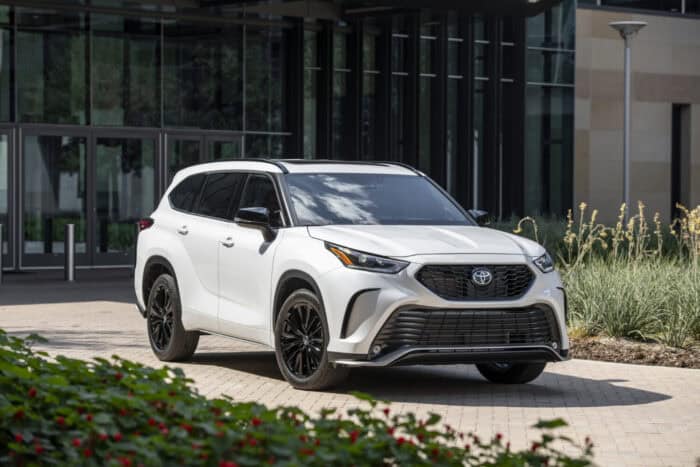
2025 & 2024 Highlander (Gas Models)
Toyota’s most recent gas Highlanders tow up to 5,000 pounds, continuing the same capability the model has offered for years. The newer turbocharged 2.4-liter four-cylinder replaces the old V6, but the tow rating remains unchanged. Equipped with an 8-speed automatic and available AWD, the gas Highlander is still the right choice for anyone who plans to tow regularly.
The advantage with hybrids is predictable efficiency, not hauling heavy trailers.
2025 & 2024 Highlander (Hybrid Models)
Hybrid models are capped at 3,500 pounds, a deliberate choice by Toyota as the hybrid system prioritizes fuel efficiency over heavy load performance. Hybrid Highlanders work best for lighter-duty towing, but the capacity doesn’t fluctuate by trim or model year, making the hybrid tow numbers very consistent across the board.
Highlander Towing Capacity by Year
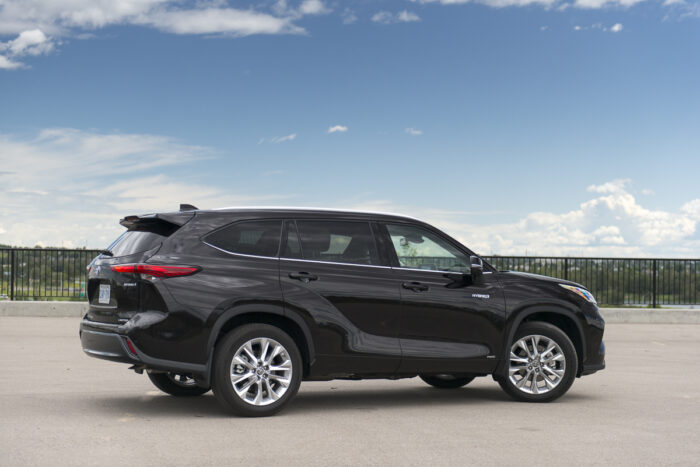
One of the most reassuring things about the Highlander is its predictability. Toyota has kept the tow numbers simple for nearly two decades; whether you’re shopping new or used, these numbers barely move. Toyota keeps things consistent:
- 5,000 lbs for properly equipped gas models
- 3,500 lbs for hybrids
Here’s a quick year-by-year reference (summarized for clarity):
| Model Year | Gas Tow Rating | Hybrid Tow Rating |
|---|---|---|
| 2025–2023 | 5,000 lbs | 3,500 lbs |
| 2022–2020 | 5,000 lbs | 3,500 lbs |
| 2019–2014 | 5,000 lbs | — |
| 2013–2008 | 5,000 lbs | — |
Gas vs. Hybrid: The Real Highlander Towing Differences
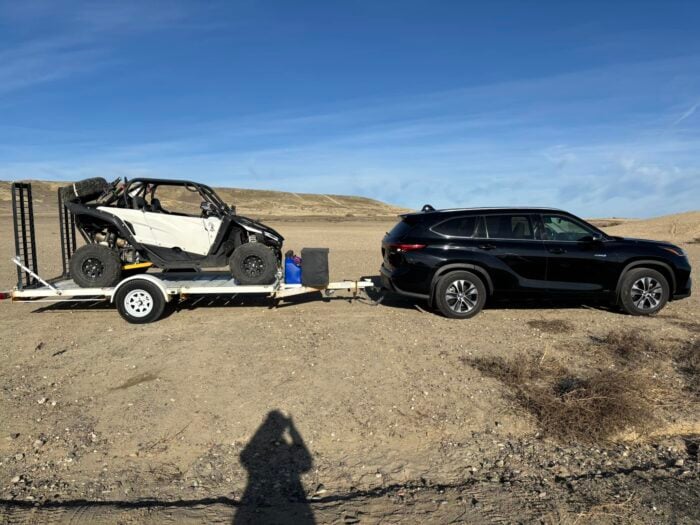
The gas Highlander has always been the towing champion in the lineup. Earlier models like the 2019 Highlander XLE we reviewed relied on Toyota’s proven 3.5-liter V6; newer ones use a more efficient 2.4-liter turbo. Either way, the setup is built to handle the full 5,000-pound rating when paired with the right tow package.
Hybrid Highlanders, like the 2020 Toyota Highlander Hybrid Limited we reviewed, on the other hand, pull back the power in exchange for excellent fuel economy. Their 3,500-pound rating is still respectable, but it’s aimed at lighter gear, the kind of weekend towing many families actually need. The advantage with hybrids is predictable efficiency, not hauling heavy trailers.
What the Highlander Can Actually Tow
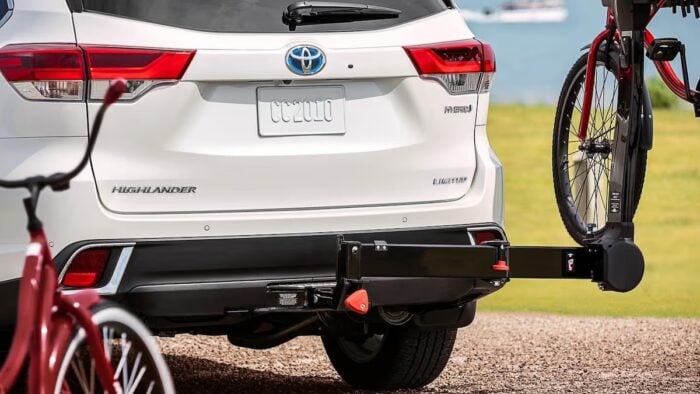
Even with its conservative image, a gas Highlander’s 5,000-pound rating covers an impressive range of real-world trailers. Depending on the year and setup, the Highlander can easily manage:
- A small to midsize boat
- A pop-up camper or teardrop trailer
- Lightweight travel trailers
- ATVs or UTVs on a flatbed
- Small enclosed cargo haulers
Hybrid models (with a still-solid 3,500-pound limit) are best suited to smaller setups, like jet skis, compact fishing boats, utility trailers, or lightweight campers. The key is matching the trailer and tongue weight to the model-year specification, something Toyota makes easy with its built-in warnings and Trailer Sway Control system.
Tow Package Requirements
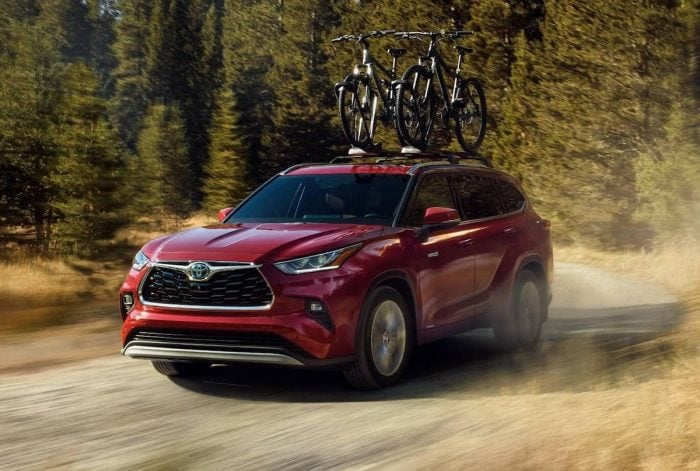
To hit the full 5,000-lb rating, Toyota requires the Highlander to be equipped with its tow package. This includes a heavy-duty hitch receiver, upgraded cooling components, and the proper wiring harness. Many trims, especially mid and upper levels, include this equipment from the factory, but on earlier models, it was often optional. AWD isn’t mandatory for maximum towing capacity, but it’s strongly recommended for stability, especially with heavier trailers or winter towing.
How the Highlander Compares to Competitors
| Model | Max Tow Rating | Notes |
|---|---|---|
| Toyota Highlander (Gas) | 5,000 lbs | Consistent across most model years |
| Toyota Highlander Hybrid | 3,500 lbs | Prioritizes fuel efficiency |
| Subaru Ascent | 5,000 lbs | Standard Symmetrical AWD |
| Kia Telluride | 5,000 lbs | Strong V6 torque |
| Hyundai Palisade | 5,000 lbs | Nearly identical to Telluride |
| Ford Explorer | 5,600 lbs | Requires specific engines/packages |
| Toyota 4Runner | 5,000 lbs | Body-on-frame, more rugged |
Toyota’s 5,000-pound rating sits right in the middle of the mid-size SUV class. The Subaru Ascent, Kia Telluride, and Hyundai Palisade all match it with similar ratings. Ford’s Explorer edges slightly ahead at 5,600 pounds, though engine choice plays a major role there. Where Toyota wins is long-term reliability and predictable capability. For most families, the Highlander offers more than enough towing muscle without sacrificing comfort or fuel efficiency.
Takeaway

The Toyota Highlander has never been marketed as a towing hero, but the numbers tell a different story. With a consistent 5,000-pound rating for gas models and a stable 3,500-pound rating for hybrids, the Highlander fits the real needs of most families: boats, campers, weekend trailers, and road-trip gear included. New or used, the Highlander delivers straightforward, dependable capability year after year (exactly what you’d expect from Toyota).