
A friend of mine told me recently that he barely remembered Buick existed. It was a brand his grandfather drove. Car brands die. And even, sometimes, come back to life. Witness Scout.
Mind you, the demise or rebirth of any brand often has far more to do with the whims of money and great—or woeful—decision making. Hummer is back, kinda-sorta? Then there’s Ducati, which was a dumpster fire until Audi came along and saved it. Ditto, Lamborghini.
Where Buick Fits Today
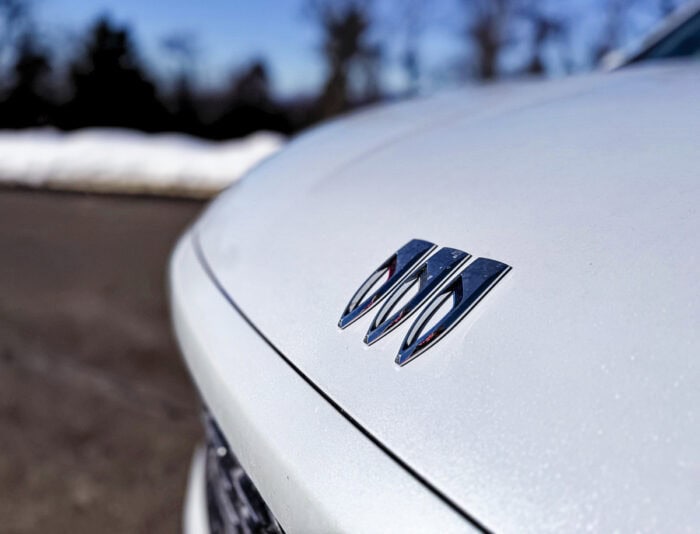
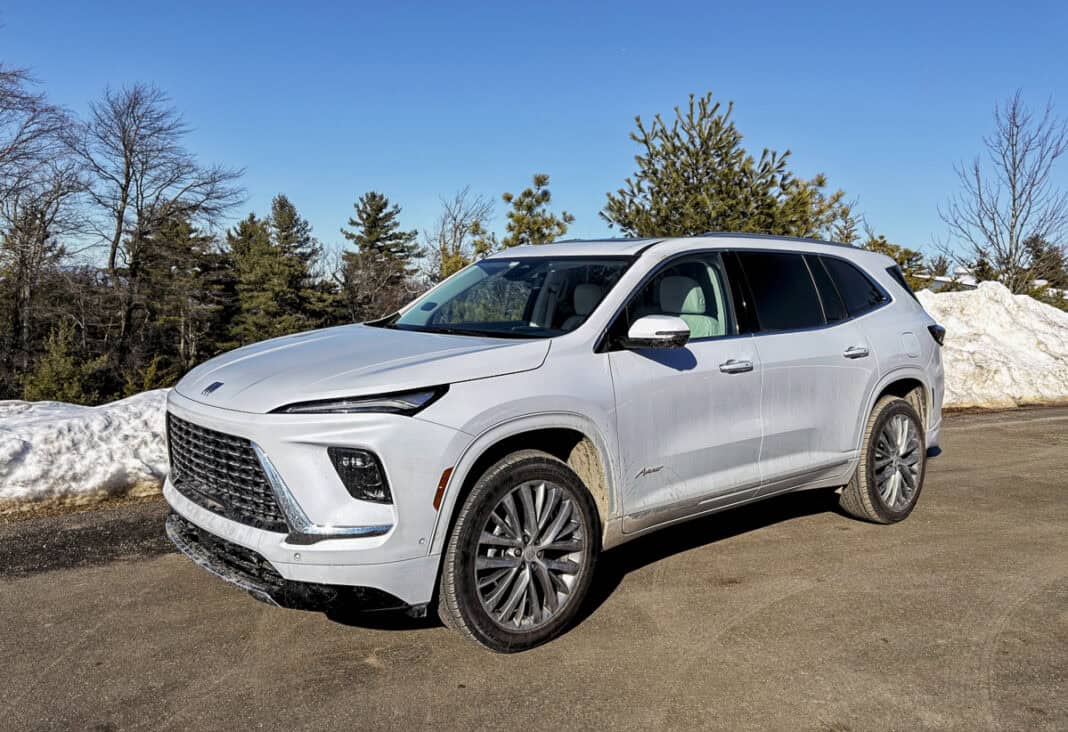
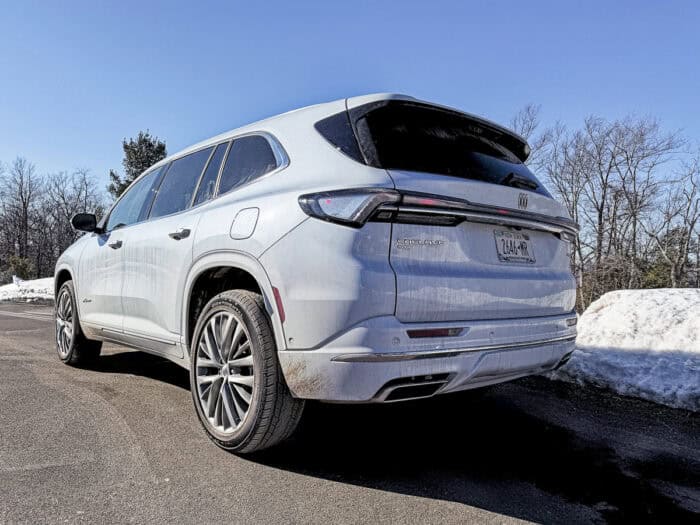
As far as Buick goes, it’s neither Lamborghini nor Ducati, nor Hummer, for that matter. As a great example of where making pretty good cars can get you, I can tell you that the Buick Enclave is a “pretty good” crossover that had a huge, 50 percent sales bump last year. That’s a big deal. And, no, it doesn’t much matter that underneath different sheetmetal the Enclave shares its hardware with the Chevy Traverse and the GMC Acadia.
For $48,590 (including U.S. destination charge), the base Enclave is a pretty good deal. You can’t sniff the Lexus TX for anything less than $58,000…
The problem for Buick isn’t (mostly) around the products it’s making. It’s that there’s so much competition even within GM, and their portfolio is tiny compared with a bigger brother with more muscle, GMC. There are no Buick trucks, which is a big branding deficit. Likewise, Buick doesn’t stake its claim to any solid turf like GMC (brawn) or Cadillac (luxe). Buick, instead, is merely “nicer” than Chevrolet. Though, arguably, the reason why the Enclave has sold so well is that, if you keep it basic, it provides a lot of goodness at right around $50,000. And even mighty Lexus doesn’t outwit Buick at this price.
Here are a few reasons why you should consider the Enclave if you’re trying to pack half a teenage soccer squad into your family bus. And, yep, a few arguments against the biggest Buick, too.
Better Digital Interface Than Lexus’s TX
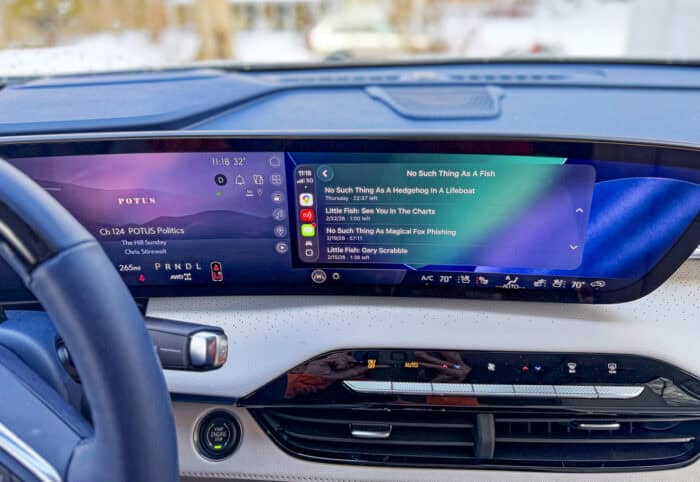
Here’s an oddity: GM’s long-term plan is to ditch integration with Android Auto and Apple CarPlay. But meanwhile, their Google-based IP still works quite well with those digital behemoths. The organization is relatively simple and clean in the Buick, and this is in contrast to what I find overly fiddly and complex in the rival Lexus TX. Plus, in the Lexus, steering wheel controls are “haptic,” meaning they’re not actually buttons, but sensors, designed to allow actuation based on where your fingers are. In fact, this always feels counterintuitive and you always find yourself distracted, staring at the cluster to confirm you’re entering the correct settings.
In the Enclave, steering wheel controls are actual buttons, and there are back-side controls for quick up-down volume or tuning adjustments of the sound system. Plus, there are discrete switches for some climate functions. But more than that, the organizational structure is simply less confusing than you’ll find on some German rivals, so you’ll spend less time hunting and poking around for functions. Weirdly, like Stellantis (i.e., Ram, Jeep), it’s the carmakers that try to do less, not more, that get these formulas more right than wrong.
More Power Than TX — Unless You Spend Even More for the TX Hybrid
Enclave vs Lexus TX (Gas): Performance Comparison
| Spec | 2026 Buick Enclave | Lexus TX 350 (Gas) |
|---|---|---|
| Engine | 2.5L Turbocharged Inline-4 | 2.4L Turbocharged Inline-4 |
| Horsepower | 328 hp | 275 hp |
| Torque | 326 lb-ft | 317 lb-ft |
| Transmission | 8-speed automatic | 8-speed automatic |
| Drivetrain | FWD / AWD | FWD / AWD |
| 0–60 mph (est.) | ~6.5 sec | ~7.5 sec |
| Towing Capacity | 5,000 lbs | 5,000 lbs |
| Fuel Economy (combined) | ~22 mpg | ~23 mpg |
All Enclaves get the same, 328-horsepower, 2.5-liter turbocharged engine. That’s a lot stronger than the TX’s 275-horsepower 2.4-liter, and the Buick’s 326 foot pounds of torque also bests Lexus’s 317, too. I would hardly call the Enclave “muscular,” but acceleration is brisk without strain, though I do wish you could use the paddle shift system without having to first engage the “Low” range of the transmission. Either make the paddles a default downshift/upshift system that readily gives the driver transmission control or ditch it entirely.
Related – 2018 Buick Enclave First Drive Review
Slightly Roomier Second Row and Cargo
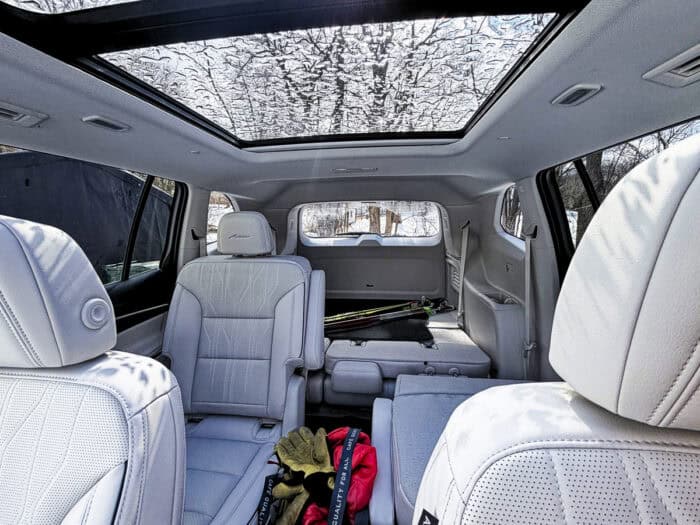
The Enclave and TX are darn near mirrors of each other’s legroom and cargo volume, but the Buick’s second-row knee room is longer by nearly three inches, at 41.4 inches, which is just about on par with some vehicles’ front-row legroom. Also, 23 cubic feet of cargo capacity behind the third row is a lot more generous than the bulk of three-row offerings, including the terrific Hyundai Palisade.
The Cost Argument
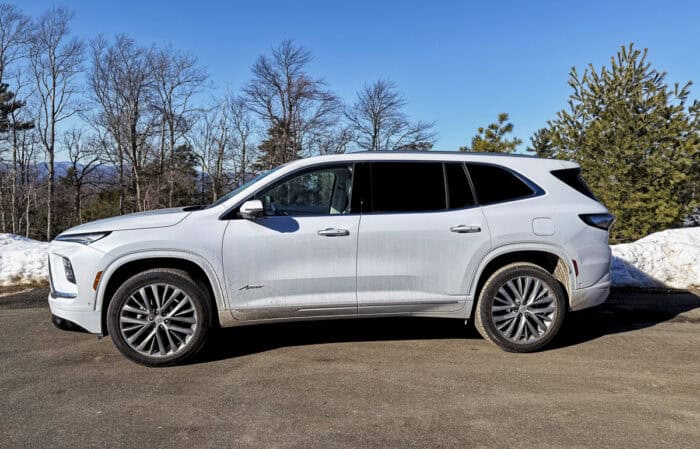
For $48,590 (including U.S. destination charge), the base Enclave is a pretty good deal. You can’t sniff the Lexus TX for anything less than $58,000, and meanwhile the Buick comes standard with an around-view camera, heated front seats, acoustic windshield, 12-speaker Bose sound system, and adaptive cruise control, plus Buick uses the audio system for noise cancelation. Even all-wheel drive is just $2,000 more.
All of which explains why the Chevy Traverse base customer might cross-shop this slightly more upscale clone and figure it’s worth roughly five grand more for the included bells and whistles, plus a somewhat more posh interior with better trim and a less plastic-not-so-fantastic feel of the Chevy.
Related – Is a Lexus TX Worth More Than a High-Spec Toyota Grand Highlander?
Takeaway: Buying Buick
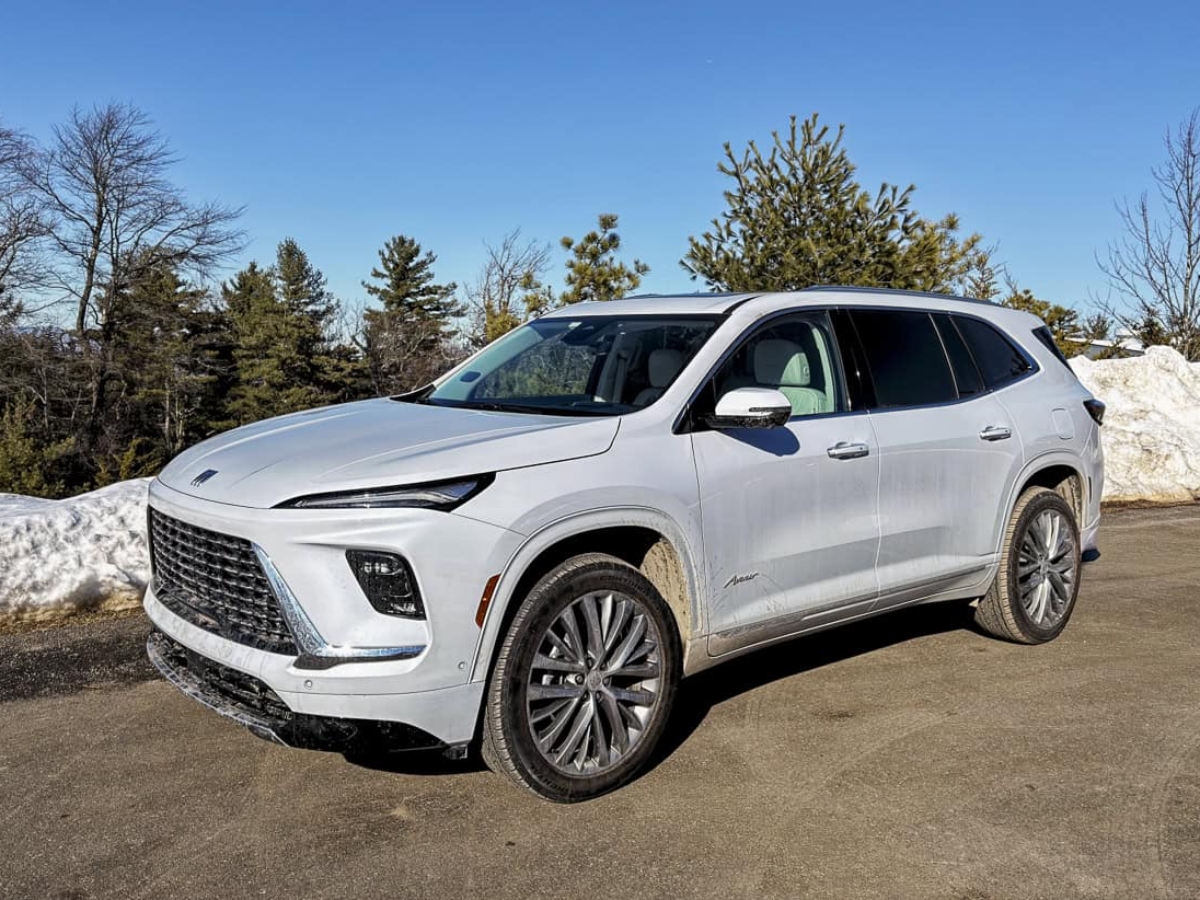


This post began with what Buick ain’t. It’s a label in search of meaning. A “default” purchase in this segment is Toyota’s Grand Highlander, which isn’t quite as luxurious as the Enclave, but at $45,000 (with destination) is definitely a competitor. Toyota sold 136,000 Grand Highlanders in 2025, which would amount to more than two-thirds of Buick’s entire 2025 sales.
Put another way, Toyota outsells Buick 10 to 1. Toyota is what Buick once was but no longer is. However, if you think of the Enclave as the upscale Chevy Traverse that Chevy doesn’t sell, it is a smart buy. And in an era when a Lexus TX is just a Toyota Grand Highlander with different cosmetics, that’s the best way to think about the upside of Buick.