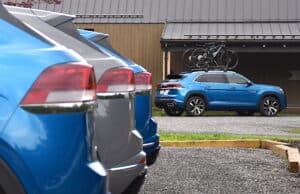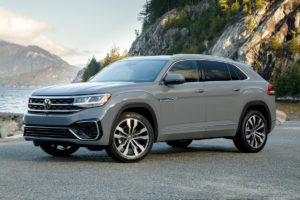

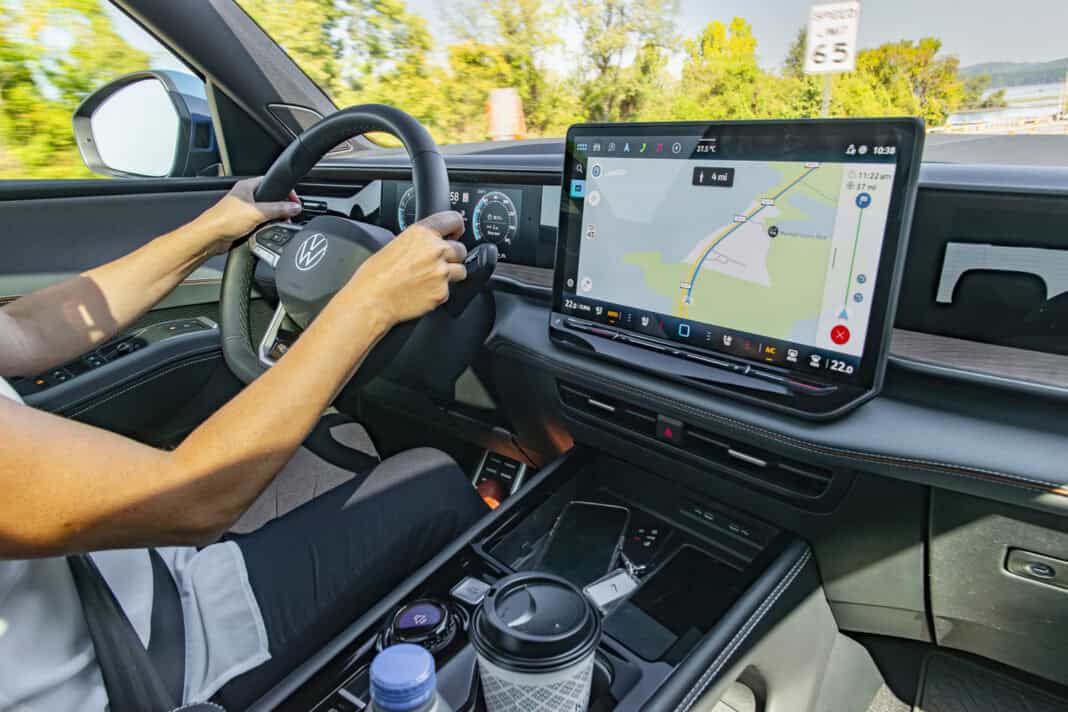
A decade is an eternity in the car world. Yet that’s nearly how long VW took to properly send its mid-size Atlas SUV into its next generation, first arriving as a 2018 model. Or, in boisterous PR speak, how long it took us to perfect the Atlas. There was a 2021 and 2024 mid-cycle refresh along the way (adding more tech inside to stay relevant, some upgraded materials, etc.), but this second-generation 2027 Atlas is a proper redesign, and the first VW SUV designed specifically for the North American market, as opposed to a global product forced to fit our lifestyles and driving habits.
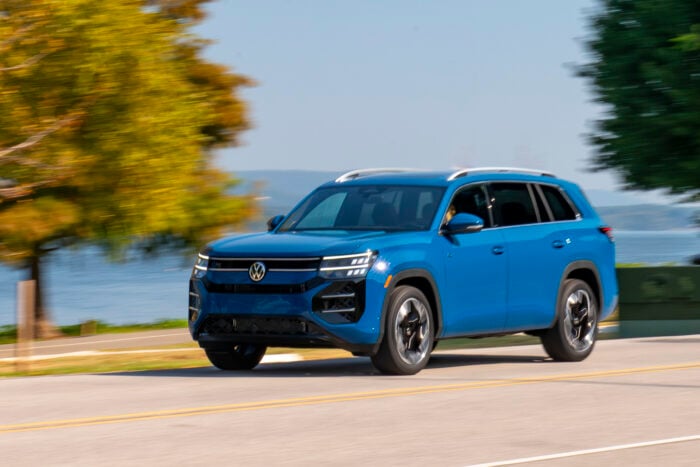
The bigger changes to the German’s first-ever seven-seat family hauler happen in the cabin. Expect the usual cast of features: larger screens, better materials, marginally larger and more efficient cargo space, faster connectivity, and so on. Overall, VW aimed for a more upscale environment throughout while keeping family-first features in mind. But whether these 2027 Atlas interior changes go far enough depends on what you’re after in what’s already a competitive mid-size SUV segment with plenty to choose from, like the Toyota Grand Highlander, Hyundai Palisade, and Honda Pilot.
First, 2027 Atlas Trims and Pricing
Gallery:


We drove the top-end SEL Premium R-Line trim during our time in Huntsville, Alabama, so the interior impressions and photos you see here include all the cabin bells and whistles. According to VW, nearly half of all Atlas models sold are the top trim. The 2027 models will arrive at dealerships soon, followed by the coupe-like Atlas Cross Sport sometime in early 2027, which first arrived in 2020. An Atlas Hybrid? That’s “coming sooner than you think,” we’re told. Oh, and the Atlas Peak Edition softroader is gone.
U.S. Market:
| Trim | FWD | 4Motion AWD |
|---|---|---|
| SE | US$41,610 | US$43,610 |
| SE w/ Technology | US$45,610 | US$47,610 |
| SEL R-Line | — | US$52,110 |
| SEL Premium R-Line | — | US$56,610 |
| U.S. destination: $1,525. |
Canada Market:
| Trim | MSRP |
|---|---|
| Comfortline 4MOTION | C$53,795 |
| Highline 4MOTION | C$60,995 |
| Execline R-Line 4MOTION | C$63,995 |
| Canada destination: $2,450. |
The 8 Big Changes Inside the 2027 VW Atlas
1. The cabin finally feels properly redesigned
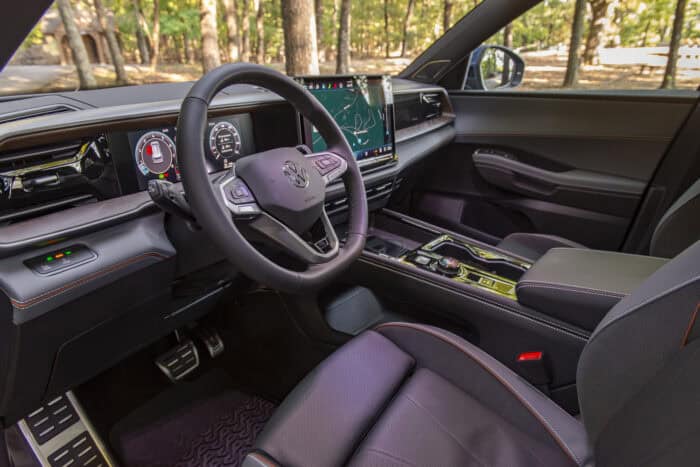
The outgoing Atlas interior was perfectly functional on the most part, but this one feels like a much bigger step forward. The 2024 model we reviewed was the Atlas’s last major refresh, adding upgraded interior styling and materials, but 2027 is a much more complete rethink, clearly with North Americans in mind. There’s a new wraparound dash design, cleaner door panels and, importantly, the shifter has moved to the steering column, freeing up more space in the centre console. The pass-through storage below, which we’re seeing more often lately, is a worthy touch to stow purses and small bags, keeping things uncluttered.
2. The materials are a noticeable step up
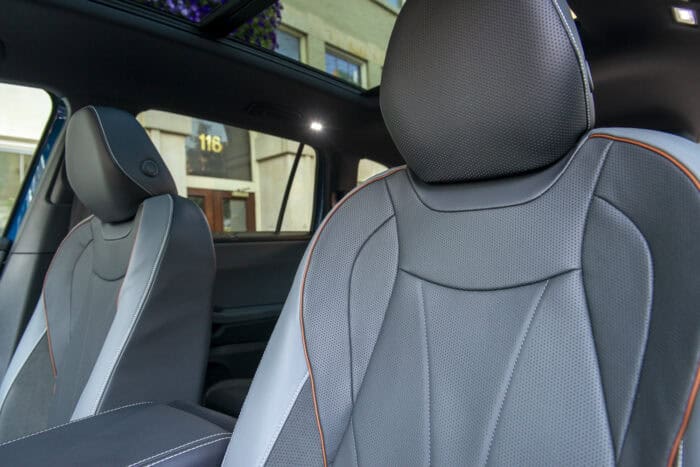
This is probably where the new Atlas makes its strongest first impression. The 2024 refresh had already upgraded the cabin’s styling and materials, but the new generation pushes that further. There are more soft-touch surfaces throughout, while real wood trim is now standard; higher trims move from leatherette to Varenna leather and, at the top, Nappa leather with microfiber accents. It all feels a step above the competitors, and VW has always done that well.
3. The 15-inch screen is hard to miss
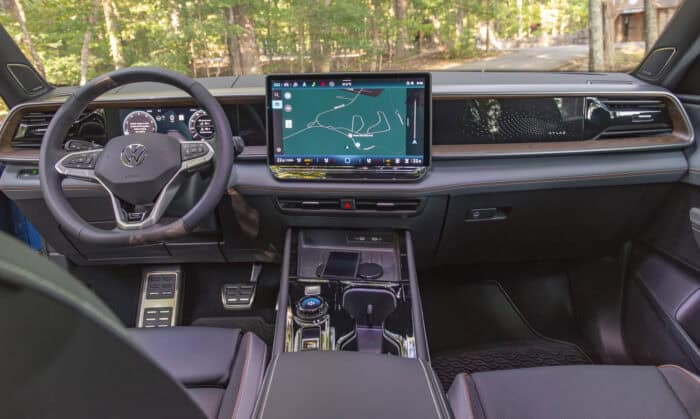
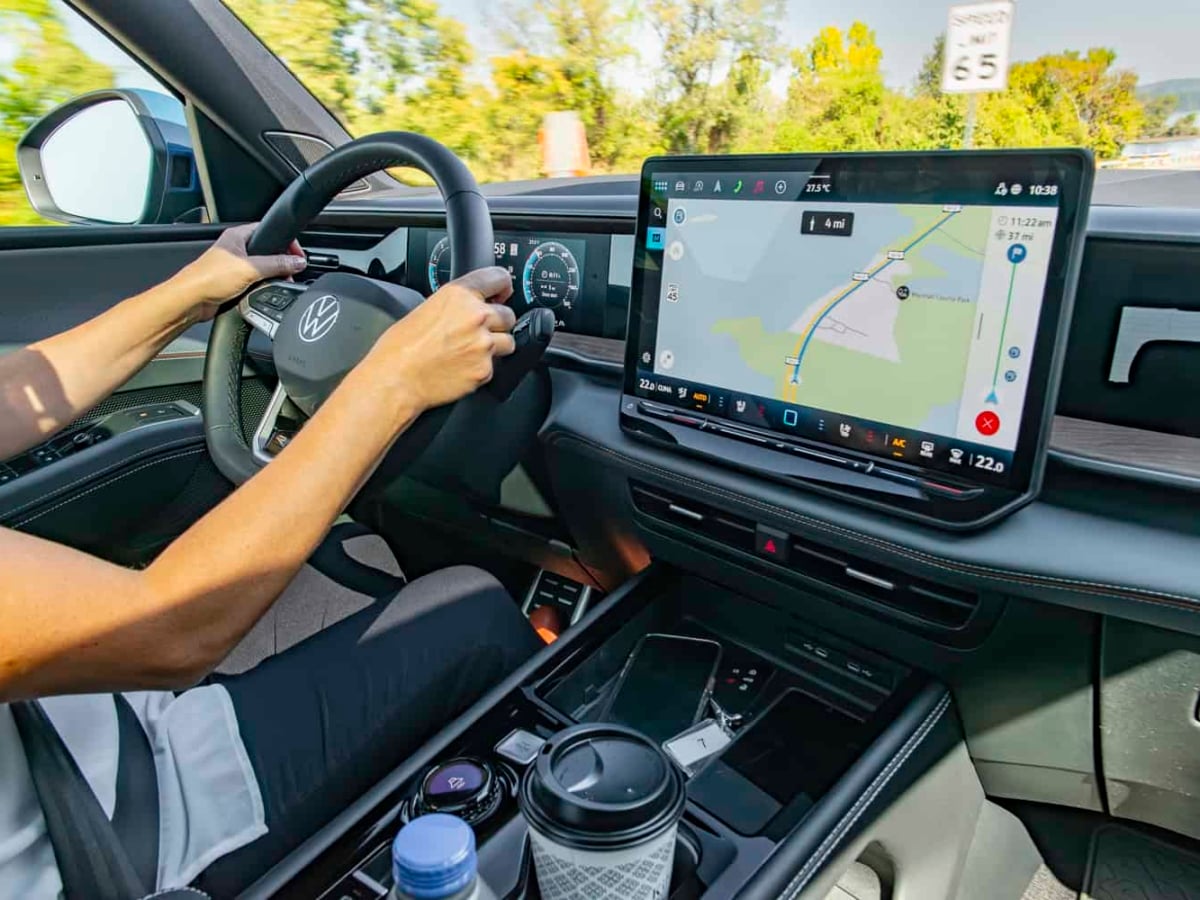
What’s a cabin redo without a massive touchscreen, right? The 2024 refresh had already moved the Atlas to a 12-inch display, so VW is clearly following the big-screen energy trend. The new setup fits the wider, cleaner dash pretty well, with the base U.S. SE and Canadian Comfortline getting a 12.9-inch display, while most other trims move up to 15 inches alongside a standard 10.25-inch Digital Cockpit Pro.
4. The ambient lighting is actually part of the design
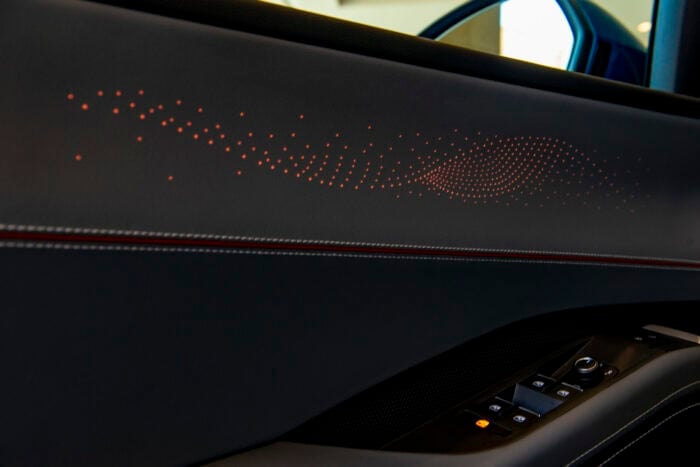
Do customers actually care about a cabin light show, with 30 choices no less? Like, is this something customers actively request? We’re not so sure, but evidently it adds to the ‘upscale’ vibe. And if the kids like it, then maybe it’s a family win. Here, the feature goes beyond the thin light strip buried in the dash. Depending on trim, the lighting runs around the dashboard, footwells and backlit door panels, with 10 colours standard and 30 on upper trims. The new Atmospheres feature can also coordinate the lighting, audio and display settings.
5. Finally, enough places to charge everything
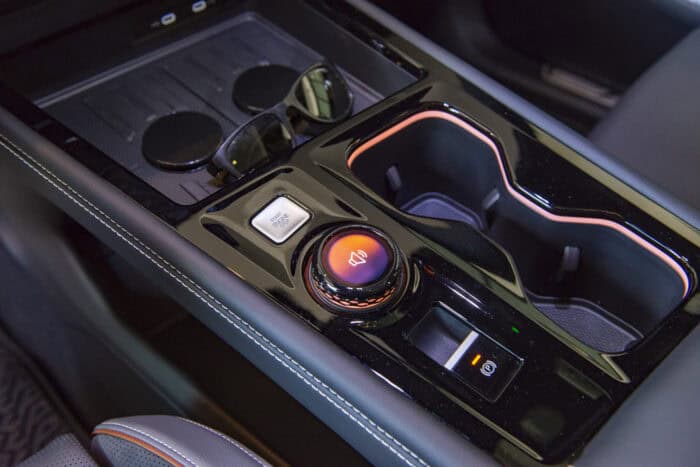
For a three-row family mid-size SUV, this is the kind of update that probably matters more day to day than another swanky new screen. The Atlas now has two Qi2 wireless charging spots side-by-side in the centre console, so the driver and front passenger aren’t fighting over one pad. There are also seven USB-C ports spread throughout the cabin, with six supporting 45-watt fast charging, which should make it much easier to keep phones, tablets and other devices powered across all three rows. It’s a small thing, but exactly the kind of practical detail a family SUV should get right. And keep the kids quiet on long road trips.
6. VW paid more attention to the second row
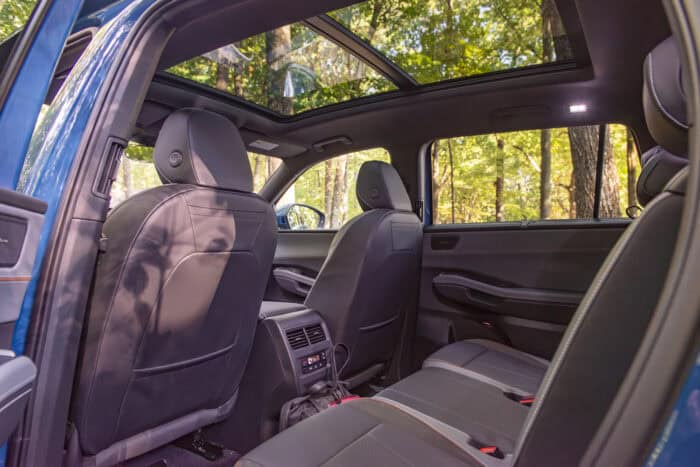
The people in the back get more than just extra cupholders this time around. VW says it wanted every row to feel properly considered, and the second row gets some useful upgrades. Rear sunshades are now standard, new B-pillar vents improve airflow, and upper trims add heated and ventilated outboard second-row seats. The Atlas also keeps its child-seat-friendly flip-and-slide setup, making it easier to reach the third row without having to remove a car seat first. For a three-row SUV aimed squarely at families, these are the kinds of details that matter.
7. The front seats get much more serious
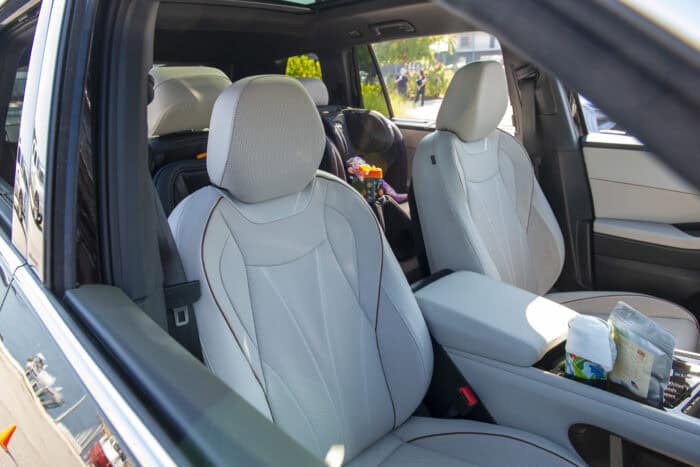
Even the standard setup is pretty generous, with heated and ventilated front seats and a 12-way power driver’s seat with four-way lumbar support. Move up the range and you can add a power passenger seat, driver thigh support, Nappa leather and an upgraded massage function on the top trim.
8. The Harman Kardon system gets some real hardware
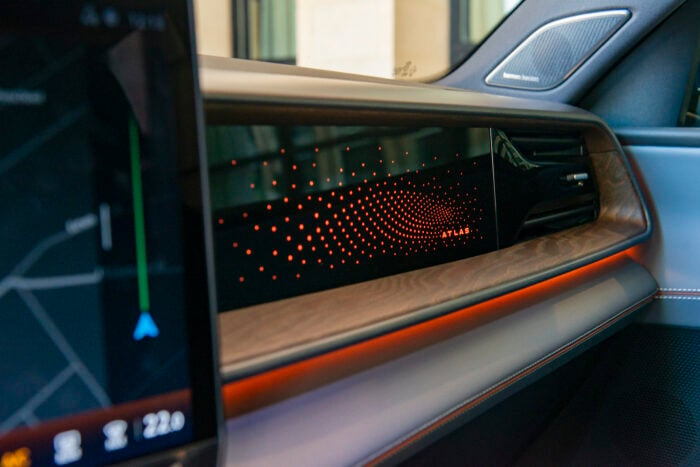
The upgraded Harman Kardon setup is more than just a badge on the speaker grille. It uses 14 speakers, a 700-watt 16-channel amplifier and four sound modes, while a larger centre speaker and two new front-door midrange speakers improve the hardware itself.
Takeaway
We appreciate VW’s effort to go more upscale here, and it works, helping set the new Atlas apart from its competitors. Nothing inside this top-trim German hauler felt really cheap or plastic-y (aside from the fake plastic mesh treatment on the exterior, but that’s a different review). But the real win here is the family-first stuff: standard rear sunshades, new B-pillar vents, heated and ventilated second-row seats on upper trims, dual wireless chargers, USB-C ports across all three rows, and a child-seat-friendly flip-and-slide second row that keeps third-row access simple.