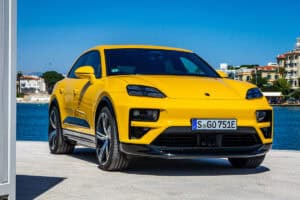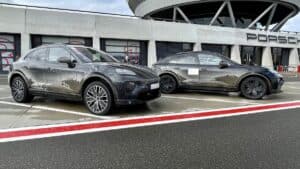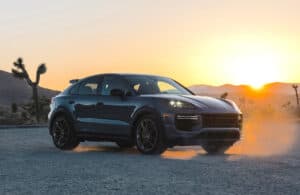

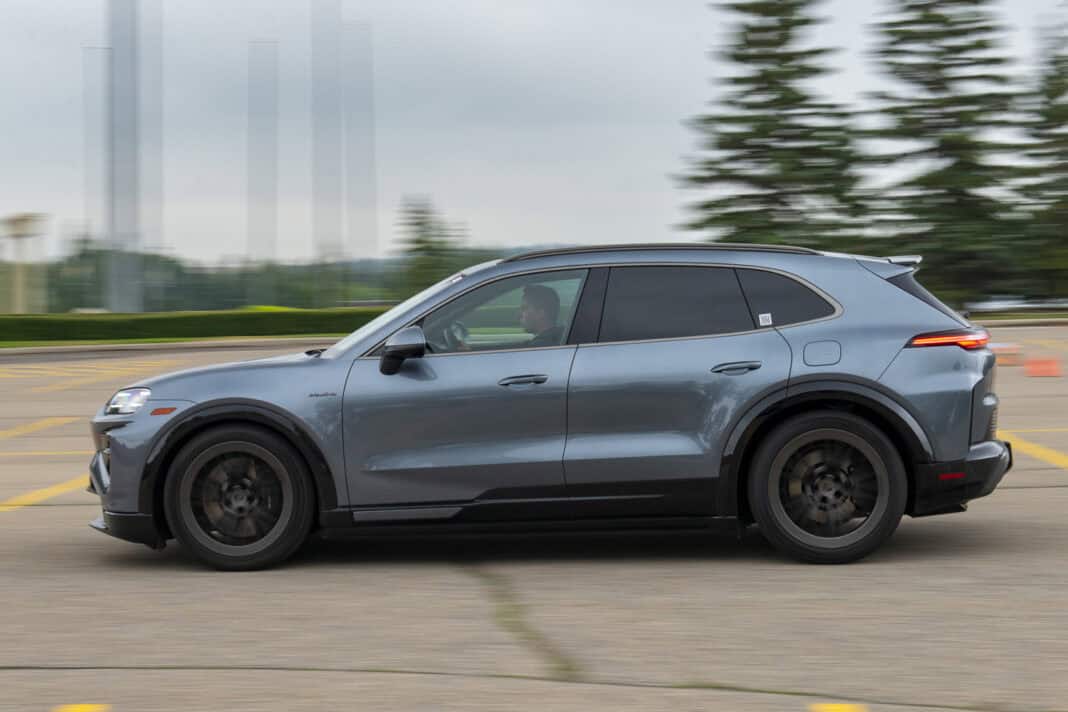
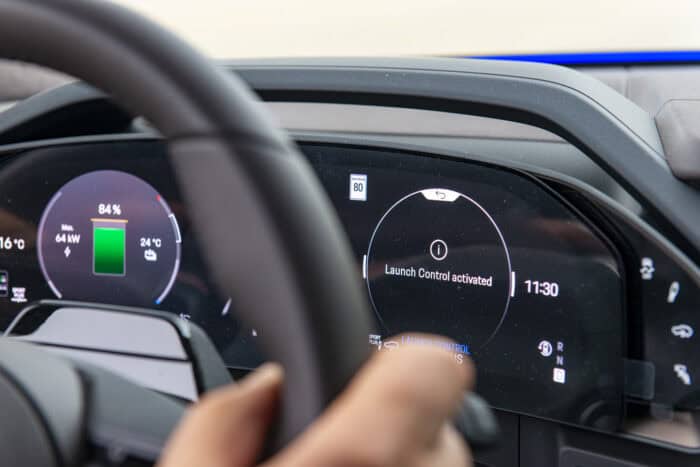
Porsche’s flagship SUV is going EV for the first time: the Cayenne Electric will arrive in North America later this year. At a recent test day, we were able to try the new Cayenne Turbo Electric’s incredible Launch Control feature, which literally snaps your neck back into the headrest as you blast to 62mph (100km/h) in 2.5 sec. We also recently tested the 1,139 hp electric Cayenne in Europe out on the open roads before it hit the market.
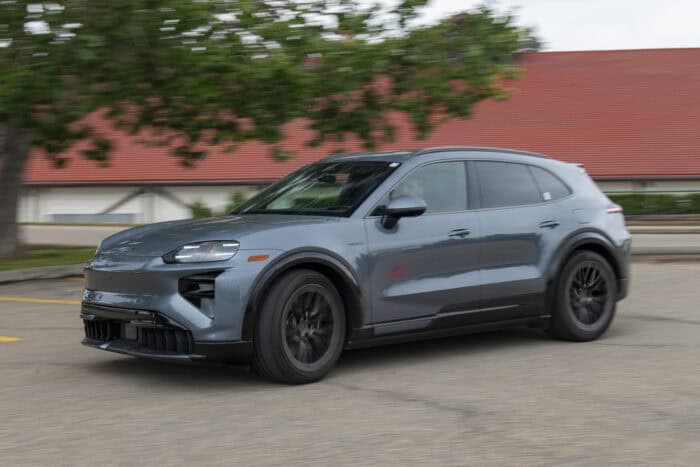
But dragstrip-friendly acceleration is not the only reason we should get excited about the first Cayenne EV. Everyday charging will also be made simpler by wireless charging: the Cayenne Electric will be the first production vehicle to be made available with this neat, convenient technology. North American pricing had not been released at the time of writing, but expect the wireless charging option to add multiple thousands to the price of your Cayenne Electric.
Related – 2024 Porsche Cayenne S E-Hybrid & Turbo E-Hybrid First Drive Review: Uncompromised Balance
How Wireless Charging Works
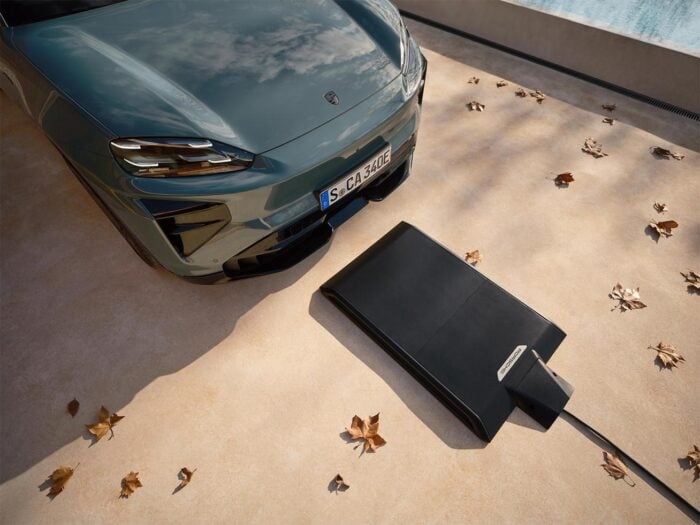
You might have charged your cell phone wirelessly, as charging pads have become increasingly common features in new vehicles, or perhaps you’ve charged an electric toothbrush on a wireless charging stand. Wireless (or ‘inductive’) charging differs from conventional ‘conductive’ cable charging because there is no physical connection between the vehicle and an external charging unit – in this case, a 50kg (110-lb) floor plate that plugs into mains electricity. Instead of passing along a cable, power is transferred between the plate and the vehicle via a magnetic field.
“We think this application is likely to be the first of many – and wireless charging won’t be the first technology to migrate down from a high-end vehicle to more affordable cars.”
To make this happen, a transmitter coil made of copper and ferrites (magnetic materials containing iron oxide) is located in the floor plate. Alternating current flows through this coil, which generates a magnetic field. Meanwhile, the Cayenne Electric must be fitted with a 15kg (33-lb) receiver coil, which, like the pad, will be available as an optional extra.
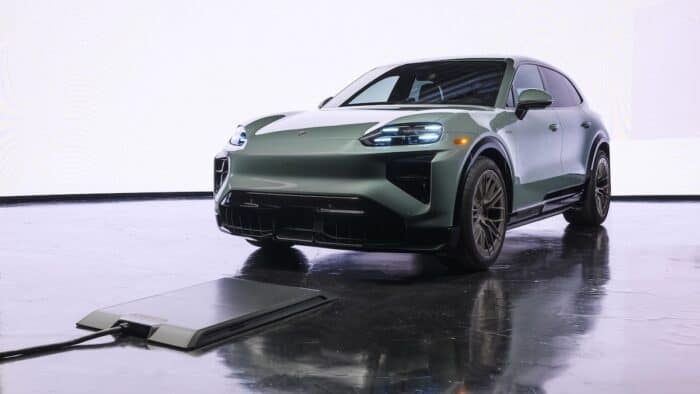
The coil is located under the vehicle, between the front wheels, and protected from stone chips, rain, and salt or debris. In this second coil, which acts as a receiver unit, the magnetic field from the floor pad generates alternating current. A rectifier then converts this into direct current, so that the Cayenne’s 108kWh, high-voltage battery can store the electricity.
Related – The New Porsche Cayenne EV Specs at a Glance
How to Wirelessly Charge the Cayenne Electric
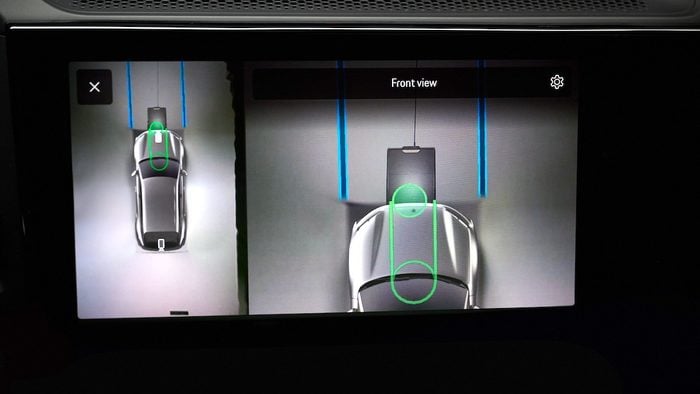
To begin charging, all you need to do is line the Cayenne Electric up over the plate. Porsche says it uses ultra-wideband communication and the Surround View parking function to guide you to the right spot. The car then lowers slightly (air suspension is standard) to reduce the distance between the two coils, and charging starts automatically.
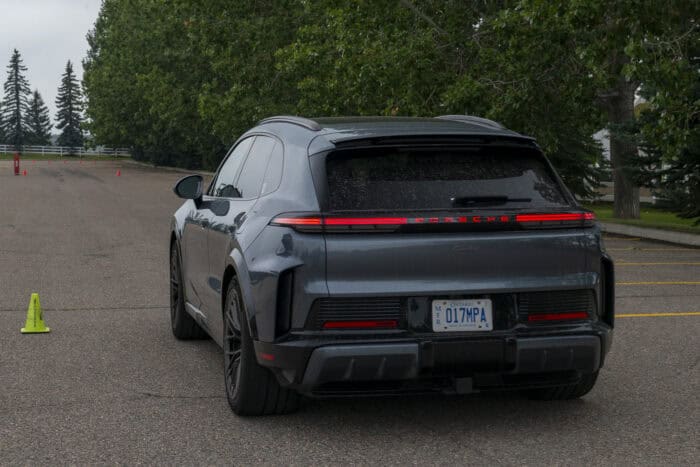
Charge is delivered at 11kW, equivalent to regular Level 2 chargers. Many customers are likely to install the plate in their garage, but Porsche says the unit is also safe for outdoor use. The plate is equipped with LTE and WLAN communications, so that it can be paired with one or more vehicles – preventing power theft – and receive software updates in the future, just as the Cayenne Electric does. Porsche emphasizes that the regular charging-convenience features, such as timer charging with preconditioning, are also available for wireless charging.
Is Wireless Charging the Future?
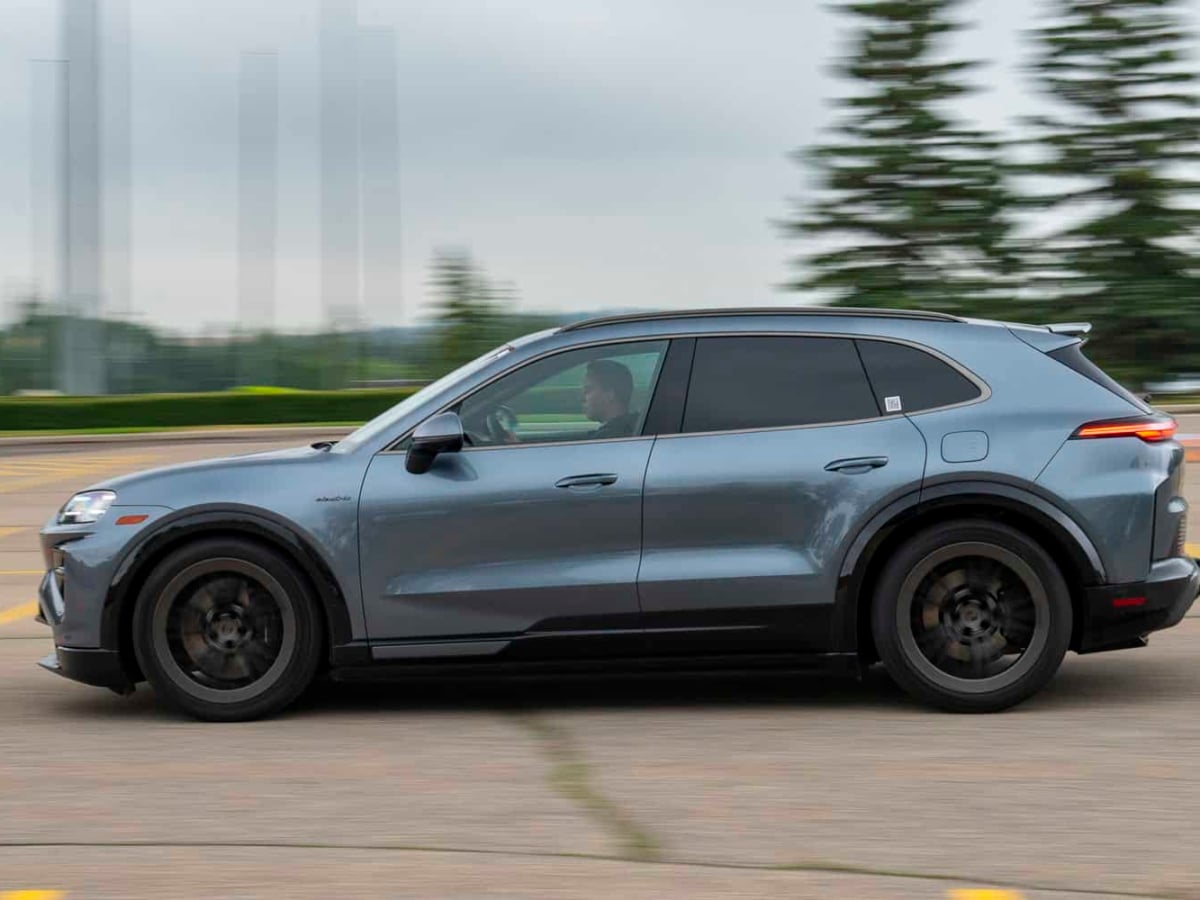


Wireless charging has long been touted as a means of making EV charging hassle-free – whether that’s via charging plates at private residences, as with the Cayenne Electric, or plates in office parking lots, fleet-vehicle depots, and elsewhere. As we’ve already seen with plug-in charging stations, interoperability across different vehicle brands and faster charging speeds will both be critical to making wireless charging tech a success. Trials have been taking place to develop the technology, such as one involving a taxi fleet in Sweden, backed by Volvo, which ran from 2022-25. Meanwhile in 2024, the Volkswagen Group – which owns Porsche – demonstrated high-power (270kW) wireless charging to a Porsche Taycan with Oak Ridge National Laboratory (ORNL) in the US.
For now, Porsche is out in front of other automakers when it comes to wireless EV charging. But we think this application is likely to be the first of many – and wireless charging won’t be the first technology to migrate down from a high-end vehicle to more affordable cars.