

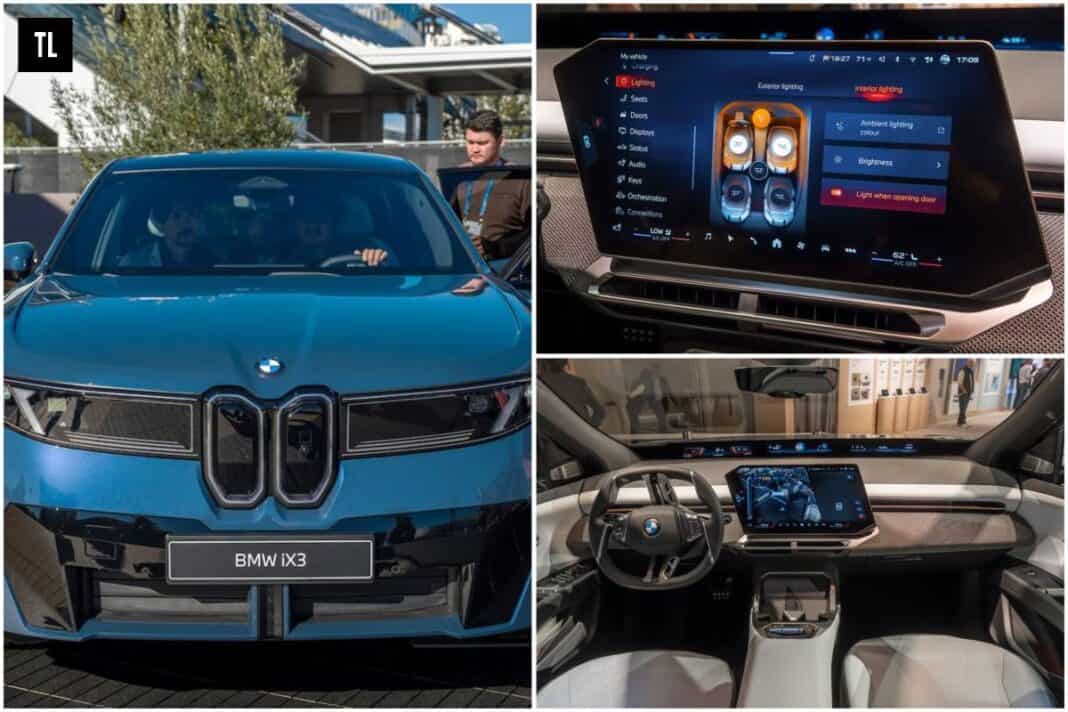
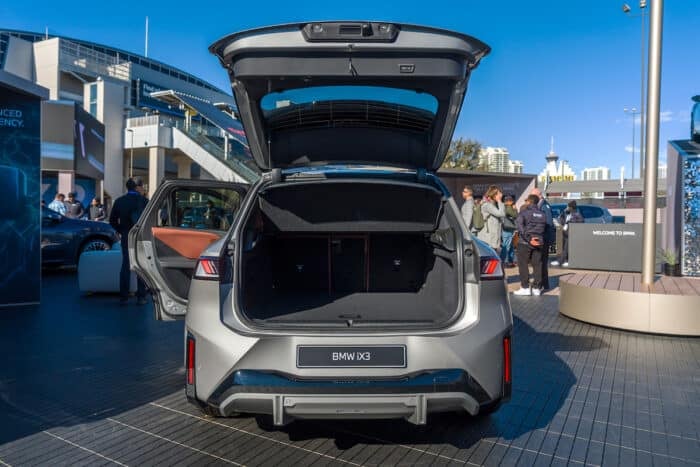
Amazon’s Alexa+ will be doing a lot more talking in the months and years to come courtesy of a new implementation, starting with the new 2027 BMW iX3 we recently reviewed. Both BMW and Amazon demoed this integration at CES 2026 booths in Las Vegas, as it makes a move from the living room to the driver’s seat, turning it from a simplistic voice assistant to more of a conversational agent.
After first launching in the United States in February 2025, Alexa+ rolled into Canada in December 2025, but only with the Alexa app and devices under the company’s Echo product line. I did a hands-on demo with Clint Jones, senior product manager for Alexa Auto at Amazon to see what the in-car experience will look and sound like in the cabin.
Scenic Routes Lead to Forgotten Sunscreen
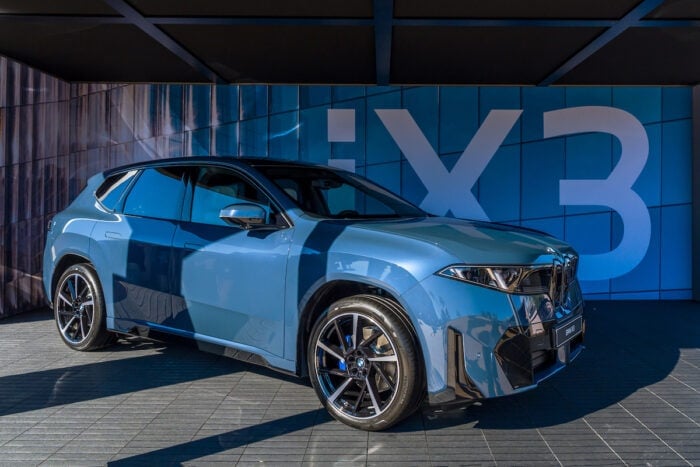
Several automakers have integrated Alexa into their infotainment systems going back to when Ford first did it in 2017. I even tried it out while testing the 2026 Mustang Mach-E Premium, only that version feels antiquated next to what Plus will be capable of from the start.
The iX3 demonstrates this pretty clearly because rather than just a simple assistant, Alexa+ is deeply tied into the vehicle’s navigation, controls, and context. Asking it to “find someplace scenic around here” surfaces a list of nearby viewpoints, complete with distances. Just pick a number on the list and it takes it from there. You don’t have to be specific about what it is you want to do or where to go when you have an open mind.
How it evolves will depend on how Amazon continues to develop it, as questions still remain over whether the AI will update the same way it will on home devices.
The system also handles mid-course changes with ease. In the demo, Jones says, “Hey BMW, I forgot sunscreen. Can you take me to CVS?” Alexa slightly stumbles over the brand name but understands the intent, so picking a nearby option just automatically adds a Walgreens along the route.
The most obvious distinction is that Alexa didn’t need precise phrasing. Then there’s how context matters more than keywords, given that “sunscreen” implies a store and Alexa+ intuitively fills in the gaps without needing explicit instructions. The system moves forward even when the input isn’t perfect.
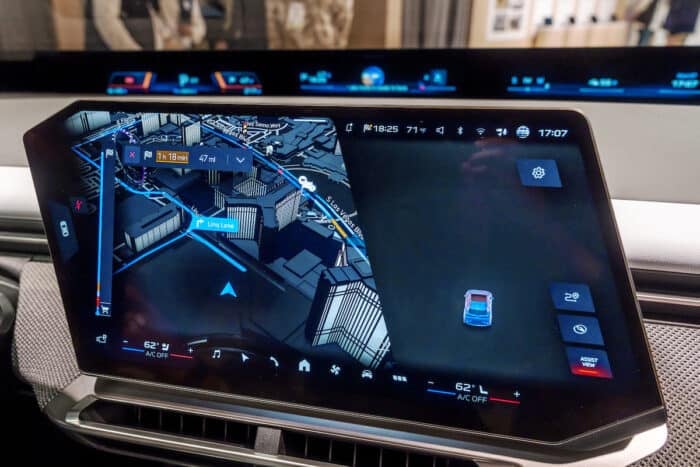
It’s the kind of conversational flexibility that feels just a little more human in delivery. A more open-ended request, like a sunny scenic drive with stops to pick up essentials along the way, prompts Alexa+ to suggest the very items, stops, and routes as part of a single exchange. It’s less about throwing out commands and more about thinking out loud about what you think is necessary.
Finding Music and Podcasts
The experience feels similar with music and podcasts, too. During the demo, Jones asks about a song associated with Las Vegas. Alexa responds with “Viva Las Vegas” by Elvis Presley. When he follows up with, “Can you play that for me?” the song begins immediately, without needing to restate the title or specify a service. Playback defaults to whichever streaming platform is already linked to the user’s Alexa account, whether that’s Amazon Music, Spotify, or another service. The same goes for podcasts, helping you parse through recommendations filtered by topic or length.
For now, the iX3 offers a compelling preview of what conversational AI in the car can become, which is less about issuing commands and more about the car understanding you.
It’s a lot like how Alexa+ works at home, where it’s acting less like a reactive assistant and more like an agent that understands intent. It doesn’t matter if the request is about a location, song, or even going over a grocery list, the AI isn’t forcing the driver to pick a category first. And since it’s more about conversation than command structure, actionable items feel more expansive because of the increased context.
That said, music control will probably be the least impactful because this was already one of the tighter integrations for the original Alexa. It just feels much easier to do it here for the sheer lack of being so exact.
Climate, Comfort, and Car Health
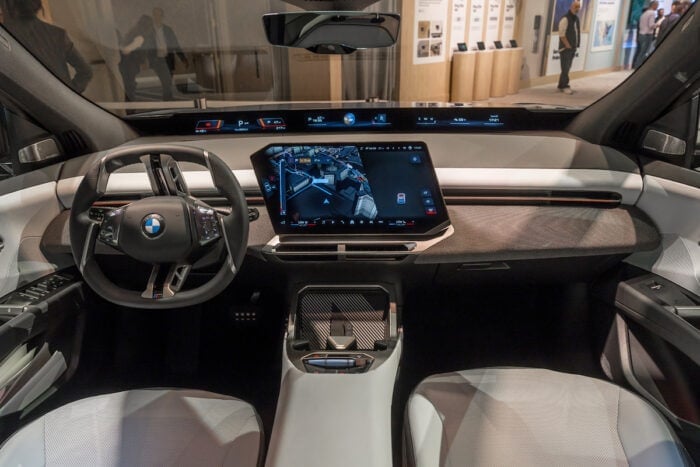
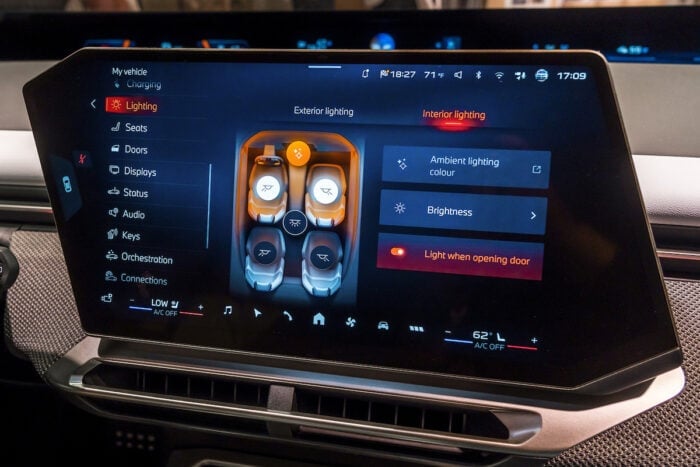
Climate control isn’t entirely new, either, but again, it’s easier to get what you want. Saying “I’m really hot” prompts the system to lower the temperature. You could also say, “I’m really hot, and turn up the fans,” and it can do both tasks simultaneously. Moreover, related controls can show up on BMW’s infotainment screen. Alexa+ can activate seat heating and massage functions, control seating, and adjust ambient lighting. If a vehicle supports it, drivers can choose to adjust climate separately for front and rear passengers.
While it’s hard to say how effective all this would be without actually driving the car, it does seem to take away some of the manual input required to make these functions work on the road. Thus, voice control is as much about convenience as it is about reducing cognitive load.
Diagnostics represent another shift. There wasn’t much to show on this front in the demo, but we do know that Alexa+ can interpret vehicle fault codes on its own. No need to plug in an external OBD-II reader. While Amazon is leaving much of this integration up to OEMs, BMW will discourage do-it-yourself repairs if the system finds something’s up. Instead, it will explain what an alert means and guide drivers toward booking service appointments when needed.
In cases where more immediate action is required, Alexa+ could proactively alert the driver to a deflating tire or a check engine light. It’s not clear whether all OEMs would enable this, but it is possible to deploy should they choose that route. The integration brings in all of the iX3’s user manual into the broader system, allowing drivers and passengers to ask detailed questions about features and functions, getting how-to responses and explanations without having to rifle through PDFs or printed booklets.
From the Cabin to the Smart Home
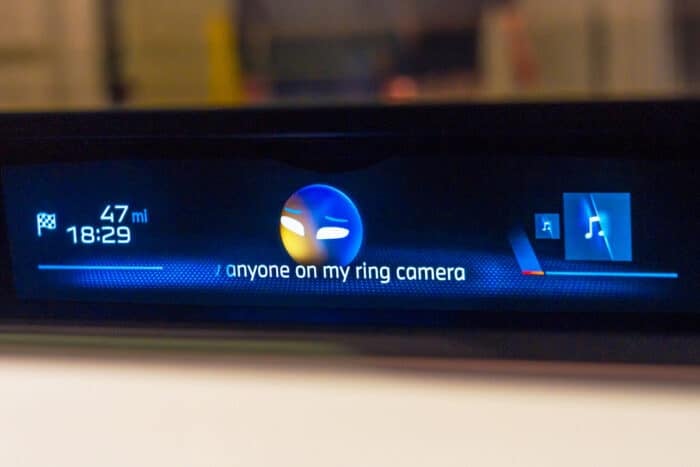
Since Alexa+ is tied directly to a user’s Amazon account, the car inherits the same smart home setup and configuration. That certainly means Ring security cameras, as well as compatible third-party lights, locks, plugs, thermostats, cameras, and scenes, are immediately available without additional setup. In other words, the same commands that work at home will work in the car. The vehicle’s own built-in connectivity handles that rather than a paired phone.
That doesn’t mean a live feed from a doorbell camera appears on the infotainment screen, but the system can notify the driver when someone is detected. Depending on how they’ve set it up, it may even be able to identify who it is if it’s a known friend or family member. In cases where a stranger shows up, that could be a notification indicating whether a package was delivered or if motion was detected. The main thing is that all this can happen without ever looking at the driver’s phone screen, though I wouldn’t be surprised if many drivers still do anyway.
Privacy and Personalization
Much like settings and configurations carry over within an Alexa account, the same goes for privacy controls. Jones says interaction history, permissions, and personalization settings remain user-controlled. In the example of a Ring doorbell seeing someone on camera, Alexa+ may know someone arrived at home without knowing who it was, depending on what the user has allowed. It all depends on the extent of privacy controls the user applies.
In shared vehicles, BMW’s driver profiles work alongside Alexa profiles to ensure preferences and data don’t bleed between users. When one driver exits and another enters, the assistant resets to the active profile. Jones wasn’t able to demo that particular handoff, so it’s not clear how fluid this turns out to be. As it’s also based on what an automaker prefers to do, the capability is clearly there to separate the Alexa+ experience between drivers.
Looking Ahead
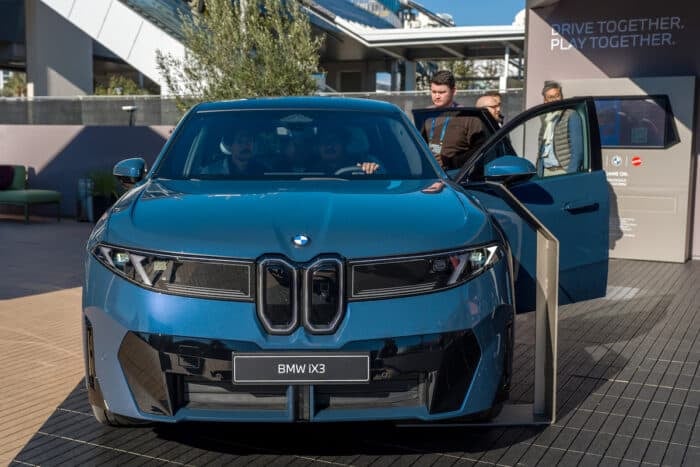
The iX3 is the first polished look at Alexa+ in a production vehicle, showcasing how much better Alexa+ will be over its predecessor right from the start. Less of an assistant latched onto a dashboard, it’s designed around context and conversation. How it evolves will depend on how Amazon continues to develop it, as questions still remain over whether the AI will update the same way it will on home devices.
That will matter in the long run as drivers learn to ask detailed questions and receive natural answers, turning interactions into more elaborate conversations. For now, the iX3 offers a compelling preview of what conversational AI in the car can become, which is less about issuing commands and more about the car understanding you.