
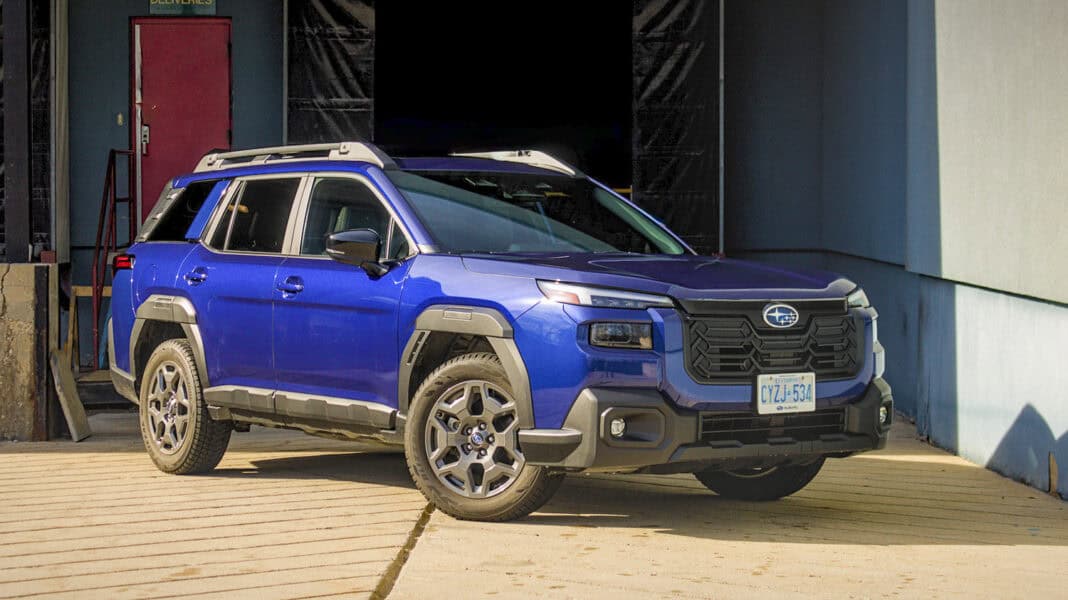
Time and time again, we’ve heard the same tired phrase: ‘Wagons don’t work in North America.’ If that’s so, how do you explain three decades of wildly successful Subaru Outbacks? For the longest time, it was the last wagon standing, but no more. With the new seventh-generation model, it’s gone full crossover, and that’s a risky move. Might the new styling alienate existing Outback buyers, and can Subaru’s ex-wagon compete with the big dogs on campus? Let’s find out.
More Crossover, Same Subaru Grip
- Base Engine (as tested): 2.5L naturally aspirated flat-four
- Base Power: 182 hp
- Available Engine: 2.4L turbocharged flat-four
- Available Power: 260 hp
- Transmission: CVT
- Drivetrain: AWD
While the new Outback seems shocking at first glance, underneath that origami Ford Taurus X body, you’ll find more-or-less exactly the same running gear as elsewhere in the Subaru range. A 2.5-liter naturally aspirated flat-four is standard, a 260-horsepower 2.4-liter turbocharged flat-four is optional, and the only transmission available is a CVT. My base-model test unit came with the former, and while 182 horsepower is plenty sufficient around town, this midsize crossover comes over all breathless at highway speeds. If you live in the mountains or plan on weighing the Outback down, pop for the turbocharged XT or Wilderness trim with subtle upgrades aimed at everyday use. Sure, combined fuel economy clocks in at 24 MPG vs 27 MPG (9.7 L/100km vs 8.5 L/100km) but that difference can erode quickly if you’re working the naturally aspirated engine hard.
“Maybe the styling would be easier to accept if the Outback still started at the same price as its Forester sibling, but it doesn’t.”
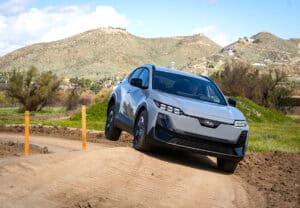
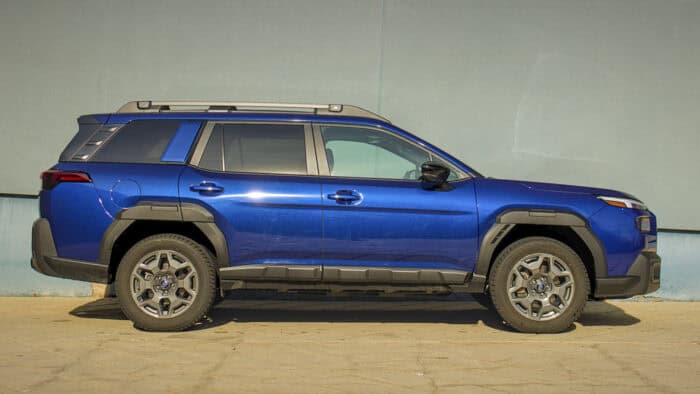
As for ride and handling, this is where the Outback excels. Though the steering is slightly vague, the standard all-wheel-drive gives a great dose of surefootedness through nasty weather, and the chassis tuning aims squarely for comfort rather than sporting pretensions. Those impressions mirror what we found in our first drive of the 2026 Outback, where its surefooted AWD and compliant ride stood out on wet roads and gravel. Indeed, the Outback makes a great deal of sense when the going gets bumpy. A sizable 8.7 inches of ground clearance make easy work of fire trails, while the pillowtop primary ride effortlessly dispatches with potholes and frost heaves.
Real Buttons, Real Comfort
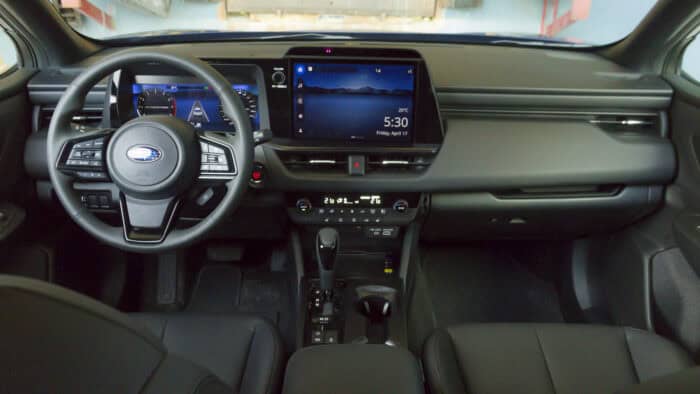
On the subject of liveability, anyone who’s actually driven a car before will cheer for the return of real buttons to the Outback. There’s a great big bank of them for climate controls, a series of shortcuts for the infotainment, and a cluster in the console for driving functions. The new native infotainment system is much quicker to boot than the previous model’s portrait-style system, although Apple CarPlay demonstrated some instability. As for space and comfort, it’s prodigal. An enormous trunk with a flexible fabric cargo cover is perfect for the IKEA run, while the seats are soft and supportive in all the right ways. Add in outstanding visibility, and the new Outback is an easy car to melt away the miles in.
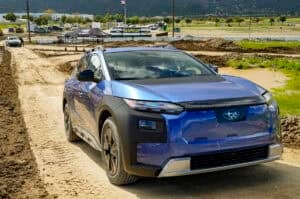
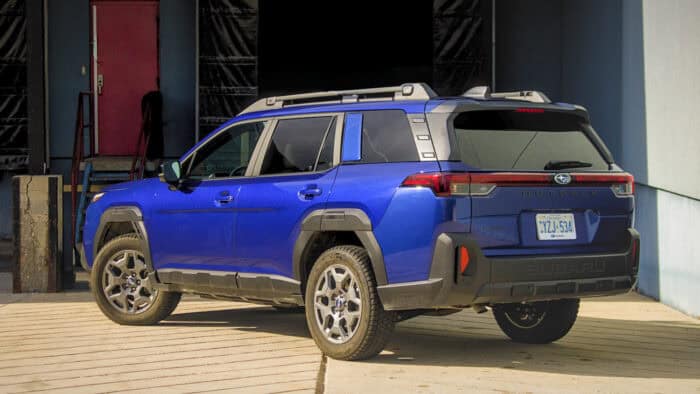
Plus, once you’re inside the new Subaru Outback, you don’t have to look at the outside of it. At least until you catch its reflection in a plate-glass window. It’s a challenging thing to look at, all blocky and gator-eyed and blistered. With lumps and bumps coming from everywhere, it’s going to take a mother to love this thing. Really makes you wonder if Subaru crossover’d too close to the sun.
Maybe the styling would be easier to accept if the Outback still started at the same price as its Forester sibling, but it doesn’t. The cheapest Outback is now $5,000 more than a Forester in America and $6,700 more expensive than a Forester in Canada, freight-inclusive starting prices of $36,445 and $43,732, respectively. Granted, compared to the midsize crossover competition, this is a bargain. So, if you’re not fussy on style but need tons of space, the Outback is still a prime contender. It’s just not a wagon anymore, for better or worse.