
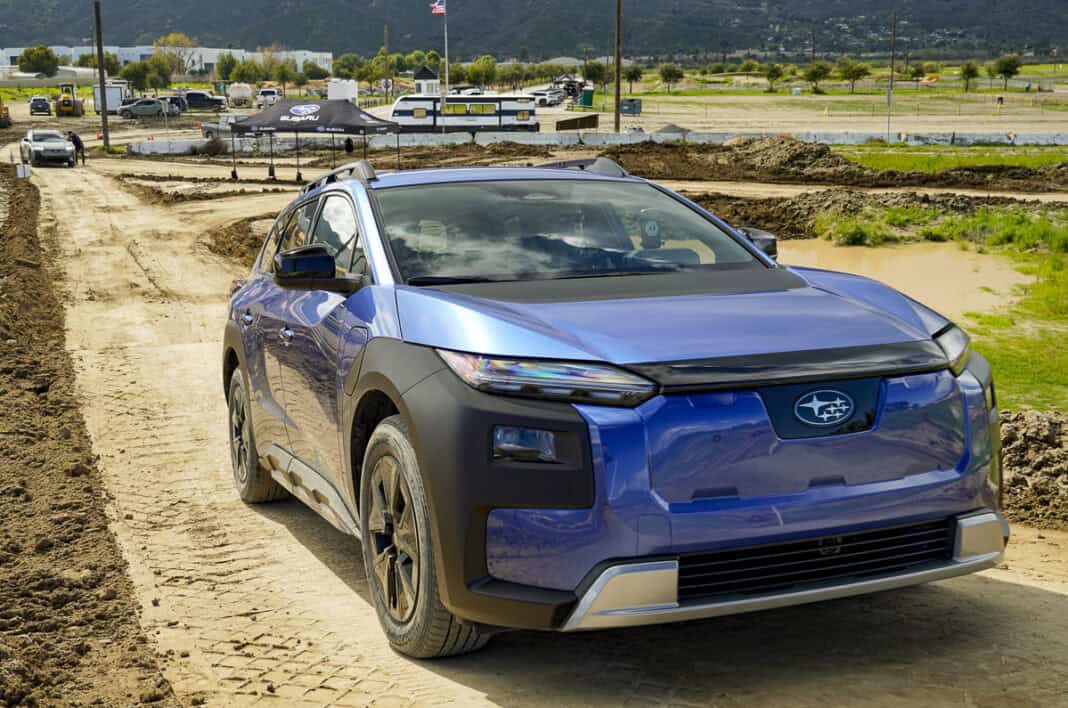
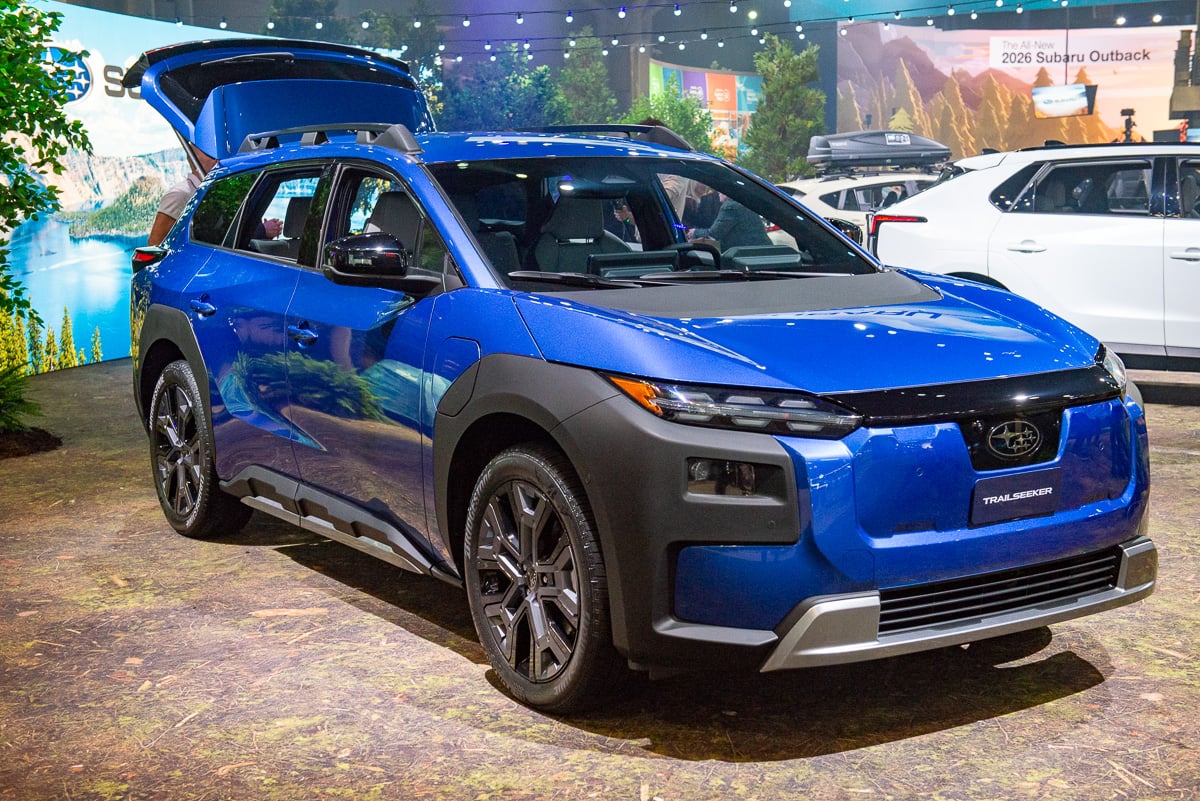
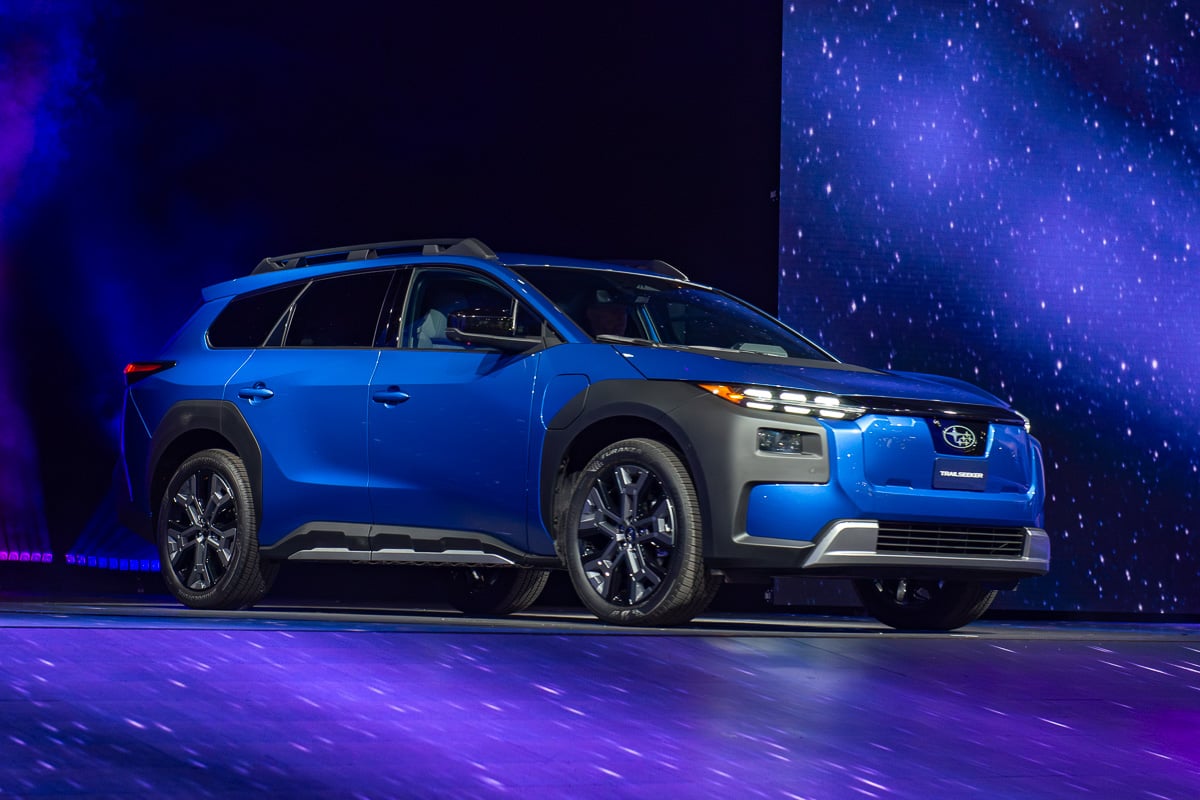
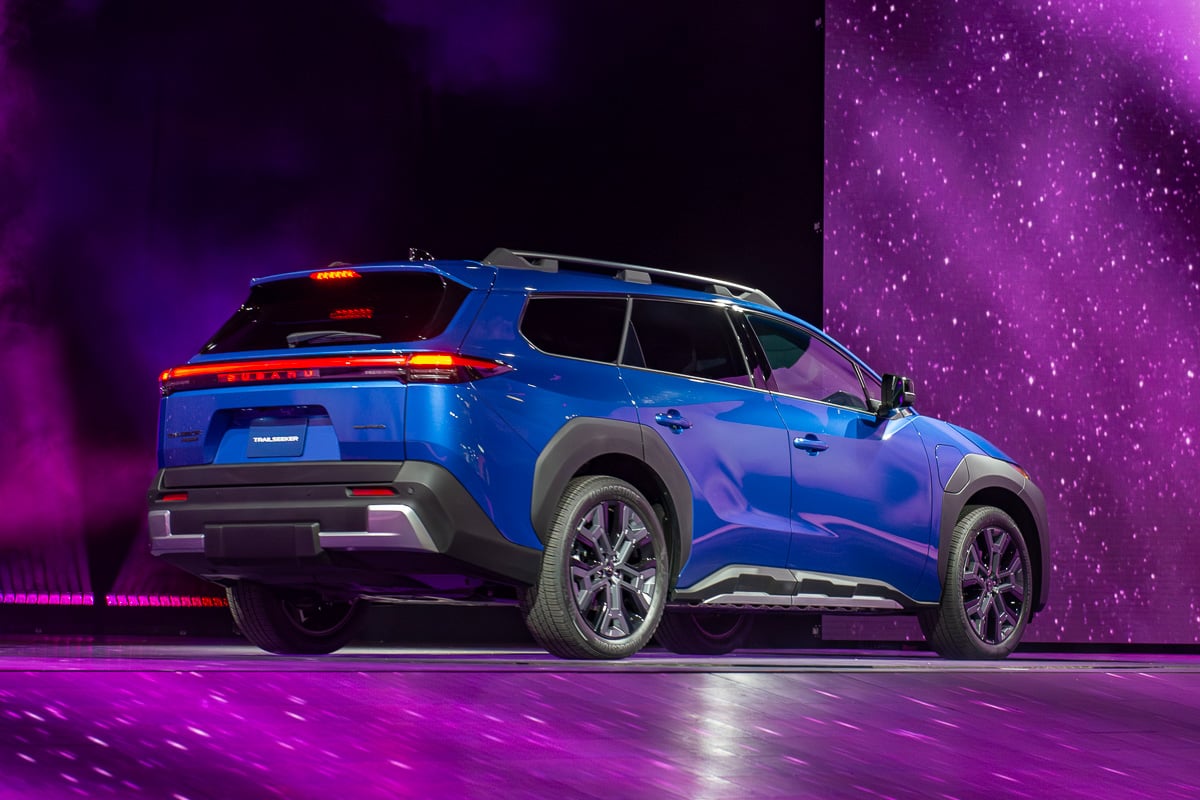
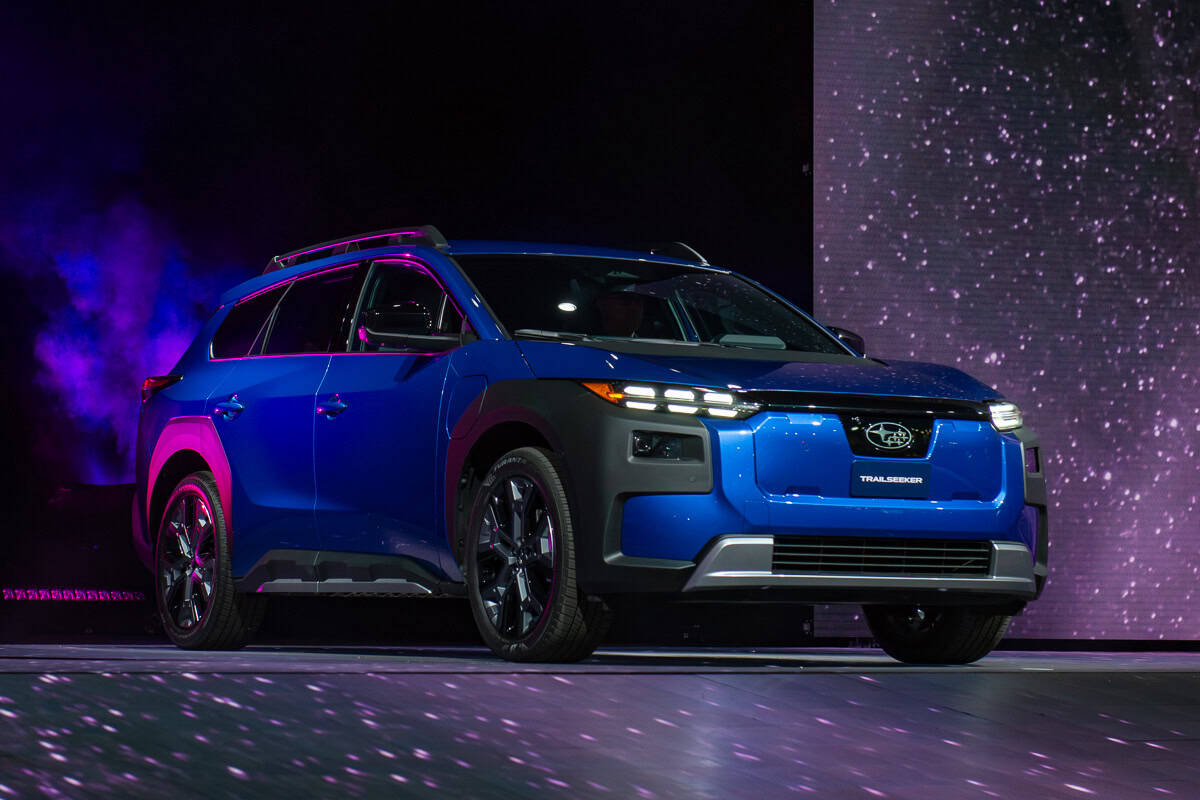
The 2026 Subaru Trailseeker is Subaru’s first serious entry into the all-electric adventure crossover segment, and it arrives with more than just an EV badge. Closely related to the Toyota bZ Woodland through a joint development program, the Trailseeker brings Subaru’s signature practicality and everyday utility to an electrified package. But unlike other badge-engineered EVs that merely swap a combustion engine for a battery, the Trailseeker wears Subaru’s ethos more clearly: comfortable, capable, and grounded in real-world use. We saw it up close at its debut; now we finally got to drive it.
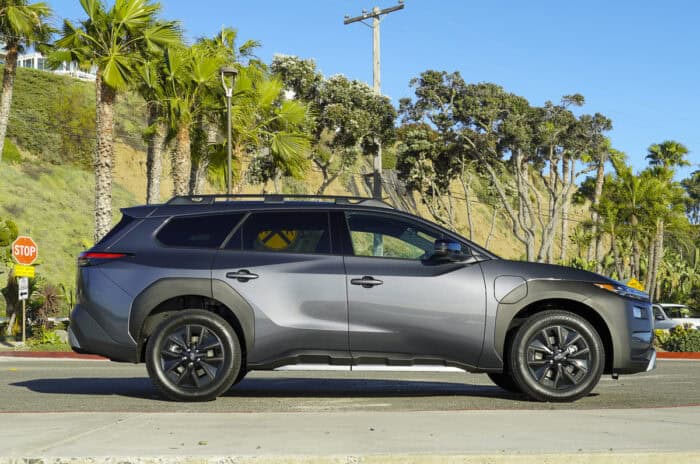
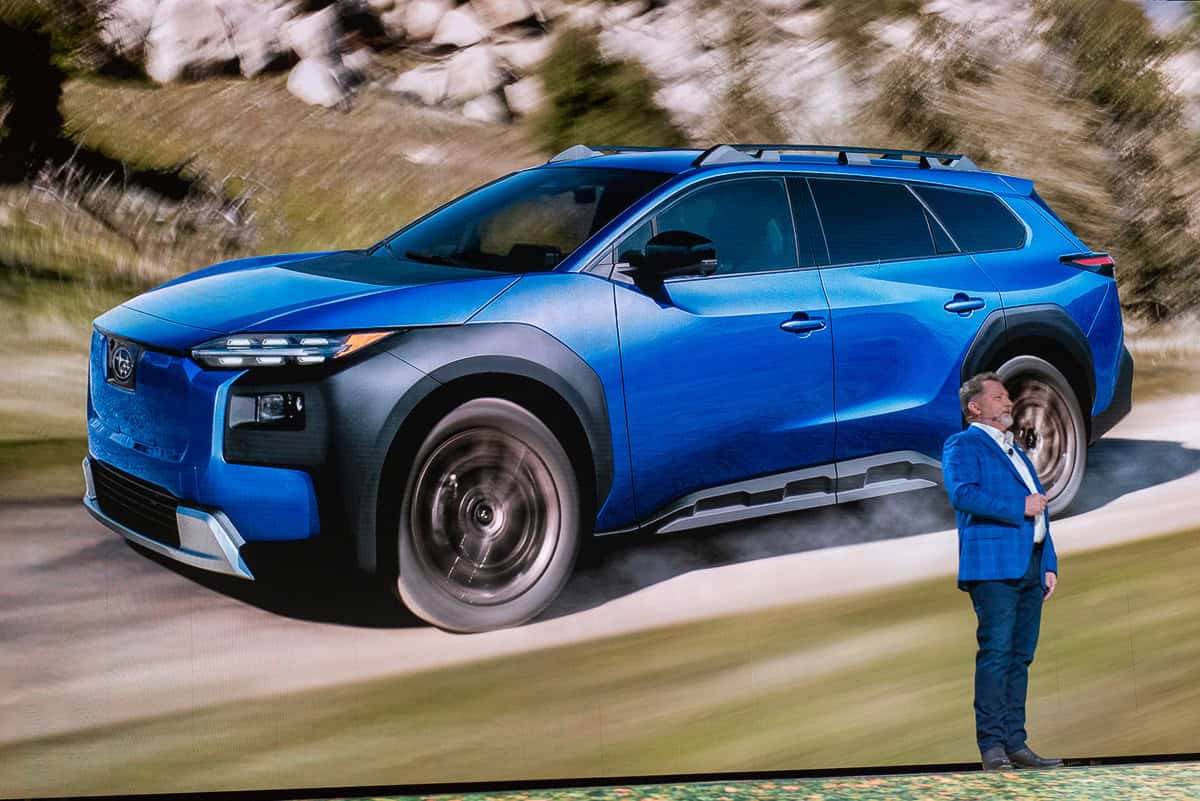
Subaru invited a few members of the press to California for a first drive on and off-road. What became immediately clear is this: the Trailseeker is not an Outback replacement, nor is it a Wilderness conqueror, especially since the tall wagons are bigger and more rugged than ever in 2026. On the other hand, Trailseeker is an energetic, comfortable, and surprisingly accomplished family-oriented electric crossover that aims to satisfy a very broad audience — from daily commuters to outdoor lovers that don’t necessarily need a more capable vehicle for ventures far from paved roads.
Related – Subaru SUV Models Up Close: Smallest to Biggest
Performance and Driving Impressions: The Quickest Subaru is Now a Crossover Wagon
- Powertrain: Dual-motor all-wheel drive
- Battery: 74.7 kWh lithium-ion
- Output: 375 horsepower (combined)
- 0–60 mph: ~4.4 seconds (claimed)
- Range: 276 miles (444 km) estimated
- Drivetrain: Standard AWD (Subaru-tuned system)
Underneath its body, the Trailseeker uses a single configuration: an all-wheel-drive system paired with a 74.7 kWh battery and dual electric motors producing a combined 375 hp. That’s enough thrust to deliver genuinely brisk acceleration — Subaru claims a 0-60 mph (0–96 km/h) in around 4.4 seconds, impressive for a crossover that tips the scales at roughly 2,015 kg (about 4,440 lb). For context, this places the Trailseeker well ahead of many compact SUVs and closer to small sports cars in a straight line, even if it’s still carrying significant weight.
Even if it’s a very close cousin of the Toyota bZ Woodland, it reminds us of the 30 years of Outback.
The result on twisty roads is a vehicle that feels confident, composed under braking, communicative in steering, and enjoyable in a way that many EVs never manage. The low battery placement delivers the familiar low center of gravity that EVs are known for: there’s minimal body roll and a predictable nature when hustled through corners, but the weight is there, so on very twisty corners, the driver must never forget this detail.
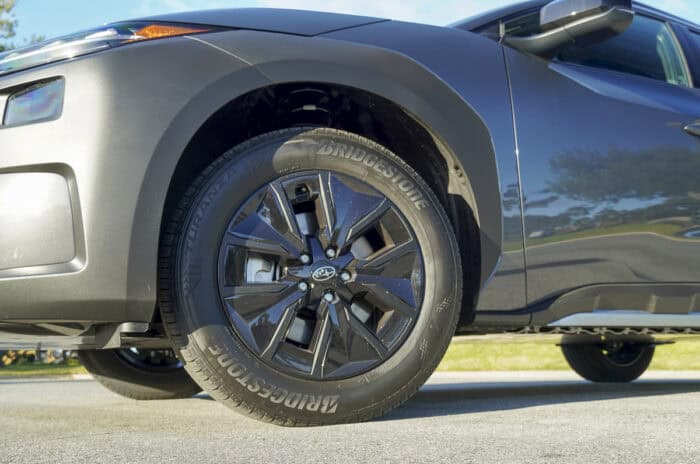
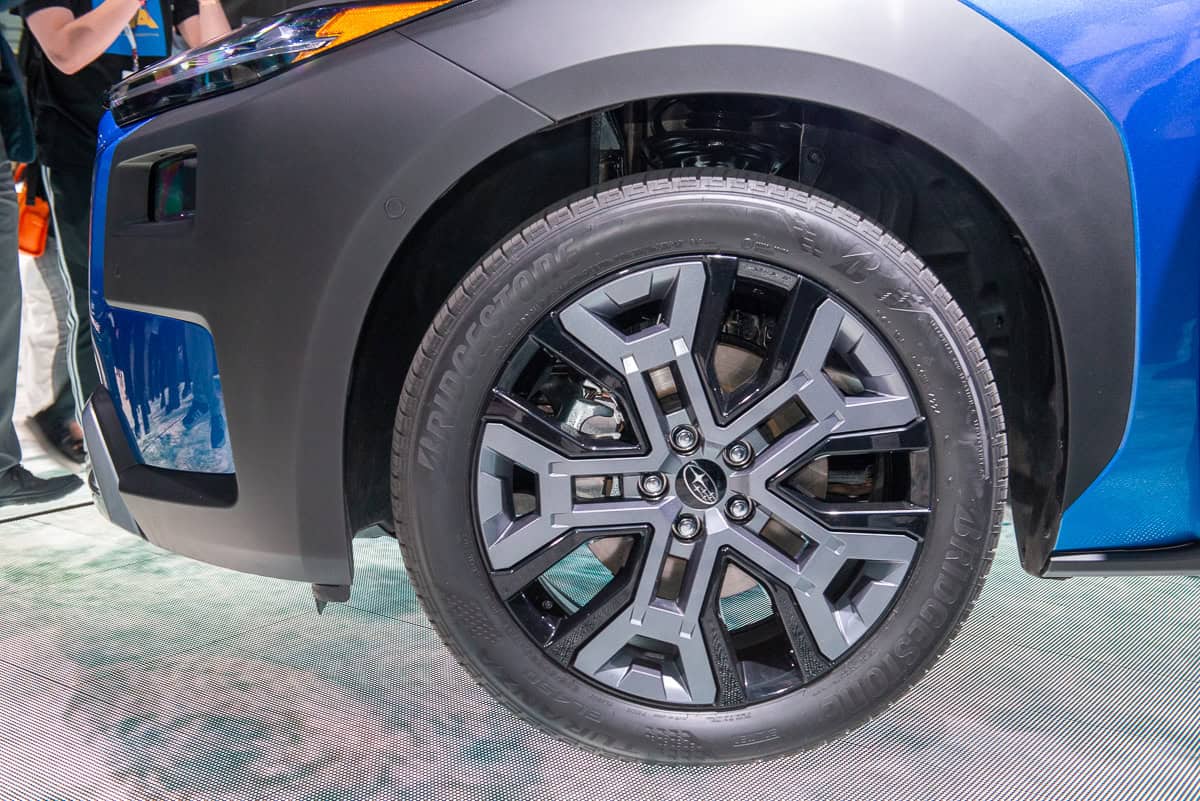
Ride comfort is quietly excellent. On smoother surfaces, the suspension absorbs irregularities without fuss, and cabin noise levels are subdued enough to encourage long highway runs without fatigue. We sampled both the 20-inch and 18-inch wheel options — the 20s sharpen steering response at the expense of some ride refinement, while the 18s feel better suited to imperfect pavement (like that found in many Canadian cities, and even more in Quebec these days).
Interior: No Surprise Here
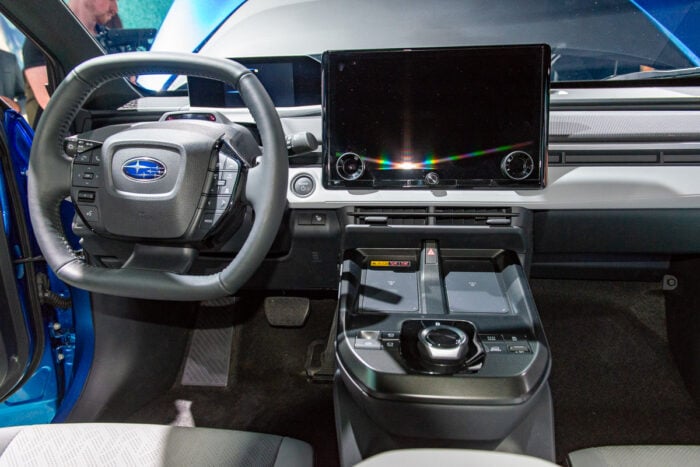
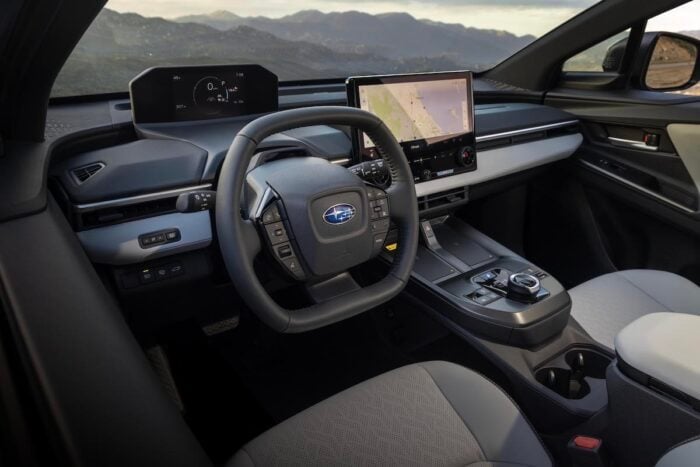
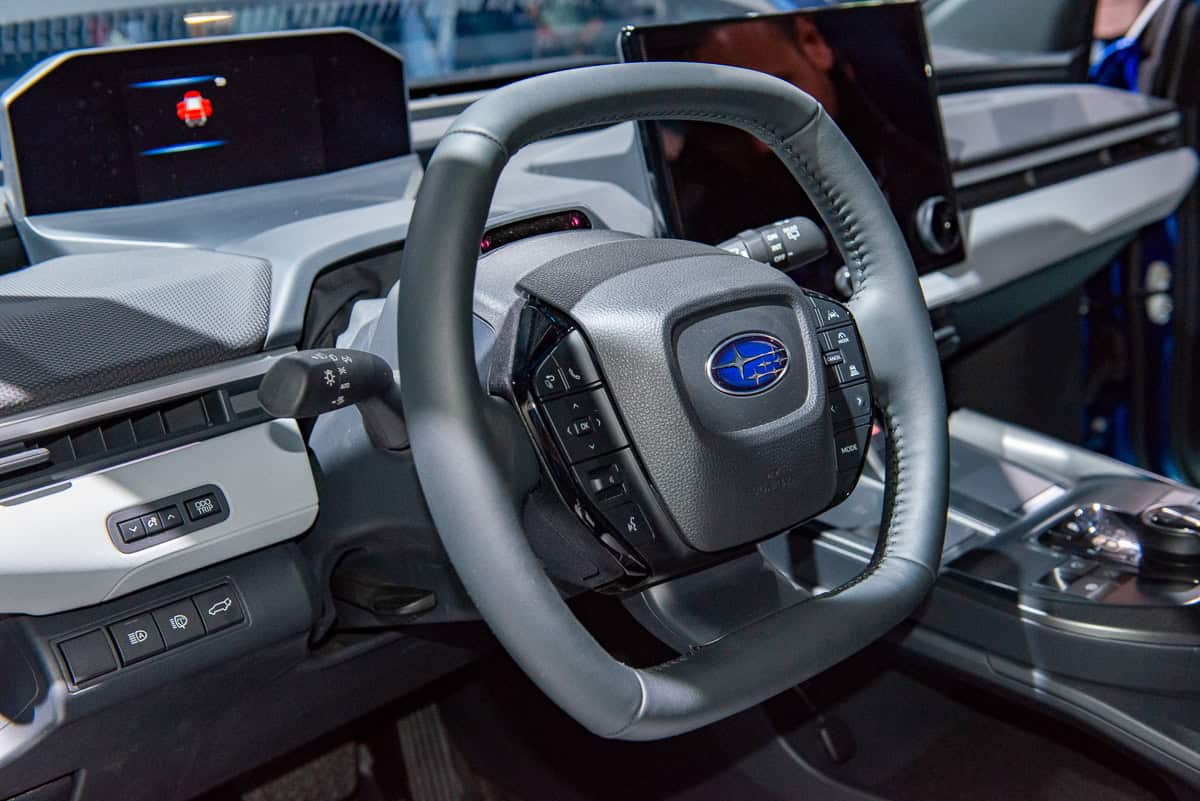
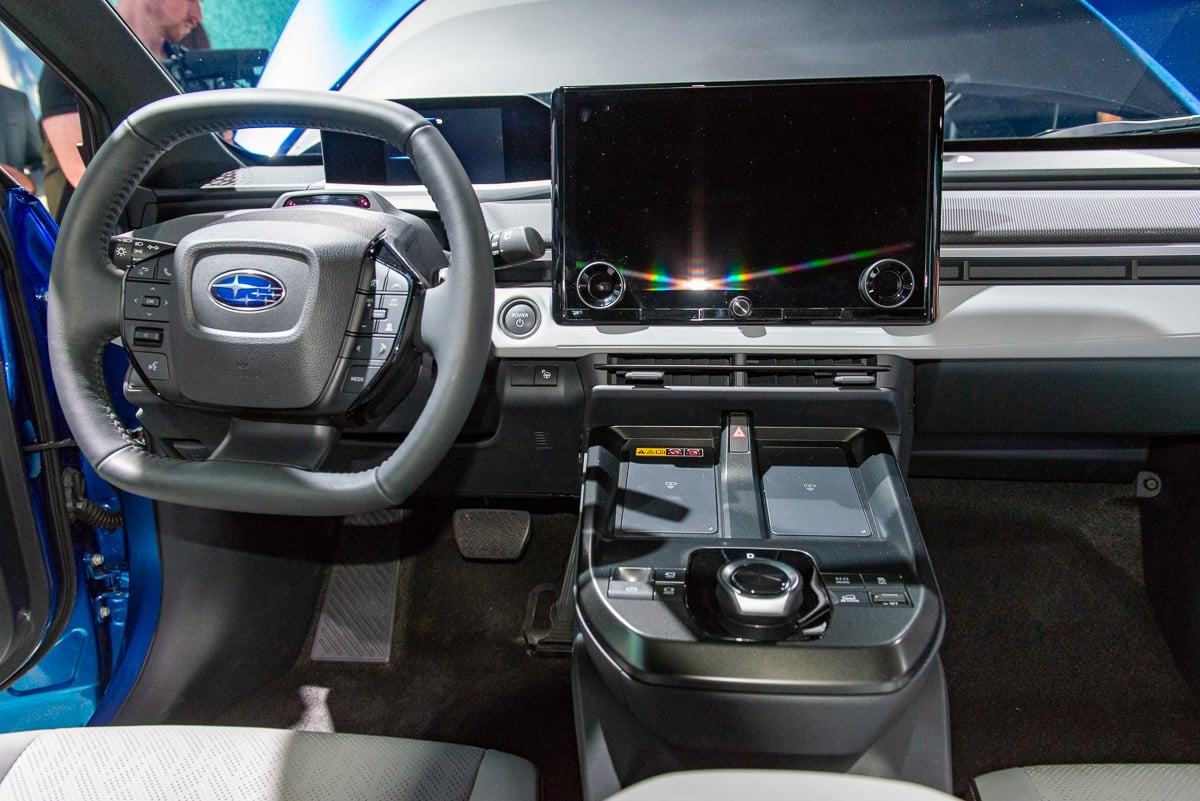
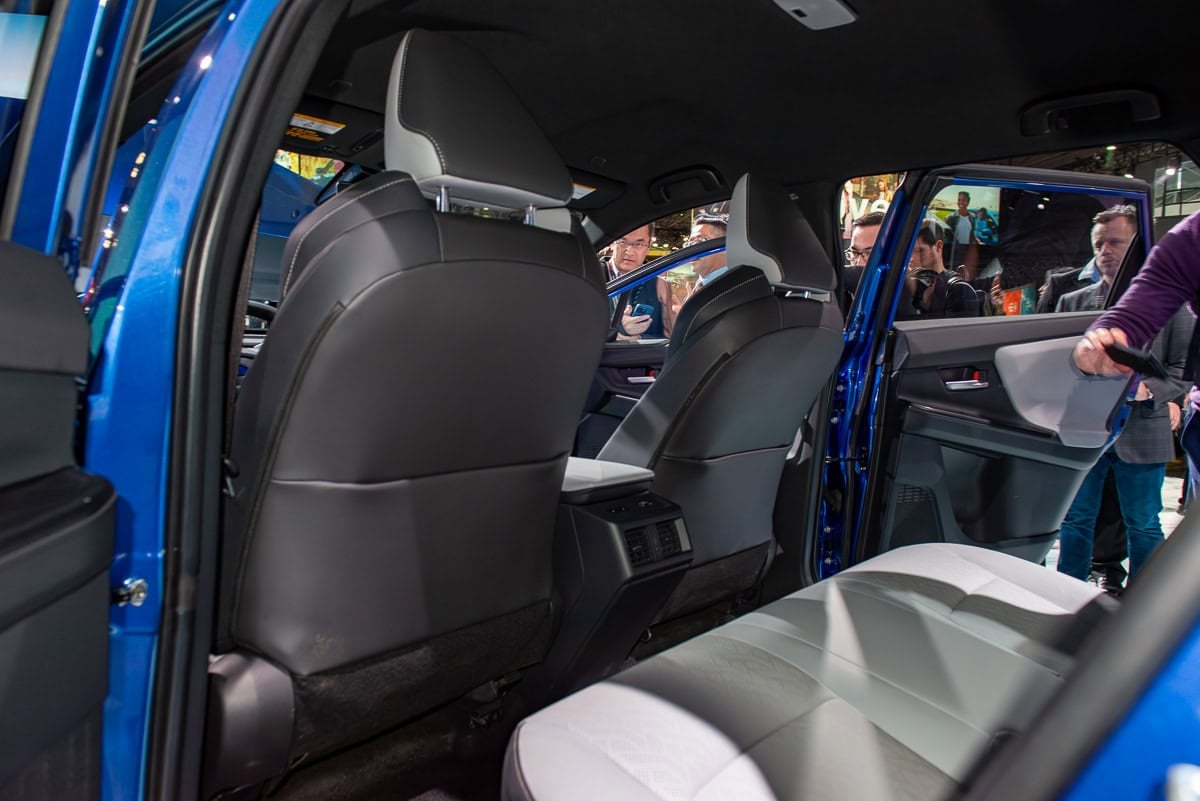
Inside, the Trailseeker borrows heavily from the shared Toyota/Subaru EV platform. The dashboard layout, infotainment screen, and center stack are all very similar to the bZ Woodland’s and bZ/Solterra cousins. But there’s nothing here that feels out of place — the interior is clean, functional, and thoughtfully laid out. A large 14-inch touchscreen dominates the center, with intuitive menus and quick responses.
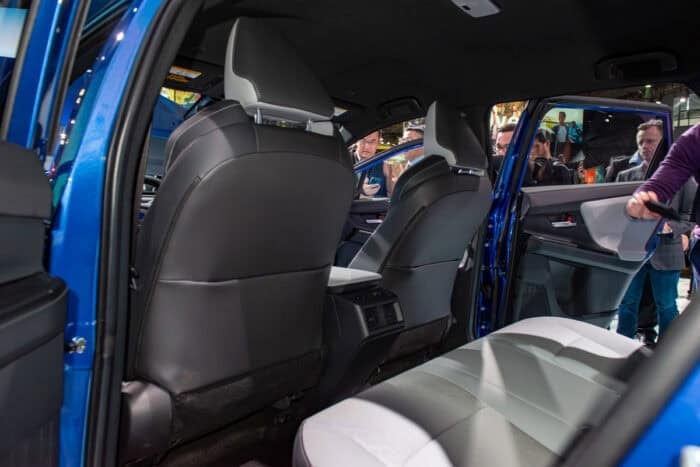
There’s now a double wireless charging pad, cleverly placed storage, and a dual-opening armrest that accommodates access for both the driver and the passenger. Near the transmission’s rotary dial, we find a few traditional buttons for driving modes, an electronic parking brake, and even the frontal camera that proved handy in several situations on that offroad course setup for the launch.
Space is also reminiscent of previous generations of the Outback, cargo-wise and even behind the first-row seats.
Takeaway


Pros
- Exceptional all-weather traction with standard AWD
- Comfortable ride and predictable handling
- Spacious cabin and highly usable cargo area
- 18-inch wheels are a good choice for Canada
Cons
- No Wilderness option yet
- No one-pedal drive
- Not eligible for government incentives
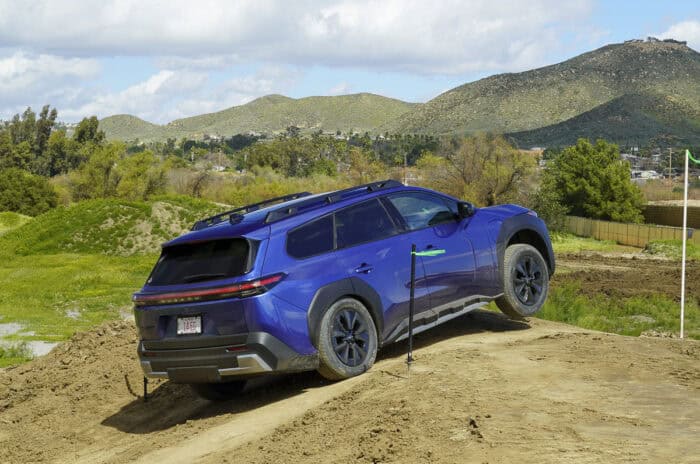
Our first drive suggests the 2026 Trailseeker is a well-thought-out family EV vehicle. Even if it’s a very close cousin of the Toyota bZ Woodland, it reminds us of the 30 years of Outback. The promised range is average at 444 km (276 miles), while the power is substantial. And while its off-road capabilities proved excellent on that soft off-road course, it still lacks the ground clearance found on the original Outback, especially the Wilderness trim with 240 mm versus the 215 mm provided by the Trailseeker.
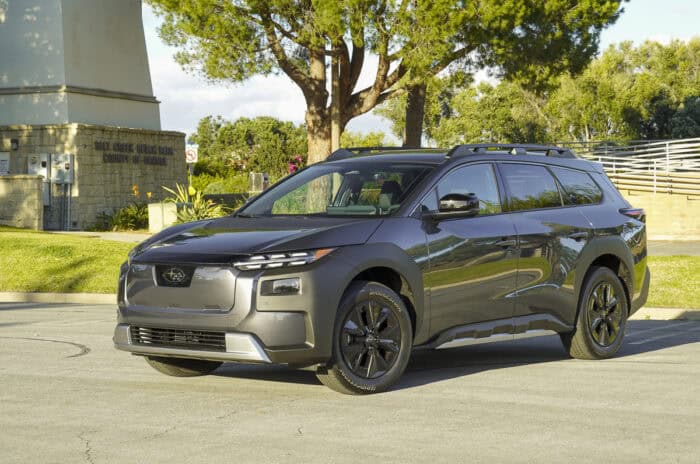
The 2026 Subaru Trailseeker looks like a great daily vehicle for busy families. It is versatile, comfortable and powerful. And while it’s no 2026 Outback Wilderness, it still proved capable on an uneven surface. For consumers who want to switch to EVs, without losing the practicality of a true crossover, the 2026 Trailseeker appears to be a great choice.