
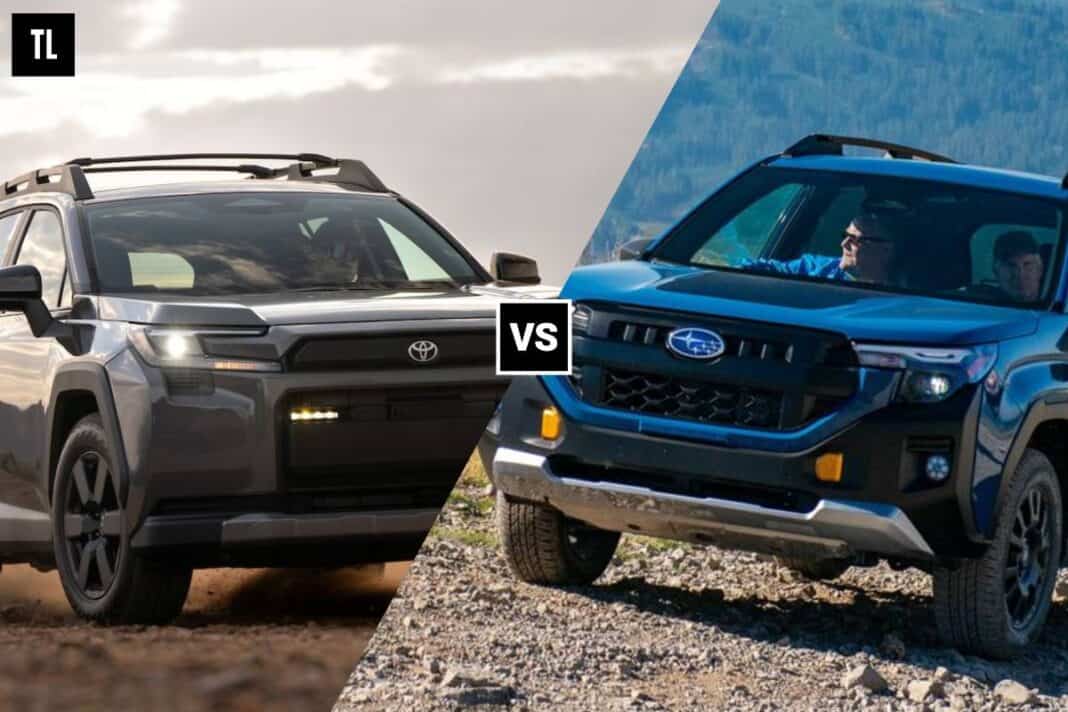
Compact crossovers wearing outdoorsy badges are everywhere right now. But only a few genuinely try to balance everyday livability with real off-pavement capability. The 2026 Toyota RAV4 Woodland (a RAV4 first) and the 2026 Subaru Forester Wilderness (fully redesigned) arrive at that same idea from very different directions. One leans into efficiency, familiar design, and broad appeal; the other doubles down on mechanical grip, durability, and trail-first intent. We’ve driven both on pavement, loose surfaces, and in real-world conditions, and while they share a similar footprint and target buyer, they couldn’t feel more different in how they go about the job.
Performance and Handling Winner: Subaru Forester Wilderness
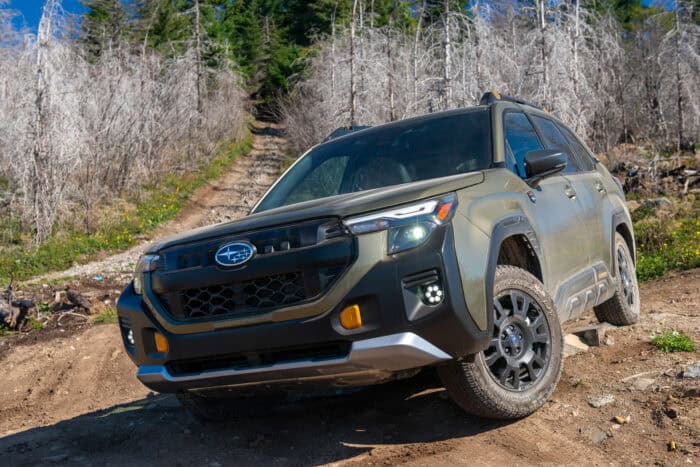
If your idea of “adventure” actually includes leaving the pavement, the Forester Wilderness makes a compelling case almost immediately. Subaru’s revised all-wheel-drive system, quicker center differential lockup, shorter final-drive ratio, and dedicated X-MODE tuning all show up when the terrain turns loose, uneven, or steep. On gravel and dirt trails in Oregon’s Columbia River Gorge, the Wilderness felt planted and confident, with predictable traction and a sense that it was working with the driver rather than reacting late.
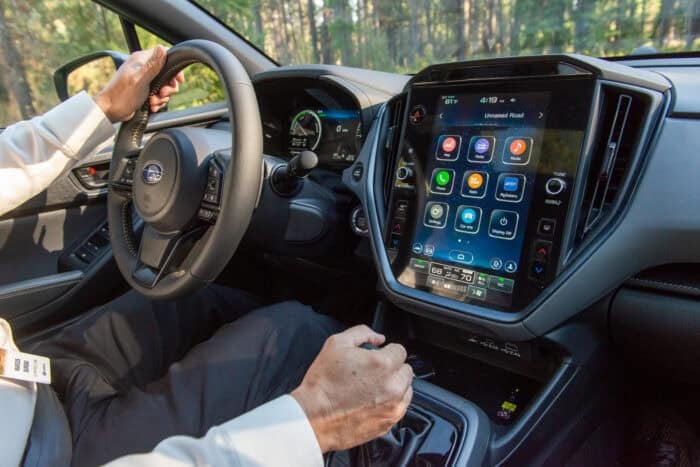
The CVT (yes, often a weak point in this segment) is noticeably improved here compared to the outgoing Forester Wilderness, especially at low speeds, where throttle modulation matters most. Hill Descent Control works seamlessly once engaged, and the added rear differential temperature monitoring provides peace of mind on longer trail runs. It’s not flashy, but it’s effective.
“Competitors may dress up their small SUVs with adventurous trim names, but the Wilderness remains the real deal.“
The RAV4 Woodland, by contrast, surprises in a different way. Even on chunky all-terrain tires, it remains composed and confidence-inspiring on the road. Steering accuracy is reassuring, and the hybrid powertrain delivers smooth, predictable performance that feels well-suited to daily driving. It won’t match the Forester’s off-road control or mechanical confidence on technical terrain, but it also never pretends to. The Woodland, like its XLE sibling, feels like a RAV4 first: efficient, easy to live with, and unintimidating—all with just enough extra capability to expand where you’re willing to take it.
Related – Subaru SUV Models Up Close: Smallest to Biggest
Interior and Daily Living Winner: Toyota RAV4 Woodland
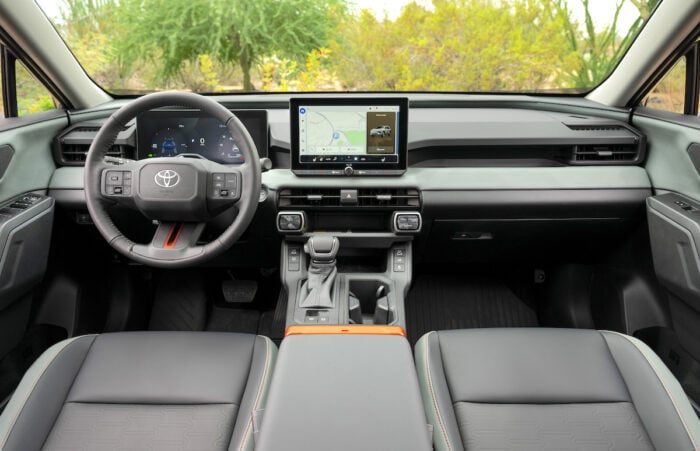
Both cabins are practical and purpose-built, but they prioritize different things. The RAV4 Woodland plays to Toyota’s strengths: clear controls, good outward visibility, a comfortable driving position, and a hybrid packaging solution that still manages to deliver a flat cargo floor and a usable spare tire underneath. For a compact hybrid crossover, that’s no small achievement.
“The driving position is good and the controls are clear looking through the wheel, while the infotainment is improved, as noted in our RAV4 XLE drive.”
There are some hard plastics, particularly along the center console and dashboard, but the layout is intuitive, and everything works as expected. The Woodland doesn’t try to feel rugged inside; it simply retains the familiar RAV4 environment that has made it a sales juggernaut, with added practicality for weekend use.
Related – The Base 2026 Toyota RAV4 Proves You Don’t Need a Higher Trim

The Forester Wilderness counters with durability and thoughtful details. StarTex upholstery, water-resistant surfaces, improved hinge sealing, and standard all-weather gear make it feel genuinely prepared for muddy boots, wet gear, and family abuse. Subaru also made smart usability improvements for 2026, including larger cupholders, more center storage, better rear seatbelt routing, and optional tech upgrades like the digital gauge cluster.
That said, for day-to-day commuting and long stretches of highway, the RAV4’s smoother hybrid drivetrain and quieter demeanor give it the edge as an all-around daily.
Related – 2025 Toyota RAV4 PHEV Review: Efficient & Fast But Showing Its Age
Styling Winner: Depends on Your Personality
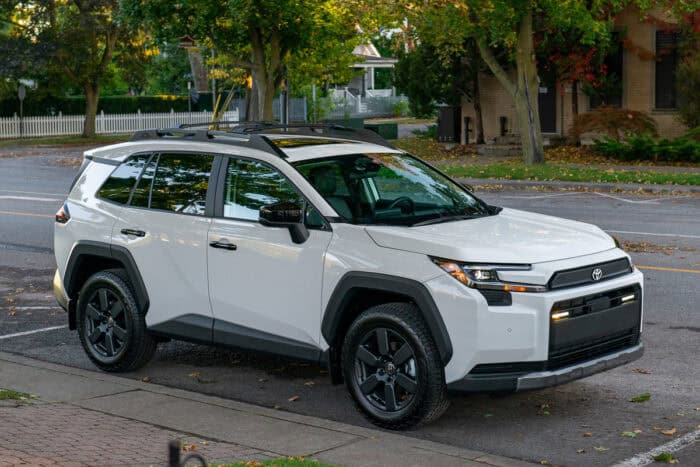
The RAV4 Woodland adds rugged cues without straying far from Toyota’s mainstream design language, even at the 2026 base level. Unique bumpers, skid-plate detailing, over-fenders, bridge-style roof rails, and Rigid Industries LED fog lamps give it a dose of adventure credibility, but it still looks clean, modern, and unmistakably urban-friendly. It’s rugged chic, not cosplay.
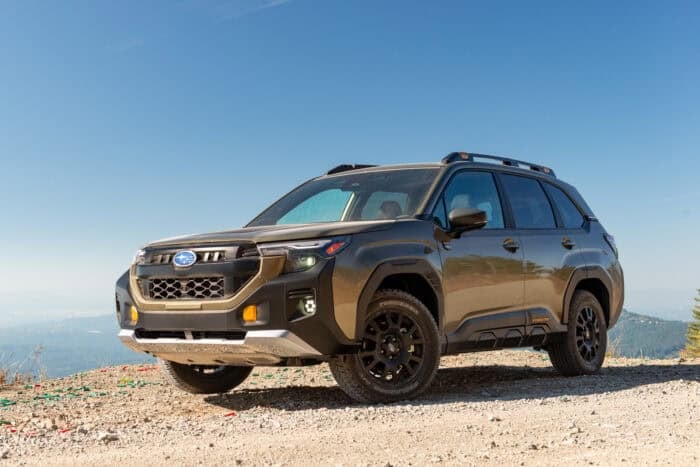
The Forester Wilderness, on the other hand, wears its intent openly. Copper accents, chunkier tires, raised roof rails with serious load ratings, and Wilderness-specific bumpers and tow points make it obvious this isn’t a standard Forester. It looks tougher because it is tougher. Subaru doesn’t shy away from that identity.
If you want subtle versatility, Toyota’s approach will resonate. If you want visual honesty that mirrors mechanical capability, the Subaru wins.
Takeaway: Two Clear Winners for Two Different Buyers
There’s no universal “winner” here, and that’s the point. The Toyota RAV4 Woodland is the smarter choice for buyers who want efficiency, comfort, and light-duty adventure wrapped in a package that works effortlessly every day. It broadens the RAV4’s appeal without compromising what has made it the best-selling compact crossover in North America.
The Subaru Forester Wilderness is the more authentic adventure tool. Its mechanical upgrades, off-road tuning, and durability-focused interior make it the better option for buyers who genuinely plan to leave the pavement regularly and want confidence doing so. Both succeed, just in very different ways. The right choice depends less on the badge and more on where your weekends actually take you.