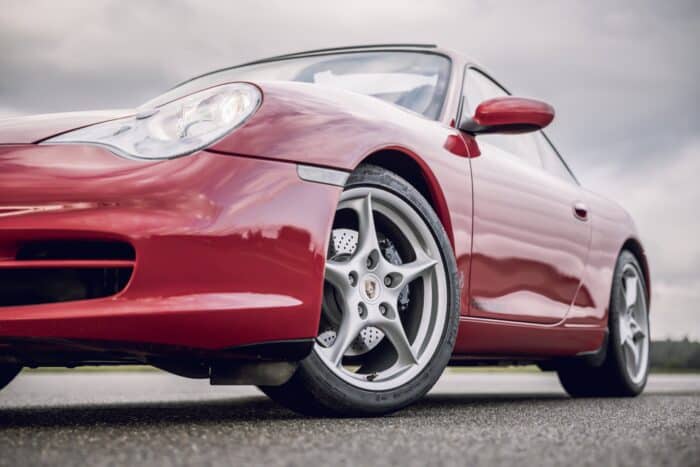

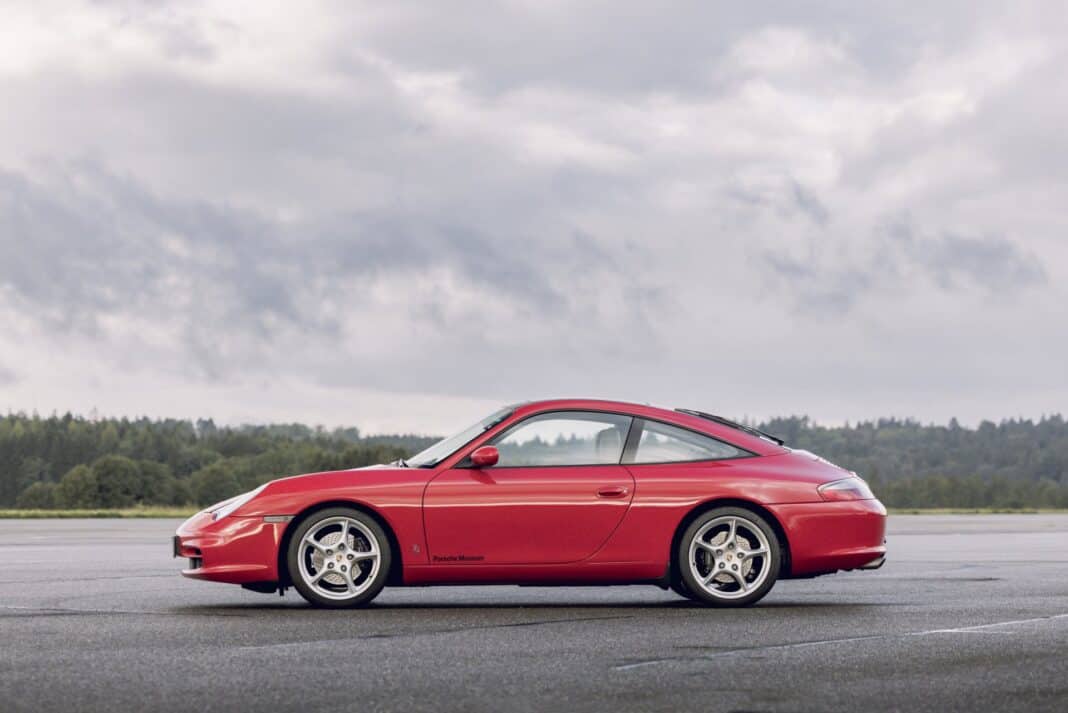
The 1990s were a decade of change in the house of Porsche. Sales had fallen considerably since the 1980s, a weak Deutsche Mark jacked up pricing in critical export markets and the brand offered three fundamentally ancient models that hardly shared a thing with each other. Of equal concern, new emissions standards were on the horizon that would mean the end of the road for the air-cooled 911. Under then-CEO Wendelin Wiedeking, a plan was drafted: Discontinue the slow-selling 968 and 928 transaxle cars, develop a new water-cooled 911, and use as many of its components as possible to build an entry-level mid-engined car in order to share costs. While the Boxster debuted for 1996, production of the new 911—chassis code 996—wouldn’t kick off for another year, and it wouldn’t reach North America until the 1999 model year.
“996s remain the cheapest entry point into a Porsche 911 by a country mile, often five figures cheaper than a 997. And guess what? They still drive beautifully.”
By that time, two schools of thought emerged. The first was a legion of diehards decrying the dequirkification of Stuttgart’s most revered model. Water–cooling? Brake and clutch pedals hinged at the top? Non-circular headlights? Heating and air conditioning that actually worked? Heresy! On the other hand, road tests of the time were overwhelmingly positive. The 996 won Evo’s 1998 Car of the Year test, beating the Ferrari F355, Lotus Elise, and BMW M Coupe. Not only was the new 911 a dynamic triumph, it was also a sales smash-hit. Over the course of its production run, more than 175,000 examples found homes around the globe, two-wheel-drive and four-wheel-drive models, manuals and Tiptronic automatics, coupes, cabriolets, and Targas.
Growing Pains
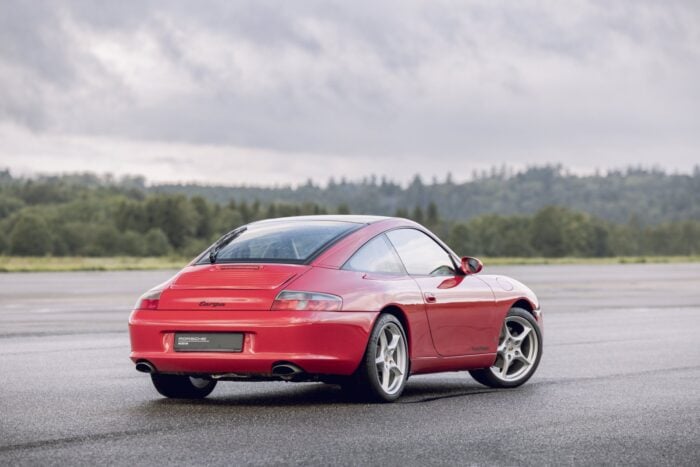
Mind you, because the 996 was Porsche’s first water-cooled 911, it wasn’t without its problems. To save money and use identical cylinder heads, Porsche relied on an intermediate shaft with a sealed bearing to time Carrera models’ M96 engines. Although failures of early dual-row bearings are relatively rare, a switch to a single-row bearing seriously amplified the problem. At the same time, the use of a Nikasil cylinder coating invited the risk of bore scoring, where the pistons would chew up the cylinder walls. Add in reports of cracked heads, worn variable valve timing pads, and a sump design that could result in oil starvation on track, and the 996 developed a reputation that seriously depressed resale value. Of course, the controversial headlights and plasticky interior didn’t help either.
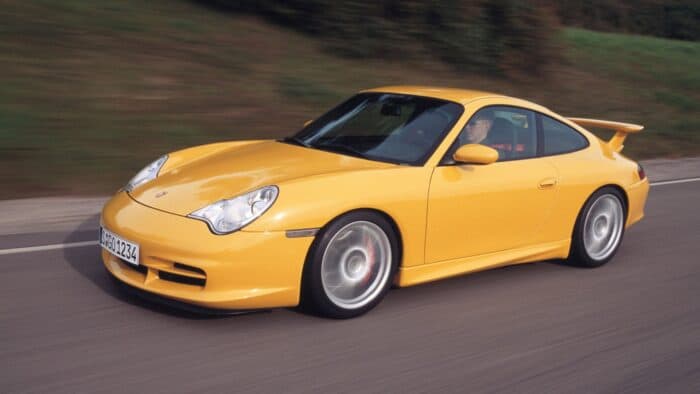
As the decades ticked by, a few interesting things happened. Porsche specialists found out that the model’s successor, the 997, can also suffer from bore scoring in either the early M97 engine or the late 9A1 engine. It’s a similar deal with oil starvation on track. Meanwhile, independent firms have developed permanent fixes for the intermediate shaft bearing issue, and the general consensus involves bundling the fix into a clutch replacement to save on labour costs. Despite these developments, 996s remain the cheapest entry point into a Porsche 911 by a country mile, often five figures cheaper than a 997. And guess what? They still drive beautifully.
Poster Car Performance
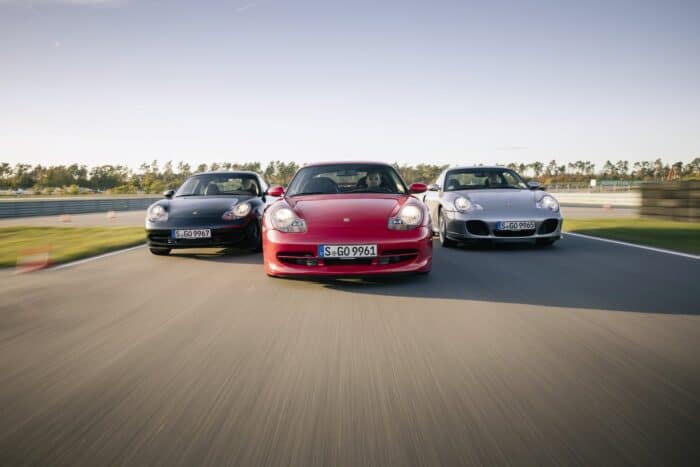
An early 996 is still the lightest water-cooled street-legal 911 ever, tipping the scales at just under 3,000 pounds. It can still run from zero-to-100 km/h in about five seconds, still serves up essays of feedback through its hydraulic power steering, and still does all the 911 things. That hint of the nose going light over crests, the ability to put the power down incredibly early out of turns, the reminder not to lift in fast corners otherwise the rear-engined pendulum effect could bite you. It’s still a machine for driving first and foremost, and closer in feel to an air-cooled 993 or a mid-aughts 997 than you might expect.
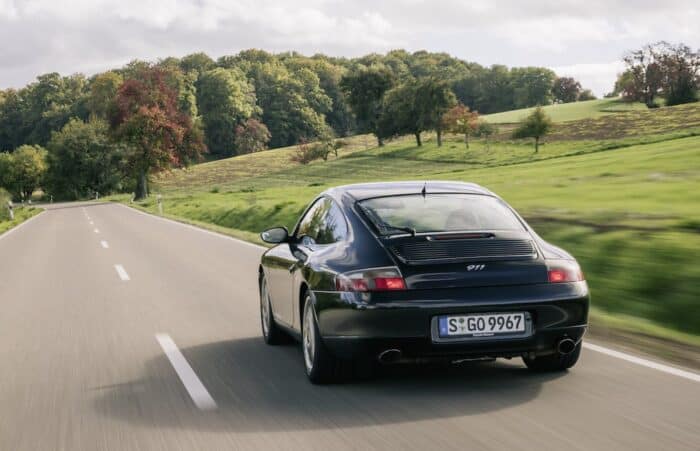
While the days of sub-$20,000 996s are well and truly over, you can still pick up a tidy stick-shift Carrera for between $30,000 and $40,000, or a slightly worn example for less than $30,000. That’s cheaper than a well-equipped new Honda Civic. So long as you can budget for typical older Porsche repair costs, a 996 is a real 911 for a price you can afford. Learn to love the headlights, and you can put a proper poster car in your garage. You might want to do it soon, though. Now that a new generation’s grown fond of the controversial fried-egg headlights, don’t expect 996s to get any cheaper.