
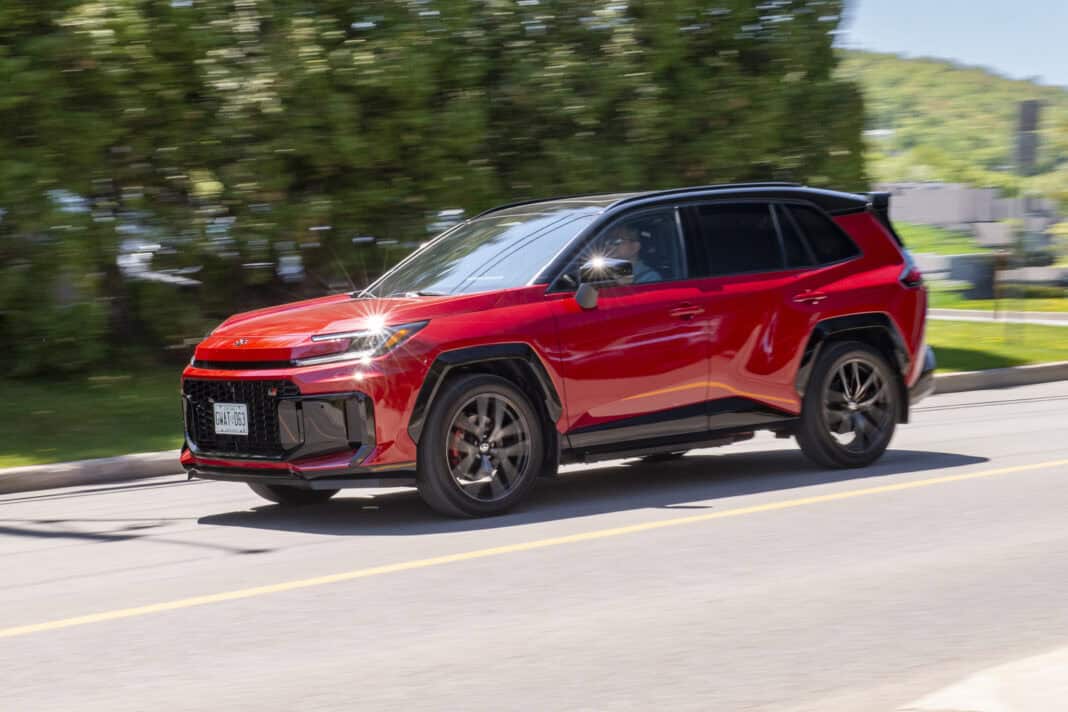
Gazoo Racing and RAV4 don’t really belong in the same sentence. But here we are, a full-on sport-tuned compact crossover nobody saw coming; one typically reserved for risk-averse accountants, sensible young couples, and retired folk who are unenthusiastic about driving. It’s been that way for over 30 years, across all five previous generations.
While this new model shares the same 324 horsepower PHEV setup as the other plug-in hybrid models, Toyota’s sport division, Gazoo Racing, did a decent job converting the 6th-generation 2026 RAV4 into more than just a ‘sporty’ badge job. Frankly, it’s what GR does best. From suspension upgrades and its own Sport mode mapping to all the aero bits and GR-specific details.
The 8 Things That Set Gazoo Racing’s RAV4 Apart In The Lineup
PHEV-Only, All-Wheel Drive Comes Standard
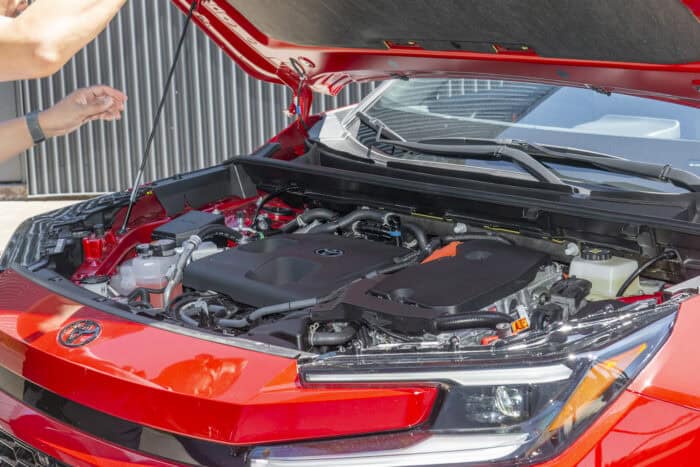
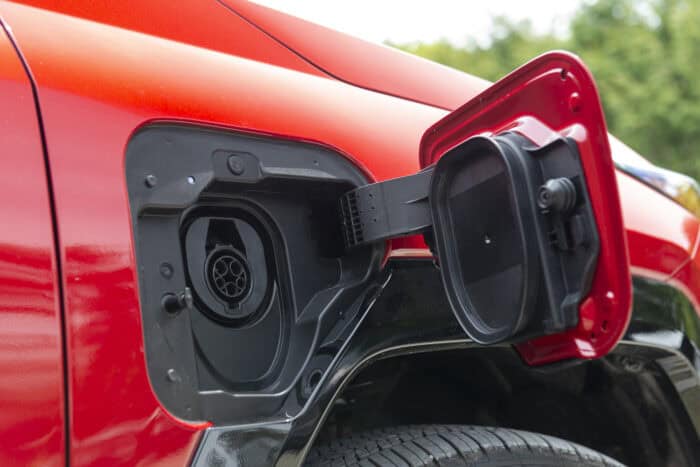
For 2026, the entire RAV4 line ditches gas engines, going exclusively hybrid or plug-in hybrid. The inaugural RAV4 GR Sport sits at the top of the sport-design side of the lineup and comes only as a plug-in hybrid with all-wheel drive. That means it uses the same 324-hp PHEV setup offered on other plug-in RAV4 trims like the SE, XSE, and Woodland, rather than getting a unique power bump of its own. The difference is that Toyota makes the PHEV/AWD combination standard here. And it’s a more powerful PHEV RAV4 compared to 2025.
“When former Toyota CEO and current chairman, Akio Toyoda, declared ‘no more boring cars’ nearly ten years ago, he clearly wasn’t just talking about Supras, GR86s, and Corolla hatchbacks.”
We spent time with this bright red compact on the roads just outside Quebec City, Quebec. The setup felt strong and easy to live with; highway driving was smooth and relaxed, while the extra power from the plug-in hybrid system gave the GR Sport enough punch to feel confident when merging, passing, or climbing through faster stretches of road. All the new 2026 RAV4s, both hybrid like the RAV4 XSE we reviewed and the plug-in hybrid (PHEV) with the charging port, feel spirited with all that instant electric torque and abundant power, but the GR flavour steps it up here.
It Sits Lower
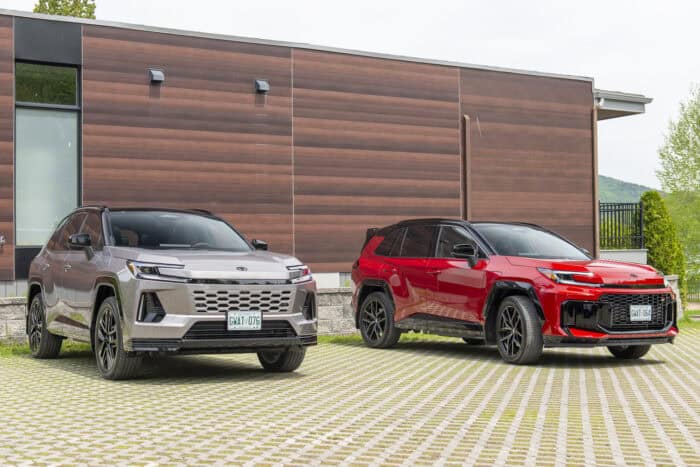
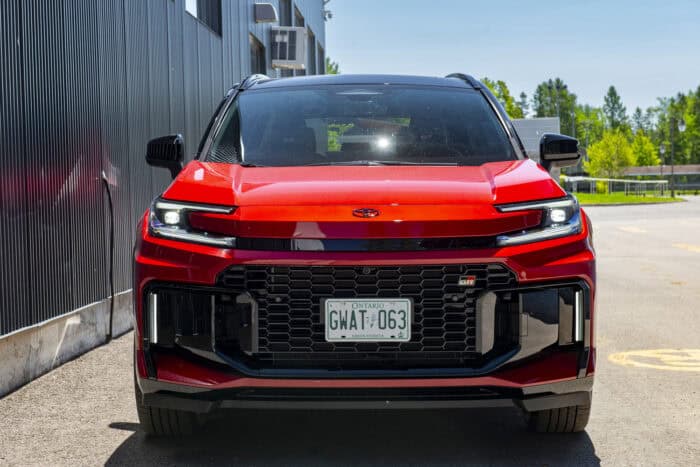
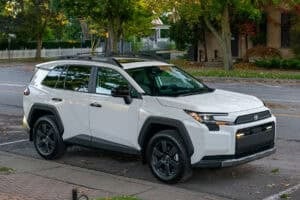
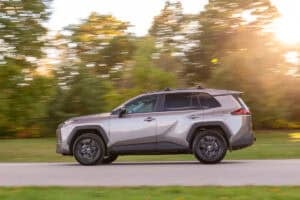
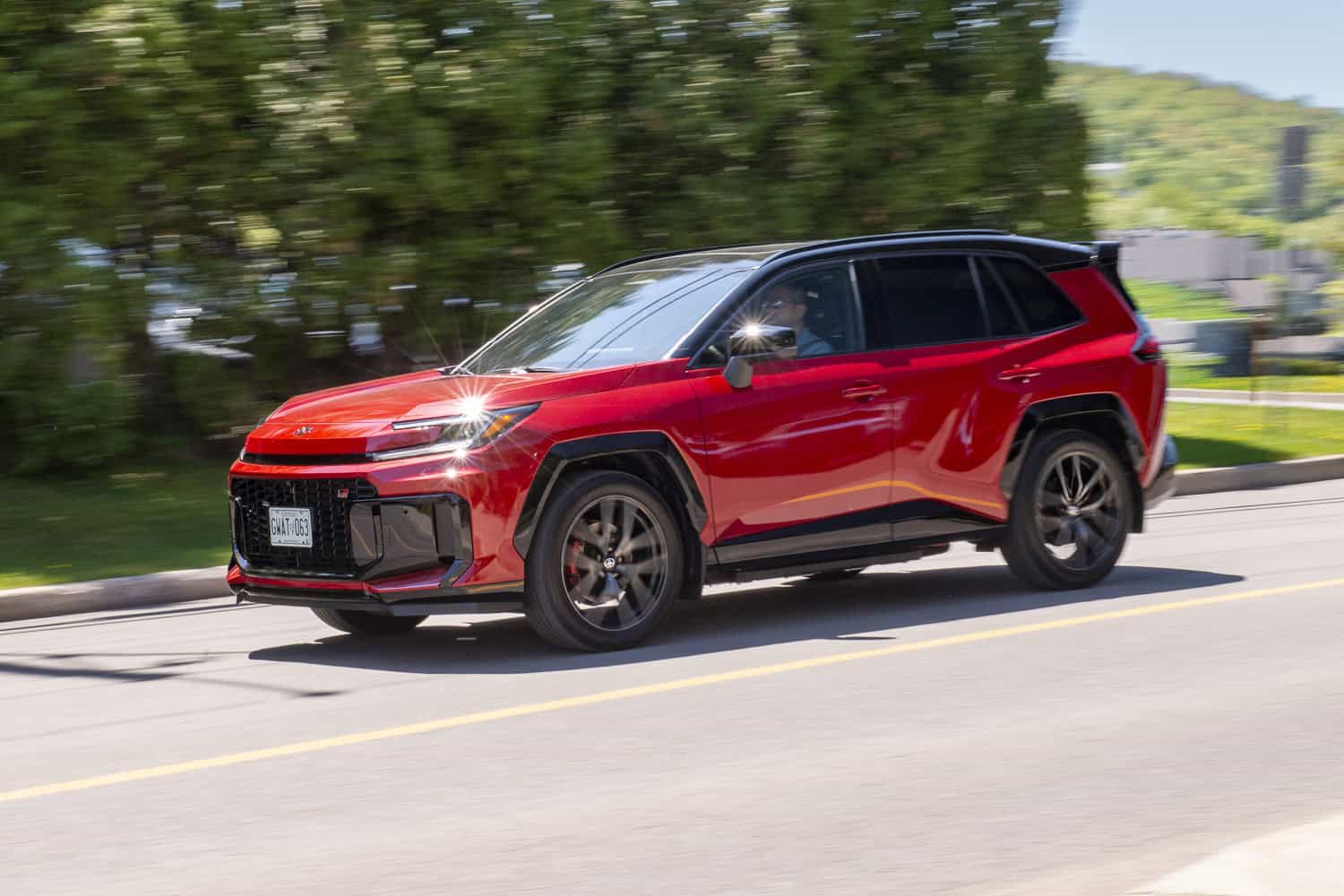
While most 2026 RAV4 trims sit at 8.1 inches of ground clearance, and the Woodland rises to 8.5 inches, the GR Sport drops to 7.5 inches. Toyota also notes a 15-mm lower ride height compared with the XSE, giving the GR Sport a more planted stance. That matters visually, but it also helps separate this trim from the more adventure-focused Woodland we reviewed, which goes the opposite direction with more ground clearance, all-terrain tires, and a tow hitch.
That lower stance also suits how the GR Sport drives. On the narrower, windier rural roads it felt settled and composed rather than tall or tippy, which helps give this version a different character from the more rugged-looking RAV4 trims.
The Suspension Is Indeed Tuned
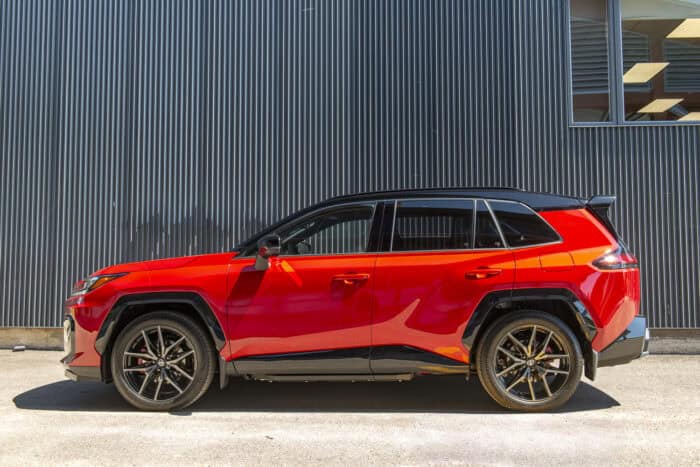
This is where the GR Sport becomes more than just a wheel-and-badge package. Toyota gives it dedicated damper tuning and coil springs, along with a front performance damper, rear suspension cross-member reinforcement, and a lower arm cover. Other RAV4 trims benefit from the new-generation chassis improvements, but the GR Sport gets additional hardware and tuning meant to sharpen the way it turns, settles, and responds.
“The cabin felt comfortable enough for longer stretches while still giving the driver a more locked-in feel than a regular family-focused RAV4.”
The suspension changes are noticeable in how the GR Sport handles a mix of highway and curvier secondary roads, compared to the XSE PHEV model we drove back-to-back. The GR drove well without feeling overly stiff, keeping the RAV4 comfortable enough for daily use while giving it a more controlled feel when the road tightened up.
Related – 2026 Toyota RAV4 Woodland Vs Subaru Forester Wilderness
The Steering Gets its Own Sport Mode Mapping
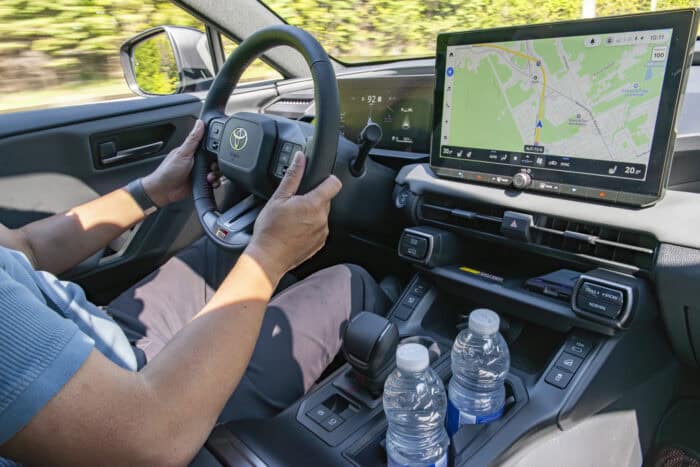
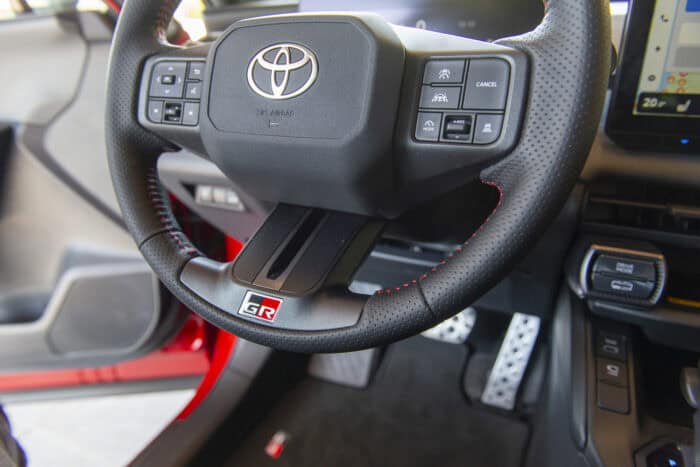
The GR Sport also receives exclusive power steering mapping for Sport mode. Every RAV4 gets selectable drive modes, but this trim gets steering calibration specific to its sportier setup. That should make the GR Sport feel more direct than a regular SE or XSE when driven harder, even though the core plug-in hybrid powertrain is shared.
On those tight winding roads, the steering felt nicely matched to the GR Sport’s mission. It doesn’t turn the RAV4 into a hot hatch like its GR Corolla cousin, but it gives the SUV enough precision and confidence to make the sportier trim feel like more than a styling exercise.
The Wheels and Tires Are More Serious
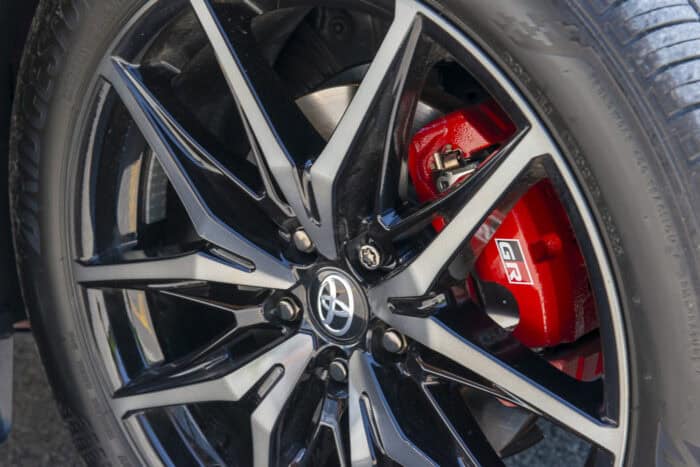
The GR Sport gets 20-inch black alloy wheels with a black pearl machined finish, black lug nuts, and a wider offset; all wrapped in Dunlop Sportmaxx summer performance tires, which are a much more road-focused choice than the Woodland’s Dunlop GrandTrek all-terrain tires. The XSE also gets 20-inch wheels, but the GR Sport’s offset, tire choice, and lighter wheel package give it a more serious handling brief.
Those tires help the GR Sport feel more planted on pavement, especially when the road starts to bend. The tradeoff, as expected, is that this version feels more road-biased than trail-ready, but that suits the GR Sport’s role in the lineup.
The Aero Pieces Are Functional
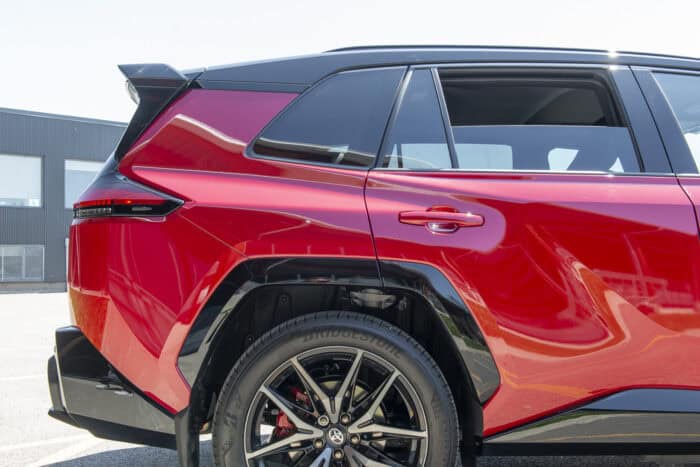
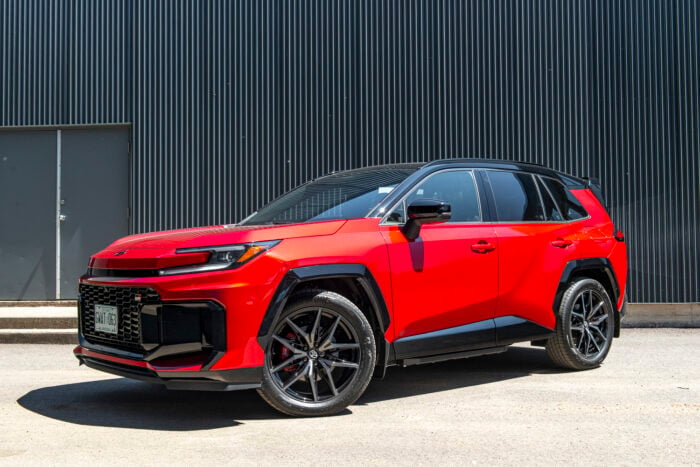
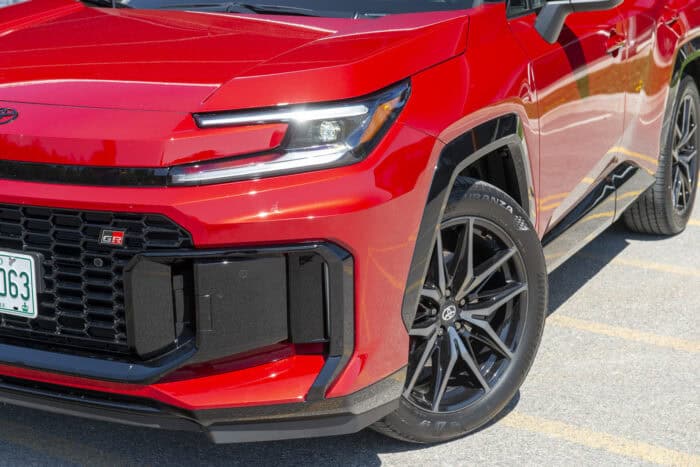
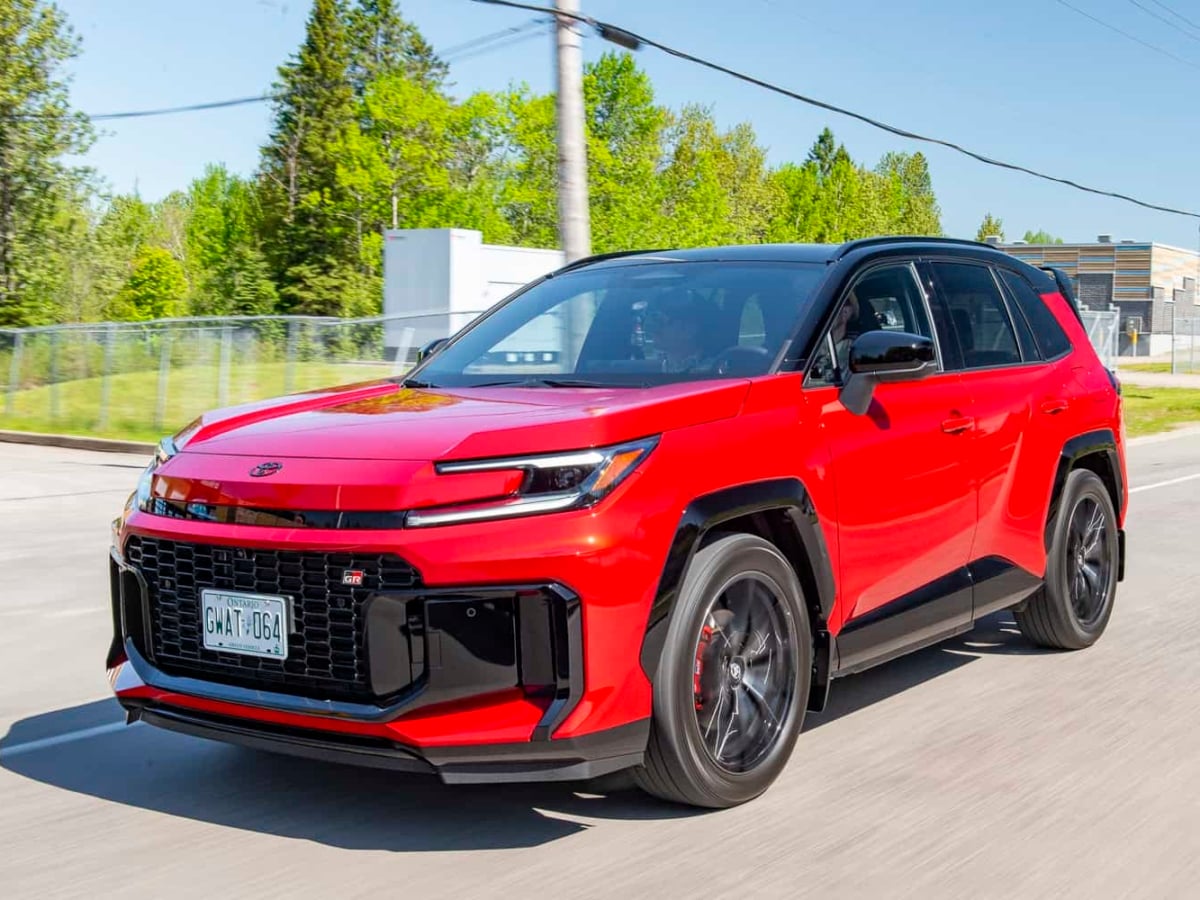
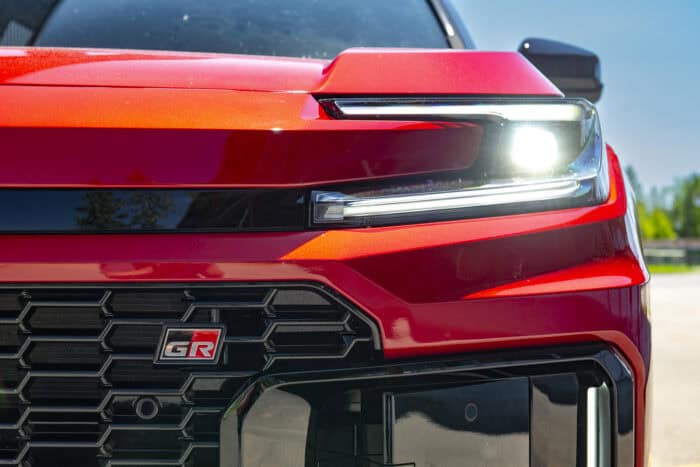
Toyota is clear that the GR Sport’s extra bodywork is not purely decorative. The trim gets a GR Functional MATRIX grille, upper and lower active cooling ducts, a front lip, rear wing spoiler, rear diffuser, and air ducts in the front grille and bumper. These pieces are designed to help with airflow, cooling, drag reduction, and balanced downforce. Regular SE and XSE trims get sportier styling, but the GR Sport pushes further with actual functional aero pieces.
“We’re not sure who Toyota is targeting with the 2026 RAV4 GR Sport, but does it matter? The crossover performs well and looks the part without being tacky.”
At highway speeds, the GR Sport felt stable and composed. The aero pieces also help the SUV look the part without making it feel overdone, giving Toyota’s best-selling compact SUV a sharper road presence. Toyota could’ve made this a cheesy upgrade, but managed to pull it off with styling that’s appropriate and overdone.
It Looks Wider (And Dare We Say Meaner)
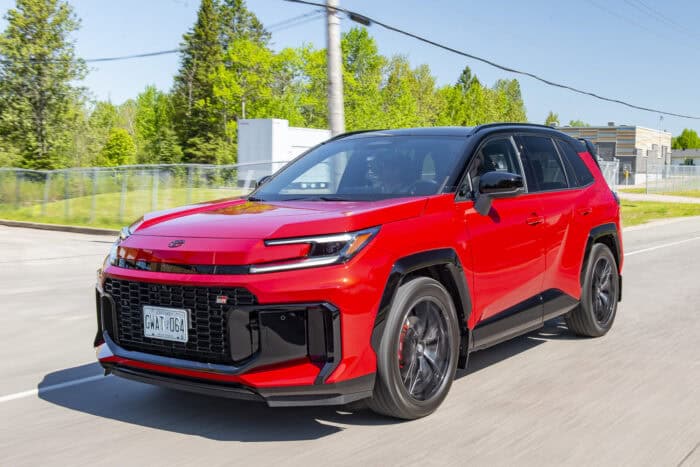
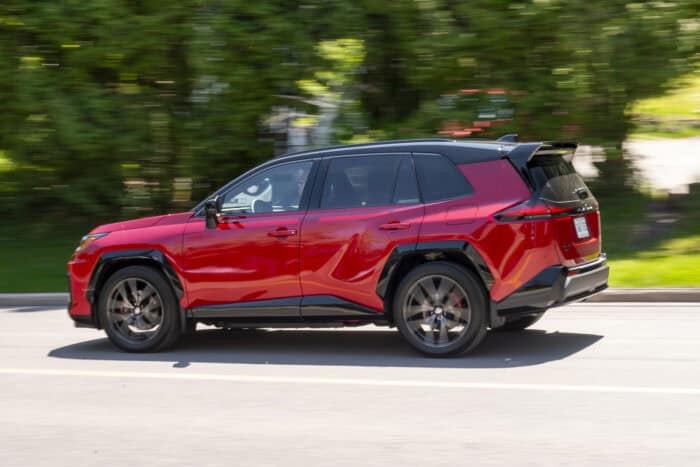
The GR Sport is one inch wider overall thanks to wider fender flares, and that alone gives it a different presence than the rest of the RAV4 lineup. It also gets wide piano black overfenders, red-painted brake calipers with GR logos, GR badging on the front grille, GR Sport badging on the rear hatch, unique vertical LED front bumper accent lights, and an optional two-tone exterior with a black roof. Compared with the XSE, it looks more aggressive; compared with the Woodland, it trades rugged cues for a lower, street-focused look.
That wider, lower look matches the driving experience better than expected. After time on a variety of Quebec’s roads, the GR Sport felt like a RAV4 with a bit more edge, not a full performance SUV, but clearly the sportiest-feeling version in the range.
The Cabin Gets GR-Specific Details
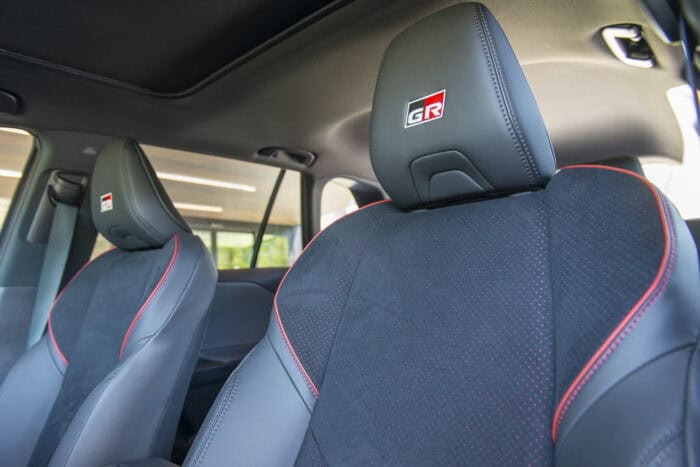
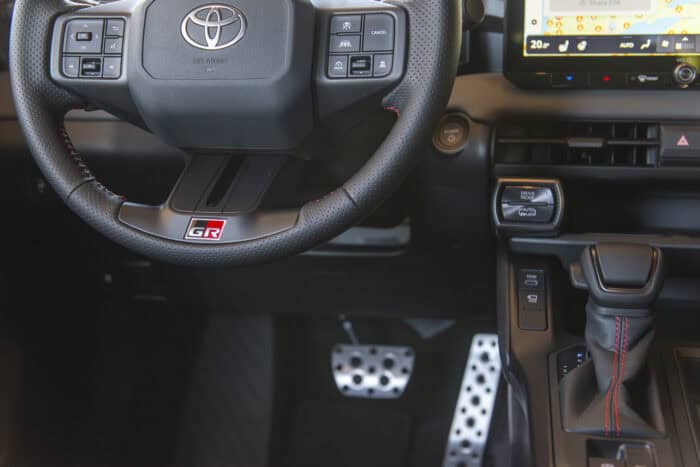
Inside, the GR Sport gets Brin Naub synthetic suede and SofTex sport seats with wide bolsters, black/red perforation, GR logos on the headrests, red stitching throughout, aluminum sport pedals, GR-branded front door scuff plates, and an exclusive GR startup screen in the 12.3-inch digital gauge cluster. The XSE also gets nicer sport-trimmed seating and the larger 12.9-inch multimedia screen, but the GR Sport adds the stronger Gazoo Racing identity inside.
During our drive with it, the sport seats also suit the way this trim drives. On a route that mixed highway cruising with narrower roads, the cabin felt comfortable enough for longer stretches while still giving the driver a more locked-in feel than a regular family-focused RAV4.
Related – 10 Interior Changes You’ll Notice in the 2026 Toyota RAV4
Takeaway




Again, no customer (we’re sure) asked Gazoo Racing to Gazoo-fy the well-mannered RAV4. But when former Toyota CEO and current chairman Akio Toyoda declared ‘no more boring cars’ nearly ten years ago, he clearly wasn’t just talking about Supras, GR86s, and Corolla hatchbacks.
After spending time with Toyota’s little nugget of surprise, we’re not really sure who they’re targeting with a factory-tuned, reliable family compact icon. But does it matter? The crossover performs well and looks the part without being tacky. Nor is it excessively more expensive than the top trims, XSE PHEV and Woodland PHEV. It’s clearly built for everyday duties the RAV4 is known for, but now with a dose of fun in the mix.
Price: Is the RAV4 GR Sport Worth It?
If you find yourself driving on highways and open roads a fair bit and actually value a firm stance and spirited driving, then the RAV4 GR Sport makes a strong case when compared to the XSE PHEV. It’s built for drivers, not just driveways.
In the US, the base SE PHEV starts at $41,500 which is perfect for those who don’t need the frills. The Woodland PHEV is $45,300 and for those who need the beefier add-ons for the extra price. But between the more luxe XSE PHEV at $47,200 and aggressive GR Sport PHEV at $48,500, you can see the price difference is negligible, so it comes down whether the Gazoo Racing touch even matters. In Canada, the RAV4 PHEV XSE with Technologly Package is actually more expensive starting at $59,350 CAD than the GR Sport at $57,500 CAD. So if sporty matters, the choice is obvious. The bigger question may be: can you actually get your hands on the new RAV4 GR Sport?