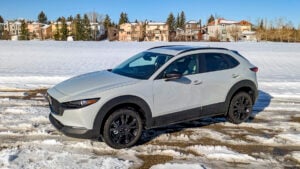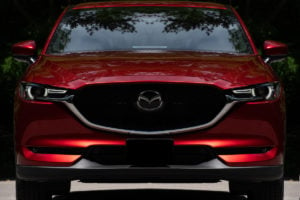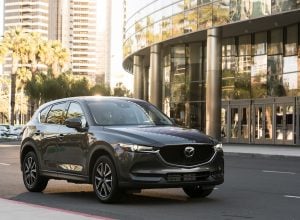

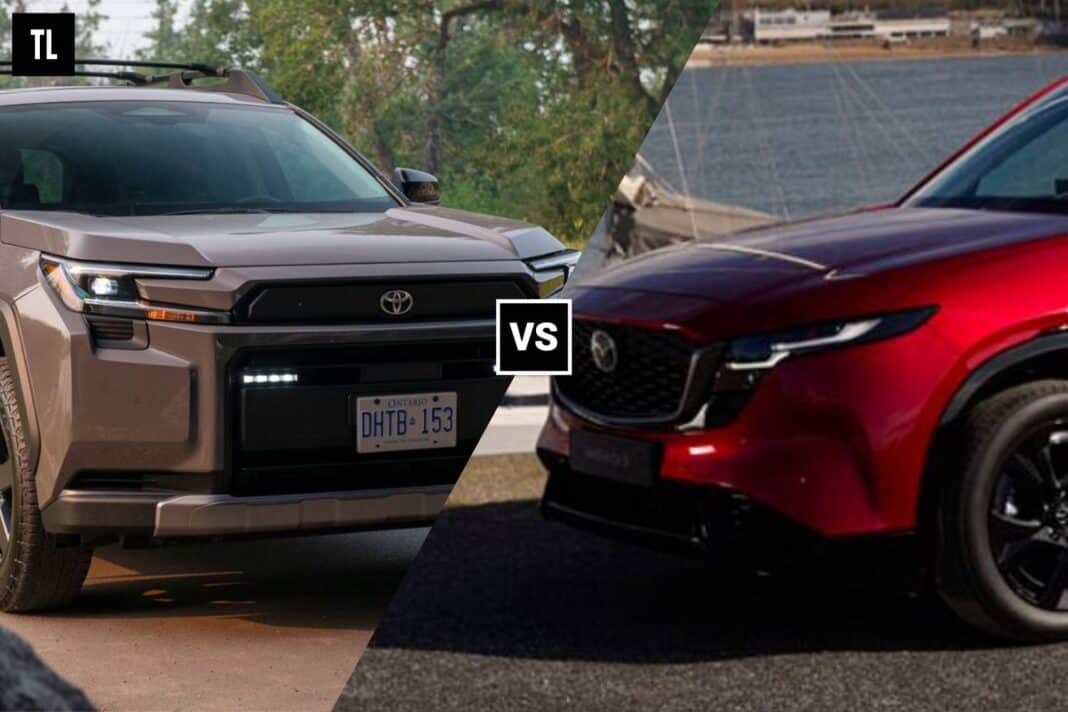
The 2026 Toyota RAV4 and Mazda CX-5 are both new, big-selling, compact SUVs. We’ve recently spent time with both, but rather than doing a conventional comparison of similar trims, we’ve decided to assess two different answers to the same question.
The CX-5 has long been the most car-like contender in its segment. Unlike many rival SUV brands, Mazda sticks to its mantra of efficient, fine-handling, street-friendly vehicles, rather than suggesting that – AWD or not – its owners might have designs on the Broken Arrow Trail.
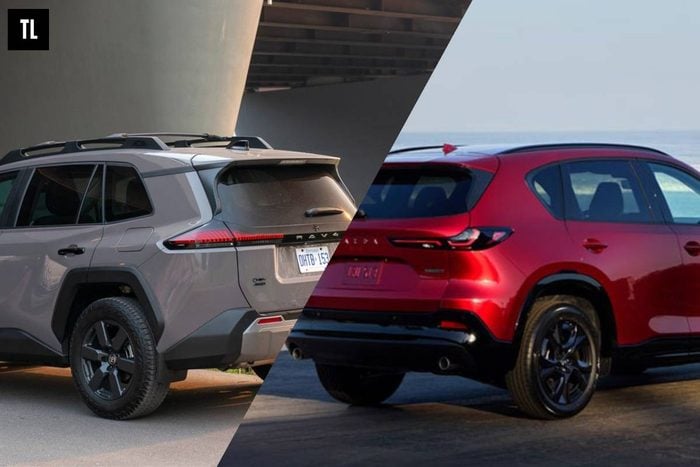
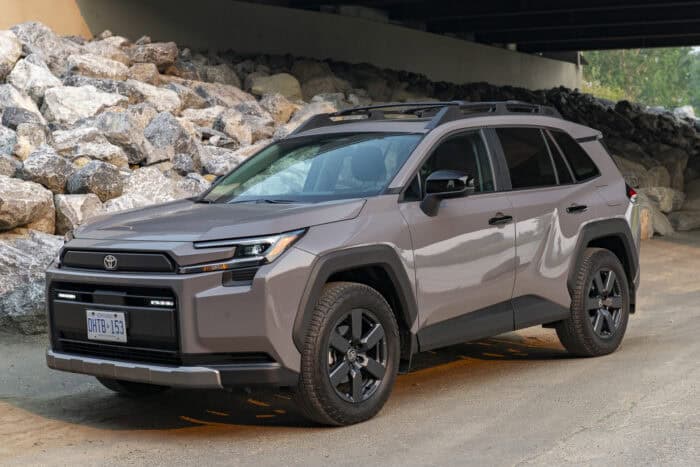
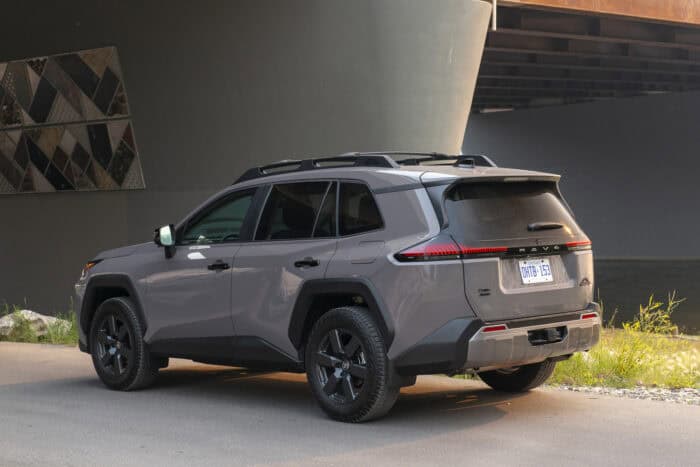
Toyota, on the other hand, has decades of off-road credibility through its TRD sub-brand and has now made the Woodland trim a permanent feature of the RAV4 lineup. This mid-range variant is not supposed to be an extreme off-road machine, but the rugged design cues, all-terrain tires and outdoorsy badging are all designed to appeal to families that might camp away from paved highways, for example – even if that campsite is likely to be equally accessible in a CX-5.
Our two test vehicles, then, represent two different, almost identically priced takes on how to do a family SUV. One of them plays the outdoor-adventure card, but let’s be honest – both will likely spend 95% of their lives in the city, which is where we tested them. Let’s see how they fared in the urban jungle.
Related – Is the Beefier 2026 Toyota RAV4 Woodland Worth the Extra Money?
Price & Powertrain: RAV4 Brings the Hybrid Advantage
| Canadian market | US market | |
|---|---|---|
| Mazda CX-5 GT (US: CX-5 S Premium Plus) | C$46,700 | US$38,990 |
| Toyota RAV4 Woodland | C$47,000 | US$39,900 |
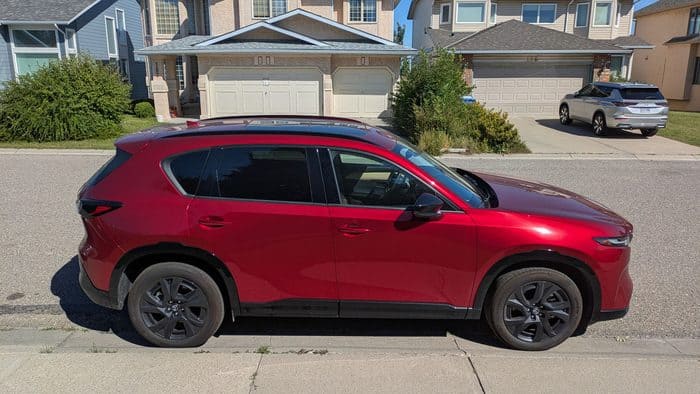
Like all grades of the 2026 CX-5, our top-of-the-line GT had a 2.5-litre, 187-hp motor under the hood, carried over mostly unchanged from the previous car. As you’d expect, it comes with automatic start-stop, but Mazda is one of the few auto makers yet to offer a hybrid powertrain in this segment, unless you step up to the CX-50 Hybrid. That has major implications for fuel economy, as we’ll see.
Related – 2019 Mazda CX-5 Diesel Review
No surprise what’s under the hood of the Woodland. Like all 2026 RAV4s (PHEVs aside), it features Toyota’s fifth-generation hybrid system, built around a 2.5-litre four-cylinder. In the AWD Woodland, that’s mated with three electric motors for a combined 236 hp (up 17 hp from the previous RAV4).
Interior: CX-5 Wins on Quality, RAV4 on Space
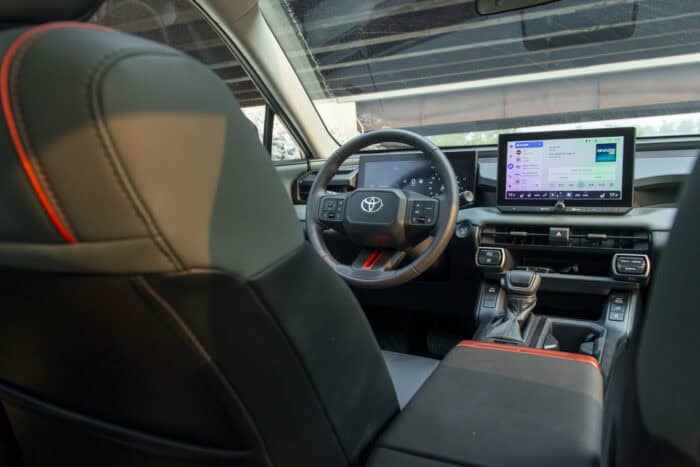
There’s no nice way of saying this: the new RAV4 Woodland’s cabin feels a bit cheap. The centre console and door panels have a particularly plasticky look and feel. The Woodland’s steering wheel is hard plastic and the latch for the centre cubby latch felt like it would break.
The design of the dash is not an unqualified success, either. Pluses are the plethora of USB-C ports and a useful shelf in front of the passenger, but I found it easy to trap my knee between the steering column and the centre console. The large screens are not as aesthetically well integrated into the whole as, say, a Hyundai’s would be, and the fan control is a screen press rather than an easy-to-grab, physical button. Try as I might, I couldn’t make the Android Auto work with my phone either – apparently I’m not alone in this problem, if online forum posts are to be believed.
Related – 10 Interior Changes You’ll Notice in the 2026 Toyota RAV4
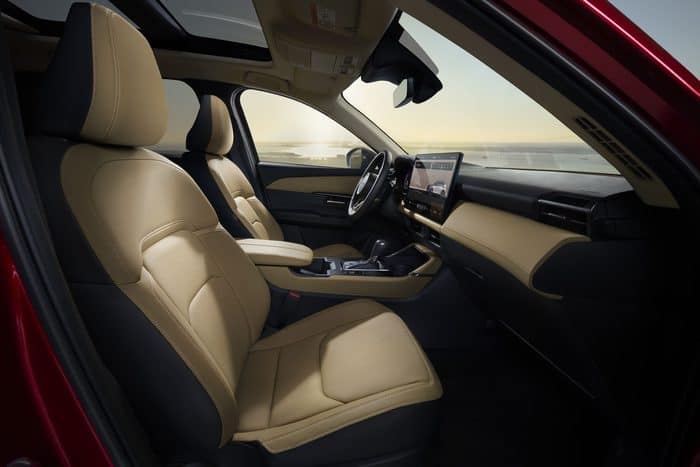
By contrast, and in line with the previous generation, the CX-5’s interior looks and feels more expensive than it is, thanks to some nicely textured materials and solid build quality. The car at last has a more conventional, Google-based infotainment screen and interface, too, now that Mazda has finally abandoned its previous, proprietary approach with its confusing menu system and central control dial. Unfortunately, it’s still not the most intuitive to operate.
More Room, Fewer Buttons
There are three options for the driver display, none of which quite hit the sweet spot (nor contain the overall odometer reading – it’s buried in an app). Reflective of a wider, minimalist design, important controls for the blower, temperature control and seat heaters are all on the screen, too, albeit permanently ‘pinned’ to the bottom. Please, auto makers, give us back the physical buttons and stop making drivers look down to wave a finger at the right part of a screen.
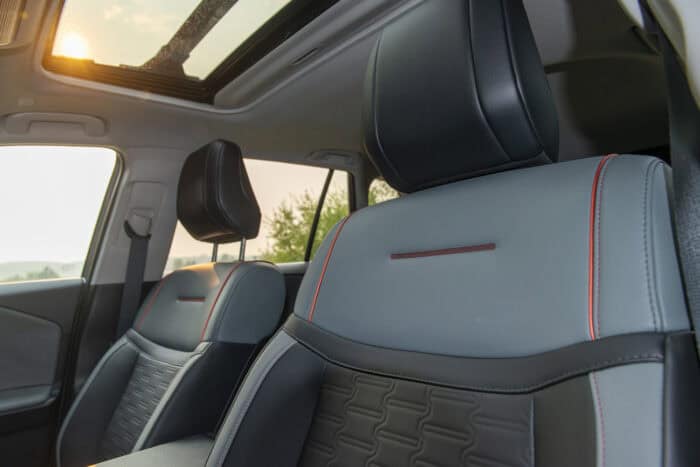
Pluses? There are lots of buttons on the steering wheel, including the volume control, and the cabin feels bigger – because it is, with noticeably more rear legroom and headroom in this 10cm (4-inches) longer-than-before Mazda. The cargo space is enlarged, too, with a lower load floor and a wider, taller opening than the previous model. The Toyota’s is almost unchanged, size-wise, but gets a cargo net and liner, and special all-weather floor mats and cargo tray, as part of the Woodland package.
Performance: The RAV4 Has the Clear Advantage
| RAV4 Woodland | CX-5 GT Premium | |
|---|---|---|
| Powertrain | 2.5L hybrid | 2.5L gas |
| Horsepower | 236 hp | 187 hp |
| Transmission | eCVT | 6-speed auto |
| Drivetrain | AWD | AWD |
The previous RAV4 was not renowned for its driving dynamics but I enjoyed driving it all the same. I can’t say the same for the latest Woodland, however. It felt less engaging than its predecessor and was a little noisy. Its Dunlop all-terrains will help you out in the mud, even if most of us will only ever use them through the puddles in the Costco parking lot. For more fun, you’ll want the RAV4 GR Sport.
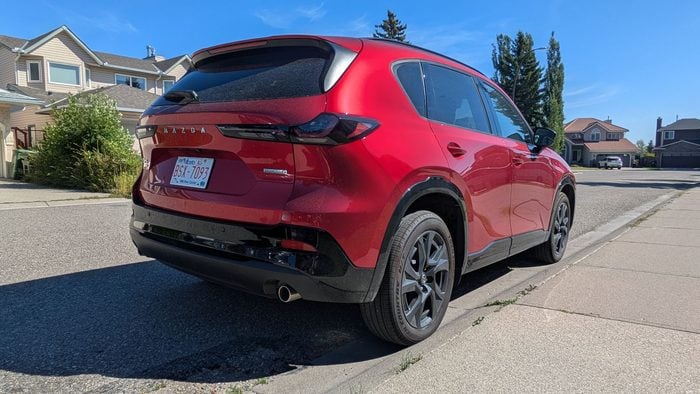
By contrast, the CX-5 has a reputation as being the best, most car-like to drive in this segment. It’s true that the steering’s precision and feel is better than the class average, but the crossover still feels like a crossover, not a family-friendly MX-5. Mazda says that ride comfort is improved on the latest generation, but it was not noticeably better than the Toyota’s – in truth, neither car excels in this regularly overlooked department.
Likely of more interest to owners than how the Mazda rides and handles is the disappointing fuel economy – 9L/100km (official combined figure) means it uses almost 50% more fuel than the hybrid RAV4’s 6.2L/100km. A much-needed, hybrid CX-5 is due in 2027.
Related – 2015 Mazda CX-5 GT Review
Verdict
Time to tally up the pros and cons. In the RAV4 Woodland’s corner: lots of space, some rugged touches, and good fuel economy, but a disappointing cabin. Meanwhile the CX-5 scores with a sleek cabin (in places, too sleek), much-improved packaging, and a more car-like drive – but drinks more gas than it should. In the case of our test vehicle, it also broke, unfortunately, requiring some dealer-applied software updates to stop the battery draining, and tweak the stability control. Teething troubles aside, we know its smooth drive and classier interior will appeal to buyers less keen on the RAV4 Woodland’s more rough-and-ready aesthetic. The choice is yours.