

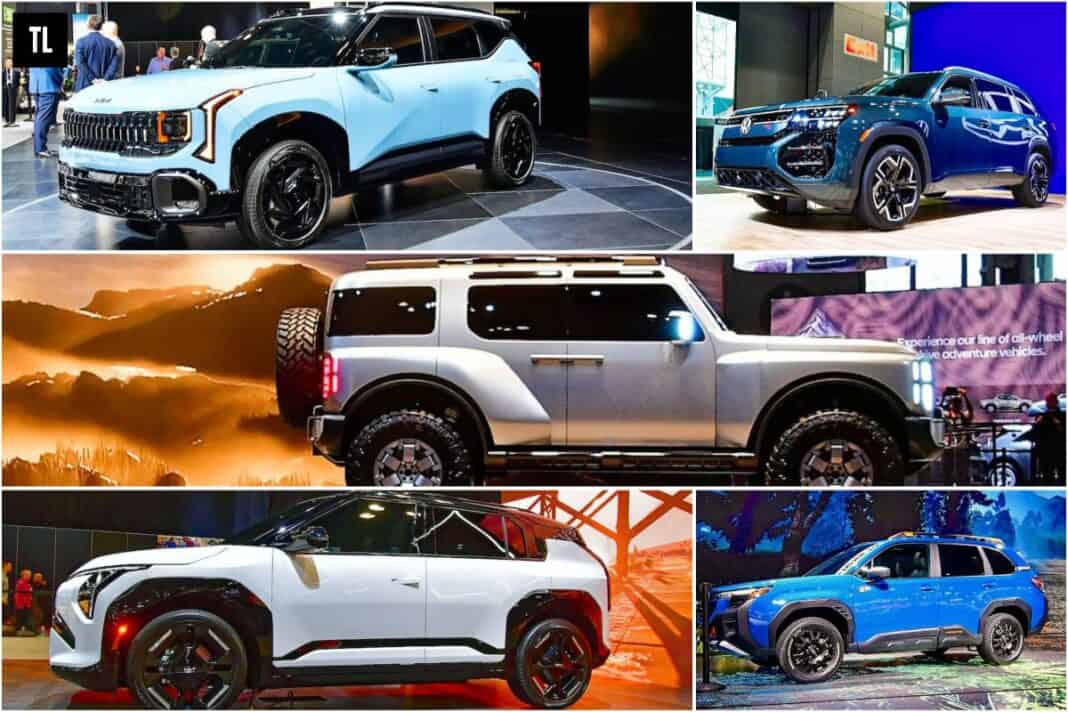
On Manhattan’s West Side, you can practically smell the fear sweat from carmakers. They all have PTSD. It’s the start of the New York Auto Show but it feels more like a dirge for the car biz. And this isn’t on carmakers—mostly. One old PR hand I won’t name said, “We tend to think of these things as ‘black swan’ events. We’re good at weathering them one at a time, but now we’ve had too many in a row!”
An Industry in Transition
By that he meant COVID supply-chain shocks, then shortly after, the cushioning of a Biden-era EV-sales incentive structure that helped bolster sales. But you know what happened next: That was rescinded in a Sharpie squib by Donald Trump. And then, yes, that same president imposed steep taxes (a.k.a., tariffs) on cars, car parts, and steel and aluminum. Now just for fun, add a war, causing oil prices to skyrocket 25% in a single month. In an industry that plans on years-long timelines, you’d also be incapacitated. Can you even sell the hulking trucks and SUVs you’re making for a yester-world of cheap gasoline?
All of that confusion is palpable in the form of cars on every brand’s stand in New York. A lot of this iron might well sit in a time capsule from an entirely different world. Here, only Subaru and Kia are defiantly debuting new EVs, though Hyundai’s Boulder concept could also be a hedge—in the form of extended-range EV, or EREV. And to be fair, Toyota also has a passel of new EVs that are only now arriving at dealers.
Still, is any carmaker “right?” Nobody I talked to trusts what’s coming next. And that’s why this highlight reel of what matters at this show has all the shelf life of ripe bananas. Tomorrow, let alone next year, feels extra scary for carmakers circa 2026.
Related – Top 5 Debuts at the 2023 New York Auto Show
Hyundai Boulder Concept
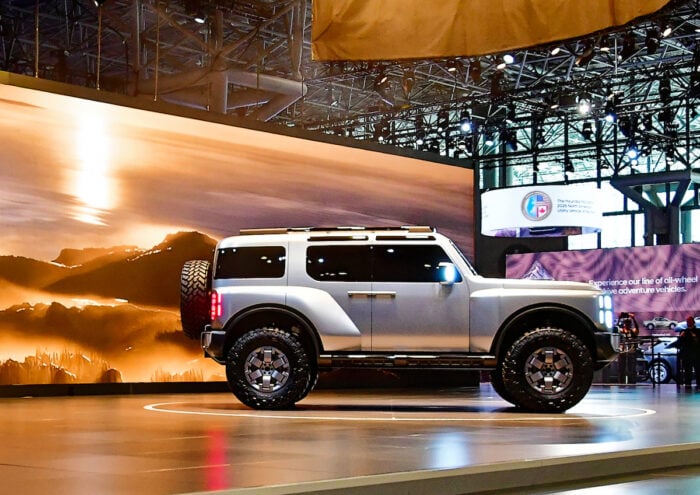
This was a car show very shy on concepts—at least ones that haven’t been shown before. Why? See all those “black swans.” One exception, and a very striking one, is Hyundai’s Boulder Concept. The Hyundai Group is investing heavily in U.S. manufacturing. They’re following a path made in prior generations by the likes of Honda and Toyota, though Hyundai is also committed to its own steel manufacturing plant in Louisiana. And that’s an indication about how far away the Boulder Concept really is, because that mill isn’t predicted to come online until 2029, and Hyundai execs promised that the Boulder will be made with that metal and won’t debut—if it debuts at all—until 2030.
Even so, the Boulder Concept augers multiple body-on-frame trucks and SUVs not just for Hyundai, but for Kia and Genesis as well. Hyundai is promising 58 total new products from the group through 2030, and a bunch of these will be hybrids, including extended-range EVs, or EREVs. That’s a big-battery hybrid capable of traveling 100 miles or so on electric-only juice, but also with a gas engine, for a total range more like 400 miles or greater.
Still, don’t expect the Boulder itself to be the headliner for Hyundai’s effort here. The real goal is a multifaceted effort around mid-sized trucks and SUVs, with anything as massive as the Boulder appearing as a halo product. One hint why the Hyundai Group is bothering is that ladder frames offer certain advantages for packaging an EREV’s larger batteries. Carmakers have said candidly that every kind of electrification in every vehicle package is the single most important way to hedge against an uncertain market.
Subaru Forester Wilderness Hybrid
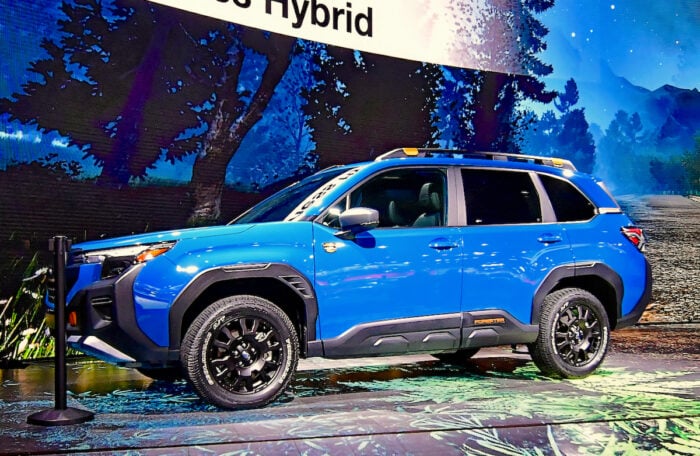
While the name hardly rolls off the tongue, hybridizing the Forester Wilderness is brilliant. Subaru, as you know, is leaning hard into EVs, but not every buyer wants one. And Wilderness is Subaru’s “gnar” edge—and they sell a lot of these lifted and marginally kitted wagonoids. But fuel economy suffers when you lift a Forester to offer 9.3 inches of ground clearance and pile on underbody protections, too—and add knobbier rubber.
What you can expect from the hybridized Wilderness Subaru is marginally more power (194 horsepower vs. 180), and all the same goodies you want from the stock Wilderness-grade Forester, including X-MODE, Subaru Symmetrical All-Wheel Drive, and a beefier suspension. But the bonus is an expected 25 percent better fuel economy. That should yield something like 34/30 City/Highway fuel economy, vs. 24/28 on the stock Wilderness Forester. This isn’t quite as swell as a Toyota RAV4 Woodland hybrid, which boasts 42/35, but Subaru-loyal peeps will turn their noses up at a mere 8.5 inches of ground clearance from that ’Yota.
Price, TBD, but considering the non-hybrid runs $38k and change, the simple answer is more than that.
Kia EV3
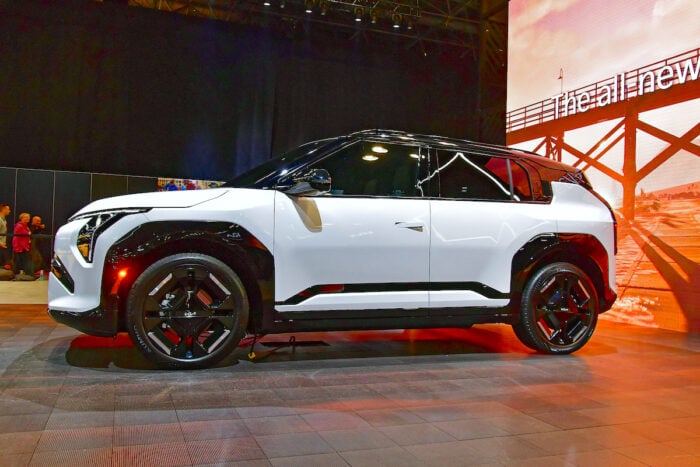
In some ways, Kia finally bringing the EV3—which has been on sale in other markets for more than a year—is the most interesting car here. Yes, more than either of the Subarus, and more than Hyundai’s Boulder concept.
That’s because the Hyundai Group, of which Kia is a part, has been far more aggressive than other carmakers in pushing EVs forward even in the face of sales headwinds. While the likes of GM, Ford, and very recently, Honda, pulled back, Kia is plowing ahead, and the EV3 represents a crucial category for the brand: sub-$40,000. No, we don’t know the sticker for sure, but Kia’s clearly needed a sub-EV6 offering to attract younger buyers who can’t afford a $45,000 EV.
Plus, the EV3 and Seltos look very much like kin, and shrunken-down versions of the Telluride/EV9. The goal is obvious, which is to get buyers who may or may not buy an EV to still purchase a Kia no matter what got them to the showroom.
FYI: Looks can deceive. The EV3 is a full 14 inches shorter than the EV6. Still, it’s roomy, since it’s quite squat and upright. That yields a maximum of 56.5 cubic feet of storage behind the first row of seats and a more SUV-like 26.1 cubic feet aft of the second row.
Kia says the EV3 can recharge from 10-80 percent in 29-31 minutes, depending on battery size. That breakdown: a 220-mile range, 58.3 kWh battery (Light) or a long-range 81.4 kWh battery for Wind, Land, GT-Line, and GT grades. The smaller battery car will be FWD only. The larger battery specs will allow up to 320 miles with FWD, and more like 300 with AWD.
Expect the EV3 to be on the market by the third quarter of 2026.
2027 Kia Seltos
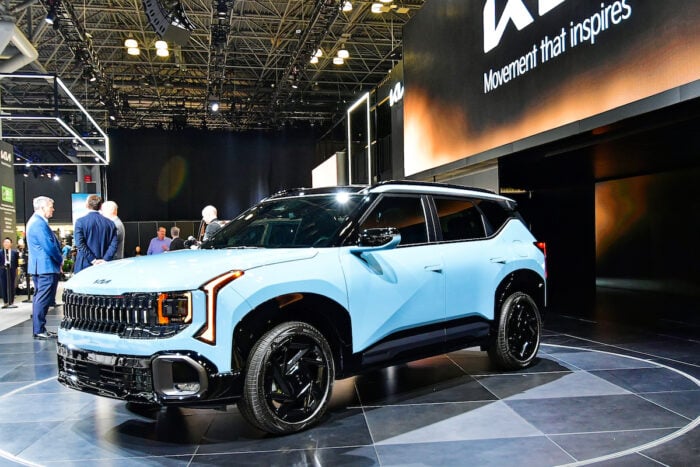
Kia is clearly gunning for a slice of Subaru’s pie with the retooled Seltos. The carmaker is boasting about up to 8.1 inches of ground clearance, AWD, and right as Subaru has just debuted a hybrid version of the Forester Wilderness, Kia’s doing the same here. Though this won’t be aimed at Forester buyers. Instead, with up to 64.1 cubic feet of cargo space and 27.8 behind the second row, this is more like a Crosstrek rival.
Power will come from either a 2.0-liter four or a smaller turbocharged 1.6-liter engine. The Seltos with the smaller engine is actually the quicker option, and also will be the one mated to the hybrid, which will be available either as a FWD or AWD vehicle.
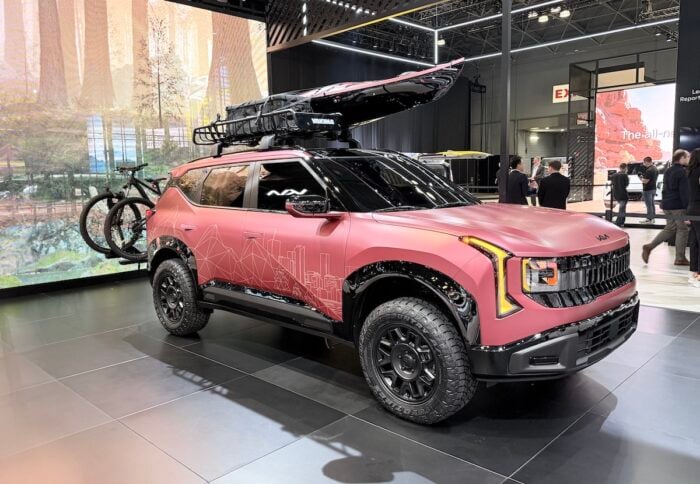
What’s less clear is just how seriously Kia is taking the Seltos’s off-roading cred. There’ll be an X-Line trim, which in the past at least has been more about show, than going seriously off piste. Then again, hiding in plain sight at the stand, they also displayed a seriously lifted version of the Seltos wearing Toyo 245/70R17 Open Country A/T III rubber. Kia Chief Designer Kurt Kahl, shared that it’s no mistake Kia’s latest Seltos looks much more like a three-quarter-size Telluride—and that the EV3 also looks a lot like the Seltos. He pointed to similarly floating rooflines, a chunkier vibe to the fenders of both the Seltos and EV3, but also a quiet confidence rather than an in-your-face muscularity. These are “familial Kia traits that are important to communicate the design brand of Kia.”
2027 Volkswagen Atlas
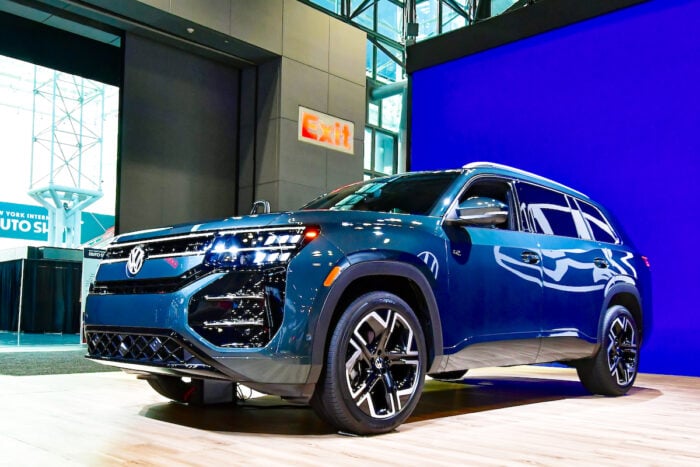
Think of the refurbished Atlas as a means of getting some of the slickness of the ID. Buzz. But, you know, not, actually getting the pragmatism that a van offers, or, gas-free living. Because while the Atlas’s sheet metal and quarters are newly-fangled, it runs on a fairly ancient gas engine, the Volkswagen Group’s EA888 2.0-liter turbo. It’s boosted to produce 282 horsepower, which is good. And the Atlas does average a combined 23 MPG with its current powertrain. Volkswagen says they expect slightly better fuel economy despite improved horsepower once this Atlas hits the market this fall. And perhaps in our newfound wariness about volatile gas prices, buyers will start opting for smaller fours rather than thirstier sixes and V-8s.
Most of what VW has brought comes in the form of a fuller larder of specifications. Kia’s Telluride and Hyundai’s Palisade play this game especially well, and maybe, at last, VW is getting the hint. So the 2027 Atlas has seven USB chargers throughout the three rows, and dual wireless charging upfront. Like stablemate, Audi, VW moved the shifter to beside the steering wheel from the driver’s hip, freeing up more room in the center console, and the dash, vents, and instrument cluster are all framed by genuine wood trim. VW also touts that ambient lighting comes standard, including on the dash and within the footwells. Probably more important to families buying three-row SUVs, Volkswagen adds as standard, a power hatch, rear sunshades, auto-dimming driver-side mirror, and electronic parking aids.
Fully one-third of Volkswagen’s 2025 sales came via the Atlas platform. Given their historically slow pivot to understanding the U.S. market and to shift with American tastes, this version of the Atlas feels like a very careful revamp. And, in a rare sign of more quickly responding to market forces, VW says it will bring a hybrid Atlas by late 2026. So, you know, you’d be like 1/8th of the way toward the fuel cost savings of the ID.Buzz.
Editor’s Note: Other Notable Debuts
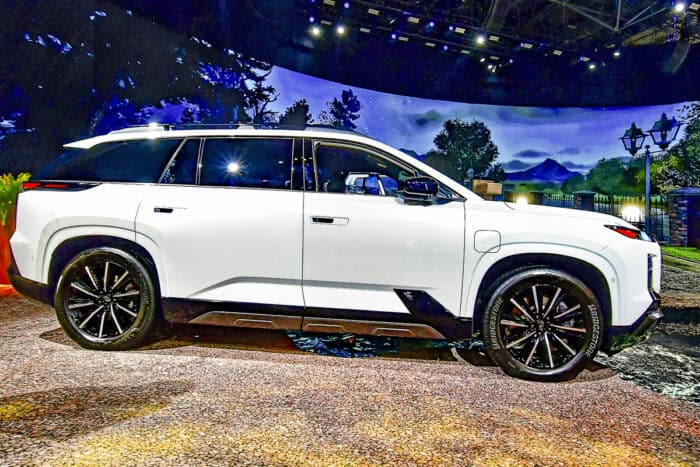
Subaru Getaway: A more lifestyle-focused addition to Subaru’s lineup, the Getaway leans into adventure-ready design with a softer, more accessible take on the brand’s rugged formula. Our full Getaway preview here.
Zenvo Aurora Agil: A wild Danish hypercar built for pure driver engagement, the Aurora Agil brings extreme performance and lightweight engineering to a show otherwise focused on practicality.
Genesis G90 Wingback Concept: A striking expression of Genesis’ “Magma” direction, this G90-based concept blends ultra-luxury with bold, performance-inspired design details. This one we’d like to see hit production lines, like now.
2027 Chrysler Pacifica: Chrysler’s family hauler returns with updates aimed at keeping it competitive, reinforcing its role as one of the few remaining minivans still evolving with the market.
2027 Chevrolet Corvette Grand Sport: A sharper, track-focused take on the Corvette formula, the Grand Sport slots between everyday usability and full-on performance with a more aggressive edge.
2027 Nissan Z NISMO Manual: Finally pairing NISMO performance with a manual gearbox, this version of the Z delivers a more purist take on Nissan’s modern sports car.
2027 Ram ProMaster City: Maybe not the most exciting, for the average buyer, anyway. A practical, city-focused van designed for urban businesses, the ProMaster City continues to serve as a workhorse in a segment that rarely gets the spotlight.