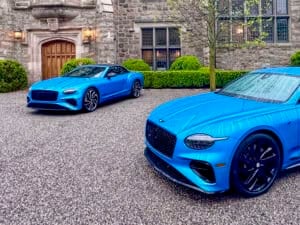

Not every SUV with a 2026 badge is genuinely new. These models actually move things forward: all-new nameplates, next-generation redesigns, and a handful of major updates worth knowing. From family-sized hybrids to electric SUVs, here’s what’s changed for the 2026 model year.
2026 Compact & Subcompact SUVs
2026 Audi Q3

- What we like: Plenty of power meets a gloriously complex indicator stalk, fairly strong value all things considered.
- Who it’s for: The matcha latte set.
If you want a small luxury crossover that doesn’t feel like a consolation prize, take a look at the new Audi Q3. What Ingolstadt’s done here is take the excellent MQB architecture and EA888 two-liter turbocharged four-cylinder engine, build a crossover body, crank up the equipment levels, and let the public have it starting at $43,700 US before destination, with well-equipped examples pushing beyond $50,000.
As it’s an Audi, you still get nice materials and the clever console-mounted volume knob that jogs side-to-side to skip tracks, but now you also get one of the most highly engineered indicator stalks ever. It’s the posh subcompact crossover for those who like a good gadget, but it’s also not in-your-face. Is it a bit performative? Perhaps, but with a claimed zero-to-100 km/h time of under six seconds, it really just performs full-stop.
Related – First Drive: 2026 Audi Q3 Review
2026 Mazda CX-5

- What we like: Upscale cabin, proven powertrain, styling that punches above its price bracket.
- Who it’s for: The smart shopper.
After nearly a decade, the new Mazda CX-5 is here, and it’s a big deal. Not only is the CX-5 Mazda’s best-selling model, it’s developed a reputation for being a bit nicer than a RAV4, just as reliable as a RAV4, and a bit less expensive than a RAV4. Not a bad niche to sit in. With that in mind, Mazda hasn’t messed with the bones of its new compact crossover much. The familiar 2.5-liter naturally aspirated inline-four and six-speed automatic carry over, but a stretch in just about every dimension serves up more space, and the cabin gets some fabulous stitched materials that make this crossover look five-figures more expensive than it is.
That being said, while most of this Mazda SUV looks to be an improvement, the in-cabin tech might be moving a step backwards. The available 15.6-inch infotainment screen is huge and the digital gauge cluster looks slick, but come on, no volume knob? Still, expect proven reliability and upscale appointments in a price bracket you can afford. Oh, and if you crave more efficiency, a hybrid model’s on its way for 2027.
Related – 2019 Mazda CX-5 Diesel Review
2026 Toyota RAV4

- What we like: Surreal efficiency, tech galore, a history of strong resale value, an almost overwhelming variety of interior storage cubbies.
- Who it’s for: In the words of Norman Stansfield from “Leon the Professional,” “EVERYONE!”
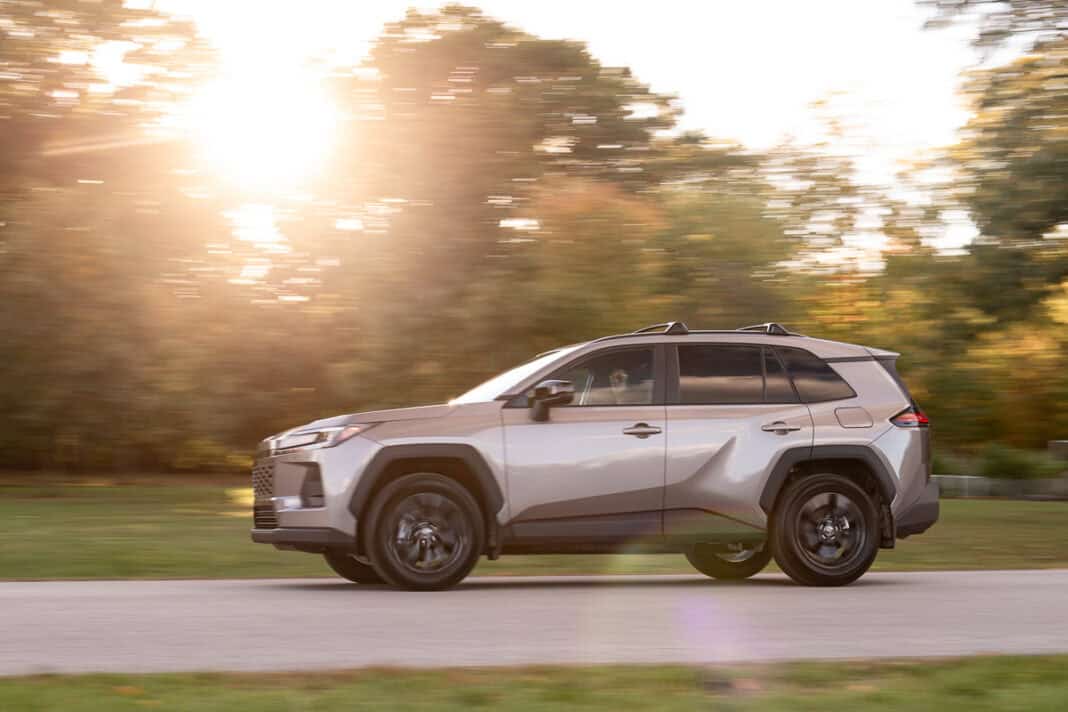
Welcome to the world’s best-selling car, version 6.0. The ascent of the RAV4 from weird little soft-roader to the biggest name in the game has been nothing short of meteoric, and the 2026 model features exactly the sort of twist needed for the next five-to-seven years. Including the new Woodland trim. Although Toyota claims it’s only about 60 percent new, the big story is that the RAV4 has gone all-hybrid, with options of a plug-in or a regular series-parallel drivetrain.
Figure consumption as miserly as 5.5 L/100km or 42 MPG combined, a starting price under $33,000 US (under $42k with standard all-wheel drive in Canada) for the base RAV4 LE model, and loads of new tech including a brand new infotainment system and an integrated dashcam. Really, it’s the responsible, no-nonsense, no-brainer choice, plus it’s made in Canada. Expect to see the new RAV4 everywhere soon.
Related – RAV4 Reviews and news
2026 Mid-Size SUVs
2026 Honda Passport

- What we like: Incredibly clever all-wheel-drive system, ruggedized inside and out while maintaining excellent manners, and doesn’t it just look great?
- Who it’s for: Anyone who wants a 4Runner but won’t really be rock crawling.
There’s nothing worse than being a fashion victim, and loping about town in a cumbersome body-on-frame SUV can be a pain if you never really use its full potential. Thankfully, the Honda Passport is here to help. It might look like a five-o’clock-shadow off-roader, and it might be available with skid plates and recovery points, but it’s a unibody machine that doesn’t sacrifice much on the road for a little extra gravel capability. Actually, thanks to a clever all-wheel-drive system with a torque-vectoring rear differential, it powers through corners far better than a 2.1-ton crossover should.
Add in a well-made interior and loads of equipment, and this midsizer Honda SUV makes a great deal of sense. It is expensive, and the naturally aspirated V6 is peaky and thirsty, but the Passport is the machine most Toyota 4Runner buyers actually need.
Related – 2019 Honda Passport Touring Review
2026 Jeep Cherokee

- What we like: Hybrid efficiency meets real mechanical all-wheel-drive, big-boned for a compact crossover, and looks properly handsome.
- Who it’s for: Weekend warriors.
At first glance, the new Jeep Cherokee is a bit of a strange one. Longer, wider, and heavier than most compact crossovers, it rides on a variant of the Dodge Charger Daytona’s platform yet it’s not quite a midsizer. However, a big-boned footprint might be this thing’s royal flush. It’s hugely spacious, especially when it comes to cargo space, and standard hybrid power makes for superb claimed fuel economy of around 37 mpg combined or 6.4 L/100km combined.
Add in a proper mechanical all-wheel-drive system, a starting price under $43,000, and reasonable off-road chops, and you get a crossover to take weekend warriors to the trailhead. Fair warning, though: Once you start to pile on the options, the new Cherokee gets a tad expensive compared to a RAV4 or a CR-V.
Related – 2019 Jeep Cherokee Review
2026 Hyundai Palisade
- What we like: Stunning mid-century modern interior, acres of space, library-hushed when on the move.
- Who it’s for: Families with lots of kids and an eye on design.
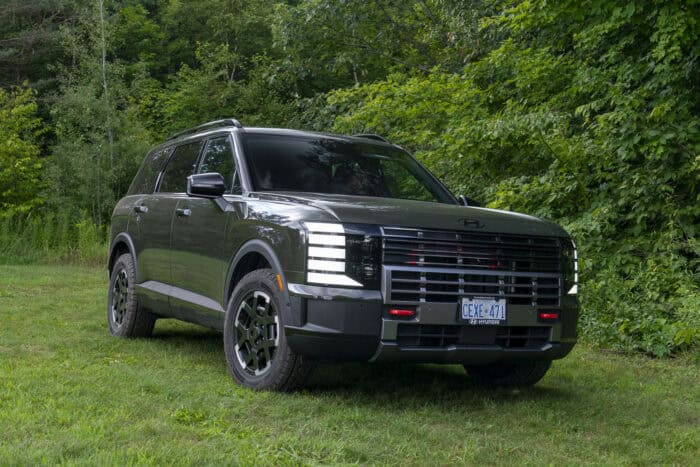
The Hyundai Palisade has always been one of the more capacious and cosseting three-row crossovers on sale, and this new second-generation model takes things to a new level. It offers seating for up to eight, with available heated and ventilated second-row seats, plus a dashboard that just screams mid-century modern. If the standard V6 feels a bit laboured by your standards, there’s now an available turbocharged hybrid powertrain that serves up a plateau of torque, a combined fuel economy rating of roughly 29 mpg or 8.1 L/100km, and a ridiculously long cruising range.
Perfect for turning “are we there yet?” into “can we stop now?” Mind you, the standard frosted daytime running lights look like they’re straight off a Di-Noc’d clay model, but if you can live with that, the new Palisade is a strong contender. And the new XRT Pro steps it up, too.
Related – 2026 Hyundai Palisade Hybrid Review
2026 Subaru Outback
- What we like: The return of physical buttons, available turbo power,
- Who it’s for: The proud Mountain Equipment Co-Op member.
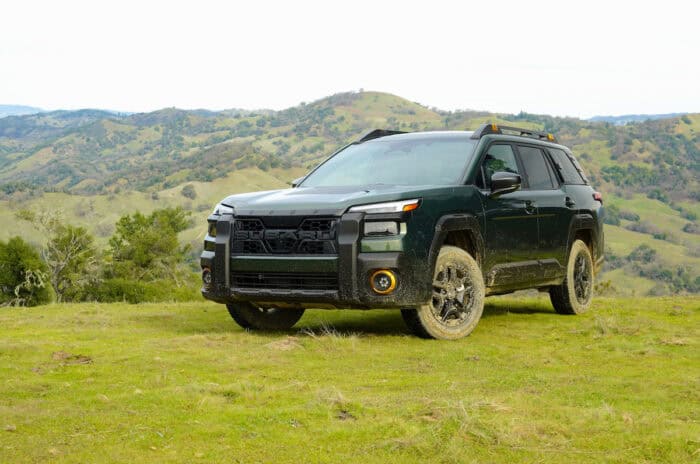
It might not be particularly new under the skin and it looks like a Birkenstock-editon Ford Taurus X, but the new Outback still has some positive points. Buttons and knobs are back, the 180-horsepower 2.5-liter naturally aspirated and 260-horsepower 2.4-liter turbocharged flat-fours ought to be thoroughly adequate, and this thing has some serious ground clearance. The 2026 Wilderness version levels up even further.
Thoroughly a crossover now with no Legacy sedan equivalent, the new Outback should do well for those with active lifestyles who can’t fit everything they need into a Forester. It has grown a bit pricey, now starting at $34,995 US (or $40,895 CAD before fees), but the new base model is effectively equivalent to the old mid-range trim. Mind you, there’s nothing between that trim and the turbocharged $44,365 US ($48,195 CAD before fees) Limited XT, which seems a bit strange.
Related – 2026 Subaru Outback Touring Review
2026 Full-Size SUVs
2026 Jeep Grand Wagoneer

- What we like: Clever incoming range-extender hybrid model, obscene towing capacity,
- Who it’s for: The toy-haver.
With Ford’s recent refresh of the Expedition and GM’s recent updates to its full-size SUVs, now’s the time for Jeep to strut its stuff. For the past few years, the Wagoneer and Grand Wagoneer have been a bit confusing, beyond the weird model split. That ends now. Every full-size Jeep SUV is now a Grand Wagoneer, and updated styling with a slim upper grille and big lower one visually aligns this hoss with the Wagoneer S electric crossover.
It can still tow up to 10,000 pounds and is still available with a McIntosh audio system, but the bigger story is Jeep’s planned range-extended electric version with a claimed 647 horsepower and a massive battery pack. Its rollout has been pushed back, so don’t confuse that model with the 420-horsepower twin-turbo six-cylinder Grand Wagoneer in showrooms now. Starting at $63,995 US before destination, it’s still a serious amount of SUV for towing really big toys.
2026 EV SUVs
2026 Nissan Leaf

- What we like: Low starting price, huge range, available electrically-frosting moonroof is pretty swish.
- Who it’s for: The EV-focused value shopper.
Is the new Nissan Leaf the automotive makeover of the year? It might well be. In one fell swoop, the model’s gone from a frumpy hatchback with an outdated CHAdeMO connector to a trendy crossover with a Tesla-style NACS port and north of 300 miles (488 km) of range. Oh, and this small Nissan SUV starts at $29,990 US ($44,998 CAD) before destination and other fees.
Sure, it might be front-wheel-drive only, but it’s also loaded with kit. A 360-degree camera system is standard on the base trim, and the range-topper pampers with an electrically-frosting moonroof and a Bose audio system. Plus, unlike the Chevrolet Equinox EV, the new Leaf comes with wireless Apple CarPlay and Android Auto. That’s a huge plus for anyone who uses Spotify but wants more fidelity than simple Bluetooth.
Related – Nissan SUV Models Up Close: Smallest to Biggest
2026 Cadillac Vistiq

- What we like: Big power, three proper rows of seats, nearly 500 km of range. Oh, and the model name doubles as an innuendo.
- Who it’s for: The Sopranos.
Alright, so it’s not as preposterously large as its Escalade IQ big brother, but the Cadillac Vistiq certainly isn’t lacking presence. Measuring 5.22 metres stem-to-stern, it’s bound to make a splash in the school drop-off line based on its size and sharp styling. Unsurprisingly, it features three proper rows of seats, but the presence of 615 horsepower means the kids will never be late to appointments again. Up to around 305 miles of range (or about 491 km) is also heady stuff.
At roughly $79,000 US to start ($95,599 CAD), it’s also good value for a properly posh three-row electric crossover, provided you’re willing to live without Apple CarPlay or Android Auto in exchange for hands-free Super Cruise on mapped highways. Just be warned, a certain pronunciation of this three-row Cadillac’s name is a bit, um, provocative.
2026 Hyundai Ioniq 9

- What we like: Feels more expensive than it is, more range than the Kia EV9, properly fast fast charging.
- Who it’s for: The road-tripper.
If you want an EV and need to make those long drives to grandma’s house easy, you’ll probably want to give the Hyundai Ioniq 9 a serious look. Right off the rip, this three-row crossover boasts around 335 miles of range (up to 539 kilometres), an 800-volt architecture and a Tesla-style NACS port makes for fast, easy charging, and clever adaptive regenerative braking that feels positively natural.
Inside, you can option up all the gadgets you’d really want, along with a library-quiet cabin at highway speeds. The advanced driver-assist systems are pretty nice, too, and if the destination’s a campsite, vehicle-to-load capability means you won’t need to bring a generator. Starting in the high-$50,000 range at base price (or $62,990 in Canada), Hyundai’s SUV with three rows and all-electric power is a lot of crossover for the money.
2026 Rivian R2

- What we like: West Coast kind of outdoorsy chic in a convenient size.
- Who it’s for: Equinox members and Whole Foods shoppers.
When it comes to brand image, nobody’s winning quite like Rivian right now. The R1T truck and R1S three-row SUV are now de rigueur for the cashed-up, do-no-evil tech set. Taking a page out of Apple’s book with sleek design and a friendly image, it’s no surprise people love their Rivians, which is why the 2026 Rivian R2 is so important. Effectively RAV4-sized, this crossover promises to be the brand’s iPhone Nano, opening it up to an entirely new audience. The first R2s are dual-motor Performance models with 656 horsepower, up to 330 miles (531 km) of EPA-estimated range, and a $57,990 US starting price. Less expensive versions are planned for 2027, while Canadian deliveries are also expected to follow in 2027. The weight of turning Rivian from an if-you-know-you-know brand to a household name rests on it.
2026 Subaru Trailseeker
- What we like: Wagon form factor, reasonably rapid, 210 mm of ground clearance.
- Who it’s for: Outback owners looking to go electric.
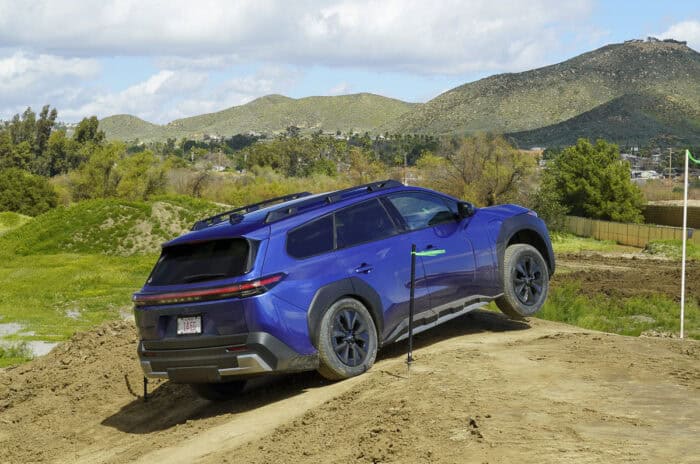
If the Subaru Trailseeker looks like a Solterra with a BBL, that’s essentially what it is. From the dashboard to basic front end elements, it’s a lot of stuff we’ve seen before paired with a longer wagon-like silhouette. Given how massively improved the updated Solterra is, this is a good thing, and that’s before we get into any of the powertrain tweaks. While 420 km (about 261 miles) of estimated range and a Tesla-style NACS port are both great selling points, 375 horsepower should make this thing haul the mail. A proper roof rack, 210 mm (about 8.3 inches) of ground clearance, and a selection of off-road driving modes means it’s designed to do Subaru things, and it looks far more wagon than the new Outback.
Related – First Drive: 2026 Subaru Trailseeker EV Review
2026 Subaru Uncharted

- What we like: Turbofans, solid range, you’ll be able to get it in orange.
- Who it’s for: Nathan Drake.
Well, well, well, if it isn’t the first front-wheel-drive Subaru in ages. Has the brand gone mad? Not exactly. Those of us who’ve been in the car scene long enough know you used to be able to get a front-wheel-drive Impreza, and the Uncharted aims to be Subaru’s entry-level EV. The basic specs including around 300 miles of estimated range (or about 480 km), available all-wheel-drive, and a modern NACS port look pretty good, and although the name’s a bit silly, would you just look at those turbofan-influenced alloy wheels? They’re a pretty good distraction from the fact that the Uncharted is fundamentally a Toyota underneath and shares many bits with the Solterra including dual wireless phone chargers, but hey. If it ain’t broke, don’t break it. Here’s how Uncharted compares to the Trailseeker.
Related – First Drive: 2026 Subaru Uncharted EV
2026 Toyota C-HR
- What we like: Up to an estimated 310 miles of range (around 500 km), up to 338 horsepower, dual wireless phone chargers.
- Who it’s for: Nike Huarache fans.
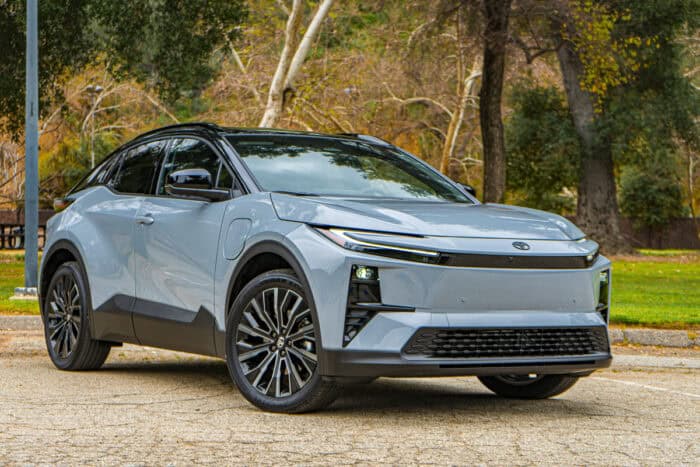
Wait a second, didn’t we just look at this coupe-crossover? Sort-of. The 2026 Toyota C-HR and the Subaru Uncharted are locked into a bit of a left-Twix right-Twix situation. Aside from a few details, they’re basically the same car, which might actually be a good thing. Don’t like your local Subaru dealer? Check out the Toyota. Don’t like your local Toyota dealer? You know the drill. Granted, the C-HR does have one advantage for Canadian shoppers: its front-wheel-drive SE is rated for up to 496 km (308 miles) of range. In the U.S., the C-HR instead comes with standard 338-horsepower all-wheel drive and up to 287 miles (462 km) of EPA-estimated range. Otherwise, you know the drill. NACS port, dual phone chargers, roof like a backwards baseball cap, and pretty much the same switchgear you get in a Toyota bZ or Subaru Solterra.
Related – The Toyota C-HR: Then and Now
2026 Toyota bZ Woodland

- What we like: It’s essentially a 375-horsepower lifted electric wagon.
- Who it’s for: Longroof-lovers without a local Subaru dealership.
Okay, at this point it’s clear that Toyota and Subaru are going for a Taco Bell-style shared common ingredients plan for their EVs, but you know what? A Crunchwrap Supreme still hits. The bZ Woodland is Toyota’s version of the Subaru Trailseeker, which is fundamentally a stretched Solterra, which is Subaru’s version of a bZ. A Toyota version of a Subaru variant of a Subaru version of a Toyota. It’s a lot to keep track of, so here are the basics: 375 horsepower, about 260 miles (or 418 km) of estimated range, 3,500 pounds of towing capacity, and it’s basically a lifted electric wagon. Yeah, we’re excited to try this one, regardless of which brand’s front fascia it’s sporting. If the standard bZ is any indication, the bZ Woodland has the potential to be a surprisingly good little Toyota SUV.
2026 Jeep Recon
- What we like: Removable doors, Trail Rated capability, more than 600 electric horsepower.
- Who it’s for: Wrangler fans willing to trade engine noise for instant torque.
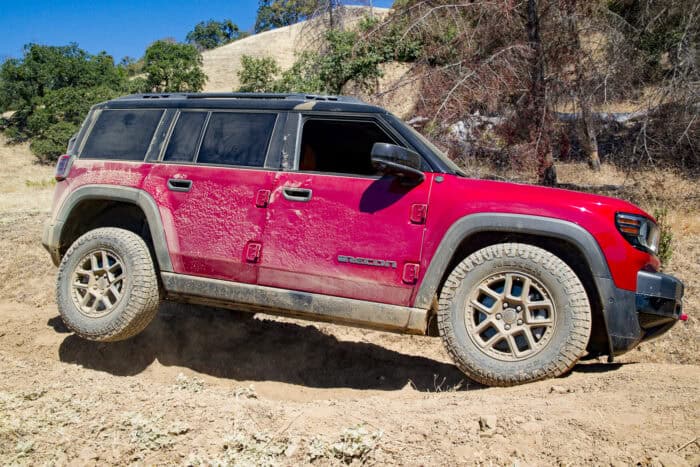
Jeep making an electric off-roader was probably inevitable, but the 2026 Recon is more than a Wrangler with a charging port. It gets removable doors and rear-quarter glass, a proper Trail Rated badge, and dual-motor four-wheel drive delivering roughly 650 horsepower. That’s enough muscle to make the idea of a quiet trail run sound downright entertaining, although Jeep estimates only about 230 miles (370 km) of range, and the starting price sits at $66,995 US. Our first drive showed there’s real capability here, but range, tire grip, and price all deserve a closer look. The upside? At least nobody will mistake this for another soft-roader with a few extra plastic cladding pieces.
Related – First Drive: 2026 Jeep Recon EV Review
2026 Porsche Cayenne Electric
- What we like: A dedicated EV platform, outrageous Turbo power, familiar Cayenne practicality.
- Who it’s for: The driver who wants a fast family SUV and has room in the budget.
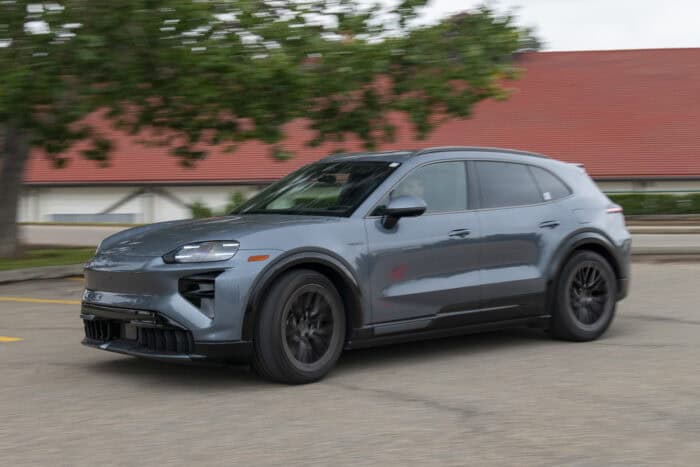
Apparently Porsche looked at the regular Cayenne and decided it needed another way to make the school run feel like a qualifying lap. The new Cayenne Electric joins the gasoline and plug-in hybrid models rather than replacing them, using a dedicated electric platform and a cabin packed with screens. It even offers optional wireless charging, letting owners replenish the battery at 11 kW simply by parking over a floor-mounted charging pad. In Turbo Electric form, output can hit four figures in horsepower with launch control, which seems utterly excessive for something capable of carrying groceries, passengers, and a dog. The base Cayenne Electric starts at $111,350 US, so nobody’s pretending this is affordable family transportation. Still, if you want Porsche handling with electric propulsion and don’t mind the price of entry, it’s hard to ignore.
Related – First Drive: 2026 Porsche Cayenne Turbo Electric Review
2026 Lucid Gravity
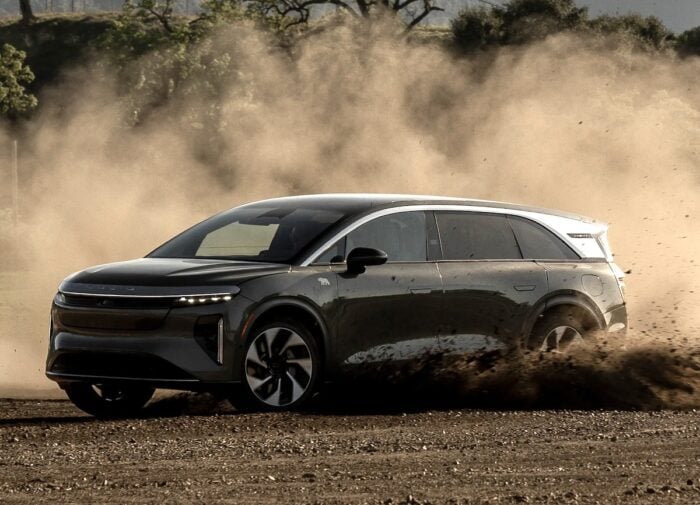
- What we like: Genuinely usable three-row packaging, up to 450 miles of range, lightning-quick charging.
- Who it’s for: The luxury EV shopper who refuses to give up road-trip range.
Lucid built a reputation for making electric sedans that can seemingly drive forever, so its first SUV had a fairly high bar to clear. The 2026 Gravity makes a strong case on paper: room for up to seven adults, as much as 450 miles (724 km) of EPA-estimated range in five-seat Grand Touring form, and up to 828 horsepower without looking like a rolling science-fiction prop. It also packs a built-in NACS charging port and can add 200 miles of range in under 11 minutes under ideal fast-charging conditions. Sure, it’s expensive, and the brand doesn’t have the dealership footprint of more established luxury players, but the Gravity might be the three-row EV that finally makes the usual compromises seem unnecessary.
2026 Cadillac Escalade IQL
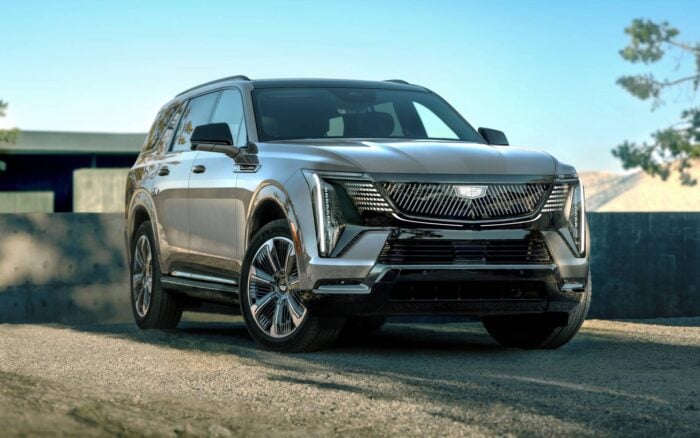
- What we like: Even more cargo room than the IQ, a 55-inch display, up to 460 miles of claimed range.
- Who it’s for: Anyone who finds an ordinary Escalade IQ a touch too compact.
If the regular electric Escalade IQ looks a bit modest in your driveway, Cadillac has a solution, and naturally it involves making the thing longer. The 2026 Escalade IQL stretches the rear end to free up extra space for passengers and luggage, while keeping the 55-inch pillar-to-pillar display, available 24-inch wheels, and as much as 750 horsepower in Velocity Max mode. Cadillac estimates up to 460 miles (740 km) of range, which is a remarkable claim for something with the aerodynamic profile of a luxury condominium. Starting above $130,000 US, this is not an exercise in restraint. Then again, has any Escalade ever been?